Financial District Photos


More like Financial District
Recommended Reviews - Financial District
Start your review...


Reviews With Photos


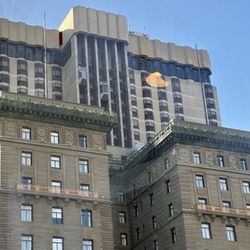
The Financial District is rich in architectural history. I don't think there was one building I didn't find interesting or just simply awe struck at the designs in general. I was told there is a great architectural walking tour that used to start at the Galleria Park Hotel but I didn't stay long enough to confirm and take it. It's definitely on my 'must do' for my next visit though! Another interesting tidbit is that since it IS the 'Financial District', many of the businesses (restaurants, cafes, etc.) pretty much adhere to 'bankers' hours'. So even the Walgreens across from my hotel closed at 8 and opened for only a few hours on Saturday. Of course, one of the exceptions would be the bars like Topsy's. My initial introduction to the Financial District was met by walking through the indoor farmer's market at the Crocker Galleria. Absolutely gorgeous and reminded me a little bit of a super small, very intimate version of Naha Mall in Okinawa which I adored. The vendors were really friendly and the aroma from nearby cafes made for a lot of induced tummy-growling!


Lots of banks, lots of bank and lots of banks. Nice architectural building here. It is somewhat a tourist area I guess. I just like roaming around here and taking pictures. Well its ok to come here if you are coming by train. Parking may be difficult to find on weekdays. Very interesting and artsy to just look up. I value the heritage building and looks here. Cool.


I enjoy walking through this area. It's quiet, some of the people here are nicer and polite. The environment here is also clean and calm. Bus stops, cable car stops and subway station entrances are visible. Traveling between here and other parts of the city is easy. After 5 pm or 6 pm, dining options do become limited. Some of them are closed during weekends and holidays. This area is another hot spot for the development of photography innovation and inspiration. Overall, this area is very clean and peaceful.


This part of town has some great buildings and public art. Often though it feels oddly empty when I walk through. Tip look at the little plaques at odd places on the sides of the buildings. This area is on land fill and the plaques tell about things like there is a boat under you. I like the Trans America Pyramid, but I like a lot of the old bank buildings just as much. They are gorgeous lots of gilding and symbolism. The old stock exchange is also amazing. This is all in the area. Tip take a tour or so from the San Francisco City Guides. They are free (but pass and envelope at the end) I have taken a couple of tours in the Financial District. They are interesting and show things I would never have found on my own. The guides are volunteers with an interest in the area. I try and take at least one tour from them somewhere when ever I am in town.


I'm going to share a little secret with you: The location of my work is what keeps me coming back, every single day. ...I need to take a hike. You see, I discovered FiDi a little over a year ago. I can't remember how, or why, but I do remember it being love at first sight. The diagonal crosswalk lights and beautiful buildings called out to me. It was fate! How many people get to choose where they work? Not very many. I was privileged. Proximity and frequency are important in relationships, you know. So here I am six days a week, talking to angry tourists, running errands, and hopping back on BART late at dusk. The organic lunch selections and friendly people (and handsome men in European-fitted suits) who smile and greet you as you walk by makes me feel like a giddy business girl. It's like New York with friendly people! Swoooon. The only thing that saddens me is the fact that everything closes at approximately 3pm. By the time I'm out of work, I'm only left with a few (decent) options: Wexler's, Wayfare Tavern, and Tadich Grill. If I feel like hiking, I'll reach BIX and perhaps Cotogna and Quince. Working evening shifts in FiDi will make you poor. Sadface. If you're not one who worries about your paper or plastic, you'll be a happy lad (or lass!). It's a small price to pay for a quality work environment. A girl deserves all the best in life, right? (; Come and work here, you can just shop for your clothes in the next district over! Did I mention how clean the sidewalks are? They're washed every night! No litter to kick or aged gum to trip your walks. Security is superb (and running 24/7) in buildings. No questionable characters. No hoards of pesky homeless people. Lots of bakeries and macarons everywhere, waiting to fill spacious tummies. YAY! 143, FiDi!


2023....Downtown San Francisco boost! With #LetsGlowSF art illuminations, this is where you want to be each evening Dec 1-10. A Holiday spectacular for free. Each venue (Ferry Building Clock Tower, Hobart Building, old Pacific Stock Exchange, Leidsdorf Landing/Commercial St @Montgonery or One Bush Plaza) is a showpiece for international artists from companies in France, Belgium and the USA. read more


8 years ago
Nothing's changed. Anything new and exciting has happened south of the slot so I'll focus on that. The Financial District is so much more vibrant than it was 15, 20+ years ago: More people, more energy, more sky high buildings. San Francisco's downtown used to feel like a quaint outpost of the country, mellow like its spirit and oddly quiet. And boom, Yerba Buena Center for the Arts and SFMOMA opened moments after I arrived and then quickly development began to push forward with a downtown ballpark, development past the Third Street Bridge with the budding of Mission Bay and seemingly overnight, South Beach and the T line. Building pushed north with new towers at Rincon Hill and now Salesforce Tower which is truly beautiful and the new Transbay Terminal whose lacy visage I've only seen from my car. The city has a new energy but with it, a nervousness of these tall towers in earthquake country. Millennium Tower is a lesson in hubris. Really, developers thought they could build multimillion dollar condos in an edifice anchored on pounded sand, too cheap to anchor it into the bedrock below? Living in San Francisco takes a sort of madness: Taxes, earthquakes and the high cost of living. Live anywhere else? Maybe not. It's hard to beat the picturesque views, perfect weather, proximity to mountains, wine country and the beautiful California Coast in both directions. read more


9 years ago


The Financial District is rich in architectural history. I don't think there was one building I didn't find interesting or just simply awe struck at the designs in general. I was told there is a great architectural walking tour that used to start at the Galleria Park Hotel but I didn't stay long enough to confirm and take it. It's definitely on my 'must do' for my next visit though! Another interesting tidbit is that since it IS the 'Financial District', many of the businesses (restaurants, cafes, etc.) pretty much adhere to 'bankers' hours'. So even the Walgreens across from my hotel closed at 8 and opened for only a few hours on Saturday. Of course, one of the exceptions would be the bars like Topsy's. My initial introduction to the Financial District was met by walking through the indoor farmer's market at the Crocker Galleria. Absolutely gorgeous and reminded me a little bit of a super small, very intimate version of Naha Mall in Okinawa which I adored. The vendors were really friendly and the aroma from nearby cafes made for a lot of induced tummy-growling! read more


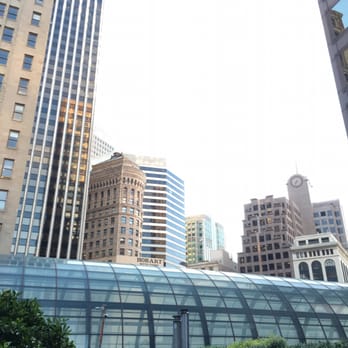


Lots of banks, lots of bank and lots of banks. Nice architectural building here. It is somewhat a tourist area I guess. I just like roaming around here and taking pictures. Well its ok to come here if you are coming by train. Parking may be difficult to find on weekdays. Very interesting and artsy to just look up. I value the heritage building and looks here. Cool. read more


13 years ago
I enjoy walking through this area. It's quiet, some of the people here are nicer and polite. The environment here is also clean and calm. Bus stops, cable car stops and subway station entrances are visible. Traveling between here and other parts of the city is easy. After 5 pm or 6 pm, dining options do become limited. Some of them are closed during weekends and holidays. This area is another hot spot for the development of photography innovation and inspiration. Overall, this area is very clean and peaceful. read more


This part of town has some great buildings and public art. Often though it feels oddly empty when I walk through. Tip look at the little plaques at odd places on the sides of the buildings. This area is on land fill and the plaques tell about things like there is a boat under you. I like the Trans America Pyramid, but I like a lot of the old bank buildings just as much. They are gorgeous lots of gilding and symbolism. The old stock exchange is also amazing. This is all in the area. Tip take a tour or so from the San Francisco City Guides. They are free (but pass and envelope at the end) I have taken a couple of tours in the Financial District. They are interesting and show things I would never have found on my own. The guides are volunteers with an interest in the area. I try and take at least one tour from them somewhere when ever I am in town. read more


I'm going to share a little secret with you: The location of my work is what keeps me coming back, every single day. ...I need to take a hike. You see, I discovered FiDi a little over a year ago. I can't remember how, or why, but I do remember it being love at first sight. The diagonal crosswalk lights and beautiful buildings called out to me. It was fate! How many people get to choose where they work? Not very many. I was privileged. Proximity and frequency are important in relationships, you know. So here I am six days a week, talking to angry tourists, running errands, and hopping back on BART late at dusk. The organic lunch selections and friendly people (and handsome men in European-fitted suits) who smile and greet you as you walk by makes me feel like a giddy business girl. It's like New York with friendly people! Swoooon. The only thing that saddens me is the fact that everything closes at approximately 3pm. By the time I'm out of work, I'm only left with a few (decent) options: Wexler's, Wayfare Tavern, and Tadich Grill. If I feel like hiking, I'll reach BIX and perhaps Cotogna and Quince. Working evening shifts in FiDi will make you poor. Sadface. If you're not one who worries about your paper or plastic, you'll be a happy lad (or lass!). It's a small price to pay for a quality work environment. A girl deserves all the best in life, right? (; Come and work here, you can just shop for your clothes in the next district over! Did I mention how clean the sidewalks are? They're washed every night! No litter to kick or aged gum to trip your walks. Security is superb (and running 24/7) in buildings. No questionable characters. No hoards of pesky homeless people. Lots of bakeries and macarons everywhere, waiting to fill spacious tummies. YAY! 143, FiDi! read more







15 years ago


14 years ago


14 years ago

7 years ago

19 years ago

13 years ago


12 years ago

12 years ago

15 years ago

11 years ago


12 years ago
The financial district in San Francisco is very high end, with a lot of early closing business (usually 5pm) that are usually banks, finance office, etc. The financial district is not packed by people ESPECIALLY ON Saturday and Sunday. Many businesses are CLOSED on Saturday and Sunday so be aware! During the day, there are some people with places not crowded at all, but like I said, they close rather earlier than shops and businesses in Union Square. As far as transportation, you are right next to the Ferry Building which has access to all the Ferrys and Fisherman's Wharf (about 7 mins away via F Muni) you are next to the major markets and streets and very close to Union Square. The Bart is also not that far (about a 10 minute walk). The Financial District has access to all major pharmacies, restaurants, diners, and markets. Even though it's not central in SF, it's definitely central to everything. read more




14 years ago


11 years ago
15 years ago