Cancel

    Open app

    Search

    Erb's Mill Covered Bridge Photos

    More like Erb's Mill Covered Bridge

    Recommended Reviews - Erb's Mill Covered Bridge

    Your trust is our priority, so businesses can't pay to alter or remove their reviews. Learn more about reviews.
    Yelp app icon
    Browse more easily on the app
    Review Feed Illustration
    Photo of P E.
    156
    1861
    593

    4 years ago

    Helpful 1
    Thanks 0
    Love this 1
    Oh no 0

    Verify this business for free

    Get access to customer & competitor insights.

    Verify this business

    1719 Museum  - The Lancaster Longhouse at the 1719 Museum

    1719 Museum

    4.9(7 reviews)
    10.9 mi

    We enjoyed the tour. Started off with an interesting video. The docent was good and knowledgeable…read more Took so see many interesting spots in and around the home, including a life size version of a wigwam that would have been in the area at the time.

    Why is the Hans Herr House significant and who the hell was Hans Herr?…read more The house itself is significant as it is the last remaining structure that is still standing from the original group of Mennonites who came to the Lancaster County area to escape religious persecution from their native Switzerland. The house is also significant in that it is the oldest structure in Lancaster County and likely the oldest remaining Mennonite meetinghouse in the Western Hemisphere. The original group traveled from Switzerland to Germany to escape religious persecution then after a governmental regime change they were forced from Germany to England where they met with William Penn who allowed them to colonize a portion of what is current day Lancaster County or when they arrived in 1711, the extreme most western frontier of Pennsylvania. One interesting piece of information is that the house did not belong to Hans Herr as it was built by his son Christian which is why his initials are over the doorway along with the inscribing mark of 1719. On the tour you are told why the name remained(s) Hans Herr House versus Christian Herr House but honestly I forget why. Maybe something just deferential from Christian towards his father or because of his father's status with the original group that came to the area or maybe everyone just liked the flow of the name more so it's based on tradition? The tour itself is around 40-45 minutes and it starts in the building which houses the gift shop and you are given a brief overview of the Anabaptist faith, the Mennonites who are direct descendants of the faith and a map which shows the route the initial settlers took from Switzerland to Pennsylvania. After that you are taken over to the house where you see the three rooms which make up the first floor (kitchen, bedroom and all purpose dining room-meeting room-family room) and the second floor which is where the eight children slept and finally the basement which is accessed from a side entrance outside of the house. You learn that the key to the home's design is that they didn't believe in wasting any space so every inch served a purpose such as not having hallways so as soon as you walk in the front door you're right in the kitchen. One thing worth noting, if you are someone who is hardcore hung up on only visiting historical places if they have lots of original items then this place might not be for you. There is not a whole lot original to the house that you can see with the exception of a piece of the ceiling insulation on the first floor (rye straw + manure + ??), the wooden crossbeam over the kitchen fireplace and the steps which go from the second floor to the third floor attic (obviously you can't use them). Past that I think most everything else was changed out in the 19th century when the house was still used as a residence or in the early 70's when the initial renovation occurred to make things into a tourist destination. If you want more original take a look at the bibles on display in the gift shop which are original to Hans and Christian. I wouldn't call the Hans Herr House a must see, but it's interesting enough and the tour is the right length to keep everyone interested along with being located close enough to most of Lancaster County's tourist elements. If you go: The 1719 Hans Herr House is open April 1 through November 30, Monday-Saturday, 9:00 AM-4:00 PM. Forty-five minute Herr House tours are offered at 9 a.m., 11 a.m., 1 p.m. and 3 p.m. This is not the tour information for their reproduction Native American Longhouse. That tour is offered at 10 a.m., 12 noon and 2 p.m and has an entirely different focus. Prices are currently Adults: $8, Children 7-12: $4 and Children 6 and under: free with a slight discount if you choose to tour both structures. There are also several special events that happen throughout the year and that information is available on their website.

    Photos
    1719 Museum
    1719 Museum  - The Herr House at the 1719 Museum

    The Herr House at the 1719 Museum

    1719 Museum

    See all

    Ephrata Cloister

    Ephrata Cloister

    4.5(20 reviews)
    5.2 mi

    The Ephrata Cloister or Ephrata Community was a religious community established in 1732 by Johann…read moreConrad Beissel at Ephrata, in what is now Lancaster County, Pennsylvania. By the early 1750s, Ephrata Cloister was home to nearly 80 celibate Brothers and Sisters who lived in striking Germanic-style log, stone, and half-timbered buildings. Alongside them, nearly 250 family members, known as Householders, resided in nearby homes and farms. Ephrata became known for: the German calligraphic art of Frakturschriften; self-composed a cappella music written using Beissel's rules for four-part harmony; and an ambitious printing establishment creating works for the use of the community and neighbors. During the American Revolution, Ephrata served as a hospital for nearly 250 American soldiers, some of whom rest in the Mount Zion cemetery overlooking the historic grounds. The Society declined after the death of Beissel in 1768. The last celibate member died in 1813, and the next year the remaining Householders incorporated into the German Seventh Day Baptist Church. Members continued to live and worship in the Cloister buildings until the close of the Church in 1934. After that, the buildings were turned over the state and became the museum you can visit today. I learned all this and more, when I visited the Ephrata Cloister this past Sunday. When you arrive, there's plenty of parking and then a short walk over to the visitor center, where you can purchase a ticket. Inside the visitor center is a small museum, which provided plenty of history and helpful context for exploring the grounds - especially if you're not taking advantage of the excellent guided tour. With the map you receive when you pay for admission, you can explore the grounds, and there's also an phone-led audio guide that tells you about each building (they're numbered). On the day I visited, there were two guided tours (one at 1pm and one at 2:15pm), and I highly recommend joining the guided tour if you can. It starts with a video in the auditorium space in the visitor center, and then a very helpful guide (ours was Sue) walked us to the grounds and explained more about the history and architecture. After that, she walked us to two buildings you cannot enter without a guide (the Sister's House and the attached Meetinghouse/Saal the Sisters used). I learned so much about this community - which I knew almost nothing about before my visit - and they were fascinating: they ate one (vegetarian) meal a day, they slept few hours each night (with a break from 12-2am in case the second coming arrived), and lived as an religious, pious, and equal community. Sue our tour guide pointed out which buildings were recreations and which were original. There were several that were original to the 18th century, and the architecture is really stunning. There's plenty to learn about this historic community and society and no wrong way to do it (although I highly recommend the guided tour, which I got so much out of - Sue was great). Don't forget to stop by the gift shop on our way out, too! A fascinating piece of American history right near Lancaster. If you're exploring Lancaster County for a weekend, including a visit to Ephrata Cloister is well worth it!


    You have the option of touring it urself or with a group and an option of watching the 15 minute…read morevideo before the tour. WATCH THE VIDEO. Good combination of informative & comedic & good acting. Tour guide was very information and kept a comfortable atmosphere for questions. I would recommend walking around in the yard to find the water (idk if it's a river) and these stairs that kinda stop in the forest

    Photos
    Ephrata Cloister - Room for manuscript copying and illuminating

    Room for manuscript copying and illuminating

    Ephrata Cloister
    Ephrata Cloister

    See all

    Hell House - Fragments.

    Hell House

    4.2(13 reviews)
    66.9 mi

    **As of February 2018** This place is not easily accessible anymore. First off, you cannot LEGALLY…read morepark under the railroad tracks/bridge area. It is clearly marked "No Standing Fire Lane". You can get a ticket or probably towed. There is no other parking for miles. We drove to the Patapsco State Park Avalon Entrance ($4 entry fee), then to "Lost Lake", where there is a trail called Grist Mill Trail. This trail will take you 2.5 miles into the park where it eventually meets Ilchester Rd (right near the hidden staircase to the ruins). After walking 2.5 miles there, we ran into construction signs and a closure near the Bloede's Dam. Because of the closure blocking the rest of the trail, the only way to get across is to travel down the steep woods and walk across the railroad bridge (cross at your own risk- there are active trains passing through that could kill you) to the other side where the ruins are. There is a scenic overlook in the trails near the Dam where you can get a better idea of how steep the woods are to get to the road. Other options may include crossing at the suspension walking bridge (called the Grist Mill Walking Bridge) which is about a mile from the ruins. I haven't seen anyone go this route, but the hiking is more difficult on the other side of the suspension bridge. It appears until the Dam construction is over, this place is going to continue to be very difficult to get to (unless you want to risk getting ticketed or towed). I hope once the construction clears up I will have another opportunity to see this place!

    This is my favorite area in Patapsco state park, I've brought many friends and family here over the…read moreyears. It's beautiful, you can find the ruins of an old mining camp and religious boarding school here. There's even a decent spot to jump off the train tracks into the water below, although take care because the water can be shallow in spots.

    Photos
    Hell House - Grateful.

    Grateful.

    Hell House - Planting.

    Planting.

    Hell House - Shadows cast the darndest things.

    See all

    Shadows cast the darndest things.

    Historic Rock Ford

    Historic Rock Ford

    4.7(6 reviews)
    8.3 mi

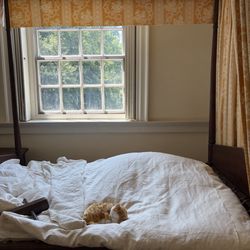
    My wife and I had a great time at the ROCK FORD Plantation and Barn Gallery tour. Lots of history…read morethere including the fact that George & Martha Washington were entertained on numerous occasions. The tour includes almost the entire house from the basement kitchen area to the second floor with many historical artifacts, furniture and writings. Many areas of the home and decor were painstakingly restored to original. Bryce, our docent was very informative, fun and very sociable encouraging questions of the family and the mansion. Since my wife and I were lucky enough to be the only guests for the time slot we enjoyed a private, longer than usual tour. Highly recommend a visit!

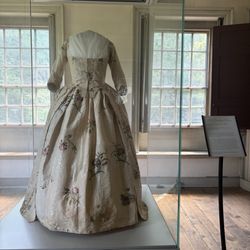
    Rock Ford Plantation was the home built by General Edward Hand, a general in the U.S. Continental…read moreArmy. Gen. Hand was a close friend of George Washington and second president John Adams. The house features letters from both the first and second president. We went on a weekend when there was a Continental Army encampment and enjoyed the outdoor demonstrations and the gardens. The house itself is very enjoyable. However, I'm taking off a star because a very bossy large woman rudely announced at the top of her lungs that I was "Not allowed to take pictures all willy-nilly throughout the house." 1. She could have asked me more nicely and in a private manner. 2. No where in the house or on the porch or at the ticket table was I told not to take pictures. 3. A simple sign of "no pictures" on the back porch when you enter the house could have saved me embarrassment and saved the bossy large woman some hot air. A nice man in period dress apologized for the bossy large woman after she sailed away with her petticoats all aflutter. She soured the entire experience for me. Seriously. Post a sign "No Pictures Please". Don't needlessly embarrass your patrons. If you love history and avoid taking pictures inside the house, you will enjoy a trip to the Rock Ford Plantation.

    Photos
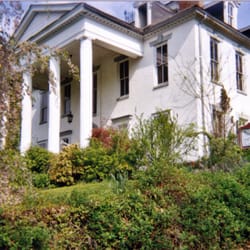
    Historic Rock Ford - Exterior of the Hand Mansion at Historic Rock Ford

    Exterior of the Hand Mansion at Historic Rock Ford

    Historic Rock Ford
    Historic Rock Ford - The original play "Sleepy Hollow: The Legend Comes to Rock Ford" has been a popular fall special event in the mansion.

    See all

    The original play "Sleepy Hollow: The Legend Comes to Rock Ford" has been a popular fall special event in the mansion.

    Fonthill Castle - Fonthill Castle

    Fonthill Castle

    4.6(89 reviews)
    61.5 mi

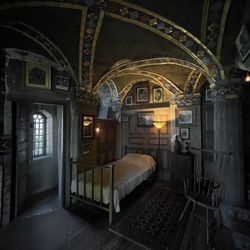
    Wow. What a unique, random gem and historic property. What is Fonthill and why is there a castle in…read moreDoylestown, Pennsylvania? Fonthill Castle was the home of archeologist and tile maker Henry Chapman Mercer. (Also in Doylestown are two more Mercer buildings you can tour - the Mercer Museum and the Moravian Pottery and Tile Works building, the business Mercer ran and where most of the tiles in the castle were produced.) Henry Mercer seems like he was an interesting guy, and you can see that in his home - 44 rooms, 18 fireplaces, 200 windows, who knows how many staircases...! And designed and decorated in a way I've never seen anywhere else. The castle is an early example of poured-in-place concrete building and is a mix of Medieval, Gothic, and Byzantine architectural styles. And there are, of course, Moravia tiles (and some historic and international tiles that he collected during his life) throughout the house - almost more than you could imagine. We visited last Saturday to experience their "Fonthill Castle Holiday Lights Meander Experience," which allows you to visit the castle through a self-guided experience (there were staff in various rooms who were happy to answer questions) and enjoy a series of Christmas trees on display throughout the home. I definitely enjoyed the experience but am definitely planning a return visit to see the castle in better light (not at night in the dark - which was perfect for the Christmas tree experience) - they offer 60-minute guided tours though the house for most of the year! The castle is pretty wild, and I look forward to visiting it again and experiencing it in a new way. If you are interested in architecture, art, crafts, the Arts and Crafts design movement, or just quirky, unusual places, definitely add Fonthill to your list and check it out!

    Amazing property, it is a hidden gem. Went with my family for the tour and everyone enjoyed it!read more

    Photos
    Fonthill Castle - Castle Exterior Spring 2023

    Castle Exterior Spring 2023

    Fonthill Castle - Fonthill Castle

    Fonthill Castle

    Fonthill Castle - Fonthill Castle

    See all

    Fonthill Castle

    Erb's Mill Covered Bridge - landmarks - Updated July 2026

    Loading...
    Loading...
    Loading...