For anyone who has played Civilization 6, Ruhr Valley is a wonder which confers the city in which…read moreit is built 10% increase in production and +1 for every one of its quarries and mines.
This UNESCO World Heritage site is categorized as a GeoPark. Hong Kong also has a UNESCO Heritage GeoPark. Both have locations of exposed rock dating all the way back to the Devonian period. However, they're very different in terms of historical, political, industrial, and military impact. According to the Ruhr Museum, Germany had more coal in this region than the rest of Europe combined. As you can imagine, this geological boon was both a gift and a curse. Industrialization made the area an economic powerhouse. Laborers from all over Germany and the region came to work in its mines, processing facilities, and steelworks. This created a diverse community which developed its own dialect, bringing unity to people who have different religions, different cuisines, etc. From the mid-19th century, company housing was built in large tracts, similar to subdivisions in the US, which is very different how other cities developed until then - large around political or religious institutions. Like in the U.S., many of these homes have developed more character as homeowners customize them over time.
Since industrial operations ceased in 2018, Germany has done an incredible job mitigating the air, noise and water pollution. It has also planted over 60% of the surface area, more than any former industrial zone. Even the heaps of waste rock generated from mining have been redeveloped into parks and areas for other leisure activities.
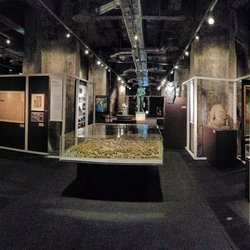
The Ruhr Museum app guides you through the place in different languages. We wanted to a tour of the former mining and processing facilities, but unfortunately, no English language tours were available today.
https://apps.apple.com/us/app/ruhr-museum-audioguide/id1596946739