1. Delta Music Museum

0

Ferriday, LA

Cancel

Open app

Search

Delta Music Museum

4.8 (4 reviews)
Closed • Closed

Delta Music Museum Photos

More like Delta Music Museum

Recommended Reviews - Delta Music Museum

Your trust is our priority, so businesses can't pay to alter or remove their reviews. Learn more about reviews.
Yelp app icon
Browse more easily on the app
Review Feed Illustration

7 months ago

Helpful 0
Thanks 0
Love this 0
Oh no 0
Photo of Andi F.
106
2029
25423

4 years ago

Helpful 4
Thanks 0
Love this 3
Oh no 1

6 years ago

Helpful 1
Thanks 0
Love this 0
Oh no 0

6 years ago

Helpful 1
Thanks 0
Love this 0
Oh no 0

Ask the Community - Delta Music Museum

Verify this business for free

Get access to customer & competitor insights.

Verify this business

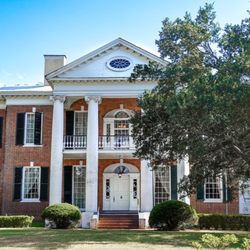
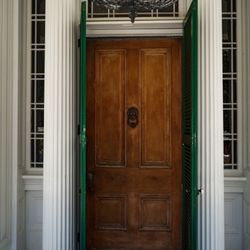
Auburn Antebellum Home

Auburn Antebellum Home

4.5(4 reviews)
11.1 mi

Auburn Plantation…read more We toured this house during the "Hope Restoration Project". The tour was amazing. So much history and the house is absolutely stunning! Here's a little history lesson. In 1811, Lyman Harding, the first Attorney General of Mississippi, hired Levi Weeks to build the mansion. Levi designed the house to be, in his words, the "most magnificent building in the state." After Harding died in 1820, the building was bought by Dr. Stephen Duncan. Here's a little history on Dr. Duncan,... He was born and studied medicine in Pennsylvania, but moved to Natchez in 1808 and became the wealthiest cotton planter and the second-largest slave owner in the U.S. with over 2,200 slaves. He owned 15 cotton and sugar plantations, served as President of the Bank of Mississippi, and held major investments in railroads and lumber. He became an influential Mississippi backer of the American Colonization Society, which promoted the removal of freed American blacks to Liberia, a colonial settlement in West Africa. Under his leadership during the 1830s, the Mississippi Colonization Society removed 571 African-Americans to Liberia. He was a steadfast Unionist during the American Civil War. He tried unsuccessfully to lobby the Lincoln Administration to help him protect his slaveholdings after the Union army occupied large swaths of Mississippi. But appeals from Duncan and his family members largely went unheeded. In late 1863, he left the Confederacy by Union gunboat and relocated to New York City where he lived until his death in 1867. Auburn and 222 acres was sold by the family to the city of Natchez in 1911 and is now a historic house museum in a public park.

We were on a road trip and we're excited to stay in an antebellum home. The price was fully twice…read morewhat we had paid it any other hotel along the way. That was fine because we expect to Pay more at a bed-and-breakfast mansion. But, the room was quite dirty. The tops of the vintage baseboards were covered with dirt and dust. The corners of the bathroom were very dirty. I somehow expected a room at an antebellum mansion to be pristine. The breakfast in the morning was just so so. It was scrambled eggs, bacon and grits. Generally when we stay in fancy bed and breakfasts, the breakfast is something special. Some interesting new thing or something we've never tried before. This was just Normal --a little disappointing.

Photos
Auburn Antebellum Home

See all

Lansdowne Plantation

Lansdowne Plantation

5.0(2 reviews)
11.7 mi

We came here as part of the pilgrimage. Absolutely stunning house with some amazing history. Def…read moreworth a visit. Lansdowne (Natchez, Mississippi) -built in 1853 as a wedding gift for George Matthews Marshall and his wife, Charlotte Hunt. Charlotte was the daughter of David Hunt, a wealthy planter known as "King David." The estate was named after their English friend, the Marquess of Lansdowne, reflecting the couple's admiration for English landed gentry. The mansion showcases Greek Revival architecture and retains many original features, including Italian marble mantels and Zuber & Cie wallpaper. The estate originally spanned 727 acres and was a working cotton plantation, relying on enslaved labor before the Civil War. During the war, George Marshall was wounded at the Battle of Shiloh and subsequently paid a substitute to serve in his place. In 1865, Union soldiers attempted to loot Lansdowne, but the family's butler, Robert, had hidden their silver under the floorboards, thwarting the theft. After the war, the Marshalls faced economic challenges due to the abolition of slavery. Charlotte sold butter and eggs to support the family and maintain the estate. Despite these hardships, Lansdowne remained in the Marshall family and has been carefully preserved. Today, it encompasses 120 acres and is still owned by descendants of George and Charlotte. The estate offers tours and operates as a bed and breakfast, allowing visitors to experience its rich history and original furnishings.

We were welcomed by the family and staff with punch, who then shared the estate grounds and the…read moreinterior like we were family. Had an amazing lunch of curried chicken and creamed spinach followed by plum cake. Excellent!

Photos
Lansdowne Plantation

See all

Windsor Ruins

Windsor Ruins

4.3(24 reviews)
32.1 mi

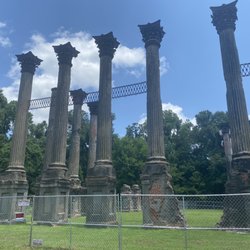
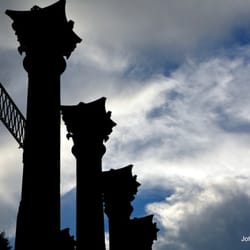
As Hurricane Harvey raged about 300 miles to the west, I drove through western Mississippi on a…read moremurky Sunday morning. The winding roads leading to Windsor ruins are filled with an intense green canopy where kudzu has turned a lot of the nearby landscape to jungle. Clouds darkened over these ruins as a heavy rain was only minutes away. The ruins themselves are easy enough to see from the road if you're looking carefully. However, the signage is primitive and the lonely information plaque provides only an overview. Context is lost here amidst the grey brittle columns that stand upright like giant pieces of used chalk. As I got out of my car, the scene appeared as a Roman ruin. However, getting closer revealed remnants of iron balustrades that hung from and bisected the tree-like columns. It suddenly became easy to assemble the plantation house in my mind. This was an expensive and monstrously large building. I've visited a few plantations over the years and any semblance of beauty is erased from my mind because I can't get past the horrors of slavery that was embedded into the fabric of these places. I pictured the owners standing at these balustrades looking out at the workers of their cotton fields. It doesn't mean I don't think people should avoid a visit to Windsor. On the contrary, I think it's an important placeholder of history and that's where I can't let go of context. I wish more were presented here besides romanticized remnants in a now lush green landscape.

Cool place. But not worth the drive as it is in the middle of nowhere. We were there long enough…read moreto take a couple pictures. Ruins were gated off when we visited.

Photos
Windsor Ruins
Windsor Ruins - The Windsor plantation once sprawled over 2,600 acres.

The Windsor plantation once sprawled over 2,600 acres.

Windsor Ruins

See all

Mississippi Civil Rights Museum - Inside museum

Mississippi Civil Rights Museum

5.0(62 reviews)
93.1 mi

Wow, what an incredibly well thought out museum dedicated to the efforts of all those who have and…read morecontinue to contribute to efforts of racial justice in Mississippi. During an open morning in Jackson, we stumbled upon the museum and decided to explore and it was easily one of the most memorable parts of our trip. We started by being welcomed into the space. This museum intentionally documents the history of the civil rights museum specifically as it pertains to Mississippi. One of the docents shared that she volunteers at the museum because she remembers what it was like growing up in Mississippi as a white child and has committed her allyship to ensuring others can understand what she witnessed with a deep desire for a better future for Mississippi. It was amazing that there were other guests visiting the museum not just from other states like us, but from other countries as well! The true treat of the visit was stumbling upon the center of the museum, where the youngest freedom rider to every be imprisoned was speaking to a group of high school soccer players from Texas. He shared his story and how his activism started at such a young age. The high school students and myself were in awe of just his bravery and hearing what it was truly like to fight for what's right at such a young age. This museum tells an important story that sadly isn't over as the fight for equity and equality is never over. Yet, it's inspiring to know that there are committed individuals ensuring that in the deep South, these stories are documented and told for all those to honor and understand.

Fortunately, we were able to tag along on a tour by the museum director (Mr. Michael Moore). One…read moreword, "Wow". This was an amazing and uplifting experience to learn the stories of the civil rights movement in Jackson Mississippi. Please allow yourself ample time to take in the materia

Photos
Mississippi Civil Rights Museum
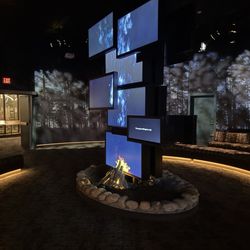
Mississippi Civil Rights Museum - Unbelievably moving museum.  Hearing first hand accounts through the audio and video clips was wonderful.

Unbelievably moving museum. Hearing first hand accounts through the audio and video clips was wonderful.

Mississippi Civil Rights Museum

See all

Emerald Mound

Emerald Mound

4.2(6 reviews)
17.9 mi

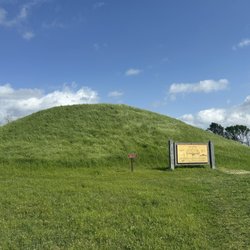
At first glance, this is just a grass covered hill. That's what my daughters said when we drove…read moreup, "It's so hot, and it's just a grass covered hill." But there is more here than meets the eye. Emerald mound is a man made hill, created by the Natchez people more than 500 years ago as a ceremonial center. It's the second biggest Native American mound in the country and the biggest in Mississippi. Several panels at the site help visitors envision what it would have looked like at that time and it's quite impressive. The mound is topped by two smaller mounds. Practical tips: You can check on the NPS website to make sure the site is open. We visited on a Friday in July and were the only people there. Plenty of parking and the site is just a short walk uphill. You can walk up the hill, but you aren't supposed to climb the smaller mounds (although a path in the grass showed that many have.) Entrance is free. Like my daughters noted, there is no shade and it can be hot. To find the mound, take the exit off the Natchez Parkway at mile marker 10. Follow Emerald Mound road for 1 mile. Stay straight, do not follow the larger 553 route to the right. We didn't see a sign at the turn off, and our cell reception was spotty, so we drove quite a few miles down 553 before we realized our error.

This is one of those places the experience is truly dependent upon the person. History does not…read morealways present itself with a rush of excitement or a spectacle to behold. Driving up to the Emerald Mound, one might think to themselves, "Look, a hill covered with grass. How quaint," and then wonder why they made the trip. This is where imagination is key to the experience. Imagine this place a thousand years ago. Imagine the indigenous people and their culture and how vastly different it is from today. We are standing in the exact same place they were. Take the time to read about it and then decide if standing on hallowed grounds aren't worth more than just a grassy hill.

Photos
Emerald Mound
Emerald Mound
Emerald Mound

See all

Delta Music Museum - museums - Updated October 2026
Loading...
Loading...
Loading...