Cancel

    Open app

    Search

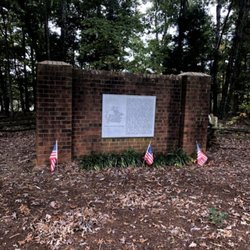
    Davidson College Historical Marker

    3.0 (1 review)

    Davidson College Historical Marker Photos

    Recommended Reviews - Davidson College Historical Marker

    Your trust is our priority, so businesses can't pay to alter or remove their reviews. Learn more about reviews.
    Yelp app icon
    Browse more easily on the app
    Review Feed Illustration

    6 years ago

    Helpful 15
    Thanks 0
    Love this 13
    Oh no 0

    Verify this business for free

    People searched for Landmarks & Historical Buildings 115 times last month within 5 miles of this business.

    Verify this business

    X-Ray Experiments Historical Marker - X-Ray Experiments Historical Marker, Davidson NC

    X-Ray Experiments Historical Marker

    2.0(2 reviews)
    1.0 mi

    This marker opposite the Davidson Library and near the Davidson College remembers an important…read moremedical experimentation. Imagine what life would be like without x-rays! It reads, "Prof. Henry L. Smith pioneered medical uses for x-rays. Conducted experiments and made radiographs Feb. 1896 in physics lab nearby." Online, there is more information. "On January 6, 1896, the Associated Press announced that German physicist Wilhelm Roentgen had discovered a new form of radiation. While experimenting with cathode rays, Roentgen noticed a green glow on a screen covered with phosphorescent paint. He realized that invisible rays had escaped the vacuum tube and passed through the surrounding cardboard. He found that the mysterious "x"-rays passed through a variety of objects, but not very dense material. Finally he put his hand in front of the rays and saw the silhouette of his bones." "An article in the Charlotte Observer on February 27 claimed that Smith's were the first x-ray experiments in the South. In 1897 Smith made the first medical use of x-rays in the state. A Cabarrus County family, having read about Smith's roentgenograms in the Observer, contacted him to make an x-ray examination of their daughter who had swallowed a thimble. Smith loaded his equipment on a cart and located the thimble in the girl's chest." [Review 12631 overall, 2423 of 2019.]

    This Landmark is not identified correctly on the map. When I tapped the marker and hit directions…read moreit took me to some neighborhood. You turn down by the road next to the library then there is a church on the right hand side. Is it directly across from the church

    Torrence's Tavern Historical Marker - Torrence’s Tavern Historical Marker, Mooresville

    Torrence's Tavern Historical Marker

    3.0(1 review)
    2.7 mi

    This marker on the side of the road recalls a battle of the American Revolution. Not one of the…read morebetter performances by the Colonials but they did eventually win the way. The marker reads, "British cavalry led by Colonel Tarleton routed a force of American militia, Feb. 2, 1781, at Torrence's Tavern, which stood nearby." As is usual with North Carolina's markers, there is more information online: 'The British wasted little time getting organized after defeating the small militia force of William Lee Davidson at the Battle of Cowan's Ford on February 1, 1781. Rain began falling again, slowing Cornwallis's progress, but the British army managed to reunite and made a wet camp six miles from Beattie's Ford during the evening hours of February 1. Before setting out from Cowan's Ford, Cornwallis dispatched Tarleton with the 23rd Foot and his Legion dragoons to discover Greene's location, seemingly unaware that the Continentals had fallen back to Salisbury." "Several postwar accounts claim that Tarleton found the militia in complete distress, many of them drunk, and completely incapable of fighting back. Joseph Graham, who did not witness the event firsthand, stated "The wagons of many of the movers with their property mixed in the lane, the armed men all out of order, and mixed with the wagons and people, so that the lane could scarcely be passed, when the sound of alarm was given from the west end of the lane." The British won the engagement. "Although Tarleton had destroyed the small militia force, the Whigs had bought precious time for Greene's army to continue its escape through Salisbury. Cornwallis would be halted again at the Trading Ford, kept at bay by the constant rain and swollen banks of the Yadkin River." [Review 13219 overall, 536 of 2020.]

    Town of Davidson

    Town of Davidson

    4.3(9 reviews)
    0.2 mi

    Farmers market on Saturday's. Barn Blue is a delicious food truck for breakfast and lunch. Get the…read morefiggy bacon grilled cheese. Mmmmm

    Yes I am a fan of Davidson…read more Great College Town, the Home of Davidson College. Liberal and Conservative at the same time but for a change, generally tolerant to all views. The Town works hard to maintain it's identity and unique small time feel. Up until a couple of years ago, there was not even a large scale Grocery Store in Town. Those wanting to maintain the small town or village feel were opposed to it because it made the town more commercial and less human. The Conservative element did not want the Grocery Stores because they sold Alcohol. Finally a Harris Teeter came in which is now part of Kroger. A rapprochement has been reached with the downtown left intact and new development east and west of Downtown. So much for the discussion of the dynamics of the Community, Very dynamic with a lot to offer, particular in Downtown. Host of one of the best regional Farmers Markets on Saturday. A string of great restaurants, some outstanding and several good but need to push it to the next level. A lot to do. Very walking and bike friendly. Many great Churches all of which are very progressive and promote a doctrine of service and inclusiveness . Good place to park your car and go for a walk and enjoy all of the shops. Stop into Summit for great Coffee and the Soda Shop for what else, Take more than a couple of hours, unwind and enjjoy

    Photos
    Town of Davidson
    Town of Davidson
    Town of Davidson

    See all

    Early Trans-Catawba History Historical Marker - Early Trans-Catawba History Historical Marker, Stanley NC

    Early Trans-Catawba History Historical Marker

    3.0(1 review)
    8.1 mi

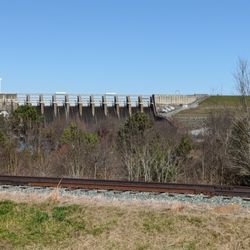
    I've lived in Charlotte for 13 years now and while I knew of the Catawba River and the Native…read moreAmericans who lived here, it was still interesting to find this marker. It is in a small observation parking lot that has a view of the Cowans Ford hydroelectric plant. You can't get close to the dam (security!), but you can see it pretty well from here. The marker was erected at around the same time. The marker reads: In 1747 Adam Sherrill and his 8 sons migrated from Pennsylvania and settled west of the Catawba River. By July, 1749, John Beatty had also crossed the Catawba. Sherrill's Ford (site underwater) and Beatty's Ford (underwater) were named for them. Another ford used by the original settlers was Island Ford. During the late 1740's Andreas Killen, Robert Leeper, Jacob Forney, Pieter Heyl, and John Clark settled on creeks which today bear their names. An early settler on the headwaters of Clark's Creek was Henry Weidner (home destroyed). The site of his homeplace has changed little since 1750. Remnants of Beatty's Ford and Tuckaseege roads, two of the earliest roads used by these and other early settlers, may still be seen. During the Revolution important battles were fought at Ramsour's Mill (June 20, 1780) (destroyed) and Cowan's Ford (Feb. 1, 1781) (preserved). During the Colonial and Early National periods it was customary to use privately-owned buildings for public purposes. Accordingly, the Tryon County Jail (partially preserved) was located in 1784 at the springhouse of Henry Dellinger, an early settler. Andrew Loretz was the first minister of the German Reformed Church in western North Carolina. His brick home (1793) is one of the oldest west of the Catawba River (preserved). Open-hearth furnaces were established by Peter Forney Alexander Brevard, Joseph Graham, and others between 1785 and 1800. The homeplaces of Brevard (Mt. Tirzah) (preserved) and Graham (Vesuvius Furnace) (preserved) include sites of two of these furnaces. A third furnace, built by Peter Forney, still stands. The "Ore Bank," a chief source of iron ore, was nearby (large pits to be seen). Graham, a Revolutionary officer and leader of North Carolina troops in the Creek Indian War (1811-12); Alexander Brevard, who served under Washington at the battles of White Plains, Trenton, Brandywine, and Monmouth; and Robert H. Morrison, founder of Davidson College and father-in-law of generals D. H. Hill and "Stonewall" Jackson lie buried in Machpelah churchyard (preserved). One of the outstanding homes of the trans-Catawba region is "Ingleside" (preserved), built by Daniel M. Forney, son of Peter Forney and grandson of the pioneer Jacob Forney who settled there. "Mt. Welcome" (destroyed), another iron furnace built by Peter Forney, is the site of the birthplace of Robert D. Johnston, one of five Confederate generals born in Lincoln County. The others were Robert F. Hoke (home preserved), Stephen Dodson Ramseur (grave preserved), John H. Forney, and William H. Forney. For early history of the area east of the Catawba see marker located on N.C. 150--500 yds. east of Catawba River, Iredell County. [Review 12724 overall, 36 of 2020.]

    Photos
    Early Trans-Catawba History Historical Marker - Cowan's Ford Dam from the parking lot

    See all

    Cowan's Ford Dam from the parking lot

    Davidson College Historical Marker - landmarks - Updated May 2026

    Loading...
    Loading...
    Loading...