Comunità San Luigi dei Francesi
Comunità San Luigi dei Francesi Photos


Recommended Reviews - Comunità San Luigi dei Francesi
Start your review...



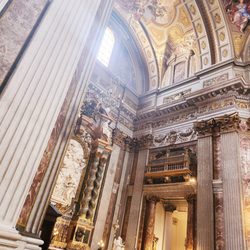
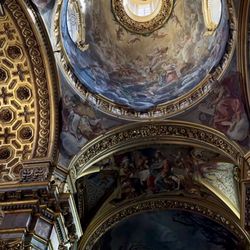
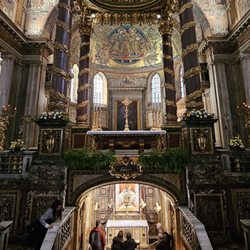
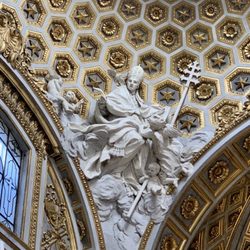
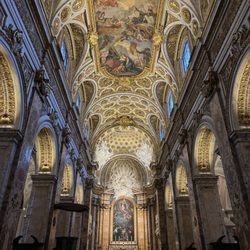
If you're in Rome wondering where all the medieval money went, look no further than San Luigi dei Francesi. Built in 1589, this French national church is basically a guilt-covered gold box masquerading as a place of worship. Starving peasants? Check. Papal extravagance? Double check. Why feed the masses when you can build a church so shiny it needs its own sunglasses? Inside, you'll find Caravaggio's Saint Matthew trilogy. It's the only thing in here not trying to outshine the sun. Worth a visit? Absolutely. Just remember, this is what happens when you combine divine inspiration with zero chill. read more


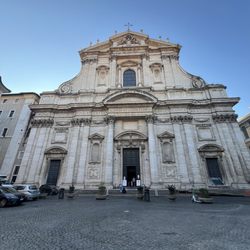
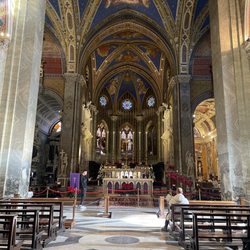
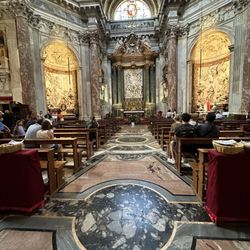
Caravaggio, Medici and della Porta. San Luigi dei Francesi, the Church of Saint Louis of France, is a stunning Roman Catholic church filled with beautiful paintings, chapels and a rich history. The church was designed by Giacomo della Porta, built by Domenico Fontana and completed by the intervention of Catherine de' Medici, who as the wife of King Henry II of France, funded the construction. Originally, Cardinal Giulio di Giuliano de' Medici (who later became Pope Clement VII) commissioned a church for the French community in 1518. When Rome was sacked in 1527, construction was halted. The church was finally completed in 1589 by Domenico Fontana and Giacomo della Porta who changed the design completely. Giacomo della Porta created a façade as an independent piece of decorative work. This method was copied in other architectural projects later on. The facade features historical French figures such as Charlemagne and Saint Louis. The interior also has frescoes recounting French heroes and saints. It was nice to be able to read about the chapels. Information was displayed in French, Italian and English. The Contarelli Chapel is famous for three works by Baroque master Caravaggio. The three paintings depict the life of St. Matthew -"The Calling of Saint Matthew," "The Inspiration of Saint Matthew" and "The Martyrdom of Saint Matthew." This was definitely the most crowded of the chapels. It was also interesting to see the school groups that were touring with their classes during our visit. It was the only church that we visited in Rome where this was noticeable. read more


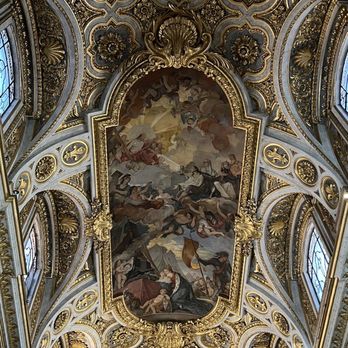
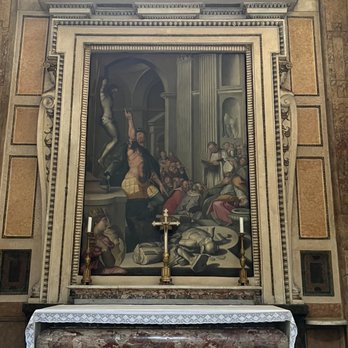
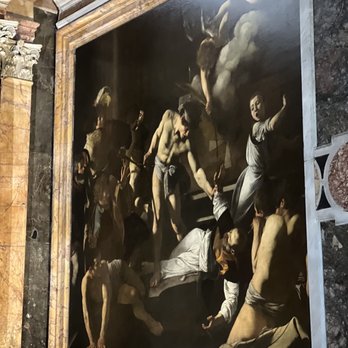

It is not very hard to get jaded in Rome visiting all the wonderful little churches with there artwork and rich history. This is a small church I visited on my way to see several must see churches in Rome. It was on my way so I stopped in. It is small compared to the more visited churches in Rome but well worth the visit. read more

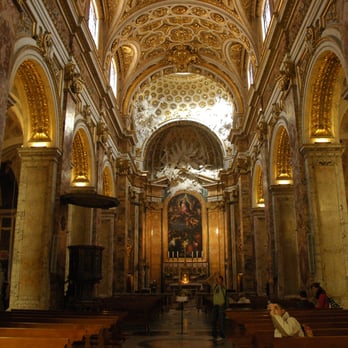


I'm not catholic, I aint even christian but here's why I went. The tomb of Fredric Bastiat is here. Yep the same guy that wrote "the Law" or "Loi" So all you Anarcho Capitalists, Libertarians, or true Capitalists you want to come here. The church is beautiful and as the review before me mentions, it is the National church of France in Rome, you do have 3 majors works by Caravaggio then why 3 stars? -1 - for not knowing where the tomb of basitat is ! It took me a good 30 minutes to go thru the whole church to find it ! Its on the left, by the second set of paintings on the ground. You're welcome -1 - for making people pay for lighting to see the art works. I understand its a rough economy, we all understand the need for money, but this seemed a bit too much of a gouging even if it was just a few cents. read more


13 years ago


More info about Comunità San Luigi dei Francesi
Comunità San Luigi dei Francesi Reviews in Other Languages

















Comunità San Luigi dei Francesi - churches - Updated May 2026
Browse Brands
Browse Articles
People who viewed Comunità San Luigi dei Francesi also viewed

Chiesa del Gesù
12 reviews
Centro Storico

Basilica di Santa Maria in Ara Coeli
8 reviews
Centro Storico

Basilica di San Pietro in Vincoli
22 reviews
Monti

Basilica di Sant'Andrea delle Fratte
4 reviews
Centro Storico

Basilica di San Clemente
29 reviews
Esquilino, Aventino

Basilica Papale di San Paolo Fuori Le Mura
25 reviews
Ostiense

Chiesa di Sant'Ivo alla Sapienza
5 reviews
Centro Storico

Basilica di Santa Maria Sopra Minerva
6 reviews
Centro Storico

Parrocchia Santa Maria in Vallicella
1 review
Centro Storico

Chiesa della Santissima Trinità degli Spagnoli
1 review
Centro Storico