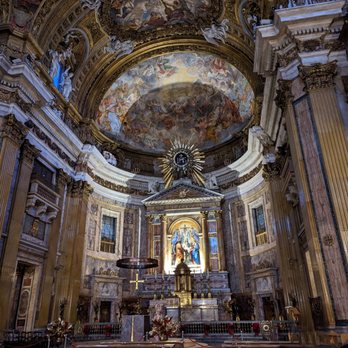
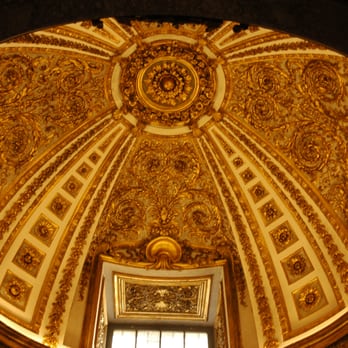
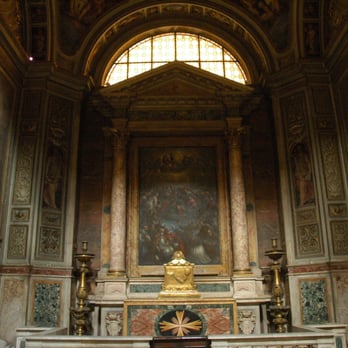
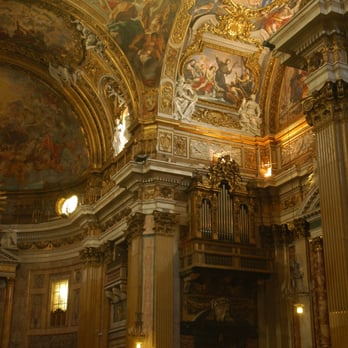
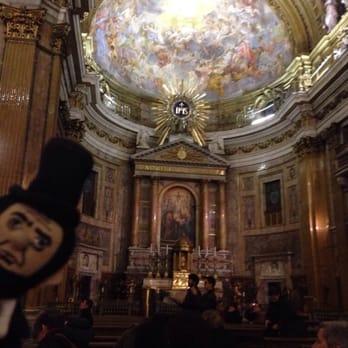
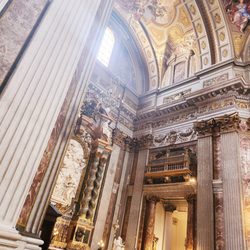
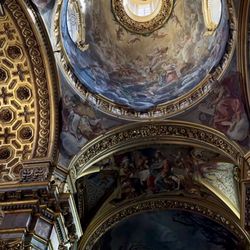
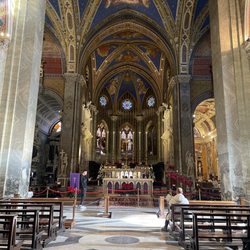
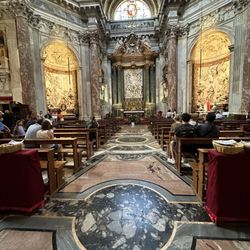
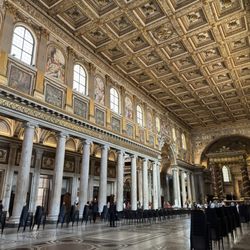
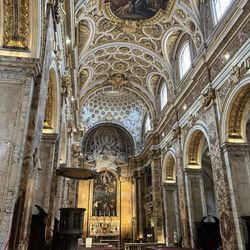
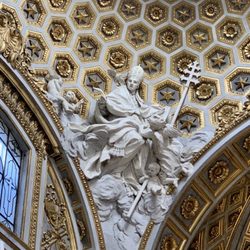
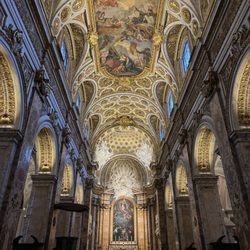
The Chiesa Il Gesù (Church of the Gesù), a 16th-century late Renaissance church in Rome, is the mother church of the Society of Jesus, also known as the Jesuits. Originally very austere, Il Gesù's interior was opulently decorated starting in the 17th century. Now its frescoes, sculptures and shrines make it one of the foremost examples of Roman Baroque art.
History
In 1540, Saint Ignatius of Loyola needed a church to serve as the center of his newly founded Society of Jesus (the Jesuits), which the Farnese-family Pope Paul III formally recognized that year. One of the Society's members was the priest of a church called Our Lady of the Way, which the Pope designated as the Society's official church. Saint Ignatius, finding the church too small, began fund-raising to construct a church worthy of the "Name of Jesus." It took him 10 years to get the necessary permits before he could break ground.
But the original site wasn't ideal, so new plans were drawn up with Michelangelo being involved in the design. A second ground-breaking ceremony took place, but this time wealthy neighbors fought the construction which would affect their houses. The Pope's grandson, who was now Cardinal Farnese, agreed to fund the church and the final ground breaking took place in 1568, 18 years after the first. Unfortunately, St. Ignatius never lived to see the construction, but the church became his final resting place, making Il Gesù an important shrine for pilgrims to this day.
The church also plays a pivotal role in the Counter-Reformation, which was the Catholic Church's response to the Protestant Reformation of Martin Luther. The Counter-Reformation's goals, worked out during the Council of Trent (1545-1563), were designed to reassert the power of the church, standardize the training of local priests, stimulate pious devotion, and wipe out the corruption in the church, which had fueled Luther's movement.
The Council also issued a decree on art in response to the lush mannerist style of artists like Michelangelo, who included voluptuous nudes, commoners and pagan images in their paintings. The decree stipulated that religious art could not be designed to incite lust, be disorderly, or contain anything that was profane or unbecoming "the house of God." Importantly, the decree stipulated that subject of the work of art was what should be venerated, not the work of art itself, which would have been considered idolatry. This still allowed the church to create shrines like the tomb of St. Ignatius and the over-the-top decoration that characterizes this period, which were designed to inspire awe at the magnificence of the Catholic Church.
Quick Chronology
1534 St. Ignatius founds the Society of Jesus in Paris while studying theology there and settles in Rome.
1540 Pope Paul III recognizes Society of Jesus. Ignatius begins fund-raising for his church in Rome.
1550-51 Foundation laid under direction of Giovanni Bartolomeo di Lippi, an architect and sculptor also known as Nanni di Baccio Bigio, construction delayed until 1554. Michelangelo called into to redesign church, refusing a commission.
1554 Second foundation laid; again construction founders because of disputes with neighboring Muti and Altieri families.
1568 Cardinal Farnese agrees to fund the church and final construction begins. Church designed by Jacopo Barozzi, known as Vignola.
1573 Vignola dies and work is completed by Giocomo Della Porta, who designed the façade and the dome.
1584 Church consecrated by envoy of Pope Gregory XIII.
1661-79 Frescoes inside the church painted by Baciccia.
1696-1700 Altar-tomb of St. Ignatius designed and by Andrea Pozzo and others.
What to See
Façade
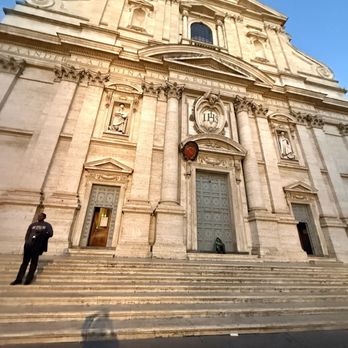
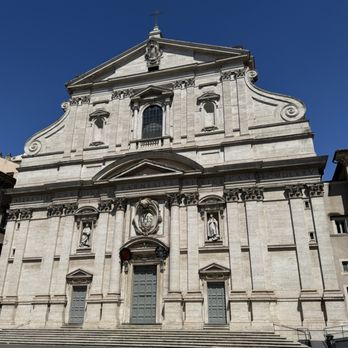
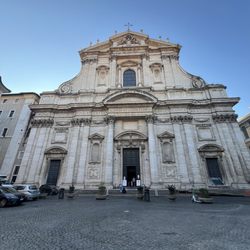
In 1571, Giacomo della Porta's design for the façade of Il Gesù was accepted. The main architect, Vignola also died that year, and Porta was put in charge of finishing the church. Della Porta's façade conveys a sense of harmony and seriousness that perfectly expressed the goal of the Counter-Reformation to assert the authority and majesty of the Catholic Church. The façade is divided into an upper and a lower portion. The lower portion is wonderfully reminiscent of Palladian architecture, and its columns and pilasters quote the harmonious lines of ancient Greek and Roman temples. Set into the wall are two statues of St. Ignatius stamping out ignorant savages, not tremendously politically correct today. The upper portion is has graceful scroll-shaped buttresses on each side, which delight the eye and echo the theme of the Jesuits being learned scholars and teachers of the faith.
Read the rest of my review of Il Gesu on: http://www.sacred-destinations.com/italy/rome-il-gesu read more