Cité Florale Photos


Recommended Reviews - Cité Florale
Start your review...



7 years ago
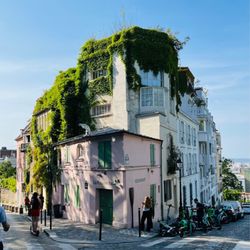
I discovered this very small intersection of streets and quaint houses after researching hidden gems in Paris. The narrow streets and adorable cottages are very appealing architecturally, and make for great photograph hunting. That said, this "Flower City" is not really bursting with colorful flora, at least in July. And at least a couple weeks after the record-breaking heat wave that hit France. So, consider those factors, but it may also be that spring is the best time to see this area bursting with flower color. It had plenty of greenery, however, along the walls and wrought iron fences. I may have called it Cite Verte. The cottages themselves were unique and quirky. This is not in the tourist areas of Paris. It is accessible by Metro and by footpower! This area is about a 15-20 minute walk south of Metro stops Glaciere/Corvisart/Place d'Italie, if that helps. I found my accidental route coming in from the east of Place de Rungis on Rue Brillat-Savarin to be a bit sketchy. If I knew that in advance, I would have walked Vergniaud, Bobillot or Barrault south from Blvd Auguste Blanqui, and then looped my way back up via weaving through those other streets in between that catch the eye. There was a quaintness about that area that I think fellow village-lovers would appreciate. There are neighborhoods of photo-worthy architecture and sites, as well as plenty of cafes as you make your way north from Cite Florale up toward main Blvd Auguste Blanqui, weaving in and out of interesting streets between Rue Vergniaud and Rue Bobillot from the Place de Rungis. The City Florale is within a little triangle bordered by Rue Brillat-Savarin, Rue August Lancon, and Rue Boussingault. Be super respectful if you find yourself in this little corner of cuteness. And remember, I didn't *send* you, I just *told* you about it and shared my photos. ;-) This was the description I found that put this place on the map during my visit: "Cité Florale is a little "village" nested in the heart of the 13th. It is made up of six little lanes named after flowers. Built on former meadow regularly flooded by nearby Bièvre river, the spongious soil made it impossible to build heavy constructions, so it was decided to build these cute little houses instead in 1928. Look for Rues: Orchidees, Liserons, Iris, Glycines, Volubilis." read more
More info about Cité Florale
Cité Florale
75013 Paris
France
Glacière/Cité Universitaire, 13ème
Directions
Hours
From the Business