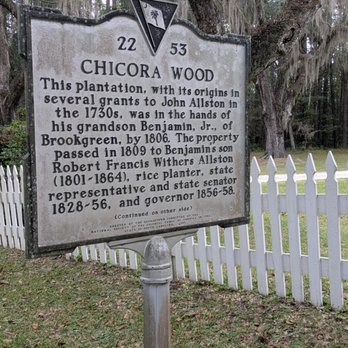
1. Chicora Wood Plantation

0

Georgetown, SC

Cancel

Open app

Search

Chicora Wood Plantation Photos
Recommended Reviews - Chicora Wood Plantation

Your trust is our priority, so businesses can't pay to alter or remove their reviews. Learn more about reviews.
Yelp app icon
Browse more easily on the app
Review Feed Illustration
Photo of Bruce K.
2442
26461
79020

11 months ago

Helpful 10
Thanks 3
Love this 4
Oh no 0

Verify this business for free

Get access to customer & competitor insights.

Verify this business

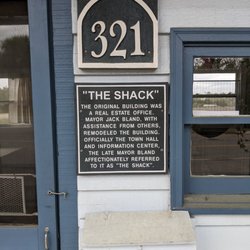
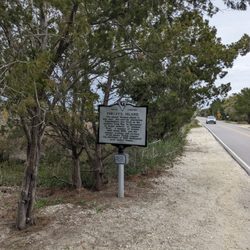
Pawley's Island Historical Marker - Old Town Hall with the marker

Pawley's Island Historical Marker

3.7(3 reviews)
6.7 mi

Marker number 22-26 was erected in 1975 by the Waccamaw Garden Club and today stands in front of…read morethe Old Town Hall. There is some space to pull over and read the marker, which is nice. On the front, it reads, "This island, located about 1/2 mile east, was used by plantation householders who lived on the seashore from May to November to escape malaria, or "summer fever." A number of houses built about 1850, and the summer academy and rectory of All Saints' Parish remain. The hurricane of 1822 destroyed most earlier homes." And on the reverse, "Narrow Strip of land from Atlantic Ocean to Waccamaw River. Rice plantations flourished by 1740. Remaining are c. 1790 houses, Litchfield and Prospect Hill, and one slave chapel. All Saints Parish est. 1767. Area furnished salt for Revolutionary War. Visitors included Lafayette 1777, Washington 1791, J. Monroe 1819, Churchill 1932, F. Roosevelt 1944." [Review 19409 overall - 983 in South Carolina - 379 of 2023.]

I just spent four days in this beautiful area. After a day at the beach, I found this historical…read moremarker just outside of the smallest Town Hall building I have ever seen. Here is the full text ( front) PAWLEY'S ISLAND-This island located about 1/2 mile east, was used by plantation householders who lived on the seashore from May to November to escape the malaria, or "summer fever." A number of houses built about 1850, and the summer academy and rectory of All Saints' Parish remain. The hurricane of 1822 destroyed most earlier homes. (reverse) WACCAMAW NECK-Narrow strip of land from Atlantic Ocean to Waccamaw River. Rice plantations flourished by 1740. Remaining are c. 1790 houses Litchfield and Prospect Hill, and one slave chapel. All Saints Parish est. 1767. Area furnished salt for Revolutionary War. Visitors include Lafayette 1777, Washington 1791, J. Monroe 1819, Churchill 1932, E. Roosevelt 1944. Erected by Waccamaw Garden Club-1975.

Photos
Pawley's Island Historical Marker - Pawley's Island Historical Marker

Pawley's Island Historical Marker

Pawley's Island Historical Marker - Old Town Hall with the marker

Old Town Hall with the marker

Pawley's Island Historical Marker - Pawley's Island Historical Marker

See all

Pawley's Island Historical Marker

Hampton Plantation Historic Site

Hampton Plantation Historic Site

4.6(22 reviews)
26.6 mi

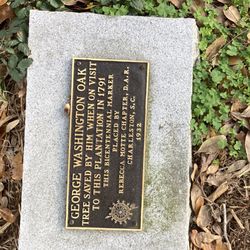
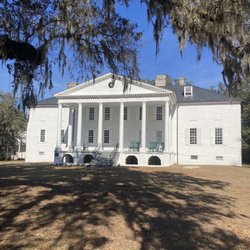
We knew we would only have time for one plantation experience on this trip two years ago and only a…read moremorning or afternoon to tour. If you are looking for something totally different yet satisfying and educational, you'll definitely enjoy Hampton Plantation State Historic Site in McClellanville, S.C., on the Wambaw Creek in the Santee Delta. The Colonial-era rice plantation mansion on 274 acres with its remnant buildings, two cemeteries, trails, three endangered species and park buildings holds a quiet change of pace from other Charleston area attractions. "Tours include a study of the architecture and evolution of the house, as seen in the open walls and unfurnished rooms, as well as personal insight into the people that called Hampton home." Built in the 1740's, two wings were added in 1760 and the first Adams style portico in the Lowcountry was added in 1791. The structures at the once 700 acre prosperous and bustling Hampton Plantation are architectural monuments to the labor of enslaved Africans. Here at Hampton, "The plantation's Georgian-style mansion and well-kept grounds serve as an interpretive site for the system of slavery that helped build such plantations in South Carolina into the greatest generators of wealth in early American history." "The property also tells the story of the freed people who made their homes in the Santee Delta region for generations after emancipation. Visitors can explore the mansion, wander the plantation grounds or look out upon Wambaw Creek at the remains of rice fields that once stretched as far as the eye could see." During the Revolutionary War, the British captured Charleston. They said that any man bearing arms against them would be treated as a traitor and so they searched houses and plantations, confiscating any valuables, including slaves, not even knowing for certain who were traitors it seems. Hampton was searched twice and plundered of everything. Just think of those soldiers, over 200 years ago, pounding up and down those still solid wooden stairs, hauling off whatever they wanted, including people already sold once, that they were going to sell again, on down the road. After the war, George Washington visited Hampton in 1791. The President was asked whether a certain oak tree should be cut down to create a better view from the newly built portico. He replied that he liked the tree, and it was saved. From then on the tree was known as the Washington Oak. It still stands almost 230 years later! This visit here at a historic place cared for by the Park Service was quite a find and a bargain. Stop here, if you get the chance. The park website below has an incredible virtual tour if you don't get the opportunity to visit this unusual historic plantation in person. Grounds are free. House admission: $7.50/adult; $3.75/S.C. Senior; $3.50/youth age 6-15; Free for children 5 & younger. Ground Hours: Apr. - Oct. 9 a.m.- 6 p.m., daily. Nov. - Mar. 9 a.m.- 5 p.m.  Mansion Hours: Guided tours only, F, M and Tu noon and 2 p.m. Sa-Su 10 a.m., noon and 2 p.m. https://south-carolina-plantations.com/charleston/hampton.html https://southcarolinaparks.com/hampton

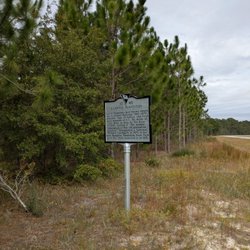
This historical marker along US-17 is in front of the Hampton Plantation Historic site and provides…read morea brief overview of the history. This is old Charleston, dating back to Colonial times, and even in condensed form the place carries more weight than the marker can hold. It notes the Horry and Rutledge families and the plantation's early eighteenth century origins, but it leaves out the deeper story of the rice economy built through the labor and agricultural knowledge of enslaved Africans whose work shaped every field along the Santee. The front of the marker reads, "Hampton Plantation, 2 mi. N.W., was established by 1730 and was one of the earliest rice plantations on the Santee River, in an area settled by Huguenots and often called "French Santee." The house, built in the 1730's for Elias Horry, later passed to his granddaughter Harriott Horry, who married Frederick Rutledge in 1797. The plantation remained in the Rutledge family until 1971." And the reverse, "One of Hampton's best-known owners was Archibald Rutledge (1883-1973), educator, man of letters, and first poet laureate of S.C. He wrote of life there in Home by the River (1941), calling it "the mother plantation of this old plantation country." Designated a National Historic Landmark in 1970, it has been Hampton Plantation State Park since the state acquired it in 1971." The limited space on the marker omits much. Including the near‑loss of the house in the twentieth century and Archibald Rutledge's role in reviving interest, as well as the long‑loved Washington Oak that tradition links to George Washington's 1791 visit. Today the unfurnished house and quiet grounds at Hampton Plantation State Park offer a clearer sense of the layered past than the roadside text suggests, inviting visitors to step beyond the marker and into a landscape where memory, myth, and history still mingle. It is marker number 1040 and it was erected in 2001 by the St. James-Santee Parish Historical Society. [Review 107 of 2026 - 1377 in South Carolina - 25297 overall]

Photos
Hampton Plantation Historic Site - Hampton Plantation Historical Marker, Mc Clellanville

Hampton Plantation Historical Marker, Mc Clellanville

Hampton Plantation Historic Site - Hampton Plantation Historical Marker, Mc Clellanville

Hampton Plantation Historical Marker, Mc Clellanville

Hampton Plantation Historic Site

See all

Hobcaw Barony

Hobcaw Barony

5.0(6 reviews)
12.6 mi

Hobcaw Barony is a historical treasure near historic Georgetown and has been on my SC to-do list…read morefor years. You have to make a reservation in advance if you want to participate in the bus tour and visit the historic homes and structures nestled deep in the woods on the property. Your tour begins with an introductory film on the history of the property and how it wound up in the hands of Bernard Baruch and ultimately Belle Baruch his daughter, who used it as a summer retreat. The story of the Baruchs and the globally famous historical figures they entertained at the restored plantation home (including Winston Churchill and FDR) was incredibly interesting and it was hard to imagine such figures making their way to the backwoods of the South Carolina lowcountry. Your tour gives you entry into the partially restored plantation home as well as allows you to stop and visit the old village of the descendants of the enslaved peoples who once worked and lived on the property as well as step outside Belle's house as well. You'll also learn about the important conservation work being undertaken there alongside scientists from Clemson University If you're a history or conversation lover I highly recommend planning a visit to Hobcaw Barony (and remember - you'll need to make a reservation in advance!). It's definitely an interesting way to pass a few hours. You'll also be right down the road from Brookgreen Gardens which is definitely worth a visit as well.

Beautiful full of history. I'd love to see more of Belle Baruch's story and her house restored.read more

Photos
Hobcaw Barony
Hobcaw Barony
Hobcaw Barony

See all

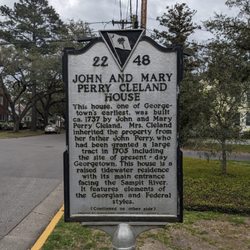
John and Mary Perry Cleland House Historical Marker - John and Mary Perry Cleland House Historical Marker, 405 Front St, Georgetown

John and Mary Perry Cleland House Historical Marker

3.0(1 review)
12.1 mi

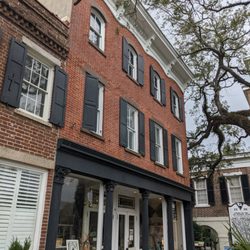
Along one of Georgetown's side streets that passes through a residential neighborhood, not far from…read morethe courthouse, this marker stands in front of a beautiful home. The road is wide enough here that you can stop to read the sign and admire the home from the outside. As near as I was able to tell, it is not open for interior tours. The marker reads, "This house, one of Georgetown's earliest, was built ca. 1737 by John and Mary Perry Cleland. Mrs. Cleland inherited the property from her father John Perry, who had been granted a large tract in 1705 including the site of present-day Georgetown. This house is a raised tidewater residence with its main entrance facing the Sampit River. It features elements of the Georgian and Federal styles." And on the reverse, "In 1753 the house was purchased by the Cleland's nephew Archibald Baird. He made small additions to each end of the house and relocated the main entrance to Front Street. A porch was added there ca. 1780. Later prominent owners of the house included John Withers, Jr., Francis Withers, Dr. Joseph Blythe, and Robert F.W. Allston." It is marker 22-48 and was erected by the Georgetown County Historical Society in 1997. [Review 19417 overall - 991 in South Carolina - 387 of 2023.]

Photos
John and Mary Perry Cleland House Historical Marker - John and Mary Perry Cleland House Historical Marker, 405 Front St, Georgetown

John and Mary Perry Cleland House Historical Marker, 405 Front St, Georgetown

John and Mary Perry Cleland House Historical Marker - John and Mary Perry Cleland House Historical Marker, 405 Front St, Georgetown

See all

John and Mary Perry Cleland House Historical Marker, 405 Front St, Georgetown

Chicora Wood Plantation - landmarks - Updated October 2026

Loading...
Loading...
Loading...