Catedral de Girona Photos


Recommended Reviews - Catedral de Girona
Start your review...


Reviews With Photos


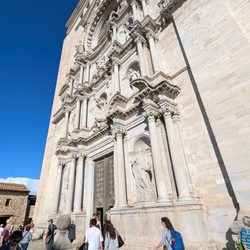
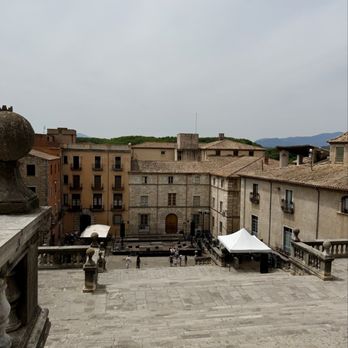
What's a trip to Girona without a visit to the famed Girona Cathedral?! It's true; several scenes from Game of Thrones were filmed right in front of this stunning cathedral. You will find many tourists and Game of Throne fans hovering around the entrance for pictures (me included). It's the busiest site in Girona but still well worth a visit. The Cathedral is known for its' large staircase. With over 90 steps, it's considered the longest Baroque staircase in the world. Many people revel in the beauty of the staircase from down below as the views of the cathedral and bell tower from the ground floor are quite stunning. It is a functioning church of the Roman Catholic Diocese of Girona. I came here during a walking tour and the church was unfortunately closed during the time that we visited, but it is open to the public. The walking tour was very informative as there is so much history involved. You can walk up to the top of the steps and get a nice little view of the city. Pro tip: if you don't want to scale all of the steps to reach the top, walk on the right side of the building and you'll be able to reach the top with fewer steps. Even if you're not a Game of Thrones fan, a trip to the cathedral is still a fun adventure while exploring Girona.


This place has so much history and beautiful structures and one of them in Girona is actually the Cathedral. It is surround by actual houses and people living right next door to this place. If you are a Game of Thrones fan you will want to visit Girona because many of the scenes were actually filmed here. We took a tour walking around this whole entire place to see different scenes that were acted here. It's a very quiet and beautiful place and I would love to come back here and stay a few days. It's a nice relaxing place. But a must see for sure is this cathedral!

You kind of can't miss this this stunner of a Cathedral. The audio tour was excellent and really takes you through the evolution of the structure from the Roman era to the present. Take your time and really soak in the beauty.

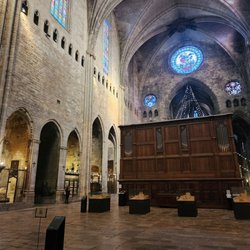
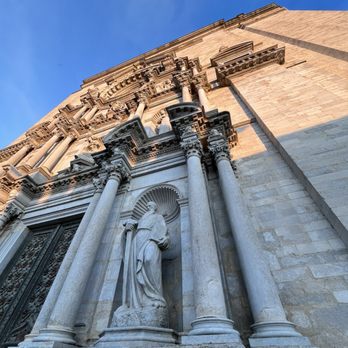
Catedral de Girona is known as Girona Cathedral or Cathedral of Saint Mary of Girona ... and also the Great Sept of Baelor. That's right Game of Thrones fans. The front, back, and plaza of Catedral de Girona was prominent in Season 6 as sets for King's Landing, Braavos, and Oldtown including memorable scenes with Cersei, Jaime, and Arya. Oh, the cathedral is also home of the Roman Catholic Diocese of Girona and been a functioning church since construction began in 1015, too. A Romanesque church and cloister were built by 1064 with a bell tower added in 1117. The church was redesigned in Gothic style beginning in 1416 including a large 75-foot (23-meter) wide nave rising 115 feet (35 meters). A Baroque main façade was added in 1606, but actually wasn't completed until 1961. The large staircase in front ... which GoT characters walked ... was completed in 1607. The big bell towers were rebuilt over the years. These days, tourists can walk down the long stairs and around the exterior to some filming sites for free. Even cooler is the impressive interior aspe and nave plus the historic cloister and courtyard. For just 7€ including an audio guide, visitors can gain admission starting at 10:00 a.m. until closing between 5:30 and 7:30 p.m. depending on the season. A series of chapels highlighting beautiful antique altarpieces surround the nave under triforium arched galleries and stained glass windows. The main marble altar dates back to the 11th century. Outside the Romanesque cloister, is surrounded by sculpted columns and tombs from the 14th to 18th century. Whether you worship the old gods or the new, Catedral de Girona is an impressive historic Catholic church and true highlight of any visit to Girona, Spain.


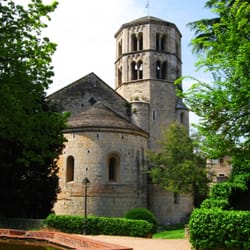
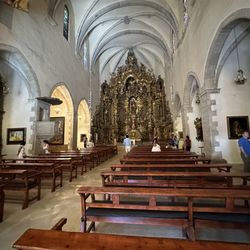
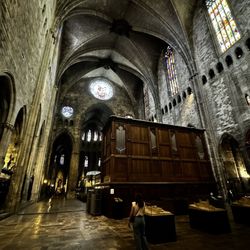
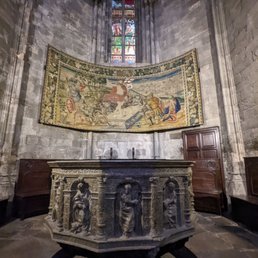
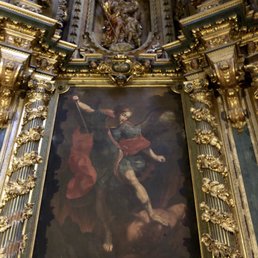
Girona has one of Spain's most impressive cathedrals, in one of its most dramatic settings. History The see of Girona dates back to the 3rd century and Roman times, and there was a recorded meeting here in the 6th century. Nothing remains of the various original buildings, which were incorporated into a mosque during the Moorish period from the 7th to the 11th centuries. A new cathedral was built in the 11th and 12th centuries, but substantially rebuilt from the 14th century onwards, when the present and impressive nave was completed. The front was given a Baroque makeover in the 17th century, including an impressive approach of 76 steps. The building The approach from the square at the foot of the steps has to be one of the most dramatic of any church, anywhere. From this level, the impressive baroque facade dominates the view, although the Romanesque 'Tower of Charlemagne', surviving from the 12th century is clearly visible. Entry (except for services) is via a small building on the left of the façade, which provides entry to the museum, cloisters and the church itself. The museum houses a number of religious artefacts, the most important of which is the 11-12th century 'creation tapestry', regarded by many as the most outstanding Romanesque textile in existence. Beyond this on the left is the Chapel of the Assumption, which contains one of the more astonishing pieces of early 18th century religiosity, an altar piece complete with the Virgin Mary being lifted - in her bed - by angels under a canopy topped by a huge crown. Straight ahead is the original 11-12th century cloister, a harmonious and calm space, with round of round arches supported on twin columns, each decorated with elaborate capitals. Although some are rather worn now, others are well preserved and draw inspiration from a wide range of religious and secular themes. To the right is the main cathedral entrance, directly into the nave. This is a dramatic space, begun in 1416 after much debate on account of its width: at nearly 23m, and without aisles, it is the widest Gothic nave in the world; indeed, only the rather later nave of St Peter's is wider. This impressive space is marred a only little by the placing, in its centre, of a rather large and unattractive organ case in the 19th century. The walls have no aisles but do have a row of chapels, for the most part filled with early 18th baroque altar-pieces, some of which are very attractive, while others demonstrate the full potential for excess of the Counter-reformation, and are something of an acquired taste. The choir is relatively short, but has a spacious ambulatory, complete with more chapels, this time of a more refined nature, dating from the mediaeval to modern periods. The chapels are unusual in having a number of late mediaeval tombs, which are relatively rare in Spanish cathedrals. On the north wall is the tomb of Ramon Berenguer II, (1053-1082), one of the original Counts of Barcelona who ruled the area in the 11th century. Outside, the south door is an impressive Gothic piece, fronting an attractive square.


This is where they filmed an episode from season 6 of Game of Thrones! The Cathedral is beautiful! The whole of Girona and the Old Town is impressive, There are many alleyways and things to explore, but if you watched Game of Thrones Season 6, you will see many filming locations around this fantastic City.Well worth a visit!


Another masterpiece in Catalonia. This cathedral and the surrounding town is so pretty. A lot of hills and so much culture as the Romans, Jews, Muslims and Christians all lived here. Very touristy as it was a Sunday and all the buses are here, but still really nice place to visit.


If you like history this is pretty cool. There is no a/c so dress accordingly. We went on a very hot day. Guys will be asked to remove hats; not a big deal. The tour phone comes in many languages and is included in the tour price. It's just impressive how many beautiful art pieces are preserved and available to see. read more

5 months ago
This is such a beautiful cathedral and has so much history. It is a Roman Catholic Church known for its gothic architecture. Also a fun fact is that scenes from Game of Thrones was shot here. It's a must see when visiting Girona! read more


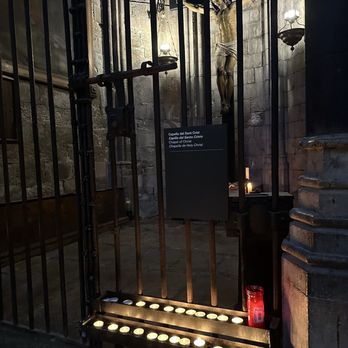


This is the Roman Catholic cathedral in Girona Catalonia Spain and the seat of the Roman Catholic Diocese of Girona. I'm far from a history buff but tourists from all over flock to see this preserved old church and for 7.50€ you can tour the interior although the mere gothic-like exterior architecture is a facinating view. There are an exhausting amount of wide cement steps leading to the top expansive entrance. Today, many tour groups cluttered near the top discussing the history of this beautiful church with a deep significance to the village of Girona. read more


What's a trip to Girona without a visit to the famed Girona Cathedral?! It's true; several scenes from Game of Thrones were filmed right in front of this stunning cathedral. You will find many tourists and Game of Throne fans hovering around the entrance for pictures (me included). It's the busiest site in Girona but still well worth a visit. The Cathedral is known for its' large staircase. With over 90 steps, it's considered the longest Baroque staircase in the world. Many people revel in the beauty of the staircase from down below as the views of the cathedral and bell tower from the ground floor are quite stunning. It is a functioning church of the Roman Catholic Diocese of Girona. I came here during a walking tour and the church was unfortunately closed during the time that we visited, but it is open to the public. The walking tour was very informative as there is so much history involved. You can walk up to the top of the steps and get a nice little view of the city. Pro tip: if you don't want to scale all of the steps to reach the top, walk on the right side of the building and you'll be able to reach the top with fewer steps. Even if you're not a Game of Thrones fan, a trip to the cathedral is still a fun adventure while exploring Girona. read more


4 years ago
This place has so much history and beautiful structures and one of them in Girona is actually the Cathedral. It is surround by actual houses and people living right next door to this place. If you are a Game of Thrones fan you will want to visit Girona because many of the scenes were actually filmed here. We took a tour walking around this whole entire place to see different scenes that were acted here. It's a very quiet and beautiful place and I would love to come back here and stay a few days. It's a nice relaxing place. But a must see for sure is this cathedral! read more


You kind of can't miss this this stunner of a Cathedral. The audio tour was excellent and really takes you through the evolution of the structure from the Roman era to the present. Take your time and really soak in the beauty. read more


7 years ago
Catedral de Girona is known as Girona Cathedral or Cathedral of Saint Mary of Girona ... and also the Great Sept of Baelor. That's right Game of Thrones fans. The front, back, and plaza of Catedral de Girona was prominent in Season 6 as sets for King's Landing, Braavos, and Oldtown including memorable scenes with Cersei, Jaime, and Arya. Oh, the cathedral is also home of the Roman Catholic Diocese of Girona and been a functioning church since construction began in 1015, too. A Romanesque church and cloister were built by 1064 with a bell tower added in 1117. The church was redesigned in Gothic style beginning in 1416 including a large 75-foot (23-meter) wide nave rising 115 feet (35 meters). A Baroque main façade was added in 1606, but actually wasn't completed until 1961. The large staircase in front ... which GoT characters walked ... was completed in 1607. The big bell towers were rebuilt over the years. These days, tourists can walk down the long stairs and around the exterior to some filming sites for free. Even cooler is the impressive interior aspe and nave plus the historic cloister and courtyard. For just 7€ including an audio guide, visitors can gain admission starting at 10:00 a.m. until closing between 5:30 and 7:30 p.m. depending on the season. A series of chapels highlighting beautiful antique altarpieces surround the nave under triforium arched galleries and stained glass windows. The main marble altar dates back to the 11th century. Outside the Romanesque cloister, is surrounded by sculpted columns and tombs from the 14th to 18th century. Whether you worship the old gods or the new, Catedral de Girona is an impressive historic Catholic church and true highlight of any visit to Girona, Spain. read more
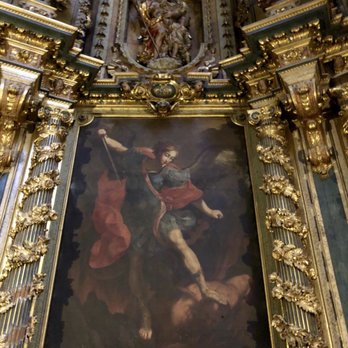


Girona has one of Spain's most impressive cathedrals, in one of its most dramatic settings. History The see of Girona dates back to the 3rd century and Roman times, and there was a recorded meeting here in the 6th century. Nothing remains of the various original buildings, which were incorporated into a mosque during the Moorish period from the 7th to the 11th centuries. A new cathedral was built in the 11th and 12th centuries, but substantially rebuilt from the 14th century onwards, when the present and impressive nave was completed. The front was given a Baroque makeover in the 17th century, including an impressive approach of 76 steps. The building The approach from the square at the foot of the steps has to be one of the most dramatic of any church, anywhere. From this level, the impressive baroque facade dominates the view, although the Romanesque 'Tower of Charlemagne', surviving from the 12th century is clearly visible. Entry (except for services) is via a small building on the left of the façade, which provides entry to the museum, cloisters and the church itself. The museum houses a number of religious artefacts, the most important of which is the 11-12th century 'creation tapestry', regarded by many as the most outstanding Romanesque textile in existence. Beyond this on the left is the Chapel of the Assumption, which contains one of the more astonishing pieces of early 18th century religiosity, an altar piece complete with the Virgin Mary being lifted - in her bed - by angels under a canopy topped by a huge crown. Straight ahead is the original 11-12th century cloister, a harmonious and calm space, with round of round arches supported on twin columns, each decorated with elaborate capitals. Although some are rather worn now, others are well preserved and draw inspiration from a wide range of religious and secular themes. To the right is the main cathedral entrance, directly into the nave. This is a dramatic space, begun in 1416 after much debate on account of its width: at nearly 23m, and without aisles, it is the widest Gothic nave in the world; indeed, only the rather later nave of St Peter's is wider. This impressive space is marred a only little by the placing, in its centre, of a rather large and unattractive organ case in the 19th century. The walls have no aisles but do have a row of chapels, for the most part filled with early 18th baroque altar-pieces, some of which are very attractive, while others demonstrate the full potential for excess of the Counter-reformation, and are something of an acquired taste. The choir is relatively short, but has a spacious ambulatory, complete with more chapels, this time of a more refined nature, dating from the mediaeval to modern periods. The chapels are unusual in having a number of late mediaeval tombs, which are relatively rare in Spanish cathedrals. On the north wall is the tomb of Ramon Berenguer II, (1053-1082), one of the original Counts of Barcelona who ruled the area in the 11th century. Outside, the south door is an impressive Gothic piece, fronting an attractive square. read more


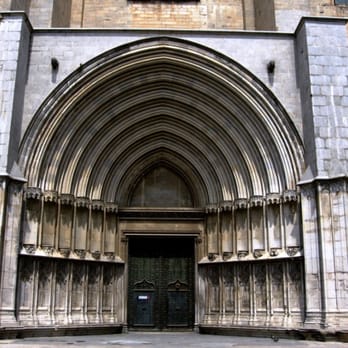


This is where they filmed an episode from season 6 of Game of Thrones! The Cathedral is beautiful! The whole of Girona and the Old Town is impressive, There are many alleyways and things to explore, but if you watched Game of Thrones Season 6, you will see many filming locations around this fantastic City.Well worth a visit! read more


Another masterpiece in Catalonia. This cathedral and the surrounding town is so pretty. A lot of hills and so much culture as the Romans, Jews, Muslims and Christians all lived here. Very touristy as it was a Sunday and all the buses are here, but still really nice place to visit. read more


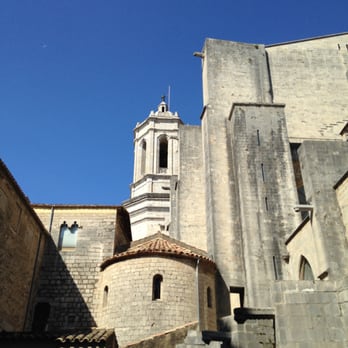


11 years ago
My hunna and I decided on a whim to go to Girona to do something out of the city of Barcelona before we head to Rome. It was the best decision we made. Girona has a sight seeing trolley which we took on a Sunday. It was so relaxing because there wasn't too much congestion. We headed into Girona and let me tell you it left us breathless. Please review my pictures and let them give you a reaction. I bought some beautiful trinkets from the neighborhood folks for my loving daughter. Do come on a Sunday! read more


18 years ago

8 years ago
18 years ago