Cancel

    Open app

    Search

    Castle Eden Dene Photos

    Recommended Reviews - Castle Eden Dene

    Your trust is our priority, so businesses can't pay to alter or remove their reviews. Learn more about reviews.
    Yelp app icon
    Browse more easily on the app
    Review Feed Illustration

    15 years ago

    Helpful 0
    Thanks 0
    Love this 0
    Oh no 0

    15 years ago

    Helpful 0
    Thanks 0
    Love this 0
    Oh no 0

    Verify this business for free

    Get access to customer & competitor insights.

    Verify this business

    Inchcolm Abbey

    Inchcolm Abbey

    (2 reviews)

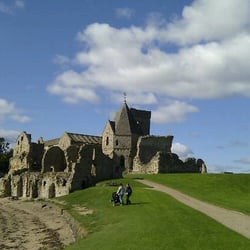
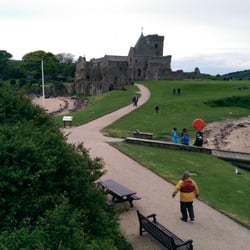
    Legend has it that the Abbey on Inchcolm Island in the Forth, began when King Alexander I was…read moreshipwrecked in 1123, and took shelter in a hermit's hovel. After the hermit saved his life, the King decided to build a priory on the Island. In any case it was definitely a priory by the mid 13th century when in 1235 it became an Abbey and grew from there. Inchcolm Abbey is regarded as one of the best preserved medieval monastic building complexes. It really is impressive. To get here you need to get one of two ferry services from Queensferry (make you sure you choose the option to get off at the Island and don't just pay for the cruise) which takes about thirty minutes. Once there you are free to explore the Abbey (and the rest of the island). It really is a great trip, if you're anything like me and generally like ruined piles of stone. But in all seriousness so much of it is still intact, that you really get a feel for the place. Actually it can become a bit maze like with all its stairs and many floors. One particular nerve racking part involves a steep climb up some very small winding stairs. These monks really were midgets! In fact I'm quite surprised Historic Scotland still lets visitors climb these precarious heights, but I'm glad they do. From the top of the tower you get a fantastic view of the Island and across the Forth. It also makes a great family day out, especially with the cruise to boot. Kids love to run around the Island and if its a nice day it makes a perfect picnic venue.

    Just because we live in Edinburgh doesn't mean we can't enjoy the city. The folks who run the city…read morecentre (Waverley Bridge) bus tours also run a boat to Inchcolm Abbey. Go for it - an absolutely brilliant and fascinating day out. Couple of tips, buy coffee on board, if you get off at Inchcolm (do, it's amazing) either take a picnic or have a meal before or after the cruise. They only have very expensive bottled drinks and biscuits and chocolate on the island. Take your camera, wear flat shoes and comfy clothes and go for a paddle if its warm. Look out for the seals, so cute. Fantastic day out for all ages.

    Whitby Abbey - photos do not capture the scale of the ruins

    Whitby Abbey

    (23 reviews)

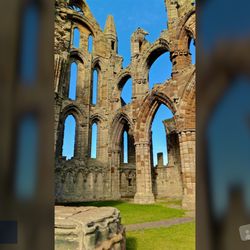
    We visited September 2024, on a Last Kingdom pilgrimage from London to Bamburgh. Whitby was a must…read moresee for us, having been established by the Abbess Hild, who was portrayed in TLK. Even though liberties were taken with her timeline in the show it made sense to add Whitby Abbey a stop on our tour. The Abbey is a typical medieval Norman structure, one of many torn down by the **** Henry VIII when he had enough of Catholics. The state of ruin though adds to the mystique of the place. Its magnificent unmistakable shape seen for miles around atop the cliffs of Whitby, looking over the mouth of River Esk. We were lucky with the weather, a cool but clear sunny day. I can imagine it gets pretty cold and blustery up here, so pack accordingly, just in case. Its a fair bit of walking too, much of it up hill, even from the adjacent parking lot. So leave plenty of time if you are a slow huff-and-puff walker like me. If you're feeling fit then theres the 199 steps up from the town below. There is a great museum that covers a great deal of history of the area and the Abbey. Of course all the Bram Stoker and Dracula associations are noted and observed. As are lots of the other literary dignitaries linked to this place. Theres a very nice gift shop too with a good array of nick nacks and local fare. One thing miss from the North East is the mead. We got hooked on mead on our trip and they have a good selection in the Abbey shop. While you are there St Marys Church is just across the way (see my other review of that). Its a must see. While we were there, the ticket machine at the parking lot was not working, so we went without paying for a ticket. We didnt get towed or anything, I don't know how much they patrol the lot. Other than that the lot is pretty huge, loads of open spots. We were there later in the day midweek after schools were back, and there were only a few people visiting. I cant imagine the Abbey on a busy Saturday, the solitude added to the isolated ambience so I'm glad for that. Overall a must see, wherever you are from or heading to, make a point of getting up here at least once in your life.

    Whitby Abbey is probably the most impressive Abbey we've visited yet. Sitting high above charming…read moreWhitby. The location and the Abbey have a long and interesting history. Some facts: Communities have lived on this headland for over 3,000 years and it has long been an important holy place and seat of power. In AD 657 Abbess Hild founded a monastery for men and women at Whitby, on land given by King Oswiu. It was Whitby's first monastic site. The Benedictine monk Reinfrid established a new community on the site in 1078. The Benedictine monastery was suppressed by Henry VIII in 1539 and its ruins are the ones we see on Whitby headland today. And Bram Stoker set part of Dracula here. The ruins are nothing short of breathtaking. The architecture, the countless details. You can spend a whole day here is still find more things to explore. And to imagine how the Abbey must have been when it was still in one piece. It's already an impressive sight now. But back then it must have been incredible. You can walk on the grounds and inside the Abbey freely. Dogs are also allowed on the site. There's lots of room and space for all visitors. Never felt crowded. If you arrive from the carpark on Abbey Lane then you will get some spectacular views of the Abbey from the little pond. The whole site is also wheelchair friendly, it's all pretty flat and easy to get around. EH members enter free of charge. A fantastic visit. And make sure to visit Whitby itself. It's probably packed as usual, but worth a visit.

    Durham Castle - main hall

    Durham Castle

    (4 reviews)

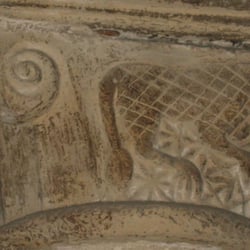
    This has 100 students living in it all the time, so is not always available for tours. it was…read morebasically saved from ruin by money from American alumni. It has an ancient working kitchen, tudor, originally open to the air, with old black and white timber which has to be seen to be believed! The great hall where everyone eats is very impressive, as is the chapel, but it is the ancient chapel underneath that is the most impressive. This bit is older even than the cathedral, and has strange pagan carvings on the tops of the pillars, the origin of which no-one knows. The carvings show tropical lands, African animals and fruit! Possibly carved by slaves? Or prisoners would also have had enough time to carve them. There is a perfectly preserved Norman doorway which was rediscovered only recently, and an enormous 'flying' staircase that is about 400 years old and covered with the ulitmate sign of wealth, pineapples. The student's rooms all have two doors, and they are closed in a certain way to let people know whether you want to be disturbed or not. These are the ones that can be hired out as b&b. Probably well worth it.

    You pay for a tour, which lasts about an hour. Again a bit pricey but very interesting and worth…read moreseeing if your visiting Durham. The frustrating thing is because their is students living there, You can not see most of the castle and I would have loved to see all of it. Really nice pictures to be taken from the outside, you are not allowed to take pictures of the inside as the tour advisor said it damaged the tapstry. The tour advisor really knew her stuff and told us some interesting facts about the castle and history behind it. Not good for disabled people as loads of awkward stairs. People can get married here on certain dates, seems an ideal place. Would certainly recommend a visit.

    Alnwick Castle & Gardens

    Alnwick Castle & Gardens

    (23 reviews)

    My wife and I visited Alnwick Castle on a cold blustery day in September 2024. It was one stop of…read moremany in a tour around Roman, Saxon, Viking and Norman historical sites across the country. I'm a sucker for castles me. What boy isn't. Alnwick is so well preserved its a real treat. In fact its a living working home to the Earl of Northumberland.  The history encapsulated in this venue is vast. Built by the Normans, owned by the Percy family and the site of battles and sieges during the Wars Of The Roses, captured by Yorkists, recaptured by Lancaster. The walls have many tales to tell. There are lots of activities outside of historical studies. DragonQuesting, Harry Potter themed events (having been filmed here), knights quest, archery. It's great for kids. But thats not why we were there. We were here for the history. And there are lots of small museum displays around the site. There was a great tour around the State House that went into some good detail of the lives of the Percy family through the years. Its a magnificent building. Stately and opulent. Whereas the outside has the battlements and the armouries. And the grounds are beautiful, alongside the River Aln. We parked on The Peth, luckily found a spot right next to the castle, avoiding the walk from paid parking lots. Spent an hour or two at the end of a long day here, but wish we had more time to leisurely enjoy all Alnwick Castle has to offer.

    I especially wanted to visit Alnwick castle as some of the scenes from Harry Potter had been filmed…read morethere. Me and my friend travelled from Edinburgh for the day and it took us 90 minutes each way, but it was so worth it. When we arrived it cost £3 for parking. The car parks are a good 15 minute walk from the castle, so if anyone has walking issues then be prepared. The first bit you reach is the gardens which are beautiful. You pay for the gardens separately to the castle. You could spend a day in both as there is so much to do. You can get your castle tickets validated for a year, meaning you can visit as often as you want for the next year. This is brilliant as your ticket is only £14 per adult. We had been warned that broomstick training tickets sell out quickly so we headed straight there. The tickets are free but are very popular. We arrived at 12pm and the next tickets we could get were for 3pm. To be honest we went to do it, but it was more for kids. So we gave our tickets away and headed for the movie tour, I'll come back to this. We headed to the gardens to have lunch. We got some fish and chips which were reasonably priced and went and sat on the lawn to eat them. We were lucky as we had a lovely sunny day. We then investigated the gardens which included a fairy trail, where you had to find the clues to save the princess, a maze, a beautiful water feature, a maze made from bamboo and a Poisen garden. We never managed the Poisen garden but heard good things. Back to the castle, it is a beautiful castle with stunning views. we wandered about, there was lots of entertainment for all ages. As I said earlier we left the broomstick training to join the movie tour. This was fascinating and we were shown the different places that things had been filmed. I knew about Harry Potter but not about Robin Hood prince of thieves, Black Adder and more recently Downton Abbey. As they say, time passes when you're having fun and the day flew past. We'd didn't even manage to go into the castle or visit the tree house. I will defo be taking advantage of my years free entry. Definitely worth a visit whatever age you are. Oh and all the staff members where lovely and friendly. All me and my friend kept saying was this has just been a perfect day, and it really was..

    Robin Hood's Bay - Its History and Origins - Beach

    Robin Hood's Bay - Its History and Origins

    (5 reviews)

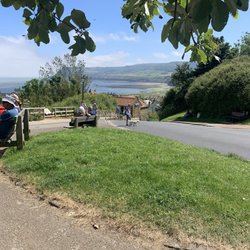
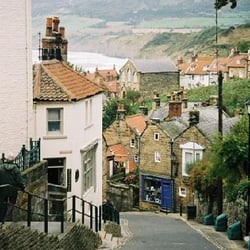
    The bay is breezy and picturesque; it is built in a fissure between two steep cliffs. Oh steep…read morereally means steep; you need to be super, super fit even going down hill. It's a pleasant place and pretty but then England has lots of beautiful harbours that aren't life threatening for the unfit. My wife and I really struggled walking back up the steep, steep hill. It's also narrow and winding and vehicle unfriendly. The village is ancient and its houses are built mostly of sandstone with red-tiled roofs. The headlands at each end of the beach are known as Ness Point or North Cheek (north) and Old Peak or South Cheek (south). There's not a lot of life in the beach rock pools. The cliffs are composed of Upper Lias shale, capped by Dogger and False Bedded Sandstones and shales of the Lower Oolite. We wouldn't return unless we had to and if we did we'd need a taxi on speed dial.

    Having written about the Whitby area and Robin Hoods Bay I thought some may be intetested in a bit…read moreof the history before visiting. I love this place. It appears that in the 16th century, Robin Hood's Bay was far more important than Whitby. In a series of Dutch sea charts published in 1586, Robin Hood's Bay is indicated while Whitby is not even mentioned. What we are certain of is that in the 18 th century, Robin Hood's Bay was reportedly the busiest smuggling community on the Yorkshire coast. Its natural isolation, protected by marshy moorland on three sides, offered a natural aid to this well-organised business which, despite its dangers, must have paid better than fishing. Five and twenty ponies trotting through the dark..brandy for the parson..baccy for the clerk Smuggling at sea was backed up by many on land who were willing to finance and transport contraband. Fisherfolk, farmers clergy and gentry alike were all involved. Fierce battles ensued between smugglers and excise men, both at sea and on land, and Bay wives were known to pour boiling water over excise men from bedroom windows in the narrow alleyways. Hiding places, bolt holes and secret passages abounded. It is said that a bale of silk could pass from the bottom of the village to the top without leaving the houses. The threat of the excise men was not the only danger to Bayfolk. In the late 18 th century and early 19 th century, the Press Gangs were feared and hated. Sailors and fishermen were supposed to be exempt but, in reality, rarely were. Once 'pressed', their chances of returning to their homes were not high. Village women would beat a drum to warn the men folk that the Press Gangs had arrived and it was not unusual for the Press Gang to be attacked and beaten off. Millions of years ago, the land upon which Robin Hood's Bay is situated was once a deep sea. The sea animals of the time, buried in the mud, became fossilised, providing one of the best sources in Britain for the fossil hunter. Some of these fossils can be seen on display in the museum and can still be picked up on the beach if you look carefully. Robin Hood's Bay lies in the ancient parish of Fylingdales. The name itself is believed to be derived from the Old English word 'Fygela' which meant 'marshy ground'. The first evidence of man in the area was 3000 years ago when Bronze Age burial grounds were dug on the high moorland a mile or so south of the village. These are known as Robin Hood's Butts. Some 1500 years later, Roman soldiers had a stone signal tower built at Ravenscar about the 4 th century AD. The first regular settlers, however, were probably Saxon peasants, followed by the Norsemen. The main colonists of this coast were Norwegians who were probably attracted by the rich glacial soil and ample fish, and this is how they survived by a mixture of farming and fishing. The likely original settlement of the Norsemen was at Raw, a hamlet slightly inland, which helped to avoid detection by other pirates. After the Norman Conquest, the Manor of Fyling was given as the spoils of war to one of William the Conqueror's relatives, Hugh of Chester. Eventually, it passed to the Percy family who gave the land to Whitby Abbey. The first recorded reference to Robin Hood's Bay was in 1536 by King Henry VIII's topographer, Leland, who described 'a fischer townelet of 20 bootes with Dok or Bosom of a mile yn length'. By now the cliff settlement had grown larger than the inland settlement, probably because they felt more secure from piracy and because it would be more convenient to walk from the boats. By 1540, the village was said to have fifty cottages by the shore (a large settlement at that time) so we can speculate that the present village originated somewhere in the 15 th century. In 1540, the chief tenant was Matthew Storm and his descendants still live in the area. At the dissolution of the monasteries in 1539, the land passed to the King who sold it to the Earl of Warwick. The Cholmleys and then the Stricklands became the final 'Lords of the Manor' The actual origin of the name remains a mystery.Robin Hood was the name of an ancient forest spirit similar to Robin Goodfellow and the use of the name for such an elf or spirit was widespread in the country. Many natural features were named after these local folk of legend and, in time, stories crossed over from one legend to another. The traditional anecdotes probably go way back in time but as to their origin - who knows? The fishing industry reached its zenith in the mid 19 th century and a thriving community existed in Bay. The townsfolk liked to amuse themselves in the winter and there were dances almost every evening. Church and chapel were well attended and funerals and weddings were occasions for a festival. Like other fishing villages, Bay had its own gansey pattern. (knitted sweaters)From the early 19 th century, Robin Hood's Bay began to attract visitors from the outside and this has


    Whitby Swing Bridge - How the original bridge looked

    Whitby Swing Bridge

    (2 reviews)

    Whitby is divided in two by the river and there had to be some way to cross. This was the swing…read morebridge which opened for shipping. There is now an additional road bridge. The main street of the old East side of Whitby is Church Street, which has cottages to one side and the river to the other. At the swing bridge it becomes a cobbled pedestrian street with houses and shops on both sides. Off of Church Street are many small snickets with intriguing names such as Saltpanwell Steps which house pretty fisherman's cottages. The swing bridge which joins the two communities East and West of the river Esk together, has been the scene of rivalry in the earlier part of this century, where gangs of youths would contest the bridge with t`other side o` watter dogs . The original bridge was first mentioned in 1351 and used to lie to the South of the present one, roughly aligned with Baxtergate. Centuries ago, houses on wooden piles overhung the river above and below the bridge. A block of early 18th century buildings on the south side was demolished in 1975. The present swing bridge was built in 1909 and is electrically operated. The bridge opens on the hour and half hour on request on VHF channel 11 and is manned for two hours either side of high water. While on duty the bridge operatives maintain a listening watch on VHF channels 11 and 16. The first opening will be as soon as practical two hours before high water and the final opening will be 10 minutes prior to two hours after high water. The bridge spans 75ft and each section can be operated independently swinging horizontally. Whitby is a working port, and opposite the amusements you can see the fishing boats bring in their catches and watch the fishermen attend to their nets.

    We always love watching this bridge open…read more The bridge spans the river and it divides the town in two, I always think of the Church Street side of the river as the old town this is the streets that are conjured up with the image of Dracula, this side of the town is looked over by the Abbey and Church. The other side of the town is the typical seaside town with amusements and beach side shops. The bridge is a wonderful piece of engineering and is always busy. In the summer the paths are always full and you can find yourself forced into the road, as the cars are always crossing this can be scary, and it is always best to carry small children if possible and in the crush they can become scared.

    Castle Eden Dene - landmarks - Updated May 2026

    Loading...
    Loading...
    Loading...