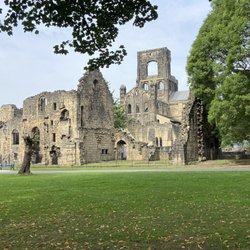
Whitby Abbey Photos


Recommended Reviews - Whitby Abbey
Start your review...


Reviews With Photos


What can I say that has not been said. So many great ruins in Yorkshire. This is more crowded than most and that is to be expected. Plan your camera shots, lay on the ground peer the camera round corners and you can blot out all the peeps. I have great shots. There is a nice exhibition and our usual gift shop. I got myself a pocket size copy of Dracula which was apt and made re reading the novel more exciting. Stunning gothic architecture.


Absolutely STUNNING! This is truly worth the visit out to Whitby - catching it at sunset too is absolutely incredible.


It happened to be a gorgeous, blue sky kind of day when I went on a tour of North Yorkshire and Whitby. We were given 2 hours in Whitby and I spent at least 40 minutes up here at Whitby Abbey to take pictures, explore the grounds, drink in the sights of the North Sea, and check out the book shop. I relished the knowledge that I was walking the same grounds as Bram Stoker who was inspired by this Abbey in his writing of Dracula. I love that book. Our driver dropped us off at the Abbey car park to save us the time it would take to walk up 199 steps up from the city centre. We also had a few elderly ladies amongst us, so they had limited mobility. Get your ticket at the abbey shop and go upstairs to get to the abbey. This former Benedictine abbey was established around 657 AD and was disestablished by Henry VIII around 1538. It has fallen into ruin as you can see. It occupies a bluff overlooking the North Sea. Beautiful beautiful views from up there. I would highly recommend visiting this place if you're in Whitby!


Once you've climbed the famous "199 Steps" you will be greeted with the combined spectacular views of St. Mary's Church (with its vast adjacent cemetery) and the ruin of Whitby Abbey, which reportedly inspired Bram Stoker to write Dracula. Also, you will be rewarded with spectacular views of Whitby and the open sea. Very much worth your while, I can tell ya*. When I visited the weather was less than spectacular, with grey skies, occasional showers and a bit of fog - all of which only added to the majesty and gloomy atmosphere of the place. The Abbey grounds were unfortunately closed on the day (the opening times vary widely during the seasons, so investigate before you visit), but even then I got a good enough glimpse of the abbey - and of course St. Mary's Church was open and available to "inspection". But for me, it was the view that left the greatest impression. If you're tired from the 199 Steps you might also drop in at the brewery tap of Whitby Brewery, which is opposite of the abbey grounds.


As I was walking around the abbey I was very sad that me being an American would never be able to see things like this on my home turf. The price is a bit steep 6 quid to walk the grounds but the views are very much so worth it and the walk around was very relaxing. I will agree with Christopher and say the front door was a bit confusing to find at first but once you get into you will lose yourself in the views. It towers over Whitby bay and you can see for miles on a clear day. I didnt opt for the headphones that told you the history of the abbey for the lack of time we had, they close at six and we showed up at half past 5 so it was proper quick but worth it if your into history and just want a good walk around some impressive grounds. I feel like a broken record with talking about the views but trust me if it a sunny day you will rave about them too. *Top Tip If you take the 199 steps two at a time its not as hard on your legs .


Shame dracula display is only on at weekends. Still a lovely sunny day don't forget the portable speaker for audio description


The one thing that defines Whitby is the Abbey. Painted and photographed over the centuries. Written about in fact and fiction and by poets. It dominates the skyline. High on a cliff above the Yorkshire seaside town of Whitby are the gaunt, imposing remains of Whitby Abbey. Founded in 657 by St Hilda, Whitby Abbey has over the years been a bustling settlement, a kings' burial place, the setting for a historic meeting between Celtic and Roman clerics, the home of saints including the poet Caedmon, and inspiration for Bram Stoker, author of Dracula. Over 2,000 years of history make the Abbey one of England's most important archaeological sites. At the interactive visitor centre you can view archaeological finds and audio-visual displays. I missed out on being at this last dig etc with moving. It was founded in 657 AD by the Saxon King of Northumbria, Oswy (Oswiu) as Streanshalh (Streonshalh). He appointed Lady Hilda, niece of Edwin, the first christian king of Northumbria, as Abbess. St Hild was a Saxon princess -- daughter of Prince Hereric and sister-in-law to Aethelhere, King of East Anglia -- and she seems to have been a remarkable character. She was born in 614, and baptized by the missionary Paulinus, but lived a secular life for 33 years before she felt called upon to renounce the world and become an abbess, first at the monastery of Hartleypool, and later at Whitby. The Venerable Bede, the famous 8th-century monk who wrote The Ecclesiastical History of the English People, notes that, she taught the observance of righteousness, mercy, purity and other virtues, but especially of peace and charity. When Abbess Hild died in 680, a nun in the monastery of Hackness, thirteen miles away, was said to have had a vision of her being carried aloft by angels. Bede maintains that a messenger who was sent from Whitby with the sorry news was shocked and confused to find the monks and nuns at Hackness already mourning her passing. After her death, Hild was granted sainthood. Her relics, along with those of King Oswy and King Edwin, attracted many pilgrims, and the financial donations these pilgrims brought to the abbey were used to fund further building work. The double monastery of Benedictine monks and nuns was also home to the great Saxon poet Caedmon. In 664, the abbey, built on the east cliff overlooking the Esk and town of Whitby, was the site of the Synod of Whitby, at which the Northumbrian Celtic church was reconciled to Rome. In 867, the abbey fell to Viking attack, and was abandoned until 1078, when it was re-founded by Regenfrith (Reinferd) a soldier monk, under the orders of his protector, the Norman, William de Percy. On the 14th December, 1539 William Davell, the last abbot of Whitby, gave the abbey to Henry VIII's commissioners under the Dissolution of the Monasteries Act This second monastery lasted until it was destroyed by Henry VIII in 1540. The abbey buildings fell into ruins, and were mined for stone, but remained a prominent landmark for sailors. It was called Streoneshalh (the historical name of the town Whitby where the abbey is located). There are two ways to approach the Abbey: from the car park to the south, or from Whitby town itself via 199 winding (and rather steep!) stone steps. The steps are best! Following the path from the car park though you'll pass by the Abbey Pond. In the Middle Ages the interior of the choir would have been richly painted and the windows glazed with colored glass. According to John Leland, a 16th-century recorder, one of the stained-glass windows here showed William the Conqueror punishing the Scots for indulging in a dubious habit -- they were believed to be cannibals! The elaborate stone carving on the walls is all that remains of that rich pictorial history now, but it is still possible to imagine what a glorious sight this building must have been in its heyday. Much of it collapsed in the late 1700s, and in 1914 it suffered further damage when a raiding force of German Navy ships shelled Whitby. There was outrage throughout Britain at the time because of this needless attack on a civilian target. Near the nave you can find several tombstones. These were excavated in the 1920s, and some of them are ancient indeed. They date back to Anglo-Saxon times, and are remnants of the first abbey that was erected on this site, A bit more history: Around 1070 a Norman soldier called Reinfrid stopped at Whitby and saw the architectural remains of the previous buildings. Some years later, having taken holy vows and became a Benedictine monk, he returned to Whitby with a group of followers and set about re-establishing the monastic community. Reinfrid was subsequently killed in an unfortunate accident whilst helping workmen build a bridge sometime around 1087. By the year 1220, Whitby Abbey had become one of the wealthiest monasteries in the country, housing dozens of monks. Much of its wealth vanished over the next few


Don't climb the stepsunless you're really fit because there is a car park right at the side of the abbey. It's quite expensive to go in but you do get an audio commentry to take round with you. It's a beautiful ruin and the views are quite spectacular. There is a visitor centre which is a bit of a let down and usually full of school parties and there's a gift shop which a large variety of nik naks for sale. Outside the visitor centre is a lovely little tea room with a good selection of cakes, meals and drinks. Leaving the site you enter the graveyard of St Hildas church which also brings you to the top of the 199 steps. Once you purchase your ticket to the abbey it lasts all day so you can come and go as you please.


2 years ago
We visited September 2024, on a Last Kingdom pilgrimage from London to Bamburgh. Whitby was a must see for us, having been established by the Abbess Hild, who was portrayed in TLK. Even though liberties were taken with her timeline in the show it made sense to add Whitby Abbey a stop on our tour. The Abbey is a typical medieval Norman structure, one of many torn down by the **** Henry VIII when he had enough of Catholics. The state of ruin though adds to the mystique of the place. Its magnificent unmistakable shape seen for miles around atop the cliffs of Whitby, looking over the mouth of River Esk. We were lucky with the weather, a cool but clear sunny day. I can imagine it gets pretty cold and blustery up here, so pack accordingly, just in case. Its a fair bit of walking too, much of it up hill, even from the adjacent parking lot. So leave plenty of time if you are a slow huff-and-puff walker like me. If you're feeling fit then theres the 199 steps up from the town below. There is a great museum that covers a great deal of history of the area and the Abbey. Of course all the Bram Stoker and Dracula associations are noted and observed. As are lots of the other literary dignitaries linked to this place. Theres a very nice gift shop too with a good array of nick nacks and local fare. One thing miss from the North East is the mead. We got hooked on mead on our trip and they have a good selection in the Abbey shop. While you are there St Marys Church is just across the way (see my other review of that). Its a must see. While we were there, the ticket machine at the parking lot was not working, so we went without paying for a ticket. We didnt get towed or anything, I don't know how much they patrol the lot. Other than that the lot is pretty huge, loads of open spots. We were there later in the day midweek after schools were back, and there were only a few people visiting. I cant imagine the Abbey on a busy Saturday, the solitude added to the isolated ambience so I'm glad for that. Overall a must see, wherever you are from or heading to, make a point of getting up here at least once in your life. read more


4 years ago
Whitby Abbey is probably the most impressive Abbey we've visited yet. Sitting high above charming Whitby. The location and the Abbey have a long and interesting history. Some facts: Communities have lived on this headland for over 3,000 years and it has long been an important holy place and seat of power. In AD 657 Abbess Hild founded a monastery for men and women at Whitby, on land given by King Oswiu. It was Whitby's first monastic site. The Benedictine monk Reinfrid established a new community on the site in 1078. The Benedictine monastery was suppressed by Henry VIII in 1539 and its ruins are the ones we see on Whitby headland today. And Bram Stoker set part of Dracula here. The ruins are nothing short of breathtaking. The architecture, the countless details. You can spend a whole day here is still find more things to explore. And to imagine how the Abbey must have been when it was still in one piece. It's already an impressive sight now. But back then it must have been incredible. You can walk on the grounds and inside the Abbey freely. Dogs are also allowed on the site. There's lots of room and space for all visitors. Never felt crowded. If you arrive from the carpark on Abbey Lane then you will get some spectacular views of the Abbey from the little pond. The whole site is also wheelchair friendly, it's all pretty flat and easy to get around. EH members enter free of charge. A fantastic visit. And make sure to visit Whitby itself. It's probably packed as usual, but worth a visit. read more

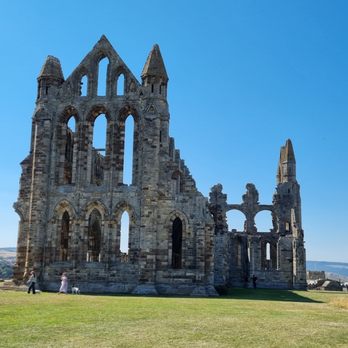


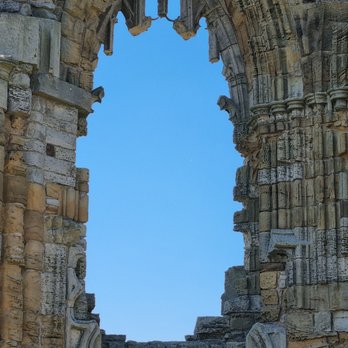

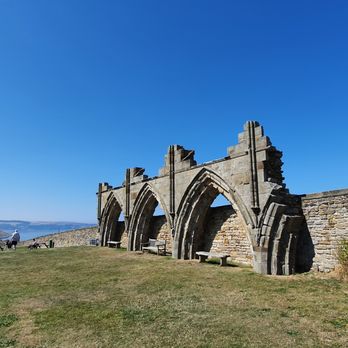


2 years ago
Overpriced for what is a ruin. It was £18 a head to go inside courtesy of English Heritage and what really bugged me was having to separately pay for car parking and the rest room. One can walk around the grounds, the graveyard and the chapel for free. The ruined monastery looks better from a distance anyway. I've done a separate review for the brewery close by. Spend your hard earned there, the beers are exquisite and the restrooms are FOC. read more


What can I say that has not been said. So many great ruins in Yorkshire. This is more crowded than most and that is to be expected. Plan your camera shots, lay on the ground peer the camera round corners and you can blot out all the peeps. I have great shots. There is a nice exhibition and our usual gift shop. I got myself a pocket size copy of Dracula which was apt and made re reading the novel more exciting. Stunning gothic architecture. read more


4 years ago
Absolutely STUNNING! This is truly worth the visit out to Whitby - catching it at sunset too is absolutely incredible. read more


It happened to be a gorgeous, blue sky kind of day when I went on a tour of North Yorkshire and Whitby. We were given 2 hours in Whitby and I spent at least 40 minutes up here at Whitby Abbey to take pictures, explore the grounds, drink in the sights of the North Sea, and check out the book shop. I relished the knowledge that I was walking the same grounds as Bram Stoker who was inspired by this Abbey in his writing of Dracula. I love that book. Our driver dropped us off at the Abbey car park to save us the time it would take to walk up 199 steps up from the city centre. We also had a few elderly ladies amongst us, so they had limited mobility. Get your ticket at the abbey shop and go upstairs to get to the abbey. This former Benedictine abbey was established around 657 AD and was disestablished by Henry VIII around 1538. It has fallen into ruin as you can see. It occupies a bluff overlooking the North Sea. Beautiful beautiful views from up there. I would highly recommend visiting this place if you're in Whitby! read more


4 years ago
Excellent place to visit. Staff are very friendly. The downside is the expensive prices to get in. read more


9 years ago
Once you've climbed the famous "199 Steps" you will be greeted with the combined spectacular views of St. Mary's Church (with its vast adjacent cemetery) and the ruin of Whitby Abbey, which reportedly inspired Bram Stoker to write Dracula. Also, you will be rewarded with spectacular views of Whitby and the open sea. Very much worth your while, I can tell ya*. When I visited the weather was less than spectacular, with grey skies, occasional showers and a bit of fog - all of which only added to the majesty and gloomy atmosphere of the place. The Abbey grounds were unfortunately closed on the day (the opening times vary widely during the seasons, so investigate before you visit), but even then I got a good enough glimpse of the abbey - and of course St. Mary's Church was open and available to "inspection". But for me, it was the view that left the greatest impression. If you're tired from the 199 Steps you might also drop in at the brewery tap of Whitby Brewery, which is opposite of the abbey grounds. read more


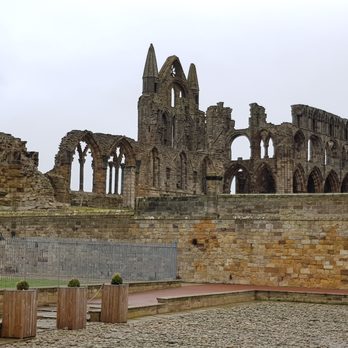


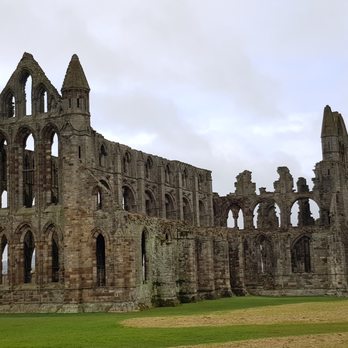

As I was walking around the abbey I was very sad that me being an American would never be able to see things like this on my home turf. The price is a bit steep 6 quid to walk the grounds but the views are very much so worth it and the walk around was very relaxing. I will agree with Christopher and say the front door was a bit confusing to find at first but once you get into you will lose yourself in the views. It towers over Whitby bay and you can see for miles on a clear day. I didnt opt for the headphones that told you the history of the abbey for the lack of time we had, they close at six and we showed up at half past 5 so it was proper quick but worth it if your into history and just want a good walk around some impressive grounds. I feel like a broken record with talking about the views but trust me if it a sunny day you will rave about them too. *Top Tip If you take the 199 steps two at a time its not as hard on your legs . read more


18 years ago
The one thing that defines Whitby is the Abbey. Painted and photographed over the centuries. Written about in fact and fiction and by poets. It dominates the skyline. High on a cliff above the Yorkshire seaside town of Whitby are the gaunt, imposing remains of Whitby Abbey. Founded in 657 by St Hilda, Whitby Abbey has over the years been a bustling settlement, a kings' burial place, the setting for a historic meeting between Celtic and Roman clerics, the home of saints including the poet Caedmon, and inspiration for Bram Stoker, author of Dracula. Over 2,000 years of history make the Abbey one of England's most important archaeological sites. At the interactive visitor centre you can view archaeological finds and audio-visual displays. I missed out on being at this last dig etc with moving. It was founded in 657 AD by the Saxon King of Northumbria, Oswy (Oswiu) as Streanshalh (Streonshalh). He appointed Lady Hilda, niece of Edwin, the first christian king of Northumbria, as Abbess. St Hild was a Saxon princess -- daughter of Prince Hereric and sister-in-law to Aethelhere, King of East Anglia -- and she seems to have been a remarkable character. She was born in 614, and baptized by the missionary Paulinus, but lived a secular life for 33 years before she felt called upon to renounce the world and become an abbess, first at the monastery of Hartleypool, and later at Whitby. The Venerable Bede, the famous 8th-century monk who wrote The Ecclesiastical History of the English People, notes that, she taught the observance of righteousness, mercy, purity and other virtues, but especially of peace and charity. When Abbess Hild died in 680, a nun in the monastery of Hackness, thirteen miles away, was said to have had a vision of her being carried aloft by angels. Bede maintains that a messenger who was sent from Whitby with the sorry news was shocked and confused to find the monks and nuns at Hackness already mourning her passing. After her death, Hild was granted sainthood. Her relics, along with those of King Oswy and King Edwin, attracted many pilgrims, and the financial donations these pilgrims brought to the abbey were used to fund further building work. The double monastery of Benedictine monks and nuns was also home to the great Saxon poet Caedmon. In 664, the abbey, built on the east cliff overlooking the Esk and town of Whitby, was the site of the Synod of Whitby, at which the Northumbrian Celtic church was reconciled to Rome. In 867, the abbey fell to Viking attack, and was abandoned until 1078, when it was re-founded by Regenfrith (Reinferd) a soldier monk, under the orders of his protector, the Norman, William de Percy. On the 14th December, 1539 William Davell, the last abbot of Whitby, gave the abbey to Henry VIII's commissioners under the Dissolution of the Monasteries Act This second monastery lasted until it was destroyed by Henry VIII in 1540. The abbey buildings fell into ruins, and were mined for stone, but remained a prominent landmark for sailors. It was called Streoneshalh (the historical name of the town Whitby where the abbey is located). There are two ways to approach the Abbey: from the car park to the south, or from Whitby town itself via 199 winding (and rather steep!) stone steps. The steps are best! Following the path from the car park though you'll pass by the Abbey Pond. In the Middle Ages the interior of the choir would have been richly painted and the windows glazed with colored glass. According to John Leland, a 16th-century recorder, one of the stained-glass windows here showed William the Conqueror punishing the Scots for indulging in a dubious habit -- they were believed to be cannibals! The elaborate stone carving on the walls is all that remains of that rich pictorial history now, but it is still possible to imagine what a glorious sight this building must have been in its heyday. Much of it collapsed in the late 1700s, and in 1914 it suffered further damage when a raiding force of German Navy ships shelled Whitby. There was outrage throughout Britain at the time because of this needless attack on a civilian target. Near the nave you can find several tombstones. These were excavated in the 1920s, and some of them are ancient indeed. They date back to Anglo-Saxon times, and are remnants of the first abbey that was erected on this site, A bit more history: Around 1070 a Norman soldier called Reinfrid stopped at Whitby and saw the architectural remains of the previous buildings. Some years later, having taken holy vows and became a Benedictine monk, he returned to Whitby with a group of followers and set about re-establishing the monastic community. Reinfrid was subsequently killed in an unfortunate accident whilst helping workmen build a bridge sometime around 1087. By the year 1220, Whitby Abbey had become one of the wealthiest monasteries in the country, housing dozens of monks. Much of its wealth vanished over the next few read more


18 years ago
Don't climb the stepsunless you're really fit because there is a car park right at the side of the abbey. It's quite expensive to go in but you do get an audio commentry to take round with you. It's a beautiful ruin and the views are quite spectacular. There is a visitor centre which is a bit of a let down and usually full of school parties and there's a gift shop which a large variety of nik naks for sale. Outside the visitor centre is a lovely little tea room with a good selection of cakes, meals and drinks. Leaving the site you enter the graveyard of St Hildas church which also brings you to the top of the 199 steps. Once you purchase your ticket to the abbey it lasts all day so you can come and go as you please. read more


14 years ago
I`ve been to Whitby a few times and love it the first time there was a viking expediton on and it was so cool you could try the old tools,wepons and food and the mead was so tasty :) everyone was in costume and in character i havent seen it since though shame.the fish and chips in town rock and the shops 2,the dracula experiance is a must for any goths and horror fans out there and every year there is awesome goth festival olus you can ride on the trams,build sandcastles on the beach or take the river cruise a fun day out for all. read more




9 years ago

16 years ago


13 years ago

9 years ago


15 years ago
16 years ago
19 years ago