Cancel

    Open app

    Search

    Brookside Close Photos

    Recommended Reviews - Brookside Close

    Your trust is our priority, so businesses can't pay to alter or remove their reviews. Learn more about reviews.
    Yelp app icon
    Browse more easily on the app
    Review Feed Illustration

    5 years ago

    Helpful 1
    Thanks 0
    Love this 1
    Oh no 0

    18 years ago

    Helpful 0
    Thanks 0
    Love this 0
    Oh no 0

    Verify this business for free

    Get access to customer & competitor insights.

    Verify this business

    William McKenzie's Tomb

    William McKenzie's Tomb

    (3 reviews)

    Strangely, William McKenzies Tomb can represent everything you wish to find about Liverpool. It is…read morean eccentric and flamboyantly designed tomb going against the grain of convention that holds a macabre presence on Rodney Street with many great stories surrounding it. Now surrounded by weeds and construction sights it does not have the dignified surroundings that it deserves but through local interest and the love of a good yarn it has begun to once again attract interest largely due to the larger than life character that inhabits it. Shabby and rough around the edges, you can't help but stop and look when walking past and find yourself being drawn in by its odd charm.

    This is a great little spot to visit if you're passing through Liverpool as a tourist or traveller…read more The story behind this pyramid type tomb is that of William McKenzie. Over a hundred years ago, McKenzie was a wealthy business man who resided in Liverpool and was well known for treating his staff terribly and gambling compulsively. Legend has it that McKenzie played poker down to his last penny with a hooded character one night, deciding at that point, to gamble his soul. He then turned cards and had lost his soul to his mysterious opponent. Due to this he requested that upon his death, he be entombed above ground, his corpse sitting at a card table, a winning hand of poker in his hand! He believed that being buried this way would save his soul from being stolen for eternity. That's how he sits within the pyramid tomb on Rodney Street, and his ghost is said to stalk the streets late at night!

    Liverpool Town Hall

    Liverpool Town Hall

    (4 reviews)

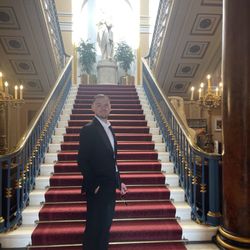
    Wow. So lovely! We recently has the pleasure of visiting Liverpool Town Hall for a wedding, and…read morewhat a wonderful place to get married! Like many historical buildings in the UK, it features prominent features like the neoclassical façade and big dome. Upon entry, you come straight into a grand staircase draped in a bright red carpet. All of the fixtures, statues, and details throughout the whole building are opulent. Rooms large and grand. There was a reception prior to the wedding ceremony which took place on the second floor, which included access to the main balcony. It was a stunning day (shocking, I know!), making it the perfect opportunity to enjoy gathering outside overlooking bustling castle street. The ceremony was in yet another grand room, with plenty of history. Such is a great place for any kind of larger event! It sounds like you can also come here for guided tours to explore the historical and architectural significance.
    Liverpool Town Hall is not nearly as grand or ostentatious as many other town halls to be found…read moreacross the UK, however it takes perfectly proportioned pride of place along one of my favourite streets in the city centre. The architecture of Cstle Street is brilliant with every building seemingly capturing a different, style, era and atmosphere of the city through its development. At the tope sits the town hall where it has been positioned under various stages of renovation and transformation since 1673. Although the mayor has little power within the city and much of the council power resides in other buildings across the city, the town hall is still an important civic centre within which weddings and prestigious social and charity events can be held.

    Plas Mawr

    Plas Mawr

    (9 reviews)

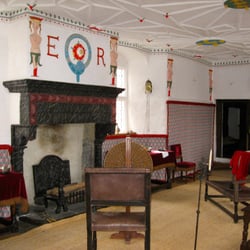
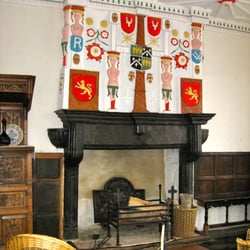
    Regarded by many as the best preserved Elizabethan town house in the UK, this historic gem is well…read moreworth a visit. It contains a wealth of decorative plasterwork and woodwork. History The house was built by Robert Wynn, a younger son of John Wynn of Gwydir Castle. He had served with the British Ambassador in Bruges, and travelled around the Continent. When he retired to Conwy, aged 50, he built himself a town house incorporating the latest features and styles, reflecting his prestige. It was built 1576-1585. After his death, a dispute over his inheritance meant the house was eventually split into a lodging house, and also functioned as a school, and then the headquarters of the local antiquarian society, before being taken over and restored by Cadw (Welsh Historic Monuments). The house This large building occupies a whole block of Conwy's streets. The main frontage consists of an elaborate gatehouse, courtyard and then the main house, which has its own courtyard and garden. The exterior has been plastered and limewashed, as it would have been originally. Inside, the rooms are a mixture of the 'working' rooms of the house kitchen, storage rooms, servants' quarters and so on, and the grander rooms intended for Wynn and his family. These have impressive fireplace mantels and panelling, and particularly large expanses of decorative plasterwork. In many places this is highly coloured, and includes decorative friezes of coats of arms, Tudor roses and other heraldic devices (and above all, Wynn's initials, RW, which appear everywhere). Another recurring motif is that of naked caryatids, carrying bowls of strawberries on their heads. They wear loincloths of leaves, and cover one breast, leaving the other bare. The plasterwork images are often touchingly naive and primitive, as local plasterers tried their best to reproduce unfamiliar images copied from pattern books. The house also has some impressive furnishings, although these have been sourced separately and are not original. In the attic, one room is furnished as it would have been in the early 19th century, as the home of a lodger, a washer-woman. Practicalities There is a guided audio tour available, which is well worth using, although the Tudor jingle which precedes each section may get irritating after a while. There are also static presentations on aspects of Tudor and later life. Access for those with restricted mobility is limited, due to the presence of stairs and uneven floors. There is also a shop at the entrance selling the usual cards, books and gift items.

    My wife and I thoroughly enjoyed touring this Elizabethan house. When you first go in they actually…read morehave clothing you can try on from that period. I would highly recommend visiting.

    Brookside Close - landmarks - Updated May 2026

    Loading...
    Loading...
    Loading...