Cancel

    Open app

    Search

    Big Tree Photos

    Recommended Reviews - Big Tree

    Your trust is our priority, so businesses can't pay to alter or remove their reviews. Learn more about reviews.
    Yelp app icon
    Browse more easily on the app
    Review Feed Illustration

    9 days ago

    Helpful 3
    Thanks 0
    Love this 1
    Oh no 0
    Photo of Ariel W.
    4395
    5911
    103778

    11 months ago

    Helpful 30
    Thanks 8
    Love this 19
    Oh no 0

    Verify this business for free

    People searched for Landmarks & Historical Buildings 187 times last month within 5 miles of this business.

    Verify this business

    Lady Liberty

    Lady Liberty

    5.0(1 review)
    0.0 mi

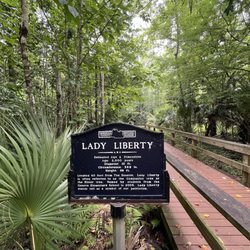
    Lady Liberty is a historic Bald Cypress tree located at the end of the boardwalk in Big Tree Park…read morein Longwood. Bald Cypress trees are a deciduous tree found in swamps, wet stream banks, and bottom lands in the southern part of the United States. They can reach heights of 80-130 feet and diameters of 8-13 feet. Cypress trees belong to the large group of plants called conifers meaning they produce cones that hold their seeds. Cypress wood is very durable resisting rotting and pests making it a popular choice for fences, docks, and other outdoor structures. Cypresses trees are also found in gardens and parks. They are notable for being one of the very few trees that can survive in standing water. Lady Liberty is 2,000 years old. She stand over 82 feet tall with a trunk circumference of 394 inches and a crown spread of 34 feet. Lady Liberty was a sister tree to The Senator. For that reason for many years she was simply called The Companion. The Senator was the Florida state champion Bald Cypress tree that was 3,500 years old. On January 16, 2012, The Senator was burned down in a drug fueled arson fire by Winter Park resident, Sara Barnes. In 2005, Geneva Elementary School held a contest to find a better name for the tree. Two fifth graders won with the name Lady Liberty. They chose the name because one of the tree's branches stands at an angle which looks like the uplifted arm of the Statue of Liberty. Also in 2005 the county extended the boardwalk to reach the tree and installed a fence around it to keep people out. A historic marker erected by Seminole County was placed near the tree. Archangel Ancient Tree Archive has obtained cuttings from the tree to propagate it for future generations. Clones of the tree will be planted in a living archive, replanted at the site. and donated to schools and various organizations in Florida. I feel lucky to have gotten the chance to visit Lady Liberty. I love nature and have explored many historic and natural places in Florida, some with their own majestic trees but there is something so special and awe inspiring about Lady Liberty. You have to stand next to her to feel it. To think of all the history she has withstood in the past 2,000 years gave me chills.

    Photos
    Lady Liberty
    Lady Liberty
    Lady Liberty

    See all

    The Phoenix - She growing up!

    The Phoenix

    5.0(2 reviews)
    0.0 mi

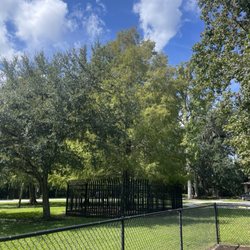
    Located in Big Tree Park near the parking area and playground is a landmark bald cypress tree, The…read morePhoenix. Bald Cypress trees are a deciduous tree found in swamps, wet stream banks, and bottom lands in the southern part of the United States. They can reach heights of 80-130 feet and diameters of 8-13 feet. Cypress trees belong to the large group of plants called conifers meaning they produce cones that hold their seeds. Cypress wood is very durable resisting rotting and pests making it a popular choice for fences, docks, and other outdoor structures. Cypresses trees are also found in gardens and parks. They are notable for being one of the very few trees that can survive in standing water. What makes The Phoenix tree so special is that it is a clone of another cypress tree that used to be in the park, The Senator. The Senator was the Florida state champion Bald Cypress tree and was 3,500 years old. On January 16, 2012, The Senator was burned down in an arson fire by Winter Park resident, Sara Barnes. Some of the wood from The Senator was given to artists and you can see the pieces they created in the Seminole History Museum. Before The Senator was lost, the forward thinking Mr. Laymond Hardy, a high school teacher with a strong interest in cypress, worked with Mr. Marvin Buchannan of Central Florida Lands and Timber Nursery and Dr. Donald L. Rockwood of the University of Florida, to develop a seed orchard of selected cypress trees in the 1990's. Mr. Hardy thought to include The Senator and collected several of its branches for cloning. Branches were grafted onto root stock, propagated, and The Phoenix was planted in the park in 2013. The Phoenix has the exact genetic makeup of The Senator. Local schoolchildren chose the name The Phoenix after the bird that rises from the ashes. While the story of The Senator is a tragic one, The Phoenix represents new hope.

    I remember when we lost the Senator and the Phoenix was first planted. Just a little sprig of wood…read morewith a fence around it. But look at her now!!!! She's growing up strong and getting bigger everyday. She's right next to the playground at the entrance of the park and is already home to so much wildlife. This is a big part of recent Florida history so bring your kids by to play on the playground and see the tree that has survived incredible odds! I am so proud of the Phoenix and give high praise to Florida for the tribute they have created for the Senator.

    Photos
    The Phoenix
    The Phoenix
    The Phoenix - The Phoenix

    See all

    The Phoenix

    Bradlee-McIntyre House

    Bradlee-McIntyre House

    5.0(1 review)
    1.7 mi

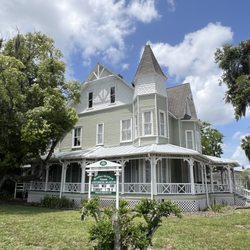
    The Bradlee McIntyre House, sometimes called the Bradlee Mac was built in 1885 in Altamonte…read moreSprings. It originally sat along with its mirror image home built for Henry Herman Westinghouse, brother to inventor George Westinghouse adjacent to the Altamonte Hotel, which sat at the intersection of Maitland Avenue and State Road 436. This home was built during a surge in Central Florida tourism in the 1880's spurned by the connection of the South Florida Railroad from Sanford to Orlando. By 1886, there was direct rail service from the North to Central Florida bringing wealthy winter tourists to luxury homes and hotels. The Bradlee McIntyre house was owned by wealthy Boston architect Nathaniel J. Bradlee who was known for the Queen Anne style of architecture used to design this home and others in the area. Queen Anne hallmarks include the castle-like tower with a steep-angled gabled roof decorative accents. Nathaniel passed away shortly after the home's completion on December 17, 1888. The family continued to winter here until 1904 when they sold the house to S. Maxwell McIntyre who lived here with family until 1946. The Bradlee McIntyre home fell into disrepair in the 1960s. By 1969 the city was looking to tear it down. The Longwood Historical Society came to the rescue and moved the house to this current location where it was restored and furnished in the late Victorian Style. It was added to the National Register of Historic Places. Bradlee McIntyre House Historical Museum tours are every Wednesday and Sunday from 1-4 PM for a donation of $5. The home is rumored to be haunted with guests feeling a presence in certain rooms. If you would like to learn more about the supernatural you can take the Longwood Haunted History Tour where guests can learn about ghost stories involving the house. Tickets are currently selling online for $30 for October event dates.

    Photos
    Bradlee-McIntyre House
    Bradlee-McIntyre House
    Bradlee-McIntyre House

    See all

    White’s Wharf Clifton Springs

    White’s Wharf Clifton Springs

    5.0(1 review)
    5.9 mi

    While I am very familiar with the blue markers of the state wide Florida Historical Marker Program,…read moreoccasionally I will come across a county or city historic marker. On a recent walk through Overlook Park on Lake Jessup, I discovered that Seminole County has their own historic marker program. Historic markers are a great way to learn about the formative people, buildings, and events in a town's history. This marker was erected by Seminole County and recounts the history of White's Wharf at Clifton Springs. Just north of this spot, in 1765-1766 John and William Bartram discovered the springs during a search for the source during their excursion up the Saint Johns River. They set up camp next to the warm sulfur springs. The swampy shoreline of Lake Jessup became the site of at least three wharves and trading posts just after the Civil War. In the late 1870's, W.G. White built a store at this spot. White employed six clerks and traded with buyers who came by wagon and ox cart from all parts of Central Florida and as far south as Fort Christmas. Settlers gave meat, hides, and plumes from wild birds in exchange for flour, grits, cane syrup, molasses, rice, medicines, cloth, and hardware. White also owned a nearby grove that supplied his wharf. White's Wharf became an important stop for anyone traveling on the St. John River and those in the new city of Oviedo. The campground at White's Wharf became a community gathering place for church picnics until the 1950's. The site also became known as Clifton Springs, in honor of the hometown in New York of Dr. Henry Foster, a wealthy grower who spent winters at Lake Charm in Oviedo. In 1882, White formed the Lake Jessup Steamboat Company with the local postmaster and another merchant. The men purchased the Isis, a stern-wheeler that hauled fruit from the grove across the lake to the St. Johns and north to Jacksonville which boosted the popularity of Clifton Springs. The Isis eventually sank in Lake George during a bad storm, killing three crewman. The Lake Jessup Steamboat Company soon disbanded after the ship was destroyed. In the 1800's White moved his business to Orlando to take advantage of the railroads being built in Central Florida. In the early 2000's, Seminole County claimed this land and renamed White's Wharf to Overlook Park and opened it to the public. The park is surrounded by two sulfur springs, one to the east and one to the west. There is a picnic pavilion and a boardwalk on Lake Jessup for fishing.

    Sanford State Farmers Market

    Sanford State Farmers Market

    5.0(1 review)
    6.5 mi

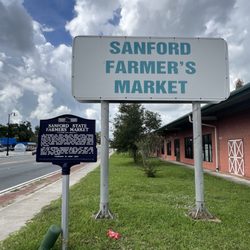
    While I am very familiar with the blue markers of the state wide Florida Historical Marker Program,…read moreoccasionally I will come across a county or city historic marker. On my way to downtown Sanford I discovered this marker on the side of the road giving the history of the first state owned Farmers' Market in the nation which was located near this site. Historic markers are a great way to learn about the formative people, buildings, and events in Florida's history. The Sanford State Farmer's Market opened on December 18, 1934 at the corner of 13th and French Avenue, Sanford, Florida. It was created in order to provide a central location for farmers to sell their produce directly to consumers. The idea for the market was developed by Fred Dorner and Gus Schmach who were both members of the Seminole Agricultural Club. Sanford Chamber of Commerce President Harry Papworth also contributed to the development of the market. The Federal Emergency Relief Administration (FERA) authorized construction of the market on June 11, 1934. That same year the City of Sanford donated 20 acres of the Alex V. and Katherine K. French properties to the Florida State Marketing Board which approved the installation of telegraph and telephone equipment and a three pump filling station. The first wood buildings were constructed with loans from the Federal Emergency Relief Agency. One hundred and eight stalls rented for 50 cents a day, $3.00 per week, or $10.00 per month. Railroad service to the market was provided to the market by an Atlantic Coastline Railroad spur. In time, the market complex grew to as many as ten units, with the filling station, restaurant, vegetable cooling room, citrus packing house, barber shop, telegraph agency, and a 35 ton weighing station. Truckers could avail themselves of free showers, soap, and towels. The large volume of the market led to 27 similar agricultural markets popping up all over the state. On April 4, 1957, a fire destroyed the building and caused damages estimated at $2.5 million. The wood buildings were replaced by a more fireproof concrete structure that is still here today. For almost 70 years this market was wholesale. In 2003, a new farmers' facility was added to provide retail produce to the public.

    Photos
    Sanford State Farmers Market
    Sanford State Farmers Market
    Sanford State Farmers Market

    See all

    Hedy Lemarr Historical Marker

    Hedy Lemarr Historical Marker

    5.0(2 reviews)
    5.5 mi

    While I am very familiar with the blue markers of the state wide Florida Historical Marker Program,…read moreoccasionally I will come across a county or city historic marker. On a recent walk through Red Bug Lake Park, I discovered that Seminole County has their own historic marker program. Historic markers are a great way to learn about the formative people, buildings, and events in Florida's history. This marker was erected in 2023 by The Jewish American Society for Historic Preservation with support from the Casselberry Historical Society and the Seminole County Historical Society. It recounts the important WWII contributions made by the actress Hedy Lamarr who passed away in Casselberry at the age of 85 on January 19, 2000. According to this marker, famed Golden Age of Hollywood actress and inventor Hedy Lemarr had a home near Red Bug Lake Park in the later years of her life. Hedy was born Hedwig Eva Marie Kiesler on November 9, 1914, in Austria to Emil and Gertrude Kiesler and she was raised in the Jewish faith. In 1938 she came to the U.S. and became a naturalized citizen in 1953. She went on to star in two dozen movies, including the notable Samson and Delilah directed by Cecil B. DeMille. During WWII, Hedy and George Antheil received U.S. patent number No. 2,292,387 for their Secret Communication System. Hedy explored potential military applications for radio technology. She theorized that varying radio frequencies at irregular intervals would prevent interception or jamming of transmissions, thereby creating an innovative communication system. Together she and Antheil designed a way to help the U.S. Navy against Nazi Germany by allowing spread spectrum and frequency jumping of radio waves in torpedo guidance systems. This technology was later used to make Wi-Fi, GPS, and Bluetooth technology possible. The National Inventor's Hall of Fame posthumously inducted Lemarr and Anthiel in 2014. Her invention has led Heddy Lamar to be known as the mother of Wi-Fi.

    Who knew that Hedy Lemarr had a connection to Oviedo, Florida? I certainly did not until today as I…read morewas walking around Red Bug Lake Park and came across this historical marker. Hedy Lamarr was n incredibly popular actress back in the golden age of film making. She starred in over two dozen movies including the Cecil B. DeMille classic "Sampson and Delilah." What many do not realize is that in addition to her beauty, Hedy Lamarr was not only incredibly intelligent, but she was also the co-onventor of a "secret communication system," which allowed frequency jumping in radio waves. This later was beneficial with WiFi and cellular phone technology possible. It appears that Lamarr relocated to the Oviedo, Florida area and this is where she passed away back in 2000. I love finding these historical markers that connect us to a community's past.

    Photos
    Hedy Lemarr Historical Marker
    Hedy Lemarr Historical Marker - Hedy Lamarr

    Hedy Lamarr

    Hedy Lemarr Historical Marker

    See all

    Casselberry

    Casselberry

    4.5(2 reviews)
    3.4 mi

    While I am very familiar with the blue markers of the state wide Florida Historical Marker Program,…read moreoccasionally I will come across a county or city historic marker. On a recent walk around City Hall, I found this marker erected by the Seminole County Historic Society. Historic markers are a great way to learn about the formative people, buildings, and events in Florida's history. Hibbard Casselberry is the founder of Casselberry, Florida. In 1926 he came to the area to visit his family in Winter Park. At the time the surrounding area was a fern farm that grew asparagus plumosis ferns for the florist industry. Casselberry became the sales manager for Fern Park Estates but left to plat his own subdivision, Winter Park Ferneries which became known as Fern Park. Throughout the 1930's he continued to develop his fernery and real estate business. This marker recounts how the City of Casselberry was initially tax free. Mr. Gordon Barnett, a local former state legislator proposed a town charter for Fern Park that included property taxes. Mr. Casselberry's Countered with a tax free proposal and and he agreed to pay out of pocket any necessary costs needed by the town. On October 10th, 1940, the tax-free Town of Casselberry including parts of Fern Park Estates was officially incorporated and Mr. Casselberry lent his name to the town and served as its first mayor. For many years the town proudly boasted of being tax free. On May 16, 1965 a new governing City Council was created and they levied the first ad valorem property tax in 1976.

    Casselberry City Hall is just off of 17-92 and has a pleasant enough park next to it and a…read moresculpture garden on the grounds. Overall, it is a peaceful place and has good parking if you are here to do business.

    Photos
    Casselberry
    Casselberry
    Casselberry

    See all

    Lake Mary Museum

    Lake Mary Museum

    4.0(3 reviews)
    2.7 mi

    Small museum which also shows local artist work on occasion…read more Came here whilst having a little wander round the area. Interesting place to come to find out more. Free entry with lots of information about the area and people along with various displays and photos to look at. Wouldn't necessarily make this my mission to see but worth popping in if you are passing by.

    Lots of old…read morestuff The Lake Mary Historical Museum is a cool old building that was built back in 1926 as a community center. It then served as the town hall from 1973 to 1996 and now it serves as the historical museum and historical society. The building isn't particular large but has a wonderful front porch and an interior that is stuffed full of cool artifacts and displays. The exhibitions change from time to time and when I went the the theme was Honor our Military. Lots of old helmets, uniforms, models, magazines, papers and other stuff that represents the military, especially Lake Mary's contribution to the various wars. They manage to get quite of bit of stuff in here, especially since the front of the building also has to serve as a meeting place for the historical society and needs open space for tables and chairs. Other exhibitions show and emphasize different aspects of Lake Mary's past so there is something new displayed frequently. The people working here are exceptional friendly and nice and will answer any possible questions you might have and the museum even has a small gift shop. A cool little museum for anyone wanting to know about the history of Lake Mary.

    Photos
    Lake Mary Museum - Scruffy tourist enjoying the museum

    Scruffy tourist enjoying the museum

    Lake Mary Museum - Music

    Music

    Lake Mary Museum - Cool porch. Photos by Anna K.

    See all

    Cool porch. Photos by Anna K.

    Big Tree - landmarks - Updated May 2026

    Loading...
    Loading...
    Loading...