Cancel

Open app

Search

Balcón del Coño Photos

Balcón del Coño Reviews in Other Languages

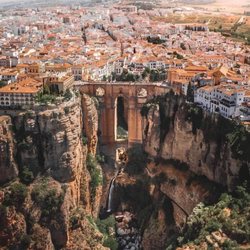
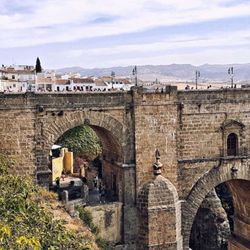
Puente Viejo - Puente Viejo, Ronda (leading from old town into the "new" part of town)

Puente Viejo

5.0(2 reviews)
0.5 km

Puente Viejo is a bridge as you'd have guessed, the oldest one built in Ronda in 1616. Easy to…read moreremember. It's very easy to find, like everything else in Ronda, just grab a map - a self guided walking tour and follow the main drag. Everything is close by, within walking distance. The bridge is old, beautiful, take a break for a while to take all the details in and the amazing views all around! Roman bridge with some Moorish influences, a great example of Andalusian architecture. Pedestrian only, a wonderful sight!

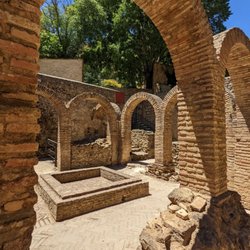
The Puente Viejo (old bridge) in Ronda, was built on remains of an older bridge. According to…read moreSpanish touring sites, this version of the bridge was built in the 16thC, however, Wikipedia claims it was built in 1616 (the year of Shakespeare's death). I would tend to go with the Spanish info, dating it to the 1500s. The more famous Puente Nuevo (new bridge) is a "young" 200+ years old. While Puente Nuevo allows vehicular traffic, Puente Viejo is a pedestrian-only bridge. It is accessible from lower points in town, down the hill from the Palacio del Rey Moro, on the old side of the city, and near Iglesia de Padre Jesús on the new side. This bridge has great views, but, IMO, not as dramatic as those from Puente Nuevo. Puente Viejo is in Carlos Saura's film version of Carmen (1983). Los Caños bar, nearby, shows photo stills from the movie. * * * TIP * * * Near the old bridge, there is an entrance to walk the INTERIOR of the city walls, to see these old ramparts from the inside. Ask for more info from your hotel, because this is not of widespread tourist knowledge.

Photos
Puente Viejo - Puente Viejo, Ronda

Puente Viejo, Ronda

Puente Viejo
Puente Viejo

See all

La Casa del Rey Moro - Patio

La Casa del Rey Moro

5.0(3 reviews)
0.4 km

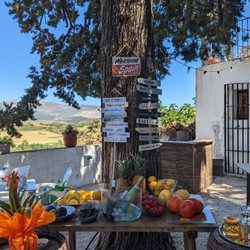
I stopped in here for an afternoon drink after doing some sightseeing around Ronda. Beautiful views…read moreof the city and a lovely patio. Definitely tourist-oriented. Service was good very relaxed atmosphere.

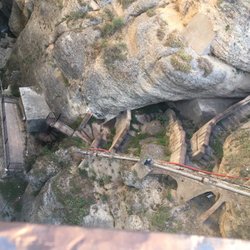
*This listing is for the historical landmark / museum, Palacio del Rey Moro. There are other Yelp…read morelistings, with German reviews, for the bar with the same name. Entry fee was 5€ pp, cash. The palace is currently under renovation (visited during the off-season). There is no actual palace to visit, just the gardens and the water mine, which is a very long staircase, inside a stone structure, down the side of the ravine, to a water source on the floor of the Tajo. This historic site is a layering of history. The 14thC water mine is authentic to the days of Moorish rule. However, the palace was built in the 18thC, long after the Moors were banished from Spain. The palace was later remodeled by the Duchess of Parcent in 1920. The gardens were created in 1912, by Jean Claude Forestier (the same French architect who designed the Maria Luisa Park in Seville). So you get a combination of stories about historical figures who were never contemporaries of one another. The main attraction at this museum is definitely La Mina (the water mine). THE MINE In the 14thC, Moorish king, Abomelik, ordered the cutting of steps into the stone walls of el Tajo so he could have Christian slaves chained to the steps, to pass water up all day, from río Guadelevin. The mine was built concealed, to be kept secret, presumably, from potential invaders, but it was a well-known fear among Spanish Christians that "in Ronda you die carrying water skins." Note that historic records state there were 365 steps in the mine, but today there are 231, and no evidence of the missing steps. When I saw this place on the Rick Steves Andalucía episode, I couldn't wait to visit. When I got to the winding, grueling 231 stone steps, of non-uniform size, with dripping water all over, making them slippery, I was not as excited. It is a workout, but a good one. I am very glad we did it in the off-season, and not when there are a million sweaty tourists crowding the passage, making it insufferable! Note that the steps of the mine are not the entire descent. There are various terraces in the garden at the top, each with a flight of stairs, leading you slowly down to the mine itself. You have already descended about 1/3 of the cliff before you even get to the mine. *This place is not at all accessible for disabled persons. The mine, in Moorish times, was the only source of water for the city, and the steps were later the means by which Spanish Christian troops forced entry into Ronda to recapture it 1485. THE PALACE Folklore names this place "Palace of the Moorish King" under the belief that a prior palace stood on this site, as the home of King Almonated (who has no Wiki article nor Googleable info). All info I could find about this king was just part of the folklore of this castle. THE GARDENS The gardens are a series of courtyard-type niches at street level, followed by stepped terraces graduating down to the entry of the mine. There is not a lot of grassy / soil area, mostly paved patio or pea gravel, along with various small ponds and fountains. There are places to sit on tiled benches. The gardens are in need of a lot of cosmetic repairs (cracked pavers, mildewed paint, chipped tiles, etc). But you can still appreciate their beauty, and the views from them are amazing. In summary, I would definitely say it was worth my fiver, and all that physical exertion to make contact with 700-year-old history. Definitely a top stop on my Ronda list. * * * TIP * * * One tourism guide stated that one of the chambers along the mine's staircase is called Sala de Secretos (Room of Secrets) because while 2 people, each standing close to the wall at opposite ends of the room, can hear each other, their words are oddly completely inaudible to anyone standing in the middle of the same room. Tourists like to put it to the test. (This phenomenon is similar to the "Whispering Gallery" in St. Paul's Cathedral, London.)

Photos
La Casa del Rey Moro - Tinto de verano

Tinto de verano

La Casa del Rey Moro - Palacio del Rey Moro, Ronda

Palacio del Rey Moro, Ronda

La Casa del Rey Moro - Palacio del Rey Moro, Ronda

See all

Palacio del Rey Moro, Ronda

Plaza del Socorro - Plaza tower

Plaza del Socorro

4.5(2 reviews)
0.2 km

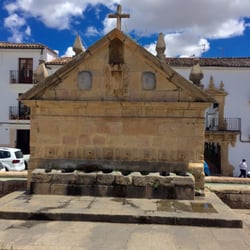
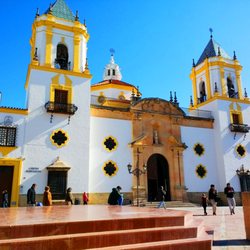
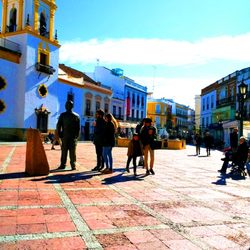
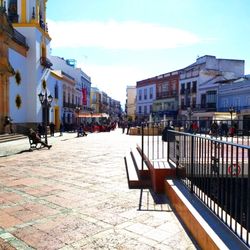
Typical plaza in Spain, beautiful architecture, a nice cathedral around (Iglesia del Socorro), a…read morephotogenic fountain in the middle of it (with the sculpture of Hercules and the 2 lions), nice colors, many outdoor restaurants around, great walking area in the middle of downtown Ronda. It is significant of the area's history and independence, the monument is dedicated to Blas Infante. Your typical Andalusian slice of heaven, with great details all over, perfect to explore on a sunny day. Next to Puente Nuevo, so make sure you won't miss it.

Plaza del Socorro is named for the abutting church, Iglesia del Socorro. This square is located in…read morethe "new" part of Ronda (the side to the north of the tajo/ravine). Plaza del Socorro hosts a fountain with sculptures of Herculese and two lions (after images representing Andalucia, established by Blas Infante), as well as a statue of Blas Infante himself, the "father of Andalicia." This square is historically significant because during the 1913 Assembly of Ronda, Blas Infante, politicking for Andalusian nationalism, waved the flag of Andalusia from the balcony of Circulo de Artistas, a building on this square. Infante led the movement to get Andalusia recognized as a national community, and won the Andalusian parliament a lot more autonomy than most regions of Spain. Infante was later executed by Franco, but is seen as a national hero, and is especially esteemed by Andalusians. We noticed a lot of Spanish tourists flocking to this square, due to its historical significance in Spanish history. Because we were there only days before Carnival, it was an especially busy time for crowds of Spanish visitors in Ronda. This square gets a lot of great sunlight, and has various places to sit. There is a parking garage under the square. Many good restaurants along its perimeter. At night, it is beautifully lit, and a fun place to relax.

Photos
Plaza del Socorro - Plaza del Socorro, Ronda 2-10-18

Plaza del Socorro, Ronda 2-10-18

Plaza del Socorro - Plaza del Socorro, Ronda 2-10-18

Plaza del Socorro, Ronda 2-10-18

Plaza del Socorro - Plaza del Socorro, Ronda 2-10-18

See all

Plaza del Socorro, Ronda 2-10-18

Balcón del Coño - landmarks - Updated May 2026

Loading...
Loading...
Loading...