Cancel

    Open app

    Search

    Altstadt Photos

    Altstadt Reviews in Other Languages

    Verify this business for free

    Get access to customer & competitor insights.

    Verify this business

    Schwäbisch Hall

    Schwäbisch Hall

    5.0(3 reviews)
    29.1 km

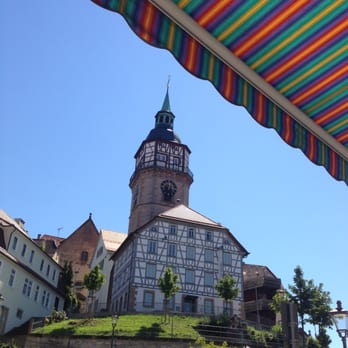
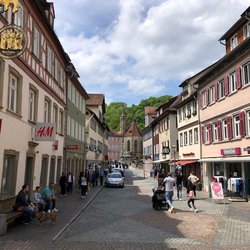
    Schwäbisch Hall or Hall for short was first mentioned in a document dating from 1063. It's…read moreunclear, but Hall possibly refers to the open-pan salt making method used there until the saltworks closed down in 1925. Salt was produced from brine by the Celts at the site of Schwäbisch Hall as early as the fifth century BC. Hall flourished through the production of salt and coins after imperial mint was founded by Emperor Frederick I Barbarossa. Hall became a Free Imperial City of the Holy Roman Empire around 1280. From the 14th to the 16th centuries, Hall systematically acquired a large territory in the surrounding area, mostly from noble families and the Comburg Monastery. The wealth of this era can still be seen in some gothic buildings like St. Michael's Church (rebuilt 1427-1526) with its impressive stairway (1507). The town joined the Protestant Reformation very early. Johannes Brenz, a follower of Martin Luther, was made pastor of St. Michael's Church in 1522 and quickly began to reform the church and the school system along Lutheran lines. Hall suffered severely during the Thirty Years' War (1618-1648) though it was never besieged or scene of a battle. However, it was forced to pay enormous sums to the armies of the various parties, especially to the imperial, Swedish and French troops. Between 1634 and 1638 every fifth inhabitant died of hunger and disease, especially from the bubonic plague. The war left the town an impoverished and economically ruined place, but with the help of reorganizations of salt production and trade and a growing wine trade, there was an astonishingly fast recovery. The Napoleonic wars brought the history of Hall as a Free Imperial City to an end. Following the Treaty of Lunéville (1801), the duke of Württemberg was allowed by Napoleon to occupy the town and several other minor states as a compensation for territories on the Left Bank of the Rhine that fell to France. Although Swäbisch Hall doesn't have any medieval fortifications walls surrounding it like Rothenburg o. d. T. or Dinkelsbühl, it certainly provides a very quaint medieval atmosphere with its numerous half-timbered houses and buildings, cobble stone streets, massive Gothic church on the hill, and Kocher River running through it. You can certainly enjoy strolling and wandering in this town for hours imagining how one's life might have been during those days. You'll enjoy visiting this town.

    Photos
    Schwäbisch Hall
    Schwäbisch Hall
    Schwäbisch Hall

    See all

    Königstuhl

    Königstuhl

    4.7(18 reviews)
    71.7 km

    Fun and reasonably priced way to see the city from the top! There are a couple funiculars depending…read moreon how far up you want to go, but I recommend going all the way up as the view is beautiful! There's a cute little bar/cafe at the top to enjoy the view. The castle is in the middle and interesting to walk around before heading back down to the city. Definitely a great experience in Heidelberg!

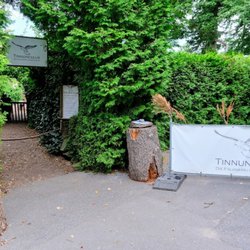
    While visiting Heidelberg, Königstuhl is a must-go attraction. Rightly called the King's Chair or…read moreThrone, it is a 567.8 meters high hill in the Odenwald Mountains. The summit allows visitors to overlook the city of Heidelberg and the Neckar River. The hilltop is the last stop on the Funicular Railway. Here, over 1,700 feet above Heidelberg, the visitor can catch a fantastic view of the region. But the view of the city is not the only reason to venture up there - there are numerous other sights as well. There is a falcon breeding station called Tinnunculus, a children's fairy-tale-themed park named Märchenparadies, and the Alter Kohlhof, a restaurant, winery, and hotel. The State Observatory of the University of Heidelberg is also located there. And in case that's not enough, there are numerous hiking trails for a bit of nature exploring. The sunset looks serene. Parking availability outside. A great place for families and kids. Going up and down with the train. Breathtaking view from the top. A perfect destination for trekkers, wanderers, and mountain bikers. Beautiful panorama. In a nutshell, it is an oasis of peace and relaxation, simultaneously offering a fantastic view of Heidelberg, the Neckar Valley, and the Rhine Plain.

    Photos
    Königstuhl
    Königstuhl
    Königstuhl

    See all

    Residenzschloss Ludwigsburg - The castle

    Residenzschloss Ludwigsburg

    4.3(32 reviews)
    17.9 km

    We were here in February, so the gardens are bare, but still a great place for a nice walk…read more We took the English language guided tour. Our guide was knowledgeable, entertaining and very friendly. Disappointed that only a small area was included on the tour. Our guide said that much of the palace was under renovation. I really enjoyed the collection of clothing - this was very unusual and interesting.

    As a study-abroad-student back in the 90s, I spent a good six weeks, or so, living in…read moreaccommodations just a stone's throw away from the grounds of the Ludwigsburg Palace. The residence, initially built as a hunting lodge for the Duke of Wuerttemberg, Eberhard Ludwig, in 1704, was expanded upon throughout the first few decades of the 18th century, and, eventually replaced the palace in Stuttgart as the residence of the royal family of Wuerttemberg. It is a gem to behold. There is much to see both around the grounds of the palace and inside the palace itself. Years ago, I had taken a tour of the palace interior, but had forgotten both its beauty and deep history. Some rooms have been preserved in the original baroque style-opulent parquet flooring and gold accented walls-but most other rooms had had their baroque flourish covered up with somewhat demure wall paper and (in my opinion) rather unimaginative wood flooring in later years. The building is surrounded by well-manicured grounds which then bleed out into, sort of, more wild bits and overlap with the Maerchen Park that has become a part of the Bluehendes Barock* experience one undertakes when purchasing an entry ticket to tour the palace grounds only. The Maerchen Park is home to a small variety of anamatronic fairytale figures that are both known and not to non-German audiences. As one attempts to open the gate of the Gingerbread House the witch living inside looks out through her curtains and speaks sinister words to you! At the tower of Rapunzel children cry out, "Rapunzel! Rapunzel! Let your hair down!" And she does! Also housed within the palace is an amazingly extensive ceramics museum charting the rise of pottery in Germany from Bartmann jugs to Meissen tea sets. Unbeknownst to me, Ludwigsburg porcelain was and is of some renown. I'd imagine that Karl Eugen and his ilk were sipping tea out of Ludwigsburger tea cups back in the day... During our look-see of the museum, we were able to spy a, sort of, 'finishing room' where folk were placing unfinished jugs on open shelving units. Ooooh! If one is keen on buying the finished product, then pop on into the ceramics shops also on the palace grounds. A tea cup and saucer might cost you somewhere in the range of 200 euro. *Flowering Baroque: a beautiful garden show within the grounds of the Ludwigsburg Residenzschloss. If a trip to Germany includes parts of the SW, then I would strongly suggest a trip to the palace in Ludwigsburg. Bonus: the first King of Wuerttemberg, Friedrich der Dicke, is the grandfather (x8) of our Boris Johnson, Mayor of London.

    Photos
    Residenzschloss Ludwigsburg
    Residenzschloss Ludwigsburg
    Residenzschloss Ludwigsburg

    See all

    Altstadt - landmarks - Updated May 2026

    Loading...
    Loading...
    Loading...