Altenburg Photos



Recommended Reviews - Altenburg
Start your review...




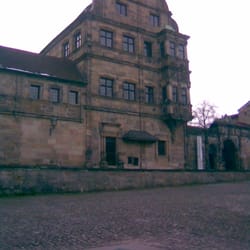
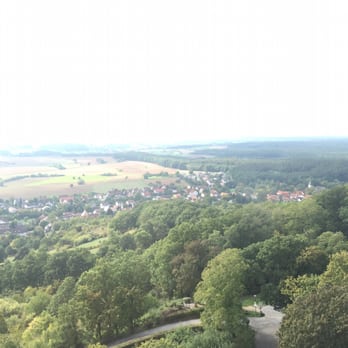
The Altenburg, one of the city's landmarks, sits enthroned on the highest of Bamberg's Seven Hills overlooking the town. The castle is mentioned for the first time in 1109, although it is likely that it was built on the spot of an earlier palisade castle. It first served as what is known in German as a "Fliehburg." This is a castle that was not regularly inhabited, but served mainly for city defense as a place where local residents could flee to in times of danger, so it was used as a refuge and fortress. In 1251, the Bamberg "Fürstbischöfe," the sovereign bishops of Bamberg, acquired the castle, so in the 14th to 16th (1305 to 1553) centuries it served as the richly furnished residence of the Bamberg bishops. It was almost completely destroyed in 1553 by the army of Albert Alcibiades, Margrave of Brandenberg-Kulmbach in the Second Margrave War. Only the 33-meter high keep from the 13th century and parts of t he curtain wall have been preserved from the medieval building stock. Afterward the castle was used as a prison for a while. An iron basket hangs on the upper part of the tower, which was used to transmit fire signals in the direction of Giechburg (near Scheßlitz), 20 kilometers across the valley away. The Altenburg was rebuilt in the age of Romanticism. In 1801, the Bamberg physician Adalbert Friedrich Marcus acquired the decaying castle and restored it from the ground up. The author E. T. A. Hoffmann, who was friends with Marcus, felt so drawn to the castle that he frequently stayed for a long time in one of the wall towers during the years 1808 to 1813. The restaurant "Hoffmannsklause" draws its name from this period. The viewing terrace offers a panoramic view of the episcopal city of Bamberg and the surrounding area. On a clear day, the view from this spot is marvelous even if you didn't go up on the tower (it was not open when we visited). You can look in to the whole city of Bamberg, and imagine how kings and knights will spend their days taking care of the business of their town. read more


The Altenburg is a castle that sits on the tallest of the seven hills of Bamberg, overlooking the city. It dates back to 1109. Die Altenburg ist das Wahrzeichen Bambergs. Weithin grüßt ihr schlanker Turm in das Fränkische Land. Sie steht auf einem Bergkegel am Rande der Steigerwaldhöhe. Zusammen mit dem gegenüber auf der Jurahöhe sichtbaren Schloß Giech beherrschte sie in vergangenen Jahrhunderten die Mainebene. --Dr. Dietrich Amende There is a 33m high tower and you can walk up there if you feel so inclined. It's about 170 some odd steps and I did go up to the top. It is however all glassed in at the top. Great views of the city from up here. A bit out of town and you can walk here if you so choose. read more



10 years ago
More info about Altenburg
Altenburg 1
96049 Bamberg
Germany
Directions
Hours
Other Amenities