
Request pricing & availability
You can now request a quote from this business directly from Yelp
Alfred Caldwell Lily Pool Photos


You might also consider


More like Alfred Caldwell Lily Pool
Recommended Reviews - Alfred Caldwell Lily Pool
Start your review...


Reviews With Photos


This spot is a hidden gem to get away from metropolitan noise located near downtown in the Lincoln Park area Great for Photoshoots too


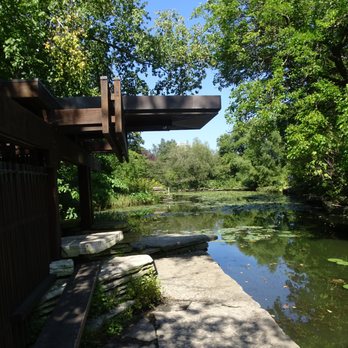
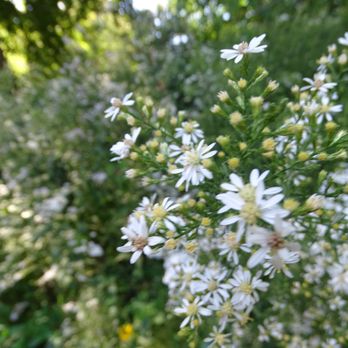
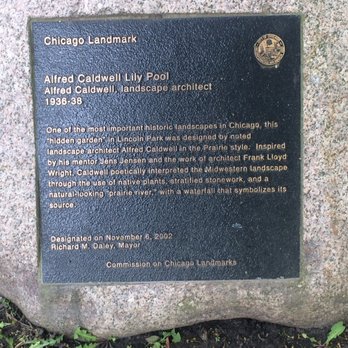
I have long wanted to visit the lily pool. I think I first learned about it from a Geoffrey Baer special on WTTW. Maintained as a partnership of the Chicago Park District and the Lincoln Park Conservatory, the Alfred Caldwell Lily Pool has a somewhat checkered past. It was originally created as a Victorian-style garden that was popular at the time (1889), and featured tropical plants (it was heated by the zoo's power plant to make the tropical plants happy, I guess). Caldwell, an early landscape architect, was hired in the 30's when the park district obtained WPA funds and set out to revive the garden, which had fallen into disrepair once the popularity of the original style of garden waned. It was meant to serve as a peaceful oasis within the city. Unfortunately (and much to Caldwell's deep resentment), it once again fell into disrepair for many years before it underwent a major restoration in the late 20th/early 21st century. According to the Chicago Park District website, the design "is meant to mimic a river formed by a melting glacier's flow of water as it cuts through rock." As an architect in the Prairie School of landscape architecture, Caldwell's work is often mistaken for Frank Lloyd Wright but you would be remiss to assume this and not seek out more of Caldwell's work if you are near it. It was interesting to me to learn that Caldwell taught for IIT for many years, since I too worked for that college for a decade. The ACLP is very hidden along Fullerton near Lincoln Park Zoo. If you are driving you can easily miss it. The entrance is on Fullerton itself, and almost as soon as you walk through the Prairie-style gate you'll feel like you're miles from the city. Of course the major feature here is the lagoon, filled with hundreds of lily pads (in early days there were prairie lilies in the pond; I don't know if there are any flowering plants in the water at some point in the present day). I didn't encounter any frogs, thank goodness! There's a path that winds around the pool; overall, the footprint of the park is actually much smaller than I expected. Toward the south end of the pond you're walking by one of the zoo habitats--you can see it from the path but I don't think you can see any animals from there. (There is also an entrance to the pond from the LPZ parking lot, so if you're a member that makes it easy.) The park is partially ADA accessible--there are some stairs as you make your way around to the west side of the pond, though. On that side of the pool there are a couple off prairie-style pavilions where folks can sit, though there are tons of outcrops all along the path for patrons to sit, read, reflect, visit, or whatnot. There is an area called the council ring on the eastern side of the pond, which Caldwell said was inspired by his mentor as a place for people to gather and socialize. Native plants were installed as part of the restoration in the early 21st century, and you will see Joe Pye Weed, Black Eyed Susans, bee balm, and other native plants as you wander the path. Frogs, turtles, dragonflies, butterflies, and other critters are said to be found here, as well as birds if you want to bring your binoculars. The Alfred Caldwell Lily Pool has earned many accolades: It is a Chicago Landmark, a National Historic Landmark, and is listed on the National Register of Historic Places. It is open from April to November from 7:30 am to 7:30 pm or dusk, whichever comes earlier. It is free to visit. Parking is a beast; I was incredibly lucky to find a spot a block away, but that was in the middle of the day whilst I was on maternity leave. You might find parking along Stockton or Cannon Drives or Lincoln Park West, or some of the further flung surrounding streets. If you're a member of the LPZ, you can park in the lot there and gain access. Event permits are available as well--I can imagine this would be an incredibly beautiful setting for a wedding or other special event. Docents of the Lincoln Park Conservatory offer free tours several times per week (I may be back for one of those soon!).


Gorgeous place. Very serene. Located right next to the zoo (which is free btw). The Lily Pool area is lovely to walk around and it's an easy walk. There is also a path that connects the Lily Pool area to the zoo area. However, there was signage indicating that the gate/path was closed when I visited July 2022. If you enjoy nature and/or pretty scenery, I highly recommend stopping by here.


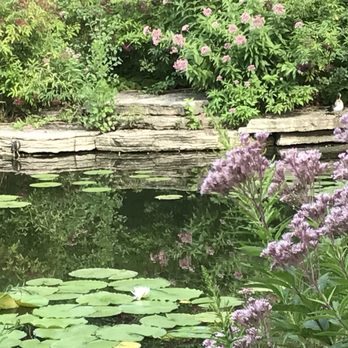
The pond area was built artistically with nature in mind. The rock formations jutting outwards give this sanctuary a unique feel and offers an abundance of space to hike or sit and enjoy the peacefulness which is usually suited for a remote area with miles of hiking. The lilies in the pond are reminiscent of one of Monet's paintings come to life. There's a few simple structures near the pond giving visitors to sit, have shelter from the rain, and to reflect. There's a plethora of wild life and plants including ducks, other birds, squirrels, flowers, trees, and ferns. I hope that more parks are built like this but alas only a few people enjoy this kind of oasis.


What a beautiful area we happened to stumble across on my vacation in Chicago! We had gotten dim sum in Lincoln Park and decided to walk back to our place (~2 miles) through the park. We didn't know what this was but we were immediately drawn to the interesting gate. Upon entering, we were delighted to discover this Lily Pool! So pretty and serene, with plenty to take in. We sat for a while in front of the Lily Pool, watched a little family of ducks swim by, and spotted some fish darting around in the water. Definitely recommend - I'm sure this would be a great spot for photos.
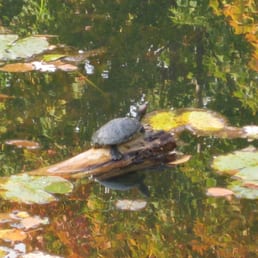

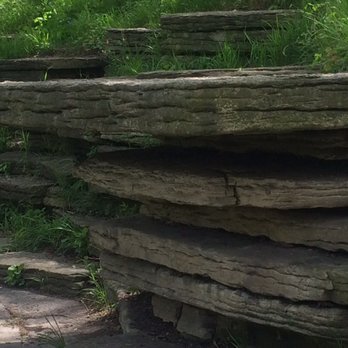
Call me Wilma, because this place would put Fred Flintstone in the mood for romance. While I am a sucker for parks (they garner the lion's share of my five star reviews), this one was a hot mess when we were there in the fall. There is a difference between 'natural' and 'left to rot' and it was not a pretty sight during our visit. I'm sure part of my reaction is due to the stark contrast between the immaculately maintained Lincoln Park Conservatory and this outdoor wildlife sanctuary. Sort of opposite ends of the park spectrum, but you should definitely visit both. Oh, the possibilities. The structures are called 'prairie style' architecture, but for me it was a cross between a 70s James Bond villain's lair and a caveman's palace. I can see why it puts so many other reviewers in the mood for romance. The large slabs of horizontal stone were striking. The pond was full of lillies and we saw turtles and fish. I'd love to visit during the lushness of the summer. At the moment, some weeding is in order. Oh and strike the first, I'd rather be Betty.


Alfred Caldwell Lily Pool is a great place to relax and unwind. A peaceful oasis to walk through or stop and enjoy the natural landscaping and natural wildlife. It's a quiet part of the Lincoln Park Zoo, and you can enter from the street or from inside the zoo. A perfect place to take your lunch and enjoy a little bit of wilderness in our great city!


This is a pretty little park! Its not huge, so it's easy to get through it all. It's very calming, and it's free to all! We saw a couple getting engagement photos taken here, and this would be such a perfect place for that. If you're in the area, definitely check it out!


I went to the Nature Museum to see the butterflies and heard someone talking about the free lily pond across the street. Unfortunately the water lilies were gone .. i guess they are gone by August and it was mid September. but still walked the short circle around the pond .. it was lovely.


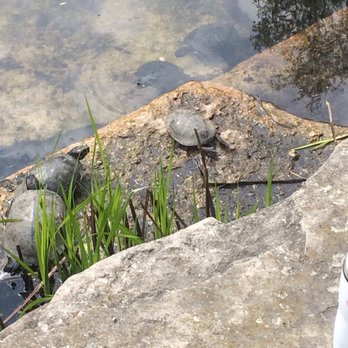
The Lilly Pool is a hidden gem that should not be missed. The Lilly pool is hidden between the Lincoln Park Conservatory and the Peggy Norbert Nature Museum. This serene area is for anyone who needs a break from the hassle of the city. The paths are very well laid out. There are plenty of areas that you can sit and relax. If you are lucky, you'll see some turtles. Later in the summer, you can enjoy the Lilly pond flowers. I look forward to return to the pond later in the summer.


It is not a big park, but kind of interesting to join the tour to walk around the park to understand the plants. The volunteers are knowledgeable to talk about different kind of plants. It is better to come in summer from June to July to see the booming lilies. If you really want to see lilies, you can still find them in Lincoln Park Conservatory. Watch out of mosquitos here. I got mosquito bites here.


I've always wanted to check this place out. It's a man-made space with a pond and a previously believe to be extinct redwood tree. The Prairie-style Fullerton gate hides the garden well. There were staff to help educate you about this hidden gem. I see why it's popular for weddings and photoshoots.


It took us a minute to find this place because it's sectioned off, but once we entered the national historic landmark, it's really quite lovely and tranquil. Constructed by Alfred Caldwell as a 'sanctuary of the native landscape' the pond is full of lily pads and turtles, with a cascading waterfall and alcoves where people can sit and chat. Guests today were laughing, talking pictures, strolling, and even sketching whatever caught their eye. The limestone pathways are easy to navigate, soI'll be back to see the summertime brightness :)


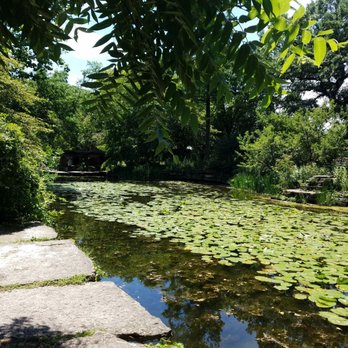

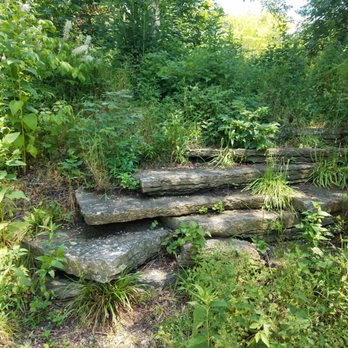
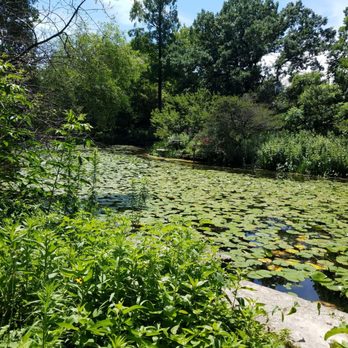
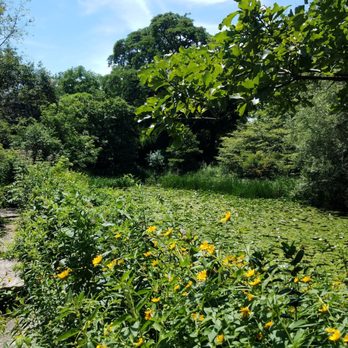


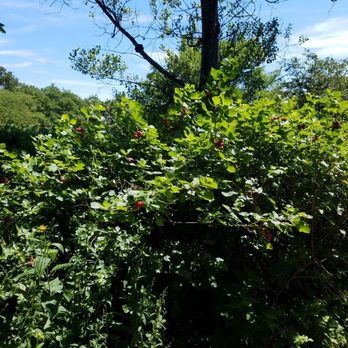


This is probably one of my favorite hidden gem spots in Chicago. It's such a beautiful and tranquil area to relax and enjoy the nature. There's a trail that loops around the pond, so you can walk around a few times and meditate. There's so many options to sit too. It's a great spot to bring a book or a snack. Amazing spot for photos too! There's always a bride and groom here taking photos. read more


3 months ago
Nice spot to relax and enjoy peace and quiet. Beautiful view of the lily pond. A good spot to meditate in the middle of the busy city. read more


I have long wanted to visit the lily pool. I think I first learned about it from a Geoffrey Baer special on WTTW. Maintained as a partnership of the Chicago Park District and the Lincoln Park Conservatory, the Alfred Caldwell Lily Pool has a somewhat checkered past. It was originally created as a Victorian-style garden that was popular at the time (1889), and featured tropical plants (it was heated by the zoo's power plant to make the tropical plants happy, I guess). Caldwell, an early landscape architect, was hired in the 30's when the park district obtained WPA funds and set out to revive the garden, which had fallen into disrepair once the popularity of the original style of garden waned. It was meant to serve as a peaceful oasis within the city. Unfortunately (and much to Caldwell's deep resentment), it once again fell into disrepair for many years before it underwent a major restoration in the late 20th/early 21st century. According to the Chicago Park District website, the design "is meant to mimic a river formed by a melting glacier's flow of water as it cuts through rock." As an architect in the Prairie School of landscape architecture, Caldwell's work is often mistaken for Frank Lloyd Wright but you would be remiss to assume this and not seek out more of Caldwell's work if you are near it. It was interesting to me to learn that Caldwell taught for IIT for many years, since I too worked for that college for a decade. The ACLP is very hidden along Fullerton near Lincoln Park Zoo. If you are driving you can easily miss it. The entrance is on Fullerton itself, and almost as soon as you walk through the Prairie-style gate you'll feel like you're miles from the city. Of course the major feature here is the lagoon, filled with hundreds of lily pads (in early days there were prairie lilies in the pond; I don't know if there are any flowering plants in the water at some point in the present day). I didn't encounter any frogs, thank goodness! There's a path that winds around the pool; overall, the footprint of the park is actually much smaller than I expected. Toward the south end of the pond you're walking by one of the zoo habitats--you can see it from the path but I don't think you can see any animals from there. (There is also an entrance to the pond from the LPZ parking lot, so if you're a member that makes it easy.) The park is partially ADA accessible--there are some stairs as you make your way around to the west side of the pond, though. On that side of the pool there are a couple off prairie-style pavilions where folks can sit, though there are tons of outcrops all along the path for patrons to sit, read, reflect, visit, or whatnot. There is an area called the council ring on the eastern side of the pond, which Caldwell said was inspired by his mentor as a place for people to gather and socialize. Native plants were installed as part of the restoration in the early 21st century, and you will see Joe Pye Weed, Black Eyed Susans, bee balm, and other native plants as you wander the path. Frogs, turtles, dragonflies, butterflies, and other critters are said to be found here, as well as birds if you want to bring your binoculars. The Alfred Caldwell Lily Pool has earned many accolades: It is a Chicago Landmark, a National Historic Landmark, and is listed on the National Register of Historic Places. It is open from April to November from 7:30 am to 7:30 pm or dusk, whichever comes earlier. It is free to visit. Parking is a beast; I was incredibly lucky to find a spot a block away, but that was in the middle of the day whilst I was on maternity leave. You might find parking along Stockton or Cannon Drives or Lincoln Park West, or some of the further flung surrounding streets. If you're a member of the LPZ, you can park in the lot there and gain access. Event permits are available as well--I can imagine this would be an incredibly beautiful setting for a wedding or other special event. Docents of the Lincoln Park Conservatory offer free tours several times per week (I may be back for one of those soon!). read more




1 year ago

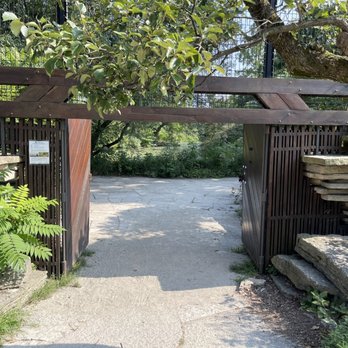
Gorgeous place. Very serene. Located right next to the zoo (which is free btw). The Lily Pool area is lovely to walk around and it's an easy walk. There is also a path that connects the Lily Pool area to the zoo area. However, there was signage indicating that the gate/path was closed when I visited July 2022. If you enjoy nature and/or pretty scenery, I highly recommend stopping by here. read more


1 year ago

The pond area was built artistically with nature in mind. The rock formations jutting outwards give this sanctuary a unique feel and offers an abundance of space to hike or sit and enjoy the peacefulness which is usually suited for a remote area with miles of hiking. The lilies in the pond are reminiscent of one of Monet's paintings come to life. There's a few simple structures near the pond giving visitors to sit, have shelter from the rain, and to reflect. There's a plethora of wild life and plants including ducks, other birds, squirrels, flowers, trees, and ferns. I hope that more parks are built like this but alas only a few people enjoy this kind of oasis. read more


5 years ago
What a beautiful area we happened to stumble across on my vacation in Chicago! We had gotten dim sum in Lincoln Park and decided to walk back to our place (~2 miles) through the park. We didn't know what this was but we were immediately drawn to the interesting gate. Upon entering, we were delighted to discover this Lily Pool! So pretty and serene, with plenty to take in. We sat for a while in front of the Lily Pool, watched a little family of ducks swim by, and spotted some fish darting around in the water. Definitely recommend - I'm sure this would be a great spot for photos. read more


Call me Wilma, because this place would put Fred Flintstone in the mood for romance. While I am a sucker for parks (they garner the lion's share of my five star reviews), this one was a hot mess when we were there in the fall. There is a difference between 'natural' and 'left to rot' and it was not a pretty sight during our visit. I'm sure part of my reaction is due to the stark contrast between the immaculately maintained Lincoln Park Conservatory and this outdoor wildlife sanctuary. Sort of opposite ends of the park spectrum, but you should definitely visit both. Oh, the possibilities. The structures are called 'prairie style' architecture, but for me it was a cross between a 70s James Bond villain's lair and a caveman's palace. I can see why it puts so many other reviewers in the mood for romance. The large slabs of horizontal stone were striking. The pond was full of lillies and we saw turtles and fish. I'd love to visit during the lushness of the summer. At the moment, some weeding is in order. Oh and strike the first, I'd rather be Betty. read more
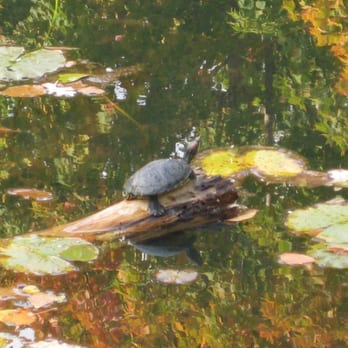


Alfred Caldwell Lily Pool is a great place to relax and unwind. A peaceful oasis to walk through or stop and enjoy the natural landscaping and natural wildlife. It's a quiet part of the Lincoln Park Zoo, and you can enter from the street or from inside the zoo. A perfect place to take your lunch and enjoy a little bit of wilderness in our great city! read more


This is a pretty little park! Its not huge, so it's easy to get through it all. It's very calming, and it's free to all! We saw a couple getting engagement photos taken here, and this would be such a perfect place for that. If you're in the area, definitely check it out! read more


I went to the Nature Museum to see the butterflies and heard someone talking about the free lily pond across the street. Unfortunately the water lilies were gone .. i guess they are gone by August and it was mid September. but still walked the short circle around the pond .. it was lovely. read more





The Lilly Pool is a hidden gem that should not be missed. The Lilly pool is hidden between the Lincoln Park Conservatory and the Peggy Norbert Nature Museum. This serene area is for anyone who needs a break from the hassle of the city. The paths are very well laid out. There are plenty of areas that you can sit and relax. If you are lucky, you'll see some turtles. Later in the summer, you can enjoy the Lilly pond flowers. I look forward to return to the pond later in the summer. read more


8 years ago
It is not a big park, but kind of interesting to join the tour to walk around the park to understand the plants. The volunteers are knowledgeable to talk about different kind of plants. It is better to come in summer from June to July to see the booming lilies. If you really want to see lilies, you can still find them in Lincoln Park Conservatory. Watch out of mosquitos here. I got mosquito bites here. read more


I've always wanted to check this place out. It's a man-made space with a pond and a previously believe to be extinct redwood tree. The Prairie-style Fullerton gate hides the garden well. There were staff to help educate you about this hidden gem. I see why it's popular for weddings and photoshoots. read more


It took us a minute to find this place because it's sectioned off, but once we entered the national historic landmark, it's really quite lovely and tranquil. Constructed by Alfred Caldwell as a 'sanctuary of the native landscape' the pond is full of lily pads and turtles, with a cascading waterfall and alcoves where people can sit and chat. Guests today were laughing, talking pictures, strolling, and even sketching whatever caught their eye. The limestone pathways are easy to navigate, soI'll be back to see the summertime brightness :) read more







16 years ago


If you live in a beautiful suburb or the countryside, there is nothing too unique about this place. What makes it unique is that it's in the middle of Chicago, the third largest metro area in the US with a population of almost 10 million people. In that context, it's a very nice stop to go for a short walk, sit down and relax a little, etc. read more

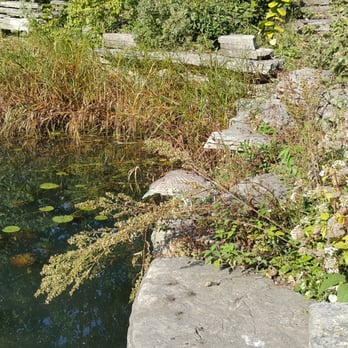

Go here! Today, tomorrow, all week. We only found this by accident on the way to the Lincoln Park Conservatory. The small entrance is located on Fullerton. The garden feels like an oasis in the city with chipmunks and everything. It's like stepping into a Monet painting. Perfect place to bring a picnic, meditate or read a book. There is some car traffic noise from Lakeshore Dr but it's muted. The place is large enough that on a not crowded day (like the Saturday we went) you can find a place to sit and be alone. When we went there were only one or two lilies in bloom by it didn't diminish the beauty of the garden. Definitely planning on coming back with a picnic basket, book, and camera. Can't wait to see the garden in full bloom. read more


15 years ago

13 years ago


I was disappointed in the Alfred Caldwell Lily Pool. My fiance wanted to visit it on a weekend trip to Chicago and I thought it sounded nice, so we went. Honestly, I really was not impressed. It wasnt that big and seemed to be poorly maintained, with plants allowed to spread out all over the place. The pond in the middle with the water lillies was nice, but everything around it just seemed overgrown and not especially pretty. I think it would be better if they maintained it better. Also, parking was very difficult; we probably drove around for at least half a hour before we found a space. Ultimately, we had to pay like $20 to park in a tiny lot for the 20-30 minutes we were here. read more


17 years ago


20 years ago


14 years ago
Page 1 of 3
More info about Alfred Caldwell Lily Pool
Ask the Community - Alfred Caldwell Lily Pool
Review Highlights - Alfred Caldwell Lily Pool
You might also consider







Why does Yelp recommend reviews?
14 reviews that are not currently recommended
The reviews below are not factored into the business's overall star rating.

16 years ago

11 years ago
15 years ago

12 years ago

7 years ago


13 years ago

11 years ago

18 years ago

9 years ago

15 years ago
14 years ago

11 years ago


