Disclaimer: I give any free museum five stars. Well, it will cost you your zip code. I just gave…read morethem 58008, hoping they'd realize later what it spells upside down.
This is one of the world's most outstanding private assemblies of postwar American art, gifted by Bay Area collectors Harry W. "Hunk" and Mary Margaret "Moo" Anderson and their daughter Mary Patricia Anderson Pence, who looks more like Moo but acts like Hunk.
The museum, which opened in 2014, houses 121 paintings and sculptures and is known for its focus on movements like Abstract Expressionism, Color Field Painting, and Pop Art. The collection is celebrated for featuring canonical works by some of the 20th century's most significant American artists. Key figures and their works include:
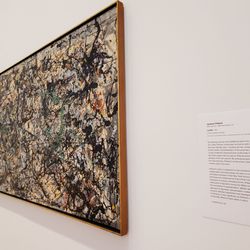
Jackson Pollock: The monumental drip painting "Lucifer," considered by many to be the outstanding drip painting still in private hands before it was gifted to Stanford.
Mark Rothko: The signature color-field work, "Pink and White over Red."
Clyfford Still: A large, imposing piece called "1957-J No. 1 (PH-142)."
Richard Diebenkorn: Works like "Ocean Park #60," which displays his progression into abstract forms using geometric shapes and a subdued color palette.
Other Masters: The collection also includes works by Willem de Kooning, Franz Kline, Philip Guston, Robert Motherwell, and Helen Frankenthaler.
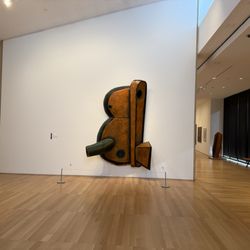
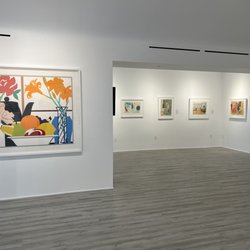
The museum building itself is spacious, which means it feels mostly like space. The coolest thing was the meticulous library that felt too nice to even touch. Be sure to see the Cantor Arts Museum next door.
Random Notes:
One exhibit had a music video by Nick Cave on repeat, which was annoying and a little out of place, echoing throughout the museum. Oddly, it was not the Nick Cave you are thinking off (i.e. Bad Seeds). It was a different Nick Cave. Which is weird. It's like saying "Oh, yeah, no, that painting of the flower over there is actually Georgia O'Queef."
1. One of the collection's anchor pieces, a major painting by Clyfford Still, was acquired a jockey who had won the famous 1950s television quiz show, "The $64,000 Question," and then retired to open an art gallery in San Francisco.
2. Mark Tansey's painting "Yosemite Falls (Homage to Watkins)" (1993), depicts the famous waterfall, but instead of falling water, the cascade is made up of cameras and tripods. I looked into an art textbook to try to interpret it and apparently it means I am gay.