3rd Worthing Scouts Photos



Recommended Reviews - 3rd Worthing Scouts
Start your review...

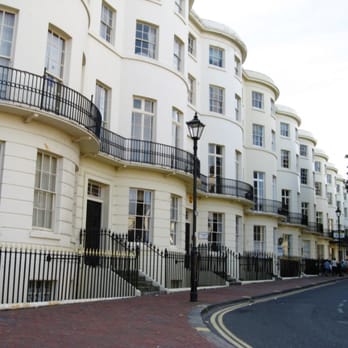
Oscar Wilde would probably not recognise the town he made famous in his best-known play, 'The Importance of Being Earnest'. The genteel seaside town in which he spent the summers of 1883 and 1884 has, of course, grown enormously since then, but oddly for a town with nearly four miles of seafront it seems to almost have turned its back on the sea, making its living instead from service industries and as a dormitory and retirement town. For most of its life a small fishing village, like Brighton, it came to prominence in the late 18th century with the growing trend for seaside holidays (although no-one actually bathed publicly until rather later). The first purpose-built lodgings opened in 1759 and, while the Prince Regent was busy making Brighton daringly fashionable, his sisters, Princesses Amelia and Augusta and his daughter, Princess Charlotte, had begun to make Worthing popular in a rather lower-key and more respectable way among the nobility and gentry despite some notable indeed, notorious - instances of smuggling by the locals. The early architecture emulated that of Brighton and Hove, but Worthing was never developed on anything like the same scale: a few set pieces like the handsome, bow-fronted Liverpool Terrace of c. 1830 hint at what might have been: subsequent development and redevelopment have left little of this period, and instead most of Victorian Worthing consists of large elegant villas set in tree-lined streets, stucco giving way to red brick as you go inland. A major setback came in 1893 when a typhoid epidemic killed over 200 people. It was a financial disaster, as visitor numbers slumped, although at least it prompted the town to improve its water and sanitation. Despite this setback, Worthing's genteel image lasted until well into the 20th century when, like many seaside towns, its popularity as a destination waned as the fashion for foreign holidays took over. However, unlike Brighton, and even Hastings and Eastbourne, apart from a small area around the pier, the seafront is now devoid of hotels, restaurants and shops, and the predominant image of Worthing is largely one of leafy suburban respectability, with its post-War urban sprawl absorbing mediaeval villages such as West Tarring and Broadwater, both of which have kept their mediaeval churches and a few streets of ancient houses and cottages. Today, Worthing's attractions include its Pier, the recently-restored and historic Dome Cinema, a couple of shopping streets consisting of the typical High Street chain stores, and a modest Municipal Museum of local history. In the summer, a small fairground camps on the beach around the pier, its caravans seemingly oblivious of the waves just a short distance away. The promenade that Oscar Wilde famously walked along is still impressive, but oddly devoid of life, even in summer its main purpose these days seems as a traffic artery, which is a pity, as the sea views are as good as any along this stretch of coast. (The one thing Worthing shares with Brighton is a pebbly rather than sandy beach). Inland, both Broadwater and West Tarring are worth a look, the latter possessing a few decent pubs. read more


Lyn had to do some Shopping in Worthing so I decided to sit on the Prom and beach for a whileturned to be a long while!!! I wasn't unhappy for it was a glorious day and there was loads of 'People Watching' to do.. The Prom is so long, (couple of miles I think), that it affords plenty of choice of where to sit. There are cycle riders but there is a lane and much care is taken by them. Palm trees adorn the pleasant walkway and there are plenty of parlours, cafes, (though we like the term Cafeterias)!!. Across the road there are bars galore. Moving down towards the waves it becomes quieter.just nice to hear the lapping of water and read the poems of Thomas Hardy and Thomas Hood Then up to Bar 42 for shandy and salad The Prom, if you explore all of it can offer you much but you need to go and find out.!! read more

18 years ago