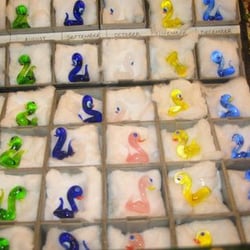
Whitby Jet Heritage Centre Photos


Recommended Reviews - Whitby Jet Heritage Centre
Start your review...



18 years ago
I suppose most tourists to Whitby will have purchased something made of Whitby Jet before they leave. It is one of the main things the town is famous for after all. It isn't particularly cheap, nor to everyones taste, but it is painstakingly carved, worked and polished. Whitby Jet was undoubtedly one of the earliest gemstones used to create artefacts and items of jewellery. The wearing of jewellery was often a display of wealth or used to bestow some 'magical' protection upon the wearer. The lustre black beauty of Whitby Jet is unmistakable. The stone is the fossilised remains of a tree dated in the Jurassic period and can only be found along a stretch of the Whitby coastline - making it distinctive to this area. Its common name is the Monkey-puzzle tree or Chilean pine. On the floor of the sea there had already been deposits of materials that subsequently became the Main Seam Ironstone, on top of this there were deposits of mud being washed down the rivers from adjoining landmass and forming an ever-increasing sedimentary layer. Most people are aware of the significance of Whitby Jet during the mid and late 19th century and are quick to establish its mourning connotations. I do not deny the importance of this fact in Victorian Britain, as mourning was almost an art form at that time,Whitby Jet as an embodiment of classical chic, a simple sophistication that is timeless. During the excavation of the old railway station in York, a whole workshop was found and later, in the same area, a coffin revealed a Roman lady's coiled and wound tresses still containing the jet pins. The great Exhibition in London did much to introduce Whitby Jet to the world..'annual holiday' in Victorian times brought many more people to the town of Whitby. Many availed themselves of the local products, in particular the now extremely fashionable Whitby Jet. The black stone has been found and worked by local craftsmen for centuries. Each piece is handled ten times in a method of working that has not changed for over 150 years. Craftsmen can be seen today, working their skills on the black stone, known as Whitby Jet, turning it into the finest jewellery. Sales boomed on the death of Albert the prince consort, husband to our great Queen Victoria, who insisted on nothing better than black for dress or jewellery. At its height in the 19th century the industry was a major employer in the region with over 200 miners and 1500 other workers in Whitby in 1873 You can purchase beautiful Whitby Jet crafted jewellery from numerous jewellery and craft shops in the town. The Victorian Jet Works, 123b Church Street. An original 1867 jet works with working craftsmen, restoration work, reproduction pieces, plus wide range of interesting and contemporary jewellery in genuine Whitby Jet. Watch the craftsmen at work creating small beautiful items; netsuke, Faberge eggs, carved gems and such like. Guided tours are available with a 15 minute pre- recorded audio tape. £1.50 for a 50 minute audio tour. read more


More info about Whitby Jet Heritage Centre
123b Church Street
Whitby YO22 4DF
United Kingdom
Directions
Hours
Outdoor Amenities