The Vietnam War Experience
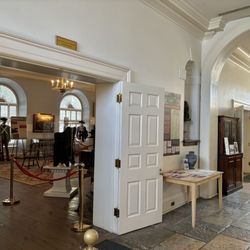
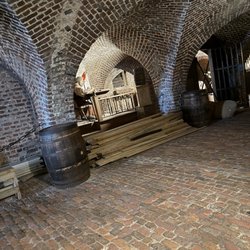
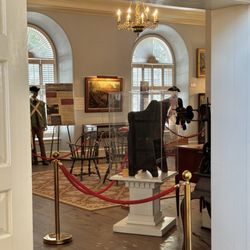
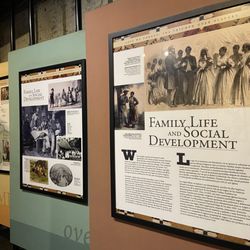
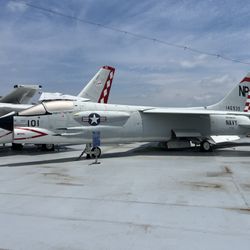
Absolutely loved this!!!! You're…read moreable to walk through a simulation of what it would have been like in Vietnam. Between tents set up, to military equipment, to actual artifacts in their museum.
Here's a lil history tidbit
1858 - 1884: Vietnam becomes a French colony, called Indochina.
1930: The Indochinese Communist Party is formed with Ho Chi Minh as founder.
September 1940: Japan invades Vietnam.
September 2, 1945: Japan surrenders to Allied forces. Ho Chi Minh declares Vietnam an independent nation, but France reassumes colonial authority.
1946: The First Indochina War begins.
1950: China begins providing the Viet Minh with military advisors/weapons. In response, the United States pledges $15 million in military aid to France.
1954: The Viet Minh defeat the French army in the Battle of Dien Bien Phu. On July 21, France signs the Geneva Accord, a cease-fire that leads to the withdrawal of French troops from Southeast Asia. Vietnam is temporarily divided between North and South at the 17th parallel. Elections are to be held in 1956 to reunify the country.
1955: On October 26, South Vietnam declares itself the Republic of Vietnam. Ngo Dinh Diem elected president in rigged elections. Diem argues that South Vietnam was not a party to the Geneva Accords, and cancels the 1956 elections.
1956: The U.S. military begins training South Vietnamese forces.
1957: Communist guerillas begin an insurgency in South Vietnam, assassinating more than 400 South Vietnamese officials.
1963: Diem, a Catholic, has tried to silence protests by Buddhist monks. In response, monks protest by setting themselves on fire in public places.
In November, with the tacit approval of the U.S., members of the South Vietnamese military overthrow Diem and execute him.
1964: General Nguyen Khanh takes power in South Vietnam.
On August 2, 3 North Vietnamese boats allegedly fire torpedoes at the U.S.S. Maddox. On August 7, Congress passes the Gulf of Tonkin Resolution, authorizing President Lyndon Johnson to "take all necessary measures to repel any armed attack against forces of the United States and to prevent further aggression."
1965: The U.S. begins sustained bombing of North Vietnam, called Operation Rolling Thunder. The bombing will continue for three years.
In March, the first U.S. combat troops arrive in Vietnam. By year's end, more than 200,000 U.S. troops are stationed there.
1967: Secretary of Defense Robert McNamara calls the bombing campaign ineffective. The U.S. launches Operation Cedar Falls, a ground war effort involving 30,000 U.S. and South Vietnamese troops to destroy Vietcong operations and supply sites near Saigon. They discover a massive system of underground tunnels that had served as headquarters for the Vietcong.
1968: In January, on the Vietnamese lunar new year (Tet), the North Vietnamese and Vietcong forces launch an attack on 100 South Vietnamese cities and towns. Within days, U.S. forces recapture most areas. The "Tet Offensive" is a military defeat for Communists, but is a political victory, as Americans begin questioning the U.S. military's conduct.
On March 16, U.S. soldiers kill hundreds of Vietnamese civilians in the town of Mai Lai.
In July, General William Westmoreland, commander of U.S. forces in Vietnam, is replaced by General Creighton Abrams.
Richard Nixon is elected President in November.
By December, U.S. troop levels in Vietnam reach 540,000.
1969: President Nixon approves "Operation Breakfast," covert bombing of Communist supply routes and base camps in Cambodia. The bombing continues for 14 months without knowledge of Congress or the American public.
Nixon's Secretary of Defense, Melvin Laird, announces a policy of "Vietnamization" in which the U.S. will gradually shift the burden of the war to the South Vietnamese army.
Ho Chi Minh dies on November 3.
On November 13, the American public learns of the Mai Lai massacre. The news further turns opinion against the war. The Army has already charged Lieutenant William Calley, who led the attack, with murder. Calley will be convicted a year later.
1970: On April 30, Nixon announces that U.S. troops will attack enemy locations in Cambodia. The news sparks protests.
1972: The North Vietnamese cross the demilitarized zone (DMZ) at the 17th parallel to attack South Vietnam in what will be known as the Easter Offensive.
Nixon announces further troop reductions.
1973: On January 27, U.S. Secretary of State Henry Kissinger and Vietcong leader Le Duc Tho sign the Paris Peace Accords, an immediate cease-fire that will allow for U.S. withdrawal. Kissinger and Le are awarded the Nobel Peace Prize later in the year.
1974: North Vietnam announces a renewal of the war.
1975: North Vietnam launches a massive assault on South Vietnam. President Gerald Ford announces that for the U.S., the Vietnam War is "finished." On April 30, South Vietnam surrenders to Communist forces.