Stift Melk Photos


Recommended Reviews - Stift Melk
Start your review...


Reviews With Photos


My friend and I spent a few days driving around Lower Austria and Burgenland at the beginning of this month. Melk was our first stop after leaving Vienna. We were there for the Melk Abbey and for an afternoon in the Wachau Valley. The Melk Abbey makes a visit to Melk totally worth it. The abbey was founded in 1089 (!!!), but the Baroque abbey you'll see when you visit was built between 1702 and 1736. The abbey sits at the top of a rocky outcrop in town, so it's a little bit of a walk through town and then up to the abbey (but not as strenuous as it seemed when we were looking up at the abbey from town). There's a lot to see at the abbey - the church, the library, the views... You can't take photographs inside the abbey, but you can see pictures of it online to get an idea. It's really stunning. It was really beautiful, and I'm so glad we made a stop in Melk to see it!


Stift Melk (Melk Abbey) is a Benedictine abbey in Melk, Austria, overlooking the Danube River. It's one of the most famous Baroque monasteries in Europe and a UNESCO World Heritage Site. It is a must see while in Melk. A typical visit takes about 2 hours, and visitors can tour the church, library, marble hall, and the abbey museum.


We took the train from Vienna to Melk in the morning (about an hour) primarily to join a short Danube River cruise in the afternoon. We were not sure how early we would arrive, so we did not book an Abbey tour in advance. From the Melk train station, it is about a 15 - 20 minute walk to the abbey. You can see it when you arrive, so finding it is not a problem. It dominates the town. You descend to the main street and then follow colored glass tiles in the road. Blue tiles lead from the river to the central fountain in town. Once you find that, there are yellow/gold tiles that guide you from there up to the Abbey. It is a bit of a climb, but not too bad. They abbey had guided and self-guided tours. We opted for the self-guided ones (15 Euros). There is some sort of audio guide too, but you have to download an app, etc. We skipped that. The tour is basically a big loop down to the far end of the complex and back. The initial 6 or so rooms had historical artifacts but were jammed with guided tours. We had to squeeze through these to continue. If you had more time, these might be worthwhile. We got to a semi-deserted high-ceilinged room. It was pretty, but we then saw the no photography signs. Continuing on, we emerged onto a semicircular terrace with views down to the river. This was a nice spot for photos. From there you enter back into the main church. There are a LOT of 'no photography' signs here, and even more people ignoring them. I did not take any photos here, though I question whether I should have. This area has a number of plaques describing various side chapels with saints, relics, etc. It was very ornate and quite interesting. You then emerge back into an arcade that leads back to your starting point in the courtyard. I think there were adjoining gardens just outside the main entrance also, but we were running short of time by that point and descended back into town for lunch. If you have at least an hour to spare and have any interest in historical churches / architecture, this is worth a stop.


Beautiful architecture all the way around. While you cannot enter the monk's quarters, there is plenty to see all around. From the picturesque steps leading down to the grounds, the restaurant on the premises, interesting fountains out front as well as in the courtyard, the huge entrance and courtyard itself. Magnificent. I highly recommend taking a tour, which is very informative and shows you a lot of details you might otherwise miss. The view across the land from this place is simply stunning.


What an amazing property. The buildings have been restored and are stunning. Children are lucky to go to school there today. The museum is very interesting. The church is absolutely stunning. We were treated to a short organ concert that was amazing. Wish we had more pictures, but you can't take any inside.


Melk Abbey is a stunningly beautiful complex itself and is home to one of the most beautiful churches in the world. But getting there is a bit of a pain unless you have a rental car or are on a bus tour. This monastery was originally a castle and was converted in the 12th century. The current Baroque design is from the 1700s and includes an integrated abbey church that is surrounded by the monastic complex. Inside the church, this is one of the most opulent, over-the-top Baroque interiors I've ever seen. Everything is pink marble and gold with overwhelmingly ornate decor and expansive ceiling frescos. It's quite a sight to behold. Most of the rest of the complex is off-limits to visitors as it is still in active use. If you have the extra time, I highly recommend visiting.
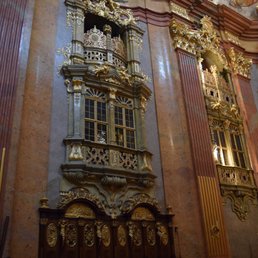

Gayle and I had a free day in Austria. My first choice was a short trip to Slovakia, and honestly just to check a geographic box. Gayle suggested a boat ride on the Danube, including a visit to the Melk Abbey. She chose well. Melk Abbey was originally a palace, and in it's multi-faceted grandeur, it shows. With its towers and golden hue, you can't miss it, or fail to be fascinated. It was built in the early 18th Century, and features stunning frescoes, a wondrous cathedral, and a library containing scores of medieval manuscripts. My only disappointment was not being able to see the impossible: the part of the collection only trusted and trained librarians could access. This religious complex not only hosts scores of tourists, but is also a prestigious coed monastery school with more than 700 students, and with an active Benedictine monk pretense. The surrounding town site is also very pretty.


Melk Abbey was built between 1702 and 1736 by Jakob Prandtauer, and is possibly the most famous Abbey in Austria. It was originally a royal palace, and in the 11th century, Leopold II presented the palace to the Benedictine monks. This monastery is more than 900 years old, and is also still run as a monastery school with over 700 students. We arrived in the afternoon at 2:50, and took a short ride to the Abbey. We took the Viking River Cruise, and the ride from the port to the Abbey was a short 5 minute drive, but the view of the city was breathtaking. Our group congregated in the courtyard before heading inside. Our guide said his name was Phillip, but if we didn't like him, his name is Thomas. Phillip moved quickly from room to room, and One room we went in had a scaled model of the Abbey, and then we went outside to connect to the library, but we were forbidden to take photos in there. From the library, we went down a spiral case and connected into the church. Like most European churches, this church was impressive with dark wood and lots of gold, and fresco ceilings. We didn't have much time after the tour, as the ship had to push off to Vienna. The town of Melk is small, but I'd recommend a day visit to the Abbey.
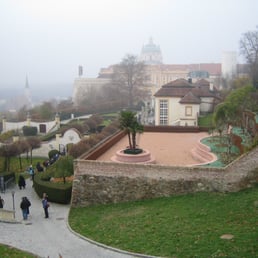

Another stop on our Danube River cruise. So stift translates as abbey, and this is one cool Benadictine Abbey. There are about 12 rooms to visit, as well as the terrace, library (approximately 100,000 volumes in total), church and courtyards. The lighting in the rooms, and the way the rooms are laid out, create a very emotional experience in this museum. I kept trying to imagine what it must have been like to visit the abbey when the museum area was actually the guest rooms. The Abbey's website has a very concise overview of the museum (http://www.stiftmelk.at/englisch/index.html). The page is in English and has many of the same pictures I took, except their photographer was allowed to use a flash and tripod, so the pictures are great. In fact I took several of the same pictures, but the website's are obviously much better. Two of the more unique items were the "reusable coffin" (room 7) and the "lock box" (room 10, part 2). Though not described on the website, the coffin had a bottom that could be released from above. So once the body and coffin were lowered ceremoniously, a rope could be pulled allowing the body to fall and thus the coffin could be reused... Very frugal. The lock box really needs to be seen in action. Requiring several keys, the intricacy of the locking mechanism was amazing. The church, in all its baroque glory is mind boggling. I'm always amazed at this level of opulence, especially when the leitmotif "ABSIT GLORIARI NISI INCRUCE" (Glory is found only in the cross) is found in the inscription over the Benedict Hall. I guess it's how you interpret the word "cross", as this is one beautiful church. The splendor the glory of the cross is quite clear. While I could see how large crowd could damper this experience, I would still recommend visiting the abbey, hopefully at a time when a riverboat full of tourists is not also there. One thing I did not see mentioned on the website is apricots. We were told that the abbey has apricot orchards, and this is evidenced by the number of apricot products for sale in the gift shop: Apricot jam, apricot nectar, and my favorite, apricot brandy. But the gift shop has much more than apricot products. It also had a very good selections of postcards, pictures and books, as well as the other trinkets a tourist expects (bottle openers, fridge magnets, etc.). Our only regret, and not a fault of the Abbey, is that we did not have more time to explore and enjoy Melk. It looked great from the Abbey's terrace overlook. So if you are heading this way, leave some extra time in your schedule. PS. Hours vary by season. The hours listed above (9:00 a.m. - 5:30 p.m.) are for May to September with the last admission at 5:00 p.m. April and October the hours are: 9:00 a.m. - 4:30 p.m. (last admission at 4:00 p.m.) November to March visits are possible only with a guided tour (See website for details). If you are interested in a guided tour during regular hours (from April to October), daily guided tours in English are at 10:55 a.m. and 2:55 p.m. Tours are also available in German (I guess that's kinda obvious).
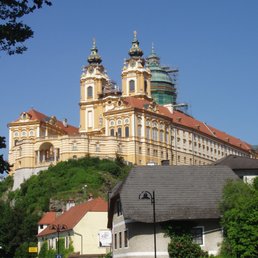

Melk Abbey was founded in 1089 when Leopold II gave one of his castle/palaces to the Benedictine monks. The abbey sits majestically on a hill overlooking the Danube. The position of the palace lends itself to great photo opportunities of the Danube, the Wachau valley and the town of Melk. The tomb of St. Coleman of Stockerau, as well as, the remains of several members of the House of Babenburg (first ruling dynasty of Austria) reside here. Today's Baroque Abbey was built between 1702-36 and was designed by Jakob Piandlauer. Black robed monks can be seen walking the grounds as well as students who attend the coed school at Melk Abbey. Friedrich Halm, a 19th century Austrian dramatist was an alumni. There is a huge parking lot next to the Abbey which is free. A self-guided tour for Adults is 19 Euros and with a guide an additional 12 Euros. The Emperor's Gallery stretches 650 feet and is decorated with portraits of Austrian royalty. The Marble Hall with pilasters of red marble has an allegorical painted by Paul Troger. The Library which has two floors also has a ceiling fresco by Troger and 80,000 volumes of priceless Medieval manuscripts. The library is the only place where no photos are permitted. The library looks like it came straight out of Harry Potter. The Abbey Church is enriched with marble, a fresco by J.M. Rottmayr and Paul Troger. There are gardens which were designed in the Baroque style in 1750 but later redesigned in 1822 as English country gardens. It's 4 Euros to see only the gardens but it is free when you purchase a Melk Abbey tour. There is a restaurant on the property which serves hot meals and wine. During Napoleon's Austrian campaigns, he used Melk Abbey as his headquarters.
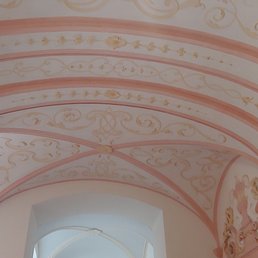

What a great day visiting Stift Melk a/k/a Melk Abbey. We arrived by bus and boat via our tour. The Abbey is beautiful. We did the tour of the Abbey in English arranged through our tour which was about an hour and would strongly recommend doing the tour. After the tour we walked down a spiral staircase to the Church. The church was the most beautiful Church I've ever seen in Europe and is a must see! We then walked the grounds of the Abbey which was beautiful too. There is a restaurant at the Abbey that has indoor and outdoor seating. There is a gift shop too.


It is the main attraction in town and attracts tons of locals and tourists alike. It towers over the town and visible from quite the distance. The abbey was founded in 1089 when Leopold II, Margrave of Austria gave one of his castles to Benedictine monks from Lambach Abbey. A monastic school, the Stiftsgymnasium Melk, was founded in the 12th century, and the monastic library soon became renowned for its extensive manuscript collection. Today's Baroque abbey was built between 1702 and 1736 to designs by Jakob Prandtauer. Particularly noteworthy are the abbey church with frescos and the library with countless medieval manuscripts, including a famed collection of musical manuscripts and frescoes. The school was returned to the abbey after the Second World War and now caters for nearly 900 pupils of both sexes. You will see tons of school students when you visit here. You can buy a ticket and go through all the main bits of this abbey and that could take hours or you can walk around the grounds like I did and spend a great deal of time marveling the amazing architecture and various sections of this ginormous place. Well worth a visit when you are in the area. The town of Melk is also quite pretty.


Dating back over a thousand years, but mostly from the C18th, Melk Abbey (Stift Melk) is an expansive, breath-takingly beautiful Benendictine Abbey at the top end of the Wachau Valley - the most scenic part of the Danube running from Melk to Krems. Like many historic buildings in Austria, much can be seen without paying an entrance fee (including the church and the gardens), but certain parts are for paying guests only.


2 days ago
We visited and went through it pretty quickly, but it was still worth stopping to see! One tip I definitely wish we had known beforehand: park in the actual Melk Abbey parking lot. When you purchase your admission tickets, you can validate your parking. We missed out on that and parked in a public lot instead. Thankfully, the public parking was still pretty cheap, so it wasn't a big deal. Just keep in mind that if you park down in town, there is a decent hill to walk up to get to the Abbey entrance. Something to consider if anyone in your group has mobility issues or just doesn't want the extra uphill walk. Overall, a beautiful place to visit, and even if you don't spend a ton of time going through everything, it's still a worthwhile stop! read more

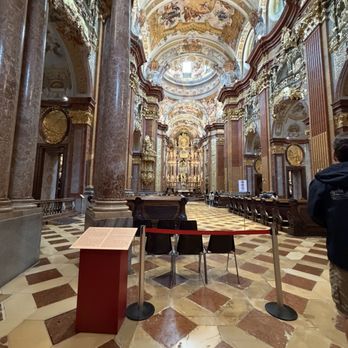
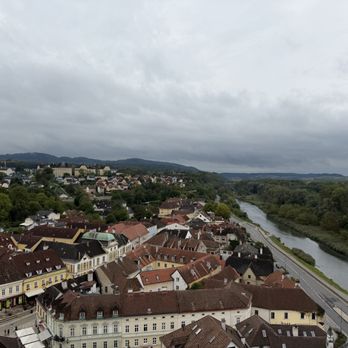


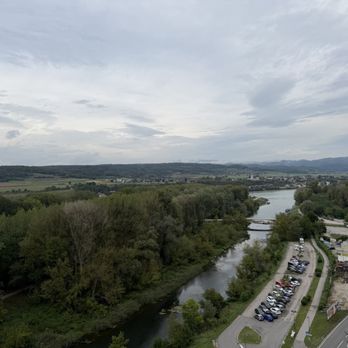


This was the final stop of our Austria drive before we hit Vienna for our flight home. I made sure our travels included a stop at the abbey since it was a large UNESCO site, high above the Danube River and had some impressive rooms inside. The signage throughout the city of Melk was plenty and clearly directed us to the parking lot above the abbey. Remember to take your parking ticket for free validation at the ticket office. It was around a 10 minute walk from the parking lot to the main ticketing desk. Don't go to the garden ticket booth unless you have a ticket or only want to pay for the garden visit. Admission included access to the church (amazing detail), museum, library (open but under renovation), gardens (with a must see interior of the Pavilion main hall), bastion (panoramic views above Melk and Danube) and the Marble Room (beautiful ceiling paintings). We joined the English guided tour for 4 Euros per person (Skippable IMO) and ended in the library as the guides were not allowed into the final stop, the church. From the guided tour one of the most important highlight was the famous Melk Cross, with a splinter of the true cross, had been stolen twice and fought over (Vienna and Melk) but now was no longer on display due to its condition. Since this was an active abbey photos were not allowed once inside by policy. Sometime the docents would stop you but other times not (ie. adult chaperones overseeing a school field trip). Guided tour took almost one hour but by the time we wrapped up our visit a storm moved in. We missed taking photos from the city of Melk to show just how large this complex was. If you're visiting Vienna then take a side trip out here. It will be worth it. read more

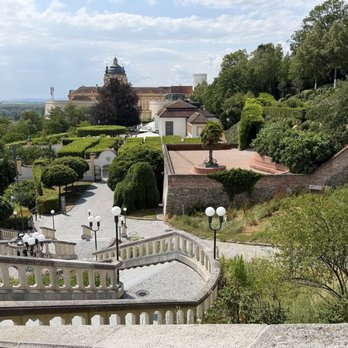


My friend and I spent a few days driving around Lower Austria and Burgenland at the beginning of this month. Melk was our first stop after leaving Vienna. We were there for the Melk Abbey and for an afternoon in the Wachau Valley. The Melk Abbey makes a visit to Melk totally worth it. The abbey was founded in 1089 (!!!), but the Baroque abbey you'll see when you visit was built between 1702 and 1736. The abbey sits at the top of a rocky outcrop in town, so it's a little bit of a walk through town and then up to the abbey (but not as strenuous as it seemed when we were looking up at the abbey from town). There's a lot to see at the abbey - the church, the library, the views... You can't take photographs inside the abbey, but you can see pictures of it online to get an idea. It's really stunning. It was really beautiful, and I'm so glad we made a stop in Melk to see it! read more

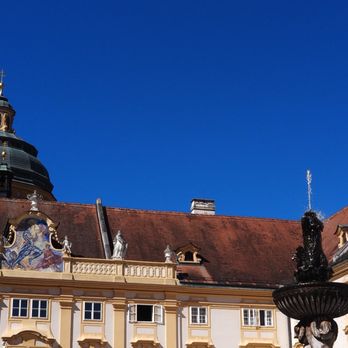


Stift Melk (Melk Abbey) is a Benedictine abbey in Melk, Austria, overlooking the Danube River. It's one of the most famous Baroque monasteries in Europe and a UNESCO World Heritage Site. It is a must see while in Melk. A typical visit takes about 2 hours, and visitors can tour the church, library, marble hall, and the abbey museum. read more


We took the train from Vienna to Melk in the morning (about an hour) primarily to join a short Danube River cruise in the afternoon. We were not sure how early we would arrive, so we did not book an Abbey tour in advance. From the Melk train station, it is about a 15 - 20 minute walk to the abbey. You can see it when you arrive, so finding it is not a problem. It dominates the town. You descend to the main street and then follow colored glass tiles in the road. Blue tiles lead from the river to the central fountain in town. Once you find that, there are yellow/gold tiles that guide you from there up to the Abbey. It is a bit of a climb, but not too bad. They abbey had guided and self-guided tours. We opted for the self-guided ones (15 Euros). There is some sort of audio guide too, but you have to download an app, etc. We skipped that. The tour is basically a big loop down to the far end of the complex and back. The initial 6 or so rooms had historical artifacts but were jammed with guided tours. We had to squeeze through these to continue. If you had more time, these might be worthwhile. We got to a semi-deserted high-ceilinged room. It was pretty, but we then saw the no photography signs. Continuing on, we emerged onto a semicircular terrace with views down to the river. This was a nice spot for photos. From there you enter back into the main church. There are a LOT of 'no photography' signs here, and even more people ignoring them. I did not take any photos here, though I question whether I should have. This area has a number of plaques describing various side chapels with saints, relics, etc. It was very ornate and quite interesting. You then emerge back into an arcade that leads back to your starting point in the courtyard. I think there were adjoining gardens just outside the main entrance also, but we were running short of time by that point and descended back into town for lunch. If you have at least an hour to spare and have any interest in historical churches / architecture, this is worth a stop. read more


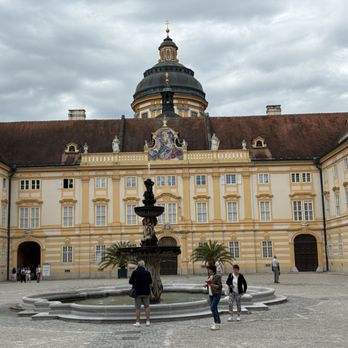

Beautiful architecture all the way around. While you cannot enter the monk's quarters, there is plenty to see all around. From the picturesque steps leading down to the grounds, the restaurant on the premises, interesting fountains out front as well as in the courtyard, the huge entrance and courtyard itself. Magnificent. I highly recommend taking a tour, which is very informative and shows you a lot of details you might otherwise miss. The view across the land from this place is simply stunning. read more


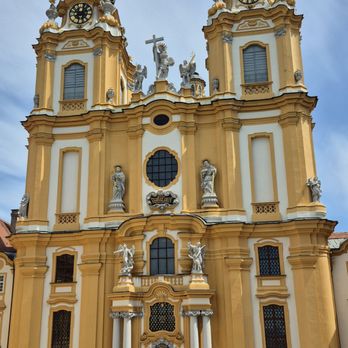


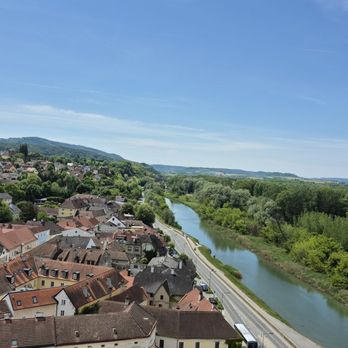


What an amazing property. The buildings have been restored and are stunning. Children are lucky to go to school there today. The museum is very interesting. The church is absolutely stunning. We were treated to a short organ concert that was amazing. Wish we had more pictures, but you can't take any inside. read more

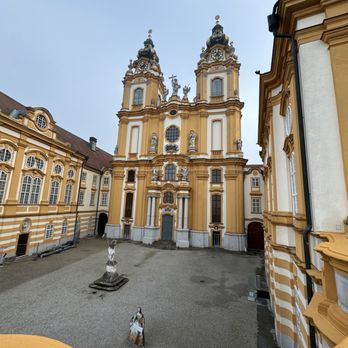


Melk Abbey is a stunningly beautiful complex itself and is home to one of the most beautiful churches in the world. But getting there is a bit of a pain unless you have a rental car or are on a bus tour. This monastery was originally a castle and was converted in the 12th century. The current Baroque design is from the 1700s and includes an integrated abbey church that is surrounded by the monastic complex. Inside the church, this is one of the most opulent, over-the-top Baroque interiors I've ever seen. Everything is pink marble and gold with overwhelmingly ornate decor and expansive ceiling frescos. It's quite a sight to behold. Most of the rest of the complex is off-limits to visitors as it is still in active use. If you have the extra time, I highly recommend visiting. read more


Gayle and I had a free day in Austria. My first choice was a short trip to Slovakia, and honestly just to check a geographic box. Gayle suggested a boat ride on the Danube, including a visit to the Melk Abbey. She chose well. Melk Abbey was originally a palace, and in it's multi-faceted grandeur, it shows. With its towers and golden hue, you can't miss it, or fail to be fascinated. It was built in the early 18th Century, and features stunning frescoes, a wondrous cathedral, and a library containing scores of medieval manuscripts. My only disappointment was not being able to see the impossible: the part of the collection only trusted and trained librarians could access. This religious complex not only hosts scores of tourists, but is also a prestigious coed monastery school with more than 700 students, and with an active Benedictine monk pretense. The surrounding town site is also very pretty. read more




11 years ago
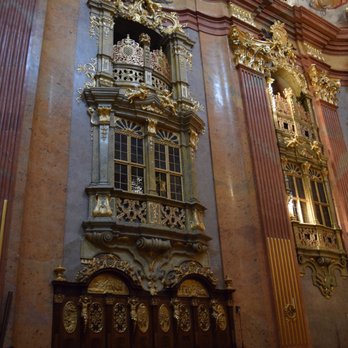
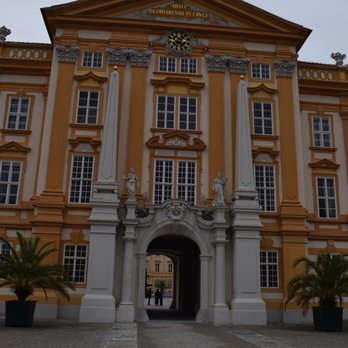
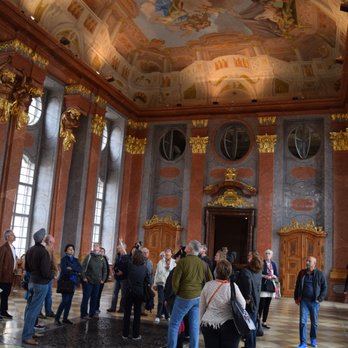
Melk Abbey was built between 1702 and 1736 by Jakob Prandtauer, and is possibly the most famous Abbey in Austria. It was originally a royal palace, and in the 11th century, Leopold II presented the palace to the Benedictine monks. This monastery is more than 900 years old, and is also still run as a monastery school with over 700 students. We arrived in the afternoon at 2:50, and took a short ride to the Abbey. We took the Viking River Cruise, and the ride from the port to the Abbey was a short 5 minute drive, but the view of the city was breathtaking. Our group congregated in the courtyard before heading inside. Our guide said his name was Phillip, but if we didn't like him, his name is Thomas. Phillip moved quickly from room to room, and One room we went in had a scaled model of the Abbey, and then we went outside to connect to the library, but we were forbidden to take photos in there. From the library, we went down a spiral case and connected into the church. Like most European churches, this church was impressive with dark wood and lots of gold, and fresco ceilings. We didn't have much time after the tour, as the ship had to push off to Vienna. The town of Melk is small, but I'd recommend a day visit to the Abbey. read more


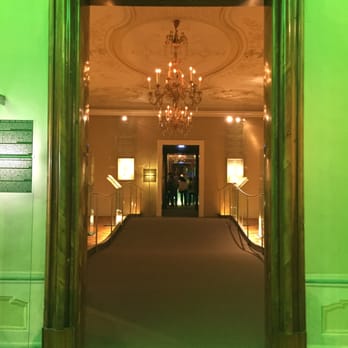

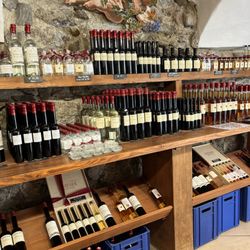
Another stop on our Danube River cruise. So stift translates as abbey, and this is one cool Benadictine Abbey. There are about 12 rooms to visit, as well as the terrace, library (approximately 100,000 volumes in total), church and courtyards. The lighting in the rooms, and the way the rooms are laid out, create a very emotional experience in this museum. I kept trying to imagine what it must have been like to visit the abbey when the museum area was actually the guest rooms. The Abbey's website has a very concise overview of the museum (http://www.stiftmelk.at/englisch/index.html). The page is in English and has many of the same pictures I took, except their photographer was allowed to use a flash and tripod, so the pictures are great. In fact I took several of the same pictures, but the website's are obviously much better. Two of the more unique items were the "reusable coffin" (room 7) and the "lock box" (room 10, part 2). Though not described on the website, the coffin had a bottom that could be released from above. So once the body and coffin were lowered ceremoniously, a rope could be pulled allowing the body to fall and thus the coffin could be reused... Very frugal. The lock box really needs to be seen in action. Requiring several keys, the intricacy of the locking mechanism was amazing. The church, in all its baroque glory is mind boggling. I'm always amazed at this level of opulence, especially when the leitmotif "ABSIT GLORIARI NISI INCRUCE" (Glory is found only in the cross) is found in the inscription over the Benedict Hall. I guess it's how you interpret the word "cross", as this is one beautiful church. The splendor the glory of the cross is quite clear. While I could see how large crowd could damper this experience, I would still recommend visiting the abbey, hopefully at a time when a riverboat full of tourists is not also there. One thing I did not see mentioned on the website is apricots. We were told that the abbey has apricot orchards, and this is evidenced by the number of apricot products for sale in the gift shop: Apricot jam, apricot nectar, and my favorite, apricot brandy. But the gift shop has much more than apricot products. It also had a very good selections of postcards, pictures and books, as well as the other trinkets a tourist expects (bottle openers, fridge magnets, etc.). Our only regret, and not a fault of the Abbey, is that we did not have more time to explore and enjoy Melk. It looked great from the Abbey's terrace overlook. So if you are heading this way, leave some extra time in your schedule. PS. Hours vary by season. The hours listed above (9:00 a.m. - 5:30 p.m.) are for May to September with the last admission at 5:00 p.m. April and October the hours are: 9:00 a.m. - 4:30 p.m. (last admission at 4:00 p.m.) November to March visits are possible only with a guided tour (See website for details). If you are interested in a guided tour during regular hours (from April to October), daily guided tours in English are at 10:55 a.m. and 2:55 p.m. Tours are also available in German (I guess that's kinda obvious). read more


7 years ago
Melk Abbey was founded in 1089 when Leopold II gave one of his castle/palaces to the Benedictine monks. The abbey sits majestically on a hill overlooking the Danube. The position of the palace lends itself to great photo opportunities of the Danube, the Wachau valley and the town of Melk. The tomb of St. Coleman of Stockerau, as well as, the remains of several members of the House of Babenburg (first ruling dynasty of Austria) reside here. Today's Baroque Abbey was built between 1702-36 and was designed by Jakob Piandlauer. Black robed monks can be seen walking the grounds as well as students who attend the coed school at Melk Abbey. Friedrich Halm, a 19th century Austrian dramatist was an alumni. There is a huge parking lot next to the Abbey which is free. A self-guided tour for Adults is 19 Euros and with a guide an additional 12 Euros. The Emperor's Gallery stretches 650 feet and is decorated with portraits of Austrian royalty. The Marble Hall with pilasters of red marble has an allegorical painted by Paul Troger. The Library which has two floors also has a ceiling fresco by Troger and 80,000 volumes of priceless Medieval manuscripts. The library is the only place where no photos are permitted. The library looks like it came straight out of Harry Potter. The Abbey Church is enriched with marble, a fresco by J.M. Rottmayr and Paul Troger. There are gardens which were designed in the Baroque style in 1750 but later redesigned in 1822 as English country gardens. It's 4 Euros to see only the gardens but it is free when you purchase a Melk Abbey tour. There is a restaurant on the property which serves hot meals and wine. During Napoleon's Austrian campaigns, he used Melk Abbey as his headquarters. read more




7 years ago
What a great day visiting Stift Melk a/k/a Melk Abbey. We arrived by bus and boat via our tour. The Abbey is beautiful. We did the tour of the Abbey in English arranged through our tour which was about an hour and would strongly recommend doing the tour. After the tour we walked down a spiral staircase to the Church. The church was the most beautiful Church I've ever seen in Europe and is a must see! We then walked the grounds of the Abbey which was beautiful too. There is a restaurant at the Abbey that has indoor and outdoor seating. There is a gift shop too. read more
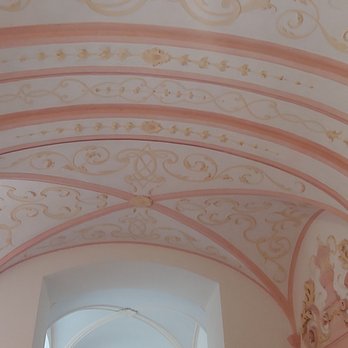


It is the main attraction in town and attracts tons of locals and tourists alike. It towers over the town and visible from quite the distance. The abbey was founded in 1089 when Leopold II, Margrave of Austria gave one of his castles to Benedictine monks from Lambach Abbey. A monastic school, the Stiftsgymnasium Melk, was founded in the 12th century, and the monastic library soon became renowned for its extensive manuscript collection. Today's Baroque abbey was built between 1702 and 1736 to designs by Jakob Prandtauer. Particularly noteworthy are the abbey church with frescos and the library with countless medieval manuscripts, including a famed collection of musical manuscripts and frescoes. The school was returned to the abbey after the Second World War and now caters for nearly 900 pupils of both sexes. You will see tons of school students when you visit here. You can buy a ticket and go through all the main bits of this abbey and that could take hours or you can walk around the grounds like I did and spend a great deal of time marveling the amazing architecture and various sections of this ginormous place. Well worth a visit when you are in the area. The town of Melk is also quite pretty. read more


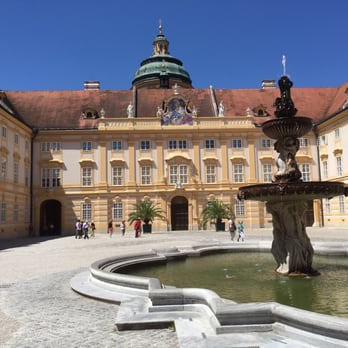


17 years ago
Dating back over a thousand years, but mostly from the C18th, Melk Abbey (Stift Melk) is an expansive, breath-takingly beautiful Benendictine Abbey at the top end of the Wachau Valley - the most scenic part of the Danube running from Melk to Krems. Like many historic buildings in Austria, much can be seen without paying an entrance fee (including the church and the gardens), but certain parts are for paying guests only. read more


15 years ago


11 years ago

11 years ago
Absolutely beautiful abbey both inside and outside. We did a one day Danube boat tour from Melk to Krems and this was included and I'm so glad it was. If just visiting, admission is €10 without an audio guide plus and extra €4 for the gardens which are equally beautiful. Just note, in the library, no photography is allowed and the lady who worked there was up our a--es about it because I had my camera out and was trying to sneak a couple shots with my iPhone . read more


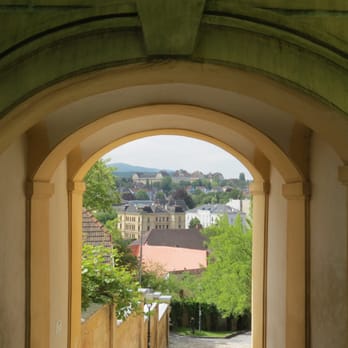

14 years ago

10 years ago
Melk was a stop along the Danube River which I was cruising on with AMA Waterways- a tour of the abbey was one of the included options and I am so thrilled I went. This place is stunningly beautiful. Baroque in style and such interesting history. If you happen to have an opportunity to go to Melk, please do so and do your self a favor; tour the abbey,!totally worth it! read more


More info about Stift Melk
Stift Melk Reviews in Other Languages
Review Highlights - Stift Melk











Why does Yelp recommend reviews?
3 reviews that are not currently recommended
The reviews below are not factored into the business's overall star rating.

6 months ago

15 years ago

13 years ago


