Stadtmauer Photos


Recommended Reviews - Stadtmauer
Start your review...



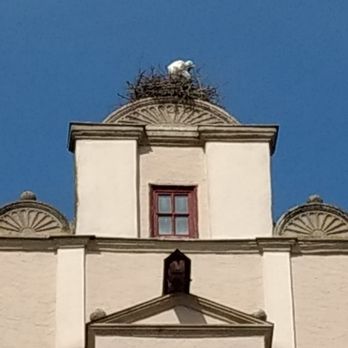
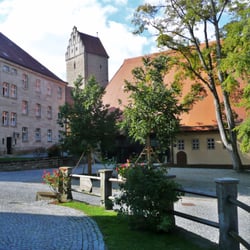
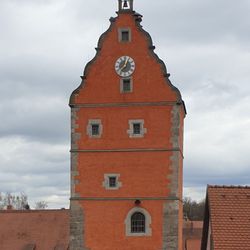
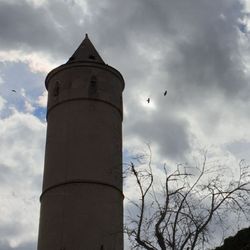
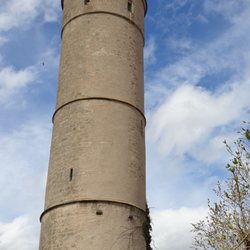
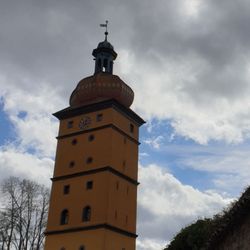
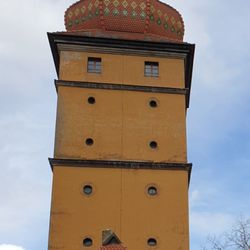
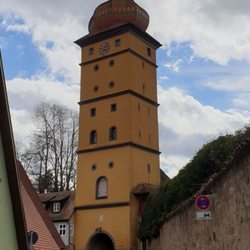
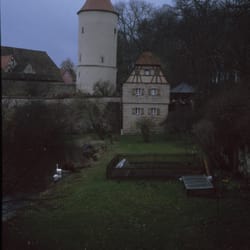
The city wall of Dinkelsbühl is one of three well-preserved medieval city fortification walls in the area that encircle the entire old towns; incidentally, other two towns are Nördlingen and Rothenburg o. d. Tauber. It's always so much fun to walk around these medieval towns imagining how the life might have been lived within these walls. A circular hiking trail (about 2.6 km) leads around the entire medieval city wall of Dinkelsbühl, mostly right along the wall. The western part of the fortification is particularly impressive. Due to the hillside location, the double wall built on the deep moat has a staggered height. We have King Ludwig I of Bavaria to thank for our pleasures of walking on the entire city wall around this fantastic medieval town since he placed the wall under his protection and prohibited for demolition in 1826. It's a must stop when you are visiting this area. There is a free parking lot available outside the city wall at every town gate for your convenience. To this day, all road traffic in and out of the city only goes through the four medieval city gates. Of course, you always have to watch out for oncoming traffic. This is probably one of the reasons why large parking lots were built for visitors and tourists in front of each gate. This is very practical, especially since you can park right in front of the first attractions you see as you enter the old town. The Segringertor already existed in 1384. During renovations in the 17th century, the gate tower was given its current baroque dome. There is a small, at first glance somewhat inconspicuous, Chapel of the Three Kings built in 1378 near the gate tower. Today the church houses a memorial for the victims of the Nazi regime. The Rothenburgertor was built around 1390 and has its original appearance to this day, which is why this gate can only be passed in one direction by car. The Wörnitztor with humpback blocks from the Staufer period is the oldest of the four city gates. The tower was raised at the end of the 14th century. The renaissance gable with bell tower dates from the 16th century. On the outside, as on all four city gates, there is the coat of arms of the imperial city of Dinkelsbühl - three golden ears of dinkel (wheat) on three hills. In addition, the imperial eagle is shown as a symbol of imperial involvement. The Nördlingertor (around 1400) is adorned with a stepped gable with half-shells (16th century). This town appears to be a lot less commercialized (it almost seems the town keeps it that way to discourage herd of tourists pouring in to this town) especially compared to Rothenburg. You will enjoy quietness of this town as you wander in and out of the city wall. If you had one to one and half hour of your time, you can enjoy a very leisurely stroll around this town. read more