Where Köln is a modern metropolis, Stadt Koblenz is a quant and historical Dorf, with many shops…read moreand churches to see and visit.
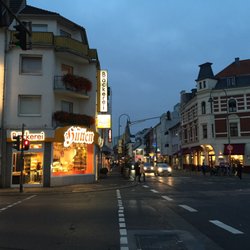
We spent five hours here and were warmed by both the friendly locals and its history. The Stadt is very walkable and if you get tired, there are plenty of Cafés were you stop for a rest-bit.
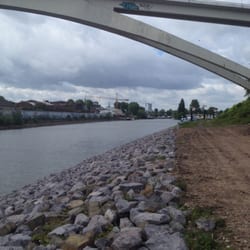
We really enjoyed ourselves here. Koblenz is on the banks of the Rhine and the Moselle. The confluence is today known as the "German Corner", a symbol of the unification of Germany that features an equestrian statue of Emperor William I.
Historical Note:
Koblenz was established as a Roman military post by Drusus around 8 B.C. Its name originates from the Latin (ad) cōnfluentēs, meaning "(at the) confluence".[3] The actual confluence is today known as the "German Corner", a symbol of the unification of Germany that features an equestrian statue of Emperor William I. The city celebrated its 2000th anniversary in 1992.
It ranks in population behind Mainz and Ludwigshafen am Rhein to be the third-largest city in Rhineland-Palatinate. Its usual-residents' population is 112,000 (as at 2015). Koblenz lies in a narrow flood plain between high hill ranges, some reaching mountainous height, and is served by an express rail and autobahn network. It is part of the populous Rhineland.
In 1814, it was occupied by the Russians. The Congress of Vienna assigned the city to Prussia, and in 1822, it was made the seat of government for the Prussian Rhine Province.
After World War I, France occupied the area once again. The city was the center of the American occupation force from 1919 - 1923. In defiance of the French, the German populace of the city insisted on using the more German spelling of Koblenz after 1926.