St Mary's Cathedral Photos


Recommended Reviews - St Mary's Cathedral
Start your review...


Reviews With Photos
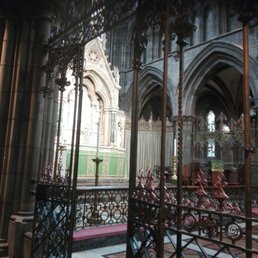

Extremely well kept, open to the public, clean, a perfect place for prayer and reflection. It's quiet and stunning


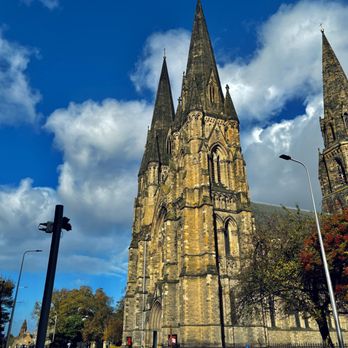
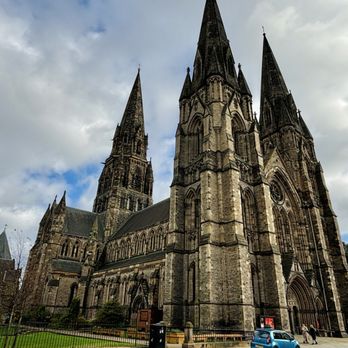
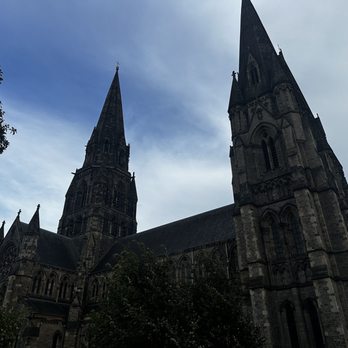
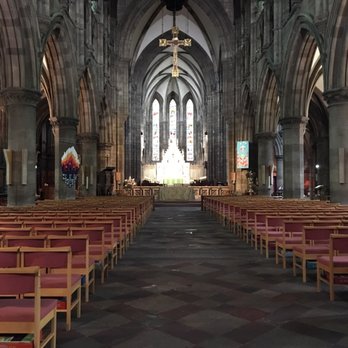
The three spires of St Mary's Episcopal (Anglican) Cathedral form a prominent part of the iconic skyline of Edinburgh, especially when looking west along Princes Street. History The Episcopal Church had been without a cathedral in Edinburgh since the division of the established church in 1689, when the ancient Cathedral of St Giles had come under the Ministry of the Established Presbyterian church. However, the aspiration to build one was only realised in the 19th century, when two wealthy spinster sisters, Barbara and Mary Walker, bequeathed their Drumsheugh Estates to fund the building on a site to the west of the New Town. The Trustees held an architectural competition, won by Sir George Gilbert Scott, perhaps best known as the architect of St Pancras railway station. The foundation stone was laid in 1874 and the Cathedral completed in 1879, although the towers were added later. Scott considered this his best church. The Church The church is the largest ecclesiastical building in Scotland, and its three spires - the central spire over the crossing is 275ft high - form a prominent landmark in Edinburgh, although the church itself is actually tucked away, off the City's main thoroughfares near Haymarket station, in the western part of the New Town. The design is essentially in Early English Gothic, with Decorated Gothic additions. The layout is conventional, with a nave with aisles separated by arcades of 6 bays, with large aisled transepts and an aisled chancel of 4 bays. The overall impression is of great space and size, with the dark exposed stonework giving it an air of mystery. Fittings of interest include the pulpit and high altar Reredos, both designed by J Oldrid Scott (son of Sir George); a brass lectern in the form of the Pelican; and a huge hanging Rood, designed by Sir Robert Lorimer (18641929) to form part of the War Memorial; and the Millenium Window in the Resurrection Chapel (in the South Transept), designed by Sir Eduardo Paolozzi. There are also excellent encaustic-tile pavements in the Chancel, and fine Victorian ironwork screens, elaborately painted, in the Choir. Most notable, however, is the pew of the novelist and poet Sir Walter Scott (1771-1832), brought here from St George's Episcopal Church, now located in the King Charles Chapel. The Cathedral boasts a choir that sings daily. A song school was built for them to practice in, in 1885. Designed by J Oldrid Scott, it contains a wooden vaulted roof, painted blue and decorated with gold motifs, while the walls are covered with mural-style paintings by Phoebe Anna Traquair. This building is open to the public, on a limited basis, to view the murals - see website for information on visits. Practicalities The Cathedral is a short walk from Haymarket railway station, and is open daily from 07:30. It has a busy calendar of events (and music in particular), and there are daily services - for details see website.


It's an impressive building and any attempt I make to describe it really won't do it justice. From the pictures, however, you can see parts of it and just imagine this, but bigger - a lot bigger. It really is something to walk around. Once inside the first thing that hits you is the quiet of the place - you almost want to apologise for the sound of your footsteps padding along the stone floors. The best way to describe the inside is cavernous; you feel less as if this was built from stone and more as if it's an underground cave. Once inside it's hard to believe that there really is an outside and that you're not miles underground. Its minimal decorations are magnificent enhancing the atmosphere of the cathedral rather than being mere ornaments. It's an amazing architectural feat and well worth checking out.


we started our day to explore Edinburgh city and this was our first stop. we stayed at 'Britannia Hotel Edinburgh' and it was on the way to tram station. St Mary's Episcopal Cathedral sits at the west end of Palmerston Place, a wide attractive Edinburgh New Town thoroughfare named after Viscount Palmerston, a former prime minister, and University of Edinburgh graduate who died in 1865. Building has three tall spires which reach up over the city skyline, meaning that the cathedral can be seen from a variety of viewpoints and outlooks in the city. But the building itself is often overlooked by visitors, perhaps because it's a little further from the traditional tourism area of the Old Town. The central spire of Scott's church is 90m tall, making it the tallest structure in Edinburgh city centre, and the two shorter spires added to the western end of the building later became known locally as Barbara and Mary, after the Walker sisters themselves. read more








8 years ago
Extremely well kept, open to the public, clean, a perfect place for prayer and reflection. It's quiet and stunning read more
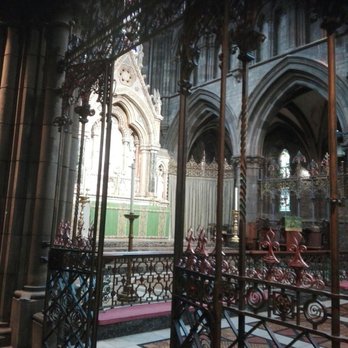
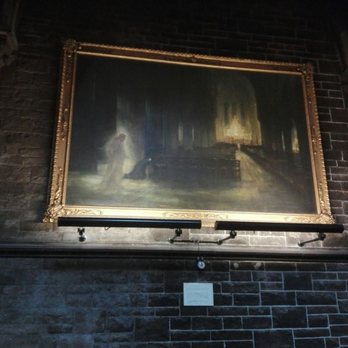


The three spires of St Mary's Episcopal (Anglican) Cathedral form a prominent part of the iconic skyline of Edinburgh, especially when looking west along Princes Street. History The Episcopal Church had been without a cathedral in Edinburgh since the division of the established church in 1689, when the ancient Cathedral of St Giles had come under the Ministry of the Established Presbyterian church. However, the aspiration to build one was only realised in the 19th century, when two wealthy spinster sisters, Barbara and Mary Walker, bequeathed their Drumsheugh Estates to fund the building on a site to the west of the New Town. The Trustees held an architectural competition, won by Sir George Gilbert Scott, perhaps best known as the architect of St Pancras railway station. The foundation stone was laid in 1874 and the Cathedral completed in 1879, although the towers were added later. Scott considered this his best church. The Church The church is the largest ecclesiastical building in Scotland, and its three spires - the central spire over the crossing is 275ft high - form a prominent landmark in Edinburgh, although the church itself is actually tucked away, off the City's main thoroughfares near Haymarket station, in the western part of the New Town. The design is essentially in Early English Gothic, with Decorated Gothic additions. The layout is conventional, with a nave with aisles separated by arcades of 6 bays, with large aisled transepts and an aisled chancel of 4 bays. The overall impression is of great space and size, with the dark exposed stonework giving it an air of mystery. Fittings of interest include the pulpit and high altar Reredos, both designed by J Oldrid Scott (son of Sir George); a brass lectern in the form of the Pelican; and a huge hanging Rood, designed by Sir Robert Lorimer (18641929) to form part of the War Memorial; and the Millenium Window in the Resurrection Chapel (in the South Transept), designed by Sir Eduardo Paolozzi. There are also excellent encaustic-tile pavements in the Chancel, and fine Victorian ironwork screens, elaborately painted, in the Choir. Most notable, however, is the pew of the novelist and poet Sir Walter Scott (1771-1832), brought here from St George's Episcopal Church, now located in the King Charles Chapel. The Cathedral boasts a choir that sings daily. A song school was built for them to practice in, in 1885. Designed by J Oldrid Scott, it contains a wooden vaulted roof, painted blue and decorated with gold motifs, while the walls are covered with mural-style paintings by Phoebe Anna Traquair. This building is open to the public, on a limited basis, to view the murals - see website for information on visits. Practicalities The Cathedral is a short walk from Haymarket railway station, and is open daily from 07:30. It has a busy calendar of events (and music in particular), and there are daily services - for details see website. read more




16 years ago
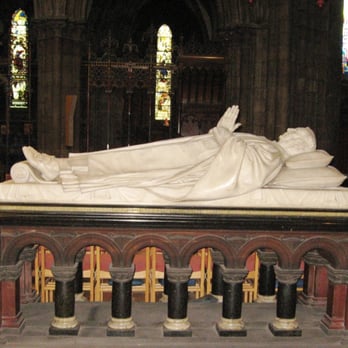
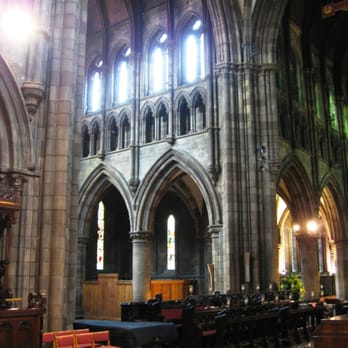
It's an impressive building and any attempt I make to describe it really won't do it justice. From the pictures, however, you can see parts of it and just imagine this, but bigger - a lot bigger. It really is something to walk around. Once inside the first thing that hits you is the quiet of the place - you almost want to apologise for the sound of your footsteps padding along the stone floors. The best way to describe the inside is cavernous; you feel less as if this was built from stone and more as if it's an underground cave. Once inside it's hard to believe that there really is an outside and that you're not miles underground. Its minimal decorations are magnificent enhancing the atmosphere of the cathedral rather than being mere ornaments. It's an amazing architectural feat and well worth checking out. read more


16 years ago
Personally I think this is better than St Giles' Cathedral. Hidden away down in the West End, it is one of Edinbugh's secret gems. I a not religious in the slightest, but I do like a good bit of architecture, and this is really impressive. With 3 towering spires, it is easy to spot from a way off and the whole of the outer facade is really ornate. Inside is nice and peaceful, as you'd hope, and again is beautiful to look at. They do have a few services here, but mainly the Cathedral is for people to look around. Make sure you check out the stained glass window (number 11 on the map) by Paolozzi, which is geometrically influenced and makes a good change from all the other stained glass around. Another of Edinburgh's secrets that is well worth a visit. read more


18 years ago

13 years ago