St Martin's Church Photos


Recommended Reviews - St Martin's Church
Start your review...



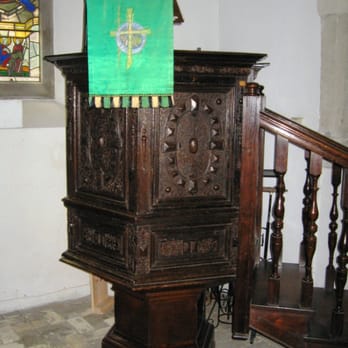
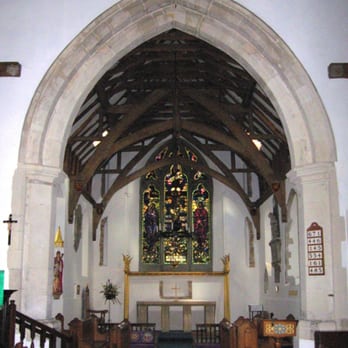
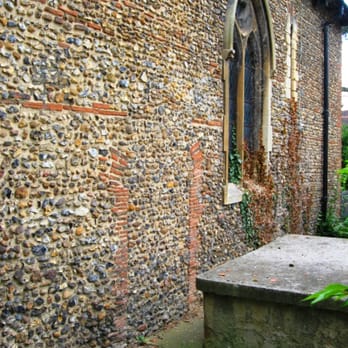
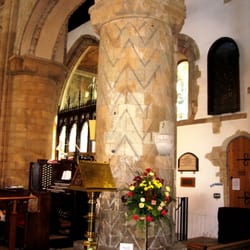
St Martin's is a historic Norman church in the pretty little town of Chipping Ongar, and is situated just off the High Street. The church was built just after the Norman conquest, around 1080. The original nave and chancel still survive, and the flint walls incorporate reused Roman bricks and tiles - clearly visible from the outside. The church was extended in Victorian times, but still retains its 15th century steeple, complete with 17th century clock. Still, outside, on the north wall of the sanctuary is a small recess (now with a door), with a very small window on the inside. This was originally an anchorite cell - where a hermit could take part in the service without being seen or coming into contact with the parishioners. Inside, the atmosphere in the nave is dark, thanks to the low, heavy 14th century roof, and the prolific amount of Victorian stained glass. The porch, south aisle and nave arcade are also Victorian, and you have to look hard to find the mediaeval features: narrow, round-headed Norman windows in the north wall, above a stoup for Holy Water. The chancel arch was rebuilt around 1350, but some Norman windows also survive in the chancel, alongside 14th and 16th century insertions, and some of the 'scissor' roof beams are also thought to be Norman. The East window is a nice Decorated Gothic example from about 1300. The fittings include a 16th century pulpit, a 15th century font and, on the south wall of the chancel, a memorial to Sara Mitford (d. 1776) by the noted English sculptor Joseph Nollekens. Under the south side of the altar is another memorial, to Jane Pallavicini, cousin of Oliver Cromwell (whose father fought on the Royalist side). Finally, one of the Victorian windows depicts David Livingstone - who lived in Chipping Ongar in 1838-40 to undertake probationary year at the London Missionary Society school. read more





More info about St Martin's Church












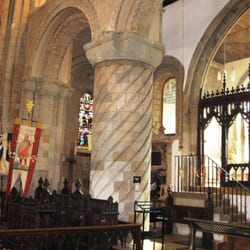


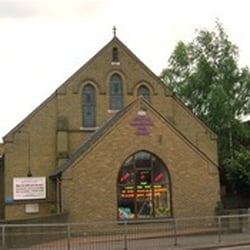





St Martin's Church - churches - Updated May 2026
Browse Brands
Browse Articles
People who viewed St Martin's Church also viewed

Holy Seulchre London
1 review
Farringdon, Blackfriars

Parish Church of St Michael
1 review
Camden Town

St. Andrew's Holborn Church
2 reviews
Blackfriars, Holborn

St Giles In The Fields C Of E Church
6 reviews
Bloomsbury

Chelmsford Cathedral
1 review

St Lawrence Jewry C Of E Church
1 review
The City

St Mary At Hill Church
2 reviews
Aldgate

St Mary Aldermary
1 review
The City

St Vedast Alias Foster C Of E Church
1 review
The City

St Mary Le Bow
5 reviews
The City