St Andrew's church Photos


Recommended Reviews - St Andrew's church
Start your review...



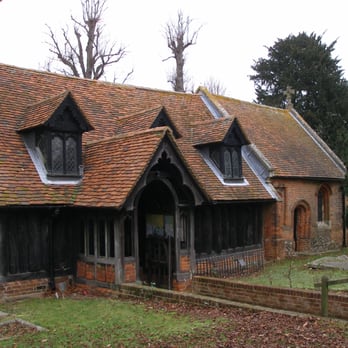
Also known as Greensted church, this unassuming spot is both rustic and charming - you might almost expect Hansel and Gretel to walk in at any moment - but is also historically very important. The nave walls are built of upright, halved wooden logs - for here is Europe's oldest wooden building still standing, and the oldest wooden church in the world. History The history of the site dates back around 1300 years: the land of the East Saxons - now Essex - was evangelised By Saint Cedd in 654AD, who was based at nearby Bradwell on the Essex coast. Remains have been found under the present church of a wooden building dating from the late sixth or seventh century, which may have been a sanctuary used by the early missionaries. The dedication to St Andrew also suggests a Celtic foundation. The present nave was erected around 1060AD; the logs have been dated by dendrochronology (ie by tree-rings) to around this period. It was originally dated to some 200 years earlier, but even with this date its status as Europe's oldest standing wooden building and the world's oldest wooden church remains. The original church was probably thatched, and without windows. The Normans built a chancel, although all that remains now are the footings and a pillar piscina. The present brick chancel was erected around 1500, and at the same time the handsome chancel arch inserted and roofs rebuilt and tiled. The date of the tower is uncertain, but it may have been added in the 17th century - one of the bells is dated 1618. The east wall of the chancel was rebuilt in the Victorian period and the roof and walls also repaired. An interesting piece of history is that some of the Tolpuddle Martyrs, after they were pardoned, were settled in Greensted on their return, and one of them, James Brine, was married here in 1839. The church The church now is about as picturesque as it is possible to get: the porch leads straight into the Saxon nave, passing a 12th century Crusader tomb just outside on your right. It is the UK's only log church. Inside, the nave is incredibly dark, despite the insertion of dormer windows. The nave still has its box pews. The chancel is somewhat brighter, and whitewashed. The church has some interesting fittings: the pulpit was donated in 1698 by Alexander Cleeve, and in the chancel are the Norman piscina and a memorial to Jone Wood, dated 1585. The eagle lectern is an impressive bit of Victoriana. Most of the glass is also Victorian, save a small but well preserved piece of 15th century glass in the quatrefoil window in the west wall. The rear of the church has all sorts of items for sale to help fundraising, from the usual postcards and guides to a wide selection of country jams and other sweet treats. Practicalities The directions given the the review by 'the xyone' are spot on - the walk should take 15-20 minutes from Chipping Ongar. If you drive there, there is parking for a dozen cars, including a space for disabled visitors, although the narrowness of the aisle in the church will probably make it difficult to use a wheelchair. read more


17 years ago
Known as the Log Church this is the oldest wooden church in Britain. Don't try and find it by it's postcode, get the Explorer 183 OS map, OS grid reference TL537030. The best way to get to it is drive to Chipping Ongar and park in Sainsbury's car park, parking is free on Sundays. Take the Essex Way from behind there, it's less than a mile walk. The church cute and little and nice to be in on a winters day, and for somewhere that was built in the mid 9th century is a marvelous bit of history. Now I'm not a big church fan but this place is lovely and I think you should put some money in the collection box. Either go back the way you came or continue on the Essex Way till just before Widow's Farm and make it a circular walk of 3-4 miles. read more


10 years ago
More info about St Andrew's church




St Andrew's church - funeralservices - Updated May 2026
Browse Brands
Browse Articles
People who viewed St Andrew's church also viewed

St Andrew's Church
1 review
Enfield

St Andrew By The Wardrobe
4 reviews
Blackfriars

The church of St Mary, Woolnoth
1 review
The City

St Mary At Hill Church
2 reviews
Aldgate

St Mary Aldermary
1 review
The City

The Church of the Immaculate Conception
6 reviews
Mayfair

Kensal Green Cemetery
12 reviews
Kensal Green

Highgate Cemetery
83 reviews
Highgate

All Saints C Of E Church
3 reviews
Fitzrovia

St Vedast Alias Foster C Of E Church
1 review
The City