About exclusive right to fool the world and the myth of authentication
People often turn to various *catalogues raisonnés* in the good-faith belief that they contain only original works; however, art history offers many examples of these publications erring--for various reasons--by including forgeries or omitting genuine pieces. Notable reasons include authors being bribed or deceived by clever fakes, but a key enabling factor is undoubtedly the "monopoly on truth", whereby the institutes and authors behind these catalogs often act as the final authority.
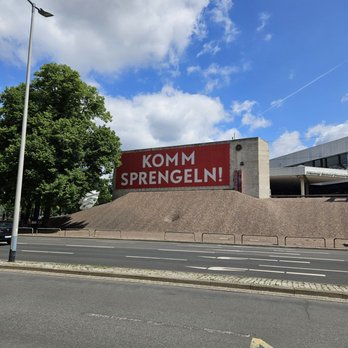
Joining the ranks of famous scandals--such as the Wacker Scandal (Van Gogh), the Modigliani forgeries, the Agnes Martin, Andy Warhol, Edouard Vuillard *catalogues raisonnés*, the Prince's Foundation controversy, the Norval Morrisseau scandal, and the Knoedler affair--is the controversy surrounding the three-volume Kurt Schwitters *catalogue raisonné* by Isabel Schulz (Sprengel Museum Hannover). A major media investigation now reveals that most of the works included in the *catalogue raisonné* by Isabel Schulz--which clearly belong to a series of dozens of collages--are poorly made fakes created in the same manner; some seems to be only a wild mixture of paper elements but not a composition. The duct of the inscriptions similarly differs noticeably from those by the artist. This forgery was likely the work of the "Hannoveraner Fälscher" and most of his forgeries were auctioned off in the 1980s through flea market dealers in Hanover or auction houses in Germany. By contrast, a large number of authentic works, encounters precisely assembled arrangements characteristic Kurt Schwitters' work that create a tension-filled pictorial texture have been arbitrarily dismissed as inauthentic without ever having been properly examined. In their quest to make a name for themselves and profit, individuals like Isabel Schulz destroy the legacy of Kurt Schwitters.
Within the art world, artist foundations and museums wield enormous power, despite the sector having been rocked by several high-profile forgery scandals involving renowned museums. Here are some of the most famous and astonishing scandals of recent times:
1. Musée Terrus, France (2018) - Half the collection was fake. Perhaps the most embarrassing scandal in modern museum history befell the small French museum Musée Terrus, dedicated to the 20th-century artist Étienne Terrus. A panel of experts determined that 82 of the museum's 140 artworks were forgeries.
2. Orlando Museum of Art, USA (2022). The museum exhibited 25 previously unknown paintings said to have been created by the legendary Jean-Michel Basquiat. Suspicions were quickly aroused, partly because one of the works was painted on a piece of cardboard bearing a Federal Express logo--in a typeface the company did not begin using until 1994 (Basquiat died in 1988).
3. Knoedler Gallery, New York (2011). Over the course of 15 years, the gallery sold unknown masterpieces by Abstract Expressionists such as Jackson Pollock, Mark Rothko, and Robert Motherwell. It turned out that a Chinese artist in Queens had painted all the works in his garage.
4. Deutsches Museum, Munich (2023).
5. Museum Ludwig in Cologne (2020).
6. RKD - Netherlands Institute for Art History (2010) - when works (such as paintings by Philips Wouwerman) rejected earlier at expert sessions RKD suddenly recognized as genuine.
7. Stedelijk Museum scandal (2017).
8. Now it turns out that even a significant number of the drawings by Gustav Klimt, Egon Schiele, and Alfred Kubin curated by Elizabeth Dutz at Albertina Museum, Vienna may be forgeries.
One could continue by mentioning several others, but then the list would be very long.
It is often these museums, foundations and expert communities that hold the exclusive right to publish so-called *catalogues raisonnés* and to determine whether an artwork is authentic or fake. I believe they have already squandered their credibility and that it is time to enhance the rights of academic researchers, whose work is often appropriated by renowned institutions and dutz curators and extend antitrust legislation to this area as well, to prevent individual museums or foundations from gaining total control over the field, abusing that power and fool the world. read more