Shingon Shu Hawaii Photos


More like Shingon Shu Hawaii
Recommended Reviews - Shingon Shu Hawaii
Start your review...


Reviews With Photos


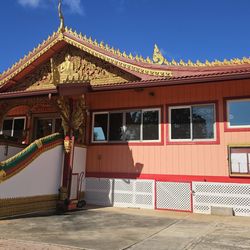
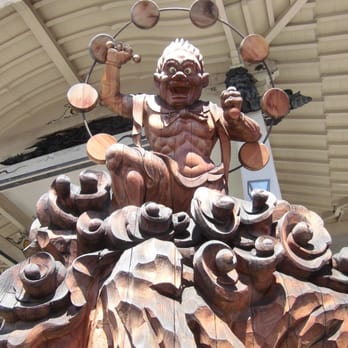
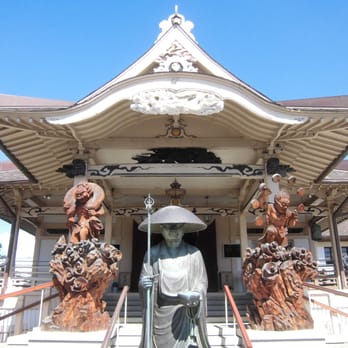
I've passed this temple for years but never went in. But after finishing my large Fillet of Fish Extra Value Meal at the neighboring McDonald's today, decided to sneak over to investigate this striking architectural building with the neat sculptures that guard it's entrance. Took some pictures and did some research and leave this review for your cultural enlightenment. Useful Information: 1. The building is called the Shingon Shu Hawaii or Hawaii Shingon Mission. It is a temple of the Shingon (True Word) Buddhist Sect. 2. Shingon Buddhism was founded by Kukai (774-835 A.D.), Japanese monk, scholar, poet and artist. He was bestowed the posthumous honorific title Kobo Daishi, "Great Master of the Propagated Teaching" by the Emperor Daigo in 919 A.D.. Notable quote attributed to Kobo Daishi: "To be enlightened is simply to understand fully the true nature of your own mind. Understanding fully the true nature of your own mind is equal to understanding everything." 3. The Shingon Shu was first built in 1917-1918 by Nakagawa Katsutaro, a master builder of Japanese-style temples, then renovated in 1929 by architect Hego Fuchino; a self-taught man who was the first person of Japanese ancestry to become a licensed architect in Hawaii. 4. The building has undergone two major renovations. However, the distinctive features of the building: the steep, hip-gable roof (irimoya) with rounded-gable projection with elaborate carvings on the ends, and the glittering altar and interior furnishings from Japan that signify its ties to esoteric Shingon Buddhism, were restored or preserved during these renovations. Cool Information: 1. The temple was added to the National Register of Historic Places on April 26, 2002. 2. The Shingon Shu Hawaii members commissioned the creation of a ceiling with panels (tenjo-e) that depicts the Taizokai mandala. The Taizokai mandala measures 600 square feet. The artwork is done in original pigments mixed by Japanese artisans and suspended in animal fat, the pigments were applied to individually lacquered (urushi) panels, then placed by hand into a grid suspended from the ceiling. 3. Carved wooden statues of Fujin (Wind God) and Raijin (Thunder God) were placed to guard the entrance, after the completion of the second temple renovation in 2007. The statues were chosen to depict Hawaii's prevailing tradewinds with Fujin; and an appreciation for the power and the force of nature in Raijin. This is really cool: Each statue stand over ten feet in height, and each weigh over 2800 pounds. The statues are constructed and carved out of Japanese Cypress. They are the largest depictions of the Wind and Thunder Gods outside of Japan. 4. The round tomoe at the top of the entrance roof represents the cycle of life and is the traditional symbol of the Koyasan Shingon sect. 5. The carved phoenix represents death and rebirth. 6. The carved dragons represent both power and good fortune. 7. The obelisk at the front edge of the property commemorates the first Shingon pilgrimage to Japan by immigrants in Hawaii in 1929. Funny Information: Uhhh! ....For this review I did not find anything funny to write about. Sorry! P.S. There is a big difference looking at Fujin and Raijin from your car driving on Sheridan and standing at their base and looking straight up into their eyes. You can feel the power of these Gods when standing beneath them. Try it before Hawaii's formosan subterranean termites get to them and reduce their weight to 280 pounds!


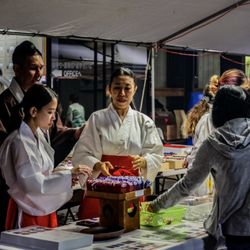
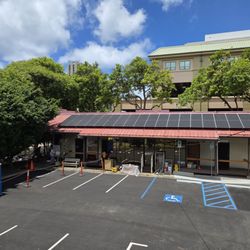
Guess who's back? Back again, kc's back, tell a friend :p They are open every Saturday for the summer starting 10am until sellout at shingon hawaii! Their setup is located on the keamoku side of the building, but you can enter either way and find parking. It is probably easiest through keamoku compared to Sheridan street. They are selling kc waffle dogs for $5 and hamburgers for $7. Cash or card accepted! They plan on doing some kind of night market at the temple too, so look out for them. Ps they are the original family that started kc drive inn that's out there at the temple :) read more


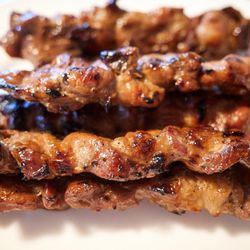
A pillar of the community, they have their Bon dance for 2023 in full swing, August 11 & 12, starting at 5:30pm each evening. The highlight for us is always the food and this year's offerings included a wide array bento & plate offerings as well as sweet selections. We settled in on the traditional andagi which was nice and crispy on the outside and not really greasy. Just the right amount of moistness. Just $3 for a bag of 3. The other food highlight was a Mochi/hot dog on a bamboo skewer, grilled and splashed with a sweet ketchup sauce. Was ono, and it's just $2 a stick. Come by to dance the night away and grind on some delicious foods. An enjoyable night during the summer. read more

3 years ago

3 years ago

16 years ago
I've passed this temple for years but never went in. But after finishing my large Fillet of Fish Extra Value Meal at the neighboring McDonald's today, decided to sneak over to investigate this striking architectural building with the neat sculptures that guard it's entrance. Took some pictures and did some research and leave this review for your cultural enlightenment. Useful Information: 1. The building is called the Shingon Shu Hawaii or Hawaii Shingon Mission. It is a temple of the Shingon (True Word) Buddhist Sect. 2. Shingon Buddhism was founded by Kukai (774-835 A.D.), Japanese monk, scholar, poet and artist. He was bestowed the posthumous honorific title Kobo Daishi, "Great Master of the Propagated Teaching" by the Emperor Daigo in 919 A.D.. Notable quote attributed to Kobo Daishi: "To be enlightened is simply to understand fully the true nature of your own mind. Understanding fully the true nature of your own mind is equal to understanding everything." 3. The Shingon Shu was first built in 1917-1918 by Nakagawa Katsutaro, a master builder of Japanese-style temples, then renovated in 1929 by architect Hego Fuchino; a self-taught man who was the first person of Japanese ancestry to become a licensed architect in Hawaii. 4. The building has undergone two major renovations. However, the distinctive features of the building: the steep, hip-gable roof (irimoya) with rounded-gable projection with elaborate carvings on the ends, and the glittering altar and interior furnishings from Japan that signify its ties to esoteric Shingon Buddhism, were restored or preserved during these renovations. Cool Information: 1. The temple was added to the National Register of Historic Places on April 26, 2002. 2. The Shingon Shu Hawaii members commissioned the creation of a ceiling with panels (tenjo-e) that depicts the Taizokai mandala. The Taizokai mandala measures 600 square feet. The artwork is done in original pigments mixed by Japanese artisans and suspended in animal fat, the pigments were applied to individually lacquered (urushi) panels, then placed by hand into a grid suspended from the ceiling. 3. Carved wooden statues of Fujin (Wind God) and Raijin (Thunder God) were placed to guard the entrance, after the completion of the second temple renovation in 2007. The statues were chosen to depict Hawaii's prevailing tradewinds with Fujin; and an appreciation for the power and the force of nature in Raijin. This is really cool: Each statue stand over ten feet in height, and each weigh over 2800 pounds. The statues are constructed and carved out of Japanese Cypress. They are the largest depictions of the Wind and Thunder Gods outside of Japan. 4. The round tomoe at the top of the entrance roof represents the cycle of life and is the traditional symbol of the Koyasan Shingon sect. 5. The carved phoenix represents death and rebirth. 6. The carved dragons represent both power and good fortune. 7. The obelisk at the front edge of the property commemorates the first Shingon pilgrimage to Japan by immigrants in Hawaii in 1929. Funny Information: Uhhh! ....For this review I did not find anything funny to write about. Sorry! P.S. There is a big difference looking at Fujin and Raijin from your car driving on Sheridan and standing at their base and looking straight up into their eyes. You can feel the power of these Gods when standing beneath them. Try it before Hawaii's formosan subterranean termites get to them and reduce their weight to 280 pounds! read more


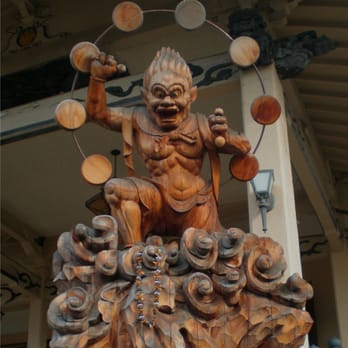


If you're hanging out at Ala Moana, this temple is a quick walk up the street from Nordstrom near McDonalds. Super worth checking out, for all the reasons listed in Val's review. We didn't go inside, but we admired the statues, a sight you don't normally get to see outside of Japan. read more




12 years ago