Seitz Park Photos



You might also consider


More like Seitz Park
Recommended Reviews - Seitz Park
Start your review...



1 year ago

3 years ago
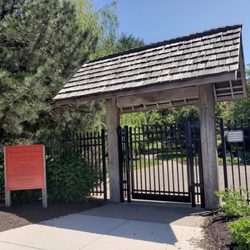
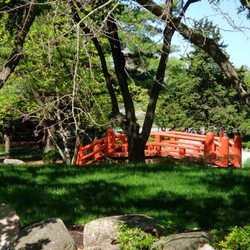
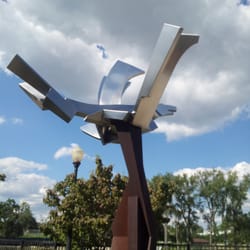
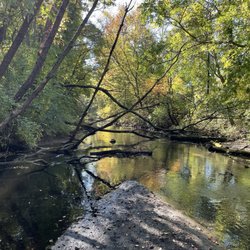
The University of Notre Dame is up to its old shenanigans again. Unless you didn't know, although I and thousands of loyal Notre Dame fans associate the university with the City of South Bend, Indiana, the university actually lies just to the north of South Bend. It's in unincorporated St. Joseph County, Indiana, and its official place name and mailing address is Notre Dame, Indiana. What does this have to do with Seitz Park? I'm getting there. Let's start with the shenanigans. The South Bend neighborhood immediately south of the university's main entrance was much more rustic and worn down when I was a grad student there. All the lots were small, and most of them had modest one- and two-story single-family houses, which were mostly built in the 1930s and '40s and were largely affordable. Sometime in the late 2000s, Notre Dame started buying up these properties, both those that were empty lots and those with houses still standing, and building McMansions on the sites. This has greatly changed the character of the neighborhood. Sure, it looks "nicer," if you can call it that, but no one who could afford to live in the neighborhood before could afford any of these new gigantic residences. Supposedly, they were built in order to attract faculty members to Notre Dame, but gentrification is usually all about the money, and I'm sure Notre Dame ended up making a killing through the gentrification of the Northeast Neighborhood, even if it lost money in the short term. Again, what does that have to do with Seitz Park? Well, Seitz Park has been closed since 2019 because the University of Notre Dame wanted to diversify its renewable-energy portfolio. Notre Dame offered the City of South Bend at least $1 million toward the reconstruction and improvement of Seitz Park, with the City of South Bend agreeing to close the park while Notre Dame spends $27.1 million to construct hydroelectric turbines beneath the park site in the river. The park was supposed to be closed for a year, but four years later, the city is still waiting for its public space back. All 2.5 megawatts of the new electricity generated by the project will go to Notre Dame (seven percent of its total usage); South Bend won't get a single watt of electricity when all is said and done. Mind you, this is city property within the City of South Bend proper. As usual, Notre Dame uses its considerable money, clout, and prestige to throw its weight around, and God forbid South Bend should have any say on what Notre Dame does on its own property. I hope the park returns soon. The Riverlights Light Forest was pretty cool to see, both from within the park itself and driving across one of the nearby bridges. The fish ladder is also a must-see--hopefully it will remain, and the new power plant won't kill too many fish. read more