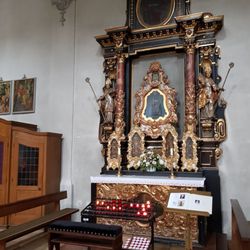
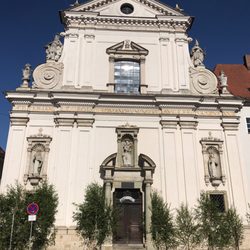
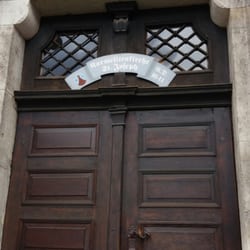
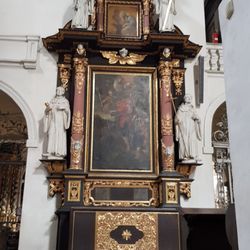
Schottenkirche St. Jakob Photos


Recommended Reviews - Schottenkirche St. Jakob
Start your review...




This former Benedictine monastery--originally named Jakobskirche or St. James Abbey--was founded in the 11th century by Irish missionaries and for most of its history was in the hands of first Irish, then Scottish monks. In Middle Latin, Scotti meant Gaels, not differentiating Ireland from Scotland, so that the term Schottenstift dates from the Irish period. That's a bit confusing to me, but it was eventually renamed after the numerous Scottish monks and missionaries who called it home from 1560 to 1860. In 1577, shortly after the Scottish Reformation, a papal bull transferred the monastery from Irish to Scottish monks. The monastery was in decline by that time with only one monk and one novice. The first Scottish abbot was Ninian Winzet (1518-92), an opponent of the reformer John Knox. Mary Queen of Scots ordered Abbot Winzet to train priests for Catholic missionary work in Scotland; the first priests were sent long after his death in 1623. The monastery managed to avoid dissolution during the Napoleonic period, a rare accomplishment. It was demoted to a priory in 1820, but monks remained in residence until 1862, when the Bavarian government bought the property and turned it into a seminary for training Catholic priests. A highlight of a visit is the spectacularly ornate north doorway (photo). Known as the Scottish Doorway (Schottenportal) constructed in the 12th century. It is the most famous architectural element of the church which occupies a full third of the north wall and is richly decorated with both ornamental and figural sculptures. It has resulted in the church being named one of Germany's most important Romanesque ecclesiastical buildings. read more