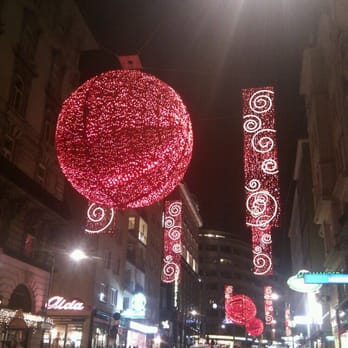
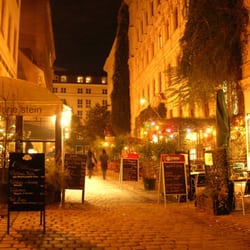
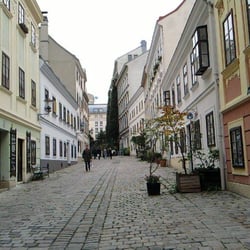
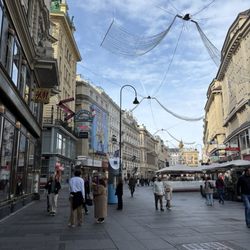
This is a shopping street of about 4.5 blocks located in the historic city center of Vienna. Lots…read moreof international high end stores line the plaza, which contains a three notable monuments. These are:
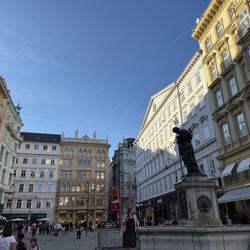
- Josefsbrunnen (Joseph's Fountain)
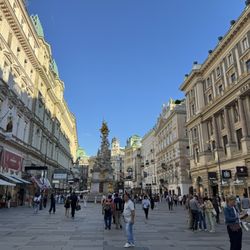
- Wiener Pestsäule (Vienna Column of Pest)
- Leopoldsbrunnen (Leopoldo's Fountain)
The first and third stand on either side (to the east and west) of the second one, all designed in the Baroque style, and are respectively dedicated to St. Joseph, and Saint Leopold III. These two fountains were initially constructed in the late 17th century though the original bronze sculptures in 1803-04 were replaced with lead ones and remain so to this day.
The composition of each fountains--a figure of Joseph leaning towards a boy holding a scroll showing his genealogy, with reliefs around the fountain depicting Joseph's flight into Egypt and dream with an angel;--a figure of Leopold holding a flag, dressed in armor and a crown, with relief panels showing discovery of Margravine's veil* and laying of the foundation stone for Klosterneuburg Abbey.
The Column of Pest, or Plague Column, came about from the Plague which afflicted Vienna in 1679. King Leopold vowed to raise a pillar--a commemorative shrine of sorts symbolizing the mercy of God on Vienna--if the epidemic would end. In 1683, Leopold commissioned Matthias Rauchmiller to design this but he died in 1686, leaving his basic plans and three of his angel figures that are incorporated on the monument.
New designs followed with several different designers and project managers, finally concluding with theatre engineer Lodovico Burnacini's idea of a Trinity being overhead a cloud pyramid with angel sculptures and kneeling emperor Leopold praying to a sculpture of faith. The sculpture was completed in 1694 and surprisingly looked pretty cohesive given the amount of change it had gone through.
*according to Google: " "Margravine's Veil" is a legend associated with Stift Klosterneuburg, a monastery near Vienna. According to the tale, the veil of Margravine Agnes was blown by a gust of wind from the Leopoldsberg hill and landed on the site where the monastery was later built. This legend highlights the site's historical importance and is a key part of the monastery's identity."