Philippine Tarsier Sanctuary Photos


Recommended Reviews - Philippine Tarsier Sanctuary
Start your review...


Reviews With Photos


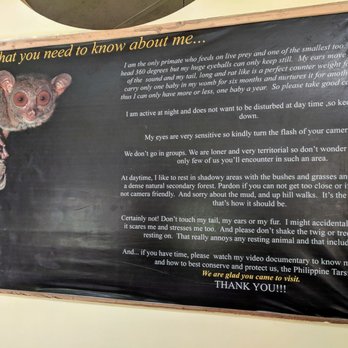
I learned that Tarsiers were an endangered species during science class while growing up in Manila. I never really imagined that I'd see them after I moved out of the motherland, but I'm so happy I did. My family booked a private driver to bring us to Bohol's top sights and he said that the work done at the Philippine Tarsier Sanctuary is the real deal. Entrance fee is P60 per person. You're given the talk about what to expect, how Tarsiers look like, behave, what not to do, etc. Please listen to your guides, don't use flash photography as it stresses the little creatures and we don't want that. The sanctuary is an enclosed gated piece of the forest, but it's maintained by the workers quite nicely. They'll remind you to be quiet since sudden, loud noises are also stressful to the Tarsiers. There were certain hiding spots where they hang out, so we just followed our guide, observed in silence and watched them in pure awe. They're about the size of your hand with big, curious eyes. They can jump from one tree branch to another with the blink of an eye. The whole thing is over in 15 minutes and after you exit, there's a souvenir shop where you can buy keychains, snacks and water. New to the Philippines? make sure to get iced candy on your way out.
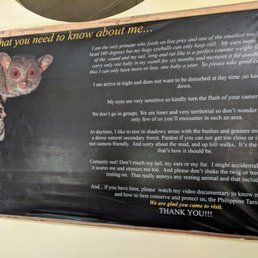

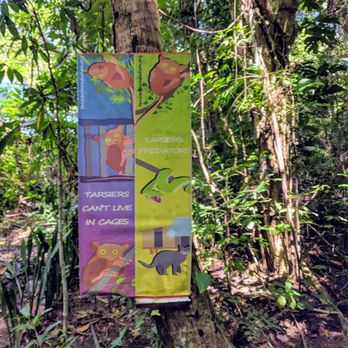
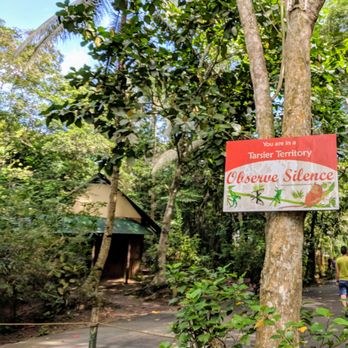
I heard of the Tarsiers from my science classes during my elementary years and have always been curious to see one. Being that I am in the province where these little Yoda-like creatures reside, I made sure that I visited their sanctuary and learn about them. The Philippine Tarsier Sanctuary was our first stop during our day tour. As soon as you enter the premises, there were signs as to what is expected from visitors -- no camera flash, no loud noises, and other facts you need to know about these little primates. The tour in their sanctuary is very quick, you're done in more or less than 15 minutes. You will be greeted by tour guides and again remind you of not using flash and not creating too much noise as it does create stress on the Tarsiers. Our tour guide pretty much let's us know where can we find them in the very lush forest-like sanctuary. We were told that before they open the sanctuary for visitors, they actually have to find the Tarsiers first so that they know where to direct guests. Apparently, these little primates don't like too much sun nor too much rain -- so they hide well underneath the trees. As much as you want to hold them or take them as pets, they cannot be held captive or cannot be taken away from their natural habitat as they are very territorial. The sanctuary is working on saving them from extinction as there are between 5,000 to 10,000 of them left in the world. After the tour, there is a small souvenir section where you can purchase Tarsier stuffed toys, magnets, key chains, and other little trinkets -- all for affordable prices. And because the area can be very humid, there are also refreshments available for purchase.


This was our favorite activity in Bohol, Philippines. It was so amazing to witness these endangered species in a serene and safe environment. No speaking, touching or close contact is allowed at the sanctuary which is how it should be because these animals are very timid. We had a lovely tour guide named Mary Ann who educated us on these amazing creatures. I captured some close up video shots of the tarsiers with my DSLR camera's zoom feature and featured an interview with our tour guide in my vlog here, if you'd like a preview of what to expect when you visit https://youtu.be/Q6mxVQw8aCY If I were you, I would go to Bohol JUST to visit this sanctuary because it's that special. read more



11 months ago
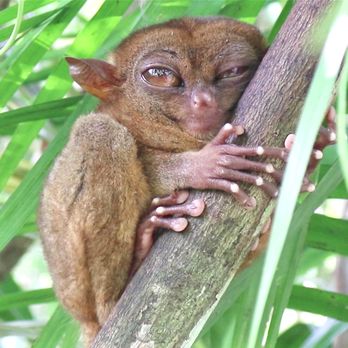
One of the best things in life is to experience the beauty and grace of the rarest animals and flowers in a rare botanical and zoological landscape of the Philippines. To experience this rare treat, we took a local flight via Cebu Pacific to Cebu and then a boat ride to Bohol, a nearby island where these icons live and thrive. As a backgrounder, these tarsiers are tiny, nocturnal primates native to the Philippines, known for their large eyes and ability to rotate their heads 180 degrees. They also have velvety fur, tarsiers are small, weighing 80-150 grams and measuring 9-16 cm long, excluding their tails, which are about twice as long. While there, we were advised to observe extreme silence and sudden movements or make any unnecessary sounds or noise, as this can disrupt their sleep or their propensity to engage in sexual productivity whatsoever. There were minders and tour guides who took these photos and reminded us to only walk within the established routes and spaces, as part of their tourist program. These tarsiers are one of the country's national treasures and if you haven't seen one face-to-face, you really haven't lived life to the fullest, to my mind. I am a Professor of Sciences at the largest state university in California, the California State University, Northridge where I earned an academic scholarship as a young g man from the Philippines (one of 2, lucky in my mind) and as a global researcher, I haven't really seen such wonder, myself. So, if you plan to visit Southeast Asia, drop by the Philippines and enjoy one of the rarest encounter with the tarsier, one of the smallest primate in the world. Enjoy! read more
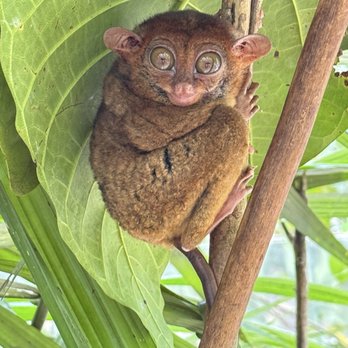


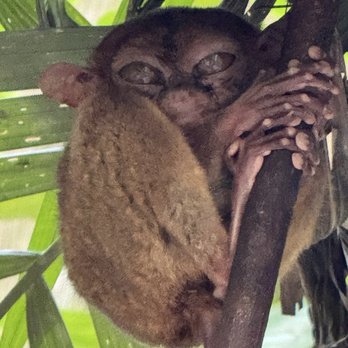
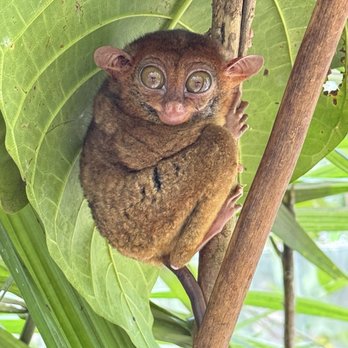

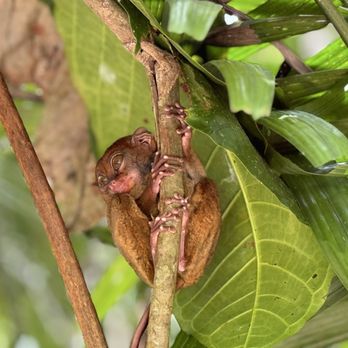
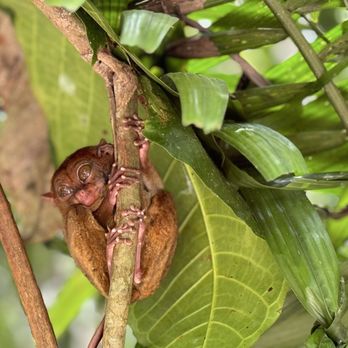
For years I had Tarsiers and Whale Sharks on my Philippines bucket list for years, Well I finally got the Tarsiers done, These little guys the save of a small hamsters nocturnal so you are lucky to see one with the eyes open. Don't expect much from these sanctuaries, I only saw three Tarsiers here and they just sit all day under some banana leaf shade sleeping. read more


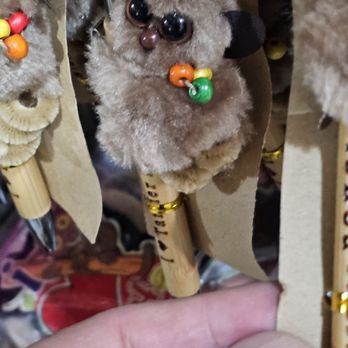


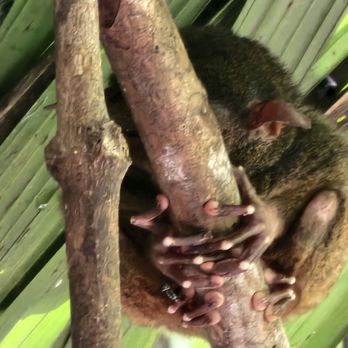


I learned that Tarsiers were an endangered species during science class while growing up in Manila. I never really imagined that I'd see them after I moved out of the motherland, but I'm so happy I did. My family booked a private driver to bring us to Bohol's top sights and he said that the work done at the Philippine Tarsier Sanctuary is the real deal. Entrance fee is P60 per person. You're given the talk about what to expect, how Tarsiers look like, behave, what not to do, etc. Please listen to your guides, don't use flash photography as it stresses the little creatures and we don't want that. The sanctuary is an enclosed gated piece of the forest, but it's maintained by the workers quite nicely. They'll remind you to be quiet since sudden, loud noises are also stressful to the Tarsiers. There were certain hiding spots where they hang out, so we just followed our guide, observed in silence and watched them in pure awe. They're about the size of your hand with big, curious eyes. They can jump from one tree branch to another with the blink of an eye. The whole thing is over in 15 minutes and after you exit, there's a souvenir shop where you can buy keychains, snacks and water. New to the Philippines? make sure to get iced candy on your way out. read more


I heard of the Tarsiers from my science classes during my elementary years and have always been curious to see one. Being that I am in the province where these little Yoda-like creatures reside, I made sure that I visited their sanctuary and learn about them. The Philippine Tarsier Sanctuary was our first stop during our day tour. As soon as you enter the premises, there were signs as to what is expected from visitors -- no camera flash, no loud noises, and other facts you need to know about these little primates. The tour in their sanctuary is very quick, you're done in more or less than 15 minutes. You will be greeted by tour guides and again remind you of not using flash and not creating too much noise as it does create stress on the Tarsiers. Our tour guide pretty much let's us know where can we find them in the very lush forest-like sanctuary. We were told that before they open the sanctuary for visitors, they actually have to find the Tarsiers first so that they know where to direct guests. Apparently, these little primates don't like too much sun nor too much rain -- so they hide well underneath the trees. As much as you want to hold them or take them as pets, they cannot be held captive or cannot be taken away from their natural habitat as they are very territorial. The sanctuary is working on saving them from extinction as there are between 5,000 to 10,000 of them left in the world. After the tour, there is a small souvenir section where you can purchase Tarsier stuffed toys, magnets, key chains, and other little trinkets -- all for affordable prices. And because the area can be very humid, there are also refreshments available for purchase. read more





6 years ago

7 years ago
Boy, they are small. There a couple of places to see them. They are small & hide well in the trees. Good thing the place we went to had kids standing by pointing the tarsier out to you. We actually saw 6 of them, which turns out to be a good amount!!! Had a good time & took some great photos. Enjoy. read more