Palazzo Vecchio Photos


Recommended Reviews - Palazzo Vecchio
Start your review...


Reviews With Photos

Beautiful piazza with a replica of Michaelangelo's David and other famous sculptures on display. There's a beautiful fountain as well. We spent about an hour in this piazza. There's a free entrance into the museum at the piazza as well. Definitely worth the visit while in Florence. There are restaurants in the piazza and tons more restaurants within walking distance.
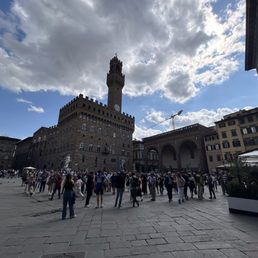

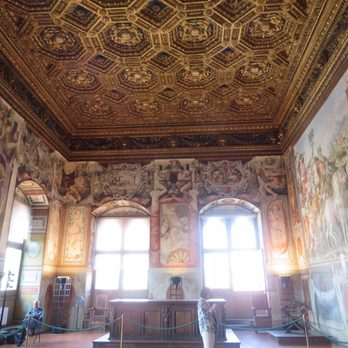
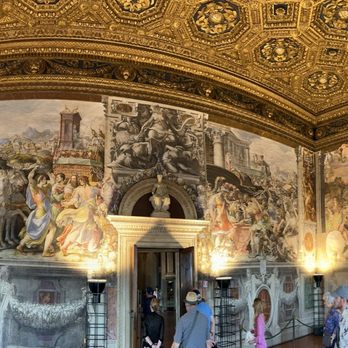
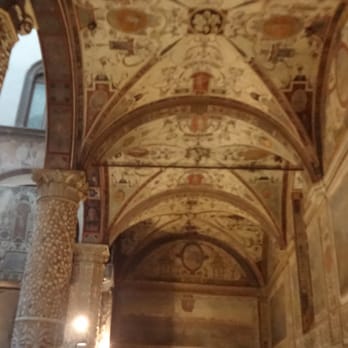
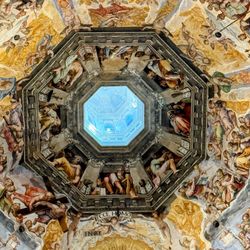
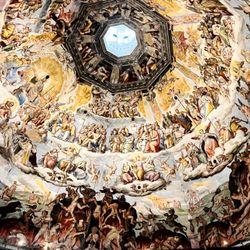
So many museums in Florence! Somehow this one was not at all crowded despite the huge crowds outside in the square around the statues which include the David copy. The Palazzo Vecchio is included with the FirenzeCard and is definitely worth stopping in. As with so many of the museums here, the building itself is a work of art and the ceilings and walls are all covered in amazing paintings. The main hall is truly impressive. Don't skip coming in here if you're walking around Florence!


In 1299, Florentines decided to build a palace that would be worthy of the city's importance, and that would be more secure and defensible in times of turbulence for the magistrates of the commune. The architect of the Duomo & Santa Croce church, began construction upon the ruins. This cubical building is made of solid rusticated stonework, with 2 rows of two-lighted Gothic windows, each with a trefoil arch. In the 15th century, decorative reliefs were added between the trefoils. The building is crowned with projecting crenellated battlement, supported by small arches & 9 painted coats of arms of the Florentine republic. These arches can be used for dropping heated liquids or rocks on invaders. In 1540, Medici the grand duke moved his official seat here to the Palazzo della Signoria. Medici moved to the Palazzo Pitti, renaming his former palace the Old Palace. The Piazza della Signoria, still bears the original name. He then commissioned an above-ground walkway, the Vasari corridor, from the Palazzo Vecchio, through the Uffizi, over the Ponte Vecchio to the Palazzo Pitti & moved the seat of government to the Uffizi. The palace gained importance as the seat of united Italy's provisional government from 1865-71, at a moment when Florence was the temporary capital of the Kingdom of Italy. Although most of the Palazzo Vecchio is now a museum, its also the symbol and center of local government. Since 1872 it has housed the office of the mayor of Florence, and it is the seat of the City Council. The tower currently has three bells; the oldest was cast in the 13th century.


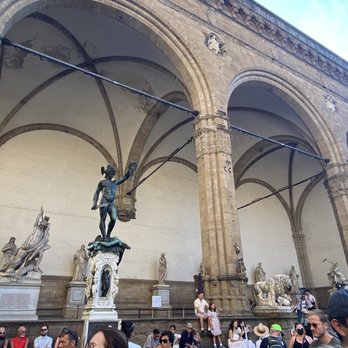
So many reviews about this historical plaza. Lots of beautiful statues and great spots for photo options. I just enjoyed walking around, exploring and taking it all in. The place is very busy, be prepared for tourists scams and pickpocketing. Our group didn't have any issues but we did see other groups constantly being approached. Very interesting watching workers clean the statues. They definitely take this time and are very careful.


All lovers of history should come here, even if you don't go into the hall, the plaza is wonderful. It can be a little crowded, but if you're in Florence this is a place that you should stop.


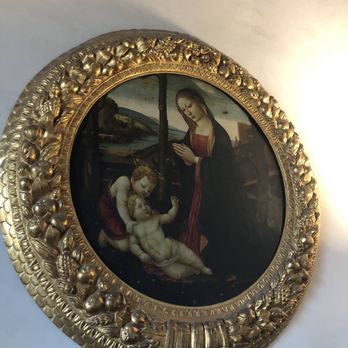
This was my first trip to Italy. When we were discussing our itinerary, this was one of the biggest things I wanted to do. Recently one of my biggest guilty pleasures of all time has been watching ancient aliens. I had to see the "Madonna Del UFO" painting in which there's a supposed UFO over Mary's shoulder. I couldn't get close enough to tell if it really was a UFO but... seeing it was enough to make me geek out. The rest of the building is incredible and I'd recommend taking your time and seeing all of it.
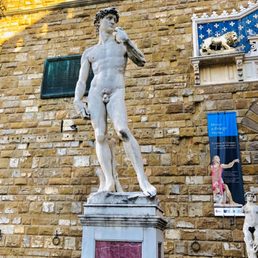

One of Florence's most significant buildings is the Palazzo Vecchio, a grand palace overlooking the Piazza della Signoria. Built-in the 12th century, the Palazzo Vecchio housed the powerful Medici family as well as Florence's supreme governing body for six centuries. From here, the city/republic was ruled. This titanic palace was the seat of power for the Medici family when they were the main engine of the Italian Renaissance. Since 1872, it has served in part as a museum and as the city town hall. Inside the museum, you will see artworks that include beautiful frescoes, sculptures, painted ceilings, intricate carvings. The David (the original is in the Galleria dell'Accademia) by Michelangelo was placed outside the Palazzo Vecchio as a symbol of the Republic's defiance also Hercules's sculpture is aligned with David's. If you enjoy great views (and don't mind a lot of stairs) this is a good alternative to the Dome Climb at Santa Maria del Fiore which is usually more crowded. Be sure to sign up early for one of the free tours, so you'll get to see some of the secret passages the Medici used to move among the rooms. in the Palazzo Vecchio we can find a series of hidden passages? These secret passages were built by the Medici to escape their enemies or to store valuables. For example, in the Stanza delle Mappe (The map room) is the map of Armenia, behind which there is an entrance leading to the dressing room of the Duchess Bianca Capello, who was the second wife of Francesco I. The Palazzo Vecchio (Old Palace) is one of the most famous symbols of the city of Florence and certainly is a stop that can't miss in your visit to this city cradle of the Italian Renaissance.


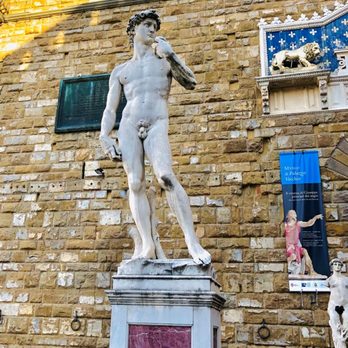
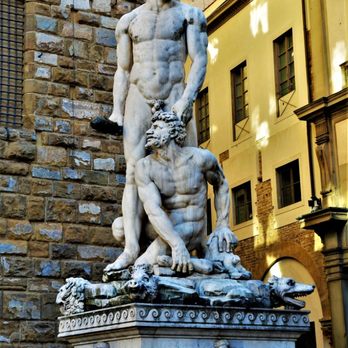
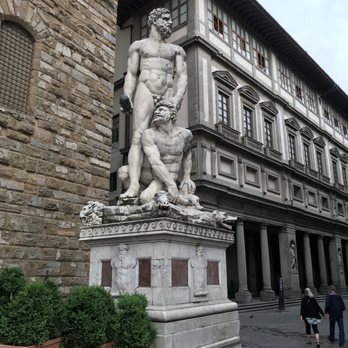
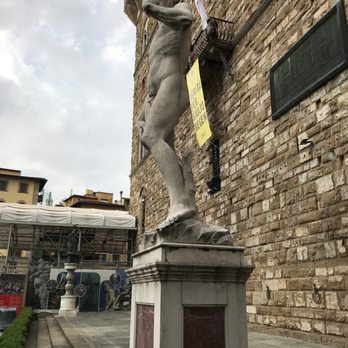
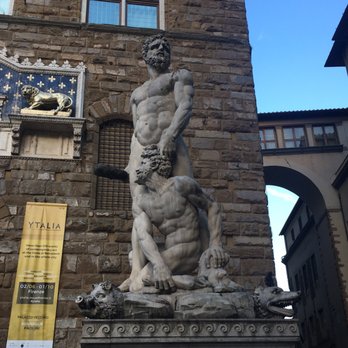
We were just wondering around Florence early one morning while walking from our hotel to Galleria dell'Accademia. During our stroll, we happened to come across the Palazzo Vecchio. We didn't go inside any of the structures, but it was awesome to see the entire area with hardly any other people around! There are magnificent statues all over the area, including a fantastic replica of the Statue of David on one side of the door entrance! This is also where the original Statue of David stood until 1873, where it was moved to it's current home. Flanking the other side of the doorway from David is another impressive marble statue of Hecules and Cacus. The castle its self was very impressive to see. as well as the adjacent Loggia dei Lanzi and it's beautiful collection of statues. One of these days, upon my return to Florence, I will see what I missed this last time and go inside to admire the courtyards for myself! 4 stars.


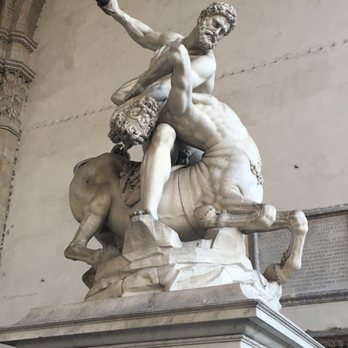
Statues, statues, and more statues everywhere. It's a beautiful building without a doubt and the tower is amazing. I wasn't able to climb it today as it was sold out and will be going tomorrow, but we were able to go inside and enjoy many of the art pieces. Rich in history in almost every aspect, there wasn't a face without a jaw drop to be found. It's that kind of place. Florence is a city rich in history and it might be one of the top artistic cities in the entire world. Any Eurotrip can become overwhelming in terms of what to hit and what to miss, but this spot is most definitely not a miss.


Scenic view was amazing, I highly recommend visit this location. Excellent place to take photos at and just explore the area.


Very busy spot but so worth to walk and see it. It's very close to other popular spots. You can go in for free and walk around and take pictures. It's fill with so much history. If you want to go to the tower you must buy a ticket :)


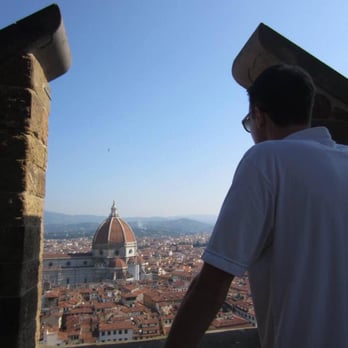
Great spot to get the full view of Florence, duomo and all. It's quite the climb and definitely worth it. It cost around €12, a little expensive for a tower climb. Great stop though, would recommend.


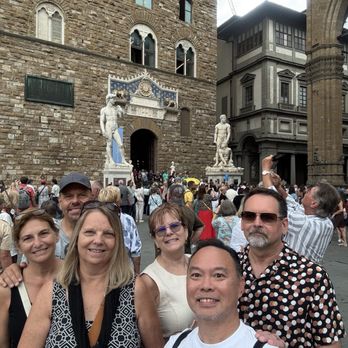
From the Middle Ages to the present day, Piazza della Signoria, between Piazza del Duomo and the Arno River, is the beating heart of the historic center of Florence with its distinctive L-shape, which my partner, our friends, family member, and I visited in mid-September. Palazzo Vecchio, the traditional seat of the Florentine government, with its distinctive tower, is yet another symbol of the city. In front stands a copy of Michelangelo's David (the original can be seen at the Accademia Gallery). One of the most impressive squares we've ever seen! The piazza looks like an outdoor museum, full of iconic statues and history in every corner. One can't miss the Fountain of Neptune that was commissioned to celebrate a Medici marriage. It is a colossal statue of Neptune, the Roman god of the sea and the counterpart of the Greek god Poseidon. The atmosphere is vibrant and lively with both tourists and locals, perfect to enjoy both during the day and at night. Definitely a must-see in Florence! read more



1 year ago
Nice gathering place next to Ponte Vecchio. There's a beautiful fountain here and plenty of places to gather and dine. I love these Italian palazzos! read more


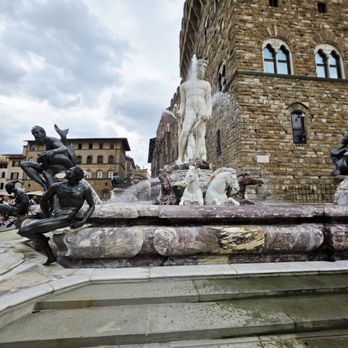

If you visit Florence, you will wind up in the Piazza della Signoria - where you will find the Palazzo Vecchio. You will know it by the replica statue of David at the entrance. The Palazzo Vecchio is the old town hall of Florence. It was built in the 14th-century to resemble a fortress. This palace is steeped in history. Its grand interior has beautifully decorated rooms and courtyards with ornate ceilings, wall tapestries, carved doors, and fine art including works by Michelangelo, Vasari, and Da Vinci. Palazzo Vecchio was home to the Medici family until they moved to Palazzo Pitti. Since we are from Baltimore, Maryland, we always feel connected to this palace as the Bromo Seltzer Tower in Baltimore, Maryland was modeled after the Palazzo Vecchio. Check out the secret passage tours that they offer to see exclusive sections only accessible on the tour. On this trip, we came to see two special exhibitions. The first one was the "Michelangelo and Power" Exhibition. We were able to see more than fifty works: sculptures, paintings, drawings, handwritten letters, and plaster casts each chosen to illustrate Michelangelo's relationship with power, his political vision and his determination to place himself on an equal footing with the powerful of the earth. The real star of the exhibition is the famous bust of Brutus, exceptionally loaned by the Museo Nazionale del Bargello and for the first time in history exhibited in Palazzo Vecchio. We saw the following: the Faun and the Sleeping Cupid, Angel Holding a Candelabrum, the cast of Bacchus, the plaster replica of the Vatican Pietà, the monumental copy of the head of the David in Piazza Signoria, the two Slaves, (the Bearded Slave and the Dying Slave), and Night, from the Medici Chapels. It was an absolutely stunning exhibition. The other exhibition was the La Sala Grande: Giorgio Vasari per Cosimo I De' Medici - a small but significant display to commemorate the 450th anniversary of the architect and the Grand Duke who both passed away in 1574, and the glorious project that remains at the heart of Florentine civic life when Vasari enhanced the most magnificent of the Palazzo's rooms - the Sala Grande. The exhibition tells the story of the transformation of this place that took place in the second half of the sixteenth century thanks to the genius and resourcefulness of the architect and painter from Arezzo at the service of the Medici. We were be able to see original documents rarely seen by the public, including several letters and drawings. Particularly interesting is Michelangelo's letter in which the master suggests raising the hall by 23 feet, something that Vasari actually did. We saw drawings for the preparation of the frescoes on the capture of Porta Camollia and the Battle of Marciano. The coffered ceiling, divided into 39 panels, was painted with celebratory scenes from the life of Cosimo I and allegories of the Medici power, all enriched with gilded details that give brightness and regality to the space. The walls were completely redecorated with gigantic frescoes depicting Florence's great military victories, including: The Battle of Marciano, which celebrates the defeat of Siena and the consolidation of Medici rule and The Conquest of Pisa, symbol of the city's triumph over the proud Tuscan port. In addition to the frescoes and the ceiling, Vasari enriched the Hall with a series of monumental sculptures, including Michelangelo's famous Genius of Victory. It was a most revealing and informative exhibition. read more


Beautiful piazza with a replica of Michaelangelo's David and other famous sculptures on display. There's a beautiful fountain as well. We spent about an hour in this piazza. There's a free entrance into the museum at the piazza as well. Definitely worth the visit while in Florence. There are restaurants in the piazza and tons more restaurants within walking distance. read more
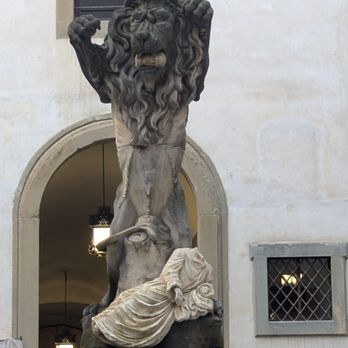

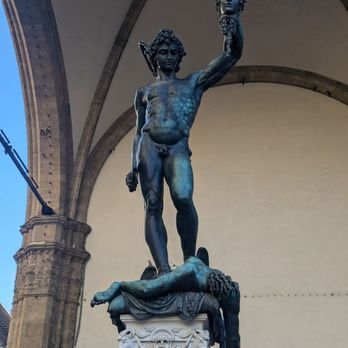


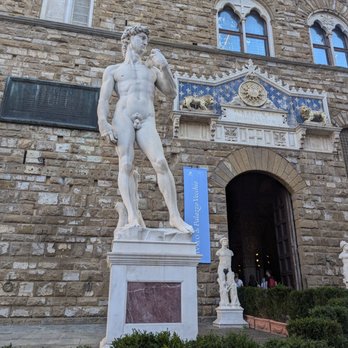


So many museums in Florence! Somehow this one was not at all crowded despite the huge crowds outside in the square around the statues which include the David copy. The Palazzo Vecchio is included with the FirenzeCard and is definitely worth stopping in. As with so many of the museums here, the building itself is a work of art and the ceilings and walls are all covered in amazing paintings. The main hall is truly impressive. Don't skip coming in here if you're walking around Florence! read more
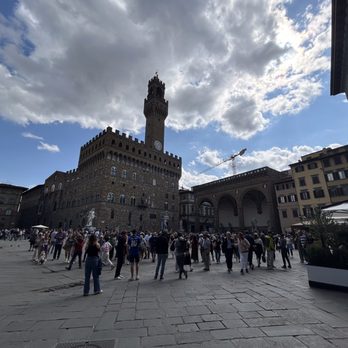




In 1299, Florentines decided to build a palace that would be worthy of the city's importance, and that would be more secure and defensible in times of turbulence for the magistrates of the commune. The architect of the Duomo & Santa Croce church, began construction upon the ruins. This cubical building is made of solid rusticated stonework, with 2 rows of two-lighted Gothic windows, each with a trefoil arch. In the 15th century, decorative reliefs were added between the trefoils. The building is crowned with projecting crenellated battlement, supported by small arches & 9 painted coats of arms of the Florentine republic. These arches can be used for dropping heated liquids or rocks on invaders. In 1540, Medici the grand duke moved his official seat here to the Palazzo della Signoria. Medici moved to the Palazzo Pitti, renaming his former palace the Old Palace. The Piazza della Signoria, still bears the original name. He then commissioned an above-ground walkway, the Vasari corridor, from the Palazzo Vecchio, through the Uffizi, over the Ponte Vecchio to the Palazzo Pitti & moved the seat of government to the Uffizi. The palace gained importance as the seat of united Italy's provisional government from 1865-71, at a moment when Florence was the temporary capital of the Kingdom of Italy. Although most of the Palazzo Vecchio is now a museum, its also the symbol and center of local government. Since 1872 it has housed the office of the mayor of Florence, and it is the seat of the City Council. The tower currently has three bells; the oldest was cast in the 13th century. read more

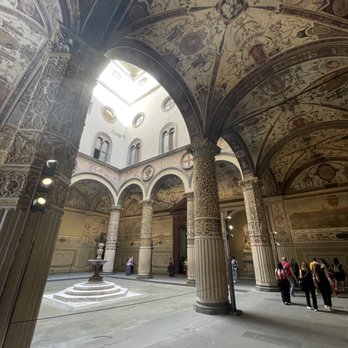


So many reviews about this historical plaza. Lots of beautiful statues and great spots for photo options. I just enjoyed walking around, exploring and taking it all in. The place is very busy, be prepared for tourists scams and pickpocketing. Our group didn't have any issues but we did see other groups constantly being approached. Very interesting watching workers clean the statues. They definitely take this time and are very careful. read more




2 years ago
This was my first trip to Italy. When we were discussing our itinerary, this was one of the biggest things I wanted to do. Recently one of my biggest guilty pleasures of all time has been watching ancient aliens. I had to see the "Madonna Del UFO" painting in which there's a supposed UFO over Mary's shoulder. I couldn't get close enough to tell if it really was a UFO but... seeing it was enough to make me geek out. The rest of the building is incredible and I'd recommend taking your time and seeing all of it. read more



One of Florence's most significant buildings is the Palazzo Vecchio, a grand palace overlooking the Piazza della Signoria. Built-in the 12th century, the Palazzo Vecchio housed the powerful Medici family as well as Florence's supreme governing body for six centuries. From here, the city/republic was ruled. This titanic palace was the seat of power for the Medici family when they were the main engine of the Italian Renaissance. Since 1872, it has served in part as a museum and as the city town hall. Inside the museum, you will see artworks that include beautiful frescoes, sculptures, painted ceilings, intricate carvings. The David (the original is in the Galleria dell'Accademia) by Michelangelo was placed outside the Palazzo Vecchio as a symbol of the Republic's defiance also Hercules's sculpture is aligned with David's. If you enjoy great views (and don't mind a lot of stairs) this is a good alternative to the Dome Climb at Santa Maria del Fiore which is usually more crowded. Be sure to sign up early for one of the free tours, so you'll get to see some of the secret passages the Medici used to move among the rooms. in the Palazzo Vecchio we can find a series of hidden passages? These secret passages were built by the Medici to escape their enemies or to store valuables. For example, in the Stanza delle Mappe (The map room) is the map of Armenia, behind which there is an entrance leading to the dressing room of the Duchess Bianca Capello, who was the second wife of Francesco I. The Palazzo Vecchio (Old Palace) is one of the most famous symbols of the city of Florence and certainly is a stop that can't miss in your visit to this city cradle of the Italian Renaissance. read more


2 years ago
Such an interesting place! Lots of art on the walls, ceilings, etc. Even more interesting if you've watched TV shows about the de Medici family! read more




5 years ago

We were just wondering around Florence early one morning while walking from our hotel to Galleria dell'Accademia. During our stroll, we happened to come across the Palazzo Vecchio. We didn't go inside any of the structures, but it was awesome to see the entire area with hardly any other people around! There are magnificent statues all over the area, including a fantastic replica of the Statue of David on one side of the door entrance! This is also where the original Statue of David stood until 1873, where it was moved to it's current home. Flanking the other side of the doorway from David is another impressive marble statue of Hecules and Cacus. The castle its self was very impressive to see. as well as the adjacent Loggia dei Lanzi and it's beautiful collection of statues. One of these days, upon my return to Florence, I will see what I missed this last time and go inside to admire the courtyards for myself! 4 stars. read more





Statues, statues, and more statues everywhere. It's a beautiful building without a doubt and the tower is amazing. I wasn't able to climb it today as it was sold out and will be going tomorrow, but we were able to go inside and enjoy many of the art pieces. Rich in history in almost every aspect, there wasn't a face without a jaw drop to be found. It's that kind of place. Florence is a city rich in history and it might be one of the top artistic cities in the entire world. Any Eurotrip can become overwhelming in terms of what to hit and what to miss, but this spot is most definitely not a miss. read more






4 years ago
Scenic view was amazing, I highly recommend visit this location. Excellent place to take photos at and just explore the area. read more

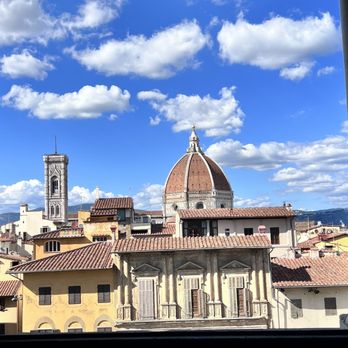


Very busy spot but so worth to walk and see it. It's very close to other popular spots. You can go in for free and walk around and take pictures. It's fill with so much history. If you want to go to the tower you must buy a ticket :) read more


7 years ago
Great spot to get the full view of Florence, duomo and all. It's quite the climb and definitely worth it. It cost around €12, a little expensive for a tower climb. Great stop though, would recommend. read more


Palazzo Vecchio used to be the home of the Medici family (1540) who spawned a generation of popes, leaders, and even a few queens. Construction began in 1299 with architect Arnolfo di Cambio. The 'old palace' was once the city hall of Florence. It's massive and contains countless works of art. Outside are statues by various Florentine artists. One of which is Michelangelo's David which originally stood outside until it was moved to the Accedemia Gallery or Academy of Fine Arts in 1873. The replica was erected in 1910, where the original once was. The statue is next to the statue of Hercules and Cacus by Bandinelli. Inside, there are expansive frescoes that depict Florence's military victories over Pisa and Siena. The palace can be found in the Piazza della Signoria which is the main square in Florence. Florence does have many squares but this is the main one which used to be the political meeting place for all Florentines. The palace has been the home to the office of the mayor of Florence since 1872 and is also the seat of the City Council. It's a must visit if you're ever in Florence! Just along the palace, you'll walk into the Uffizi courtyard and on to Ponte Vecchio. read more

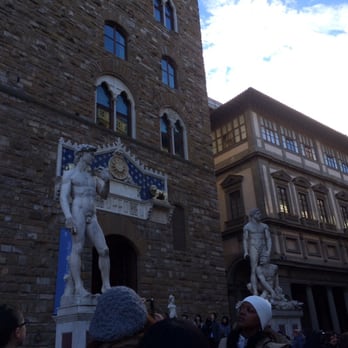


This is a beautiful palace that should be on your 'to do' list when in Florence. Many of the rooms contain detailed frescoes and beautiful ceilings. There are so many photos already posted here it seems redundant to post more. If you are a fan of old and richly decorated palaces, you will enjoy Palazzo Vecchio. Note: use care not to confuse Palazzo (palace) with Piazza (open space). Palazzo Vecchio is an 'old palace'. read more


8 years ago
While the Santa Maria del Fiore cathedral (aka the Duomo) was the center of Florentine religious life, the center of political and civil life was the Palazzo della Signoria. Named after the former ruling body of Florence (Signoria), it served as the seat of local government and became a symbol of the Florentine republic. When the Medicis became the de facto rulers of the city they used the building as their private residence. As they expanded their power the Medicis had control over Tuscany; the current name Palazzo Vecchio came into use when the Medicis moved their private residence to Palazzo Pitti across from the Arno River. They built the Vasari Corridor to link both buildings but much of the corridor is inaccessible to the public. While Palazzo Vecchio still is home to Florence's mayor and city council, much of the building is now a museum that highlights what the city was like during the Medici era. ADMISSION - €10 gets you access to the museum *or* Torre Arnolfo. (I cover Torre Arnolfo in a separate review: https://www.yelp.com/biz/torre-arnolfo-firenze?hrid=iBFuJOCJcYotFjoT_eClFw) - €4 gets you to the archaeological excavation of what was once a Roman theater of Florentia seating up to 10,000 spectators. - €18 gets you access to the museum, tower and archaeological site on the same visit. - Three official guided tours can be included in addition to the museum addition from €4. One is the official guided tour, one focuses on the "secret passages" while another retraces the scenes of Dan Brown's "Inferno" in relation to the palace. (I took the "Secret Passages" tour, reviewed here: https://www.yelp.com/biz/palazzo-vecchio-percorsi-segreti-firenze?hrid=cq913ugHBbgAfEB04dOzXQ) - Included in Firenze Card. The most significant room in the palace is the Salone dei Cinquecento (Hall of the 500), which was built by Savonarola when the Medicis were in brief exile and Savonarola wanted to establish a more democratic rule. It was modeled after Venice's Chamber of the Great Council inside Doge's Palace and to reflect Savonarola's austerity the room was devoid of decoration. When the Medicis returned to power Grand Duke Cosimo I entrusted Vasari to expand the hall and decorate it to exalt and glorify the Medici family, specifically Cosimo. This was emphasized in the coffered ceiling (which was raised by seven meters) and the walls that depict Florence's victories over its rivals Siena and Pisa. In the same floor are a group of apartments named after Leo X, a Medici who became pope. Each room is dedicated to a prominent member of the Medici family that illustrates their most significant endeavors. The floor above is divided into three sections, which contain various private apartments for members of the Medici family. 1. Apartments of the Elements: These rooms lie directly above the apartments of Leo X who was responsible for establishing the Medici duchy line in Tuscany. While the rooms themselves are named after Greco-Roman mythological beings, it is purposefully juxtaposed with the corresponding rooms below dedicated to a prominent Medici family as the room proportions are identical to one another. By doing so the House of Medici established themselves as "deities on earth" by linking themselves to the origins of the "deities in heaven". This section was made after the Medicis re-established themselves in Florence. 2. Apartments of the Eleonora of Toledo: Originally this section was part of the Palazzo della Signoria as the private apartments of the members of the city government, who were required to live in isolation. When Duke Cosimo took over he dedicated this wing to his wife Elenora. The rooms are named after famous heroines. A private chapel for Elenora is also located in this wing. 3. Apartments of the Priors: Also a part of the original Palazzo della Signoria, this section contained public rooms. Out of all the sections this section retained the look and feel of what Palazzo della Signoria was like before the Medicis took over. This section contained a chapel that also served as a treasury and an audience hall where the duke would granted audience to his subjects. - Hall of Geographical Maps: Not originally a part of this wing, Duke Cosimo had Vasari build a room that would serve as the family's "wardrobe" storing the family's possessions. In addition to highlight Cosimo's interests in geography and the natural sciences Vasari worked with a cosmographer. The ceiling depicts constellations while the walls contain wooden cupboards that contained maps of every single region that was known in the 16th century. The Medicis are strongly associated with the identity of Florence. By visiting Palazzo Vecchio along with Palazzo Pitti a tourist can make themselves informed on just how much the Medicis were involved in the city's affairs. As a person who didn't pay much attention in history class this was a great proper introduction to all things Medici-related. read more

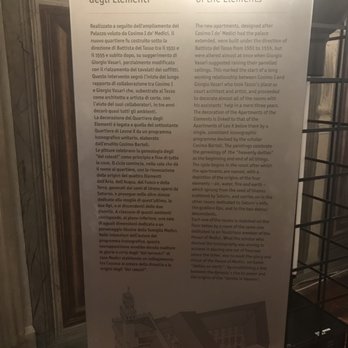


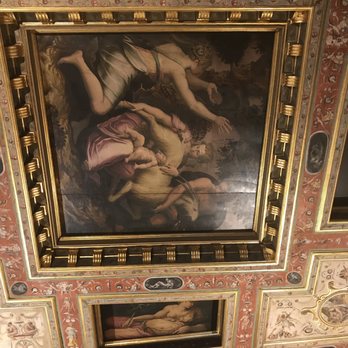


Overlooking the crowded Uffizi and the festive Piazza della Signoria, Palazzo Vecchio is surprisingly overlooked by many tourists who are willing to wait in long lines at other sites. Such a shame as this old palace (That's what its name means in English) has been and is still Florence's city hall since the time before the Renaissance, and contains so many beautiful artworks! One of the few places that opens late in Florence, Palazzo Vecchio has opening hours that can go as late as 11 PM on all days except Thursday during the summertime, so you can definitely visit this place without sacrificing other destinations that close at the typical 5 PM! Here you will find the impressively huge gathering hall Sala de Cinquecento that is decorated on every wall. As you go further, you will find beautifully-painted fresco in the apartments that once belonged to the Medici pope Leo X and the residences the first Grand Duke of Tuscany Cosimo I. Despite the medieval barebone exterior, Palazzo Vecchio is quite colorful inside! Come early enough (before 9 PM) and you can climb the offset tower for one of the best views of Florence. It'll be less crowded to the Duomo dome! While the Duomo represents the religious aspect of historic Florence, Palazzo Vecchio is the civil counterpart. This palace usually has no crowd and even if it does, its enormous size makes it a non-issue. Either way, Palazzo Vecchio is a destination that you cannot miss for a full trip to experience historic Florence! Nowhere can you truly see how Florence's ruling family, the Medici, lived before they upgraded to the grander Palazzo Pitti. --- tl;dr version: 1) The often-overlooked "hidden gem" despite being prominent and close to headliners 2) Despite the bland exterior, many beautiful colorful art inside 3) One of the few late-opening sites in Florence 4) Must-go for the full experience of historic Florence read more


We did a general tour AND a hidden passage tour of this old palace. Definitely interesting, like stepping back in time. Interesting to see where the Medici lived. Definitely recommend booking a tour directly through the Palazzo Vecchio website. Very affordable and worth it. They have a Michaelangelo sculpture there, with other artwork and architecture. A must see. read more


Palazzo Vecchio (which translates literally to "Old Palace") was originally established as the City Hall of Florence in medieval times (specifically the year 1302!). This is an attraction not to be missed when visiting Florence. The Romanesque Palace is an incredibly impressive Fortress which retains much of its original exterior appearance, although its interior was "updated" (ha!), meaning "re-modeled" (ha ha!) in the mid-1500's. During the brief period that Florence was the capital of Italy from 1865-1871 the Palazzo Vecchio housed the Parliament and Foreign Ministry. It is one of the most impressive sights to see throughout Tuscany. It is absolutely massive, constructed from large blocks, with an extremely tall lookout tower that immediately attracts your eye when viewing the Florence skyline even today. The top of the tower is roughly the same height as the top of the Duomo. The palace's main entrance is approached from a piazza (plaza) which includes many historic sculptures, including Michaelangelo's David (although the original marble sculpture is housed at the Accademia di Belle Arti, "Academy of Fine Arts"), as well as Benvenuto Cellini's Perseus with the Head of Medusa. These are awe inspiring sculptures that, again, are not to be missed. Michelangelo's original marble sculptue of David actually stood at the entrance from its completion in 1504 to 1873, when it was moved to the Accademia Gallery. A replica of the David, erected in 1910, now stands in its place next to Baccio Bandinelli's Hercules and Cacus. A trip to Florence would not be complete without including a visit to the Palazzo Vecchio!! read more
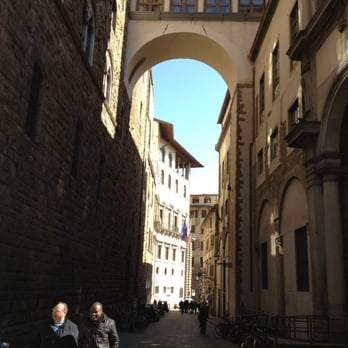


from our trip in 2009... very visually stunning area here. even with all the tour groups blocking most of the statues, the space is still amazing. the replica statue of David is one of the stars in the plaza. lots of other repica statues of, apparently, famous sculptures. maybe zuess and poseidon, i think. we're not big art buffs. there are several little cafes in the plaza that mama and i people watched from. and of course, we did so whilst sipping on some refreshingly cool prosecco. the people watching here is unparralled. they flow through the plaza like schools of fish. the plaza is fun and relaxing for just sitting around. sit on the steps or visit the cafes. if you're so inclined, stand in on one of the tours. cool spot. read more
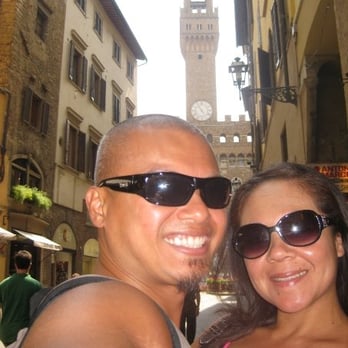

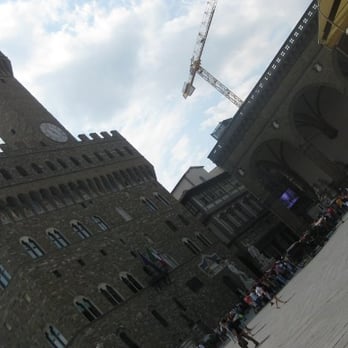

It's a beautiful building and there is a huge statue of David in the front entrance. As you get in a large open area with a magnificent fountain with statues awaits. The ticket price was 10 euros each. There are several really long stairs to climb and of course no elevators available, so be prepared if you are going to the top for the view. It's a must visit when in Firenze.... And you cant miss it as its beside Galleria degli Uffizi and Piazza della Signoria. read more


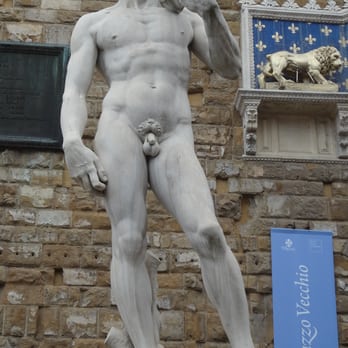



13 years ago
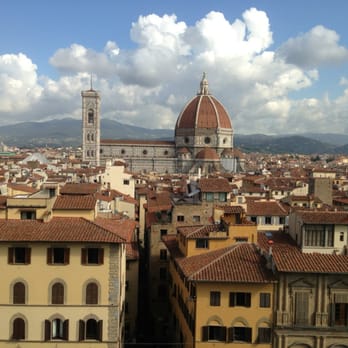
Great stop in Florence. I recommend doing the town first early when there is no one there and working your way back down to the museum after the tower. Amazing views of the Florence from up there. Great architecture. read more


10 years ago


The Palazzo Vecchio looms above the piazza with its tall tower and we toured the aforementioned tower and the museum of the palace. Climbing to the top of the tower is not too difficult as you traverse a passageway of stone steps. The views from the top were incredible, with gorgeous views of the entire city. I was a bit letdown that a metal staircase at the top (enabling an even higher view) was blocked off. After the tower tour, we ventured to the museum which featured a vast collection of paintings, walnut painted maps (even one of California), a walk through of the Hall of Five Hundred, and seeing the death mask of Dante (which plays a key role in "Inferno" by Dan Brown). It was amazing the the Palazzo was a residence for the Medicis (it is massive!). Now it acts as the town hall of Florence. read more



11 years ago


9 years ago

11 years ago
Page 1 of 2
More info about Palazzo Vecchio
Palazzo Vecchio Reviews in Other Languages
Review Highlights - Palazzo Vecchio


















Why does Yelp recommend reviews?
1 review that is not currently recommended
The reviews below are not factored into the business's overall star rating.

2 years ago


