Cancel

    Open app

    Search

    National Museum of Computing

    3.8 (5 reviews)
    Closed 9:30 am - 5:00 pm

    National Museum of Computing Photos

    Recommended Reviews - National Museum of Computing

    Your trust is our priority, so businesses can't pay to alter or remove their reviews. Learn more about reviews.
    Yelp app icon
    Browse more easily on the app
    Review Feed Illustration

    3 months ago

    Helpful 3
    Thanks 1
    Love this 1
    Oh no 0

    8 years ago

    Helpful 1
    Thanks 0
    Love this 0
    Oh no 0
    Photo of Kevin C.
    614
    104
    646

    8 years ago

    Helpful 0
    Thanks 0
    Love this 0
    Oh no 0

    14 years ago

    Helpful 0
    Thanks 0
    Love this 0
    Oh no 0
    Photo of Martin S.
    5
    524
    1411

    14 years ago

    Helpful 0
    Thanks 0
    Love this 0
    Oh no 0

    Verify this business for free

    Get access to customer & competitor insights.

    Verify this business

    Bletchley Park - Secretaries Rooms

    Bletchley Park

    4.9(22 reviews)
    0.2 mi

    Fans of the film "The Imitation Game" will recall Bletchley Park as the home of code-breaking,…read morewhere Alan Turing (alongside nearly 9,000 colleagues) worked to decipher the encrypted messages of the Germans and Japanese in World War II; this included breaking the infamous "Enigma" German coding system. This is one of the best museum experiences I've ever had. It does a brilliant job of making a highly technical subject accessible and of bringing it to life, with plenty of human interest. All based in the original buildings, it tells the story of how Bletchley Park was established, and then expanded, as its operations grew during World War II. Rooms are recreated as they would have been in the 1940s, and are beautifully curated to explain how every aspect of the code-breaking operation worked. This covers not just the code-breakers themselves, but everyone from the linguists, canteen staff and administrators, to the motorcycle messengers who rode to and from the radio stations with intercepted messages, and then on to the Intelligence HQs with the deciphered messages (in all weathers, with all the road signs removed, and with blackouts at night!). I particularly liked the wall of original memos from the administrative office, which shows the vagaries of the British class system (wanting more typists of the "Roedean school sort"), alongside very modern concerns about staff shortages, and complaining about the food, heating and just about everything else! Finally, the later exhibits show the development of computers and radio interception, and the implications of the development of AI. There's a huge amount of personal detail about the people who worked here, including oral histories, letters, and diary entries. A highlight has to be Alan Turing's office, set up as he had it in 1944. Then there are the exhibits explaining how code-breaking works in general, and how the Enigma Code itself was broken, with a replica of one of the famous "Bombe" machines that helped speed the code-breaking. (If you can work out how it works, you're better than me!) But equally important was the work of turning the messages into useful military intelligence, and in turn, using that knowledge to develop counter-intelligence, which played a vital role in an early example of disinformation. On our visit, there were lots of guides, some of whom had worked there (one lovely lady was 96), but all were delightfully helpful, very enthusiastic and incredibly knowledgeable. We spent 5 hours there, and still didn't see everything, but the good news is that tickets are valid for return visits for a year. As I said, this is one of the best curated museums I've ever visited. We had a wonderful day out. On a practical level, the museum is less than 10 minutes' walk from Bletchley railway station, but there is a decent-sized car park too. The huge site has been made fully accessible for wheelchair users, and there are plenty of toilets. There are two cafes (pricey but okay) and a tea hut; and a shop, selling souvenirs and generous selection of books about WWII and code-breaking more generally.

    I suspect that the museum here is quite new, though I suspect interest in it arose after the film…read morebased around Alan Turing. Mind you, a lot of what went on here was top secret for years after the war finished, so in many cases we simply had no idea that this place existed. It's pretty big mind you, and you can pretty much explore the entire complex, as well as seeing Turing's office, as well as replicas of the Bombe.

    Photos
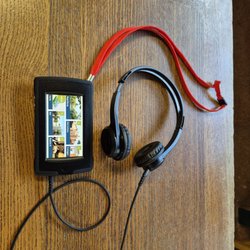
    Bletchley Park - Headset tablet for self guided tour

    Headset tablet for self guided tour

    Bletchley Park - Bletchley Park: Alan Turing's office

    Bletchley Park: Alan Turing's office

    Bletchley Park - Bletchley Park: WWII ambulance

    See all

    Bletchley Park: WWII ambulance

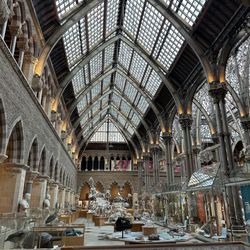
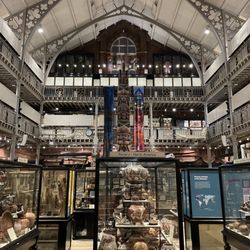
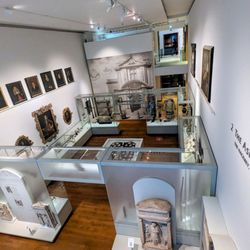
    Pitt Rivers Museum - Museum looking up from the ground floor.  So much to see!

    Pitt Rivers Museum

    4.8(53 reviews)
    27.3 mi
    £

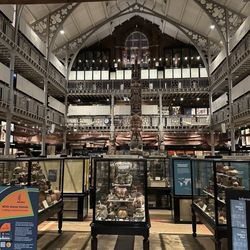
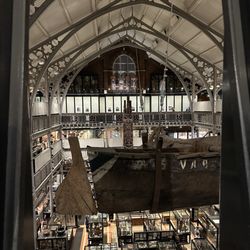
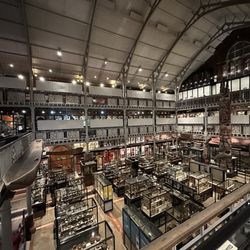
    We had a great time exploring the Pitt Rivers Museum! There is SO much on display it's almost hard…read moreto take it all in. If you're an anthropology buff, this is your place. So many neat things to see and everything you can imagine, too many to list. From clothing to masks to weapons to toys all from different cultures and different times. We even saw a Totem Pole! Overall a fascinating place to visit, just wish we'd had more time to explore!

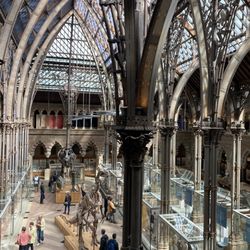
    What you think of Oxford's Pitt Rivers Museum likely depends on how you like your museums. With…read moremore than 500,000 objects on display, Pitt Rivers is ripe for exploration. There's multi-level display cases everywhere, each seemingly containing more than the last. And don't get me started on the drawers; they're everywhere too, and when you pull them out you'll find hundreds more items in each. So if you like your museums with a few paintings on each wall this might not be your jam but you'll still probably be happy you went. You've likely never seen anything like this. A young woman in a shop mentioned, several days before my visit, that she particularly liked this museum and the way she described the entrance intrigued me. As it should: the entrance to this museum is found when you're already inside another museum (The Museum of Natural History; both are free of charge). Officially, the Pitt Rivers Museum displays both the archeological and anthropological collections of the University of Oxford. But unofficially, it's like entering someone's giant garage, very well organized but also packed to the rafters. One could spend months in here and only skim the surface.

    Photos
    Pitt Rivers Museum
    Pitt Rivers Museum
    Pitt Rivers Museum - Totem Pole!

    See all

    Totem Pole!

    The MAD  Museum

    The MAD Museum

    4.5(2 reviews)
    43.1 mi

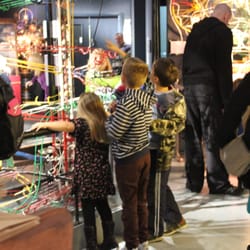
    What an amazing place! We happened to see this museum as we…read morewere walking by and were intrigued by their moving signage. Inside there are plenty of machines that whir and perform small tasks or even make music. Lots of interactive things to see and do, buttons to push, pedals to press, even a magnetic marble track you can build yourself! It's a treat for young and old and definitely worth the small entry fee.

    The opening hours are stated for October to March. Opening hours from April to September are a…read morelittle longer (10:30 to 18:30 daily). A friend recommended this place to me thinking that my boys would like it. My friend was right! We did all enjoy the interactive displays. The extent of the interactivity is mainly pressing a button though but it's still good. There is an interesting range of mechanical art and my boys and I were fascinated by the mechanisms. It is quite a small place. It cost £19 for the four of us (2 adults and 2 children) which isn't too bad but, considering we spent less than an hour in there and saw everything, it does seem a little expensive. There are two floors. One very small room on each floor displaying different pieces of art. It can get rather crowded due to the small size, especially downstairs where the entrance/exit is the same. In the same small area, there is a counter where there is a single member of staff who both admits people and serves the gift shop. The gift shop is basically a small portion of the wall within the ground floor of the museum. Many items are over-priced and the selection is very limited. We did enjoy ourselves there and would recommend it but it could get claustrophobic and the upstairs can be noisy (although it does state this on the signage).

    Photos
    The MAD  Museum
    The MAD  Museum
    The MAD  Museum

    See all

    Hatfield House - Hatfield

    Hatfield House

    4.6(8 reviews)
    28.1 mi

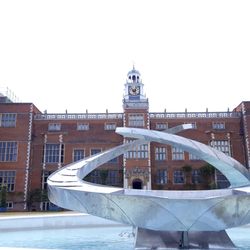
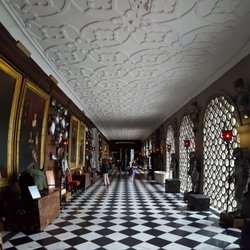
    I visited this house a few years ago which was only a few miles from my high school in…read moreHertfordshire and realized its historical significance. This was the house where Mary I, Elizabeth I and Edward VI were raised. London in Henry VIII's time was riddled with disease such as typhoid, cholera and smallpox, hardly a place fit for little royals where childhood mortality was common. King Henry VIII choose Hatfield house for its proximity to London but far away enough from its scourge. Located in the North Downs, you could see the Thames and from London, you could see Hatfield House. Henry could signal his intention to visit his children and the royal household at Hatfield would make preparations to cater for his arrival with his royal entourage. The journey on horse from London to Hatfield would take a day by the way of Saint Johns Wood. Now you could get to Hatfield from Central London in probably an hour. On a clear day you should be able to see the London Eye from Hatfield if you know what you are looking for. This house was a crucial incubator of the protestant faith. King Henry had the best scholars of the time to instruct his children so that they can continue their reign as protestants. Without Elizabeth I being a strong protestant, England might have kept the Catholic faith as the country's religion. Her eldest sister Queen Mary reinstated Catholicism as the faith of the land when she reigned after the death of Edward VI and the brief reign of Jane Earl Grey. It was reverted to the Church of England when Elizabeth I became Queen. So, if you are ever within spitting distance of this place you should try and see it.

    Hatfield House is a lovely day out from London. It is about a 25 minute train ride north of London…read more Hatfield House is the family home of the Marquess of Salisbury, and was built by Robert Cecil (Chief Minister to James I, and son of William Cecil) from 1607-1611. The house is gorgeous, and has loads of beautiful furniture and art. Also on site is Old Hatfield Palace, where Elizabeth I spent much of her childhood. Elizabeth was out on the grounds at Hatfield when she learned that she was now queen, following the death of her sister Mary. Hatfield has somewhat limited opening hours, and is closed (except for the grounds and for special events) during the winter. Check the website (great info) for details. I recommend going at the weekend: during the week you must take a guided tour of the home. The guide was knowledgable and entertaining, but we had to keep moving ahead of the group behind us, so did not have time to savor all of the wonderful things about Hatfield. I will definitely go back.
    Photos
    Hatfield House
    Hatfield House
    Hatfield House

    See all

    The Fitzwilliam Museum - Outside Museum

    The Fitzwilliam Museum

    4.4(24 reviews)
    39.2 mi
    £

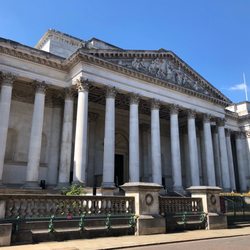
    This is an amazing 2 story museum with all kinds of artifacts from old wedgewood to Egypt's tomb…read moreand artifacts Teapots and tea cups old coins to everything in between. 2 nd floor loads of paintings to look at. Entry is free which is always a plus.

    The Fitzwilliam Museum offers a well rounded and varied collection. It is sure to please most…read moremuseum visitors regardless of interests. If you're a fan of the work of Georges-Pierre Seurat, you're sure to enjoy the 1884 Neo-Impressionism painting, "The Couple" (original title: Un dimanche après-midi sur l'île de la Grande Jatte). Does it somehow look familiar? This was a study for A Sunday on the Island of la Grande Jatte! "This work is one of many that Georges-Pierre Seurat made in preparation for a much larger painting. The woman's stiff posture is accentuated by her tightly buttoned jacket and the exaggerated bustle of her skirt, which echoes the curve of her parasol. Given that the area of Paris depicted here was known for prostitution, it has been suggested that the woman is a sex worker on the arm of a male client." Give yourself several hours if you plan to take in the entire collection. If you are fortunate enough to live nearby and can visit often, take your time and you're sure to fall in love with one of the many wonderfully curated items found within the museum walls.

    Photos
    The Fitzwilliam Museum - Armor/Knight

    Armor/Knight

    The Fitzwilliam Museum - Georges-Pierre Seurat (1859-1891) Study for A Sunday on the Island of la Grande Jatte: The Couple 1884

    Georges-Pierre Seurat (1859-1891) Study for A Sunday on the Island of la Grande Jatte: The Couple 1884

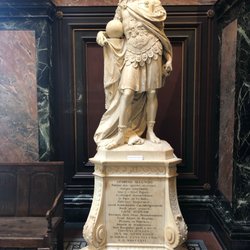
    The Fitzwilliam Museum - Statue

    See all

    Statue

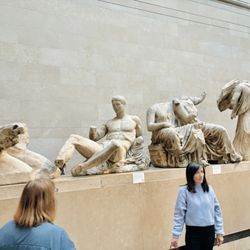
    The British Museum - At British Museum

    The British Museum

    4.6(1.3k reviews)
    42.4 miBloomsbury

    Huge crowds and it wasn't even a weekend. Reason: free…read more This is equivalent to Natural History ones in US. However, there are historical contexts with british roman empires and other inclusions that makes this place distinct in a variety of ways. There are also kid packet activities- ask front desk. Some areas have uneven heating and cooling so you may be prone to fainting / esp if the ennui alone is not enough to get you there- ha! Place is great for history buffs, though, as it is free- do not expect high end bathrooms and overall exceptional service. Otherwise, 5 stars for being free and for a very elaborate set up.

    British Museum, London, April 5…read more Our family of four with kids ages 9 and 10 spent part of the afternoon at the British Museum as an easy cultural stop during our London stay. Entry to the permanent collection is free and straightforward, with no reservation required, which made it simple to drop in. There are paid special exhibitions, but the main museum itself is open access. Arrival and First Impressions Entry to the building was very easy, and once inside the scale is immediate. The Great Court sets the tone right away, and everything feels larger and more layered than expected. Even just orienting yourself takes a moment because of how expansive the space is. Getting in was smooth and flexible, and the museum handles steady crowds well without ever feeling restrictive, which helped a lot with kids in tow. The Highlights The Egyptian galleries are one of the first moments where the scale really lands. The large stone sculptures and statues are far bigger in person than photos suggest, and they create a dramatic backdrop as you move through the space. The Rosetta Stone was another key highlight. Seeing it in person adds a different level of context, especially knowing its role in unlocking ancient Egyptian writing. It is not large or flashy compared to some of the other artifacts in the room, but it carries a quiet importance that draws attention naturally. The Samurai exhibition was a standout and required a paid entry ticket. It was absolutely worth it. The display of full armor sets, helmets, weapons, and artwork created a complete and visually rich picture of samurai life. The craftsmanship in the armor in particular held everyone's attention far longer than expected, and it felt more immersive than a typical museum exhibit. We also spent time in the hands-on style learning stations, which were a strong break in pace. These included real artifacts like a flint knife that was thousands of years old and a Roman cosmetic jar believed to have been used for eye makeup. Seeing objects like that up close made history feel very tangible for the kids in a way that glass cases alone do not. There is also a family area tucked away downstairs that worked well as a short reset point. It felt quieter and more relaxed, and it gave the kids a chance to decompress before continuing, which made the overall visit more sustainable. The museum works best as a series of short, flexible stops rather than a structured route, and we naturally moved based on interest and energy levels. The Challenges The main challenge is scale. It is very easy to underestimate how large the British Museum is, and even with breaks built in, pacing becomes the key factor in how enjoyable the visit feels. Trying to cover too much quickly would likely be overwhelming, especially for kids. Would We Return Yes, but with a more focused plan and specific sections chosen in advance rather than trying to see everything broadly again. Final Thoughts The British Museum is best experienced in segments rather than as a single continuous visit. The Egyptian galleries, the Rosetta Stone, the Samurai exhibition, and the hands-on artifact stations all offered very different but equally strong experiences. It is free, accessible, and incredibly rich, but the real value comes from slowing down and treating it like a collection of smaller discoveries, with breaks built in, rather than a single museum to "finish."
    Photos
    The British Museum - At British Museum

    At British Museum

    The British Museum - British Museum_Yelp_Sanju-1

    British Museum_Yelp_Sanju-1

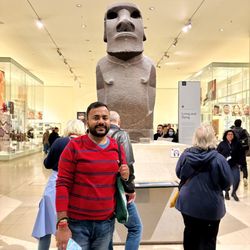
    The British Museum - Easter Island head

    See all

    Easter Island head

    National Museum of Computing - museums - Updated May 2026

    Loading...
    Loading...
    Loading...