Cancel

Open app

Search

Nathaniel Macon Photos

Recommended Reviews - Nathaniel Macon

Your trust is our priority, so businesses can't pay to alter or remove their reviews. Learn more about reviews.
Yelp app icon
Browse more easily on the app
Review Feed Illustration

4 months ago

Helpful 7
Thanks 1
Love this 1
Oh no 0

Verify this business for free

Get access to customer & competitor insights.

Verify this business

Hope Plantation

Hope Plantation

(1 review)

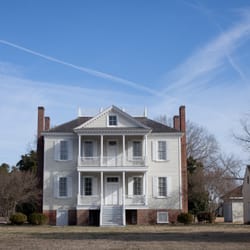
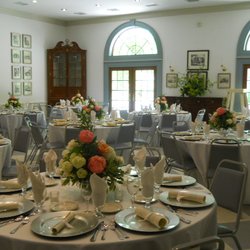
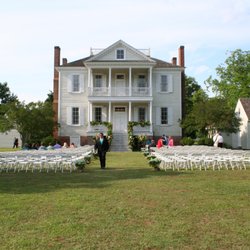
Hope Plantation is in Windsor, NC. It was the home of former NC Governor David Stone…read more Hope Mansion and the King-Bazemore House can be toured with a docent on certain days and times so check the website before visiting to make sure it will be open. You start your visit and buy your ticket at the Roanoke-Chowan Heritage Center. It has restrooms, a gift shop and two rooms to view that provide background information about the property. You can either walk or drive to the houses as they are a distance away. I was not sure what to expect when I decided to visit Hope Plantation and did not expect that the tour would be as long as it was and so thorough. It is possible that my tour was longer than normal as I was very interested in all of the facts provided. I was very impressed with this property; the history and the restoration. I try my best to find the hidden gems to visit so was excited that I found another. Both houses are on the National Registry for Historic Places. The land of the plantation sits was from a land grant by King Charles II of England. It was to lure settlers from Virginia and was given to Francis and Elizabeth Hobson. Elizabeth inherited the property after her husband died and later married Zedekiah Stone. The story told is that Elizabeth missed her homeland Hope Parish so the property was named Hope. David Stone was given the Hope tract of land as a wedding present. He constructed the Hope Mansion. The house was completed in 1803. It is of a Georgian style with Federal Period influences. The enslaved community provided the labor to run the plantation. The highly skilled labor can be seen with the craftsmanship of the home. After David Stone died, his son sold the property. It changed owners many times. In 1960 though the property was deteriorated and Bertie Country residents worked to save the property. They created a historical association and raised the funds to purchase the property. Then went on to restoring the mansion through research. The outside was completed in 1969 and by 1972 the restoration was completed. The King-Bazemore House was relocated to the plantation in 1974 to be restored. It is an example of a colonial home and would be compared to the Hobson-Stone House that was destroyed when the mansion was built. I highly recommend visiting this property in Bertie County if you love history and historic properties. You will not be disappointed. These properties are amazing and the restorations impeccable.
From the owner: Restored home of former North Carolina Governor David Stone (1770-1818). Located four miles west of…read moreWindsor, NC, the plantation complex offers unique insights into the late 18th & 19th century rural life in eastern North Carolina and the South.

Brady C Jefcoat Museum

Brady C Jefcoat Museum

(3 reviews)

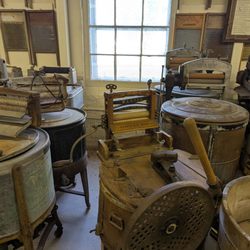
The Brady C Jefcoat Museum is located in Murfreesboro, NC. There is parking for the museum on the…read morestreet. The museum is open on Saturdays and Sundays. Admission is currently $10. The museum is located in the old Murfreesboro High School and all three floors are used for the museum. Stairs are the only way to get to the other levels. The elevator appeared out of order. The building is showing its age and needs some maintenance and upkeep. The restroom sink did not have water and did not appear very clean. Some of the rooms had mold or mildew on the walls. Brady Jefcoat was a collector and collected everything you can think of from phonographs to tools to taxidermy to washing machines to toasters to butter churns to telephones to records to bedpans to toilets to toasters. The museum holds all 17,000 items he collected. Every inch of space in the building is filled with the collections from the hallways to the stairwells. I enjoyed aspects of the museum as there were some unique items and the overabundance of some items made the museum unique. Some of the items were labeled so that was helpful. I liked the first room the best with the sofa from Gone With the Wind and the harp. Some of the rooms are so filled with items that it is overwhelming. But there is something special with the everyday items in the collection as the variety of items shows how everyday people lived and how much has changed with technology and innovation. I think a visit to the museum will have something for everyone to enjoy.

This is an amazing museum. It's not like your typical one, very unusual. It's Mr. Brady Jefcoats…read morepersonal collection. He collected anything that tickled his fancy, and then he collect all types of that item. I was told it takes 3 hours to go through, at first, we were like "yea, right, 15 minutes and I'm outa here". Well, we were wrong. He has the largest collection of phonographs/victrolas around, music boxes, toasters, pipes/cigar making items, bedpans, toilets, bathtubs, tape meastures, office suppies, guns, washing machines/boards. Have to see to believe. I've been in a lot of museums, and this one is one of my tops. It is guided $8/person; and you can't wonder freely due to many items could be stolen. So plan accordingly to the hours open, and give yourself at least 3 hours to go through. Talk about a trip down memory lane!

Nuclear Mishap Historical Marker - Nuclear Mishap Historical Marker, Eureka

Nuclear Mishap Historical Marker

(1 review)

Yes, I drove an hour round trip to take a picture of a sign but this one is special. It denotes the…read moretime that the United States bombed North Carolina, nearly a hundred years after the end of the Civil War. The marker reads, "Nuclear Mishap. B-52 transporting two nuclear bombs crashed, Jan. 1961. Widespread disaster averted; three crewmen died 3 miles south." Okay, all kidding aside. Three Air Force crew died and in the process, prevented what would have been an unspeakable tragedy. It is a serious matter. During the height of the Cold War, the United States had a policy of keeping armed aircraft in the air at all times in the event of a conflict. Nuclear deterrence and all that. Well, this B-52G Stratofortress took some structural damage during an air refueling and while preparing to land at nearby Seymour Johnson Air Force Base, it experienced a major failure of the right wing. The plane broke up and exploded at 8000 feet. "As a result of the breakup of the plane, two MK39 nuclear weapons were released at a height of between 10,000 and 2,000 feet. Seven of eight arming, fusing, and firing switches and devices in one bomb automatically actuated. Only a crew-controlled switch prevented a nuclear detonation. Since its parachute deployed, one bomb had only minor damage when it fell about a mile from the crash site. The second bomb fell free, without its parachute deploying, and broke apart on impact." "Components of the bomb were sought for several weeks. The decision was made to leave remaining portions of the weapon containing uranium, believed to have entered the water table, in the ground. As a precaution, the government purchased part of the site and still maintains an easement in order to prevent digging in the vicinity. Periodic groundwater tests, still conducted by the state, have revealed no contamination." As the sign mentions, the actual crash is three miles away and the grounds are secured. Here in downtown Eureka, there isn't much. A small sandwich shop is near the sign if you're hungry. [Review 15486 overall, 990 of 2021, number 3029 in North Carolina.]

John A Hyman Historical Marker - John A. Hyman Historical Marker, Warrenton

John A Hyman Historical Marker

(1 review)

Located near the center of Warrenton, this marker points out a local who was "first" and served his…read morecommunity well. The marker has the same text on both sides. It reads, "John A. Hyman. 1840-1891. First African American to represent N.C. in U.S. Congress, 1875-77; state Senator & member, 1868 constitutional convention. He lived 1 block west." There is more information online. John A. Hyman, born into slavery in Warren County, North Carolina in 1840, became the first African American to represent the state in Congress, elected in 1874 from the "Black Second" district. His early life was marked by hardship, including being sold and sent to Alabama, but he returned home after the Civil War and quickly rose through the ranks of Reconstruction-era politics. Hyman served in multiple conventions and the state senate, though his tenure was marred by involvement in political scandals like the Littlefield-Swepson bond fraud. After a failed congressional bid in 1872, he won election in 1874 but was denied renomination in 1876; during his term, he advocated for civil rights and voting protections. Financial troubles and controversy followed him in Warrenton, and by 1880 he relocated to Washington, D.C., where he worked modestly until his death and burial in the capital. It is marker number E-101. It was erected in 2022 by the North Carolina Office of Archives and History. [Review 941 of 2025 - 4344 in North Carolina - 24496 overall]

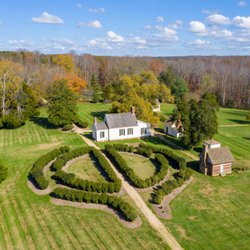
Patrick Henry’s Red Hill - Aerial photo of Red Hill

Patrick Henry’s Red Hill

(8 reviews)

Hello everyone, I had an absolutely fantastic, once in a lifetime experience at Patrick Henry's Red…read moreHill. The property is beautiful, relaxing and well-maintained. I highly recommend checking out this place. The admission is very affordable and the experience is worth the cost. I really enjoyed learning about the property from Patrick Henry's descendant. He was very kind and well-informed about the life of Patrick Henry. The first part of the experience includes a short film about Patrick Henry's life and family. Patrick Henry's descendant explained everything about Patrick Henry and was passionate about history. My family and I were very fortunate to have the whole property to ourselves. The property has breathtaking views and is very peaceful. I enjoyed walking the grounds and seeing the different historical buildings. The whole experience was truly memorable and enjoyable. I will definitely visit again when I travel to Virginia from Florida. I went to purchase a book in the gift shop about Patrick Henry and his descendant gave me a free copy. I really appreciated that and enjoy learning more about the founding fathers.

It's off the beaten path but a neat look back to Colonial times. A great patriotic look at one of…read morethe more outspoken voices of the American Revolution. Also has a nice display to honor the slaves and freedmen who made their homes there. It was a nice history lesion and afternoon spent in the beauty of the Virginia countryside

Historic Jamestowne

Historic Jamestowne

(113 reviews)

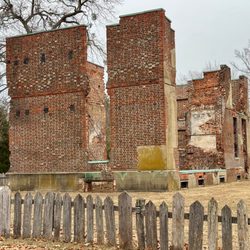
This confusing setup has a bunch of national park land adjoined to a privately owned historical…read moresite. Focusing only on the national park site, I found a visitor center with an introductory movie. While I was perusing the exhibitions right outside the theater, they managed to close it and lock it without letting me know the movie was starting. Which is a little irksome, but may have worked out for the best as I got to the outdoor site and managed to get a run of it and take some pictures just as a weather front was heading in. Some people had traveled from Michigan to tour the area, which I think was a good decision for them as you don't get this kind of history up there. The national park site has some ruins and signage after crossing a boardwalk over the swamp. While not huge in scope; I spent maybe an hour on the site in total, it gives you a feel for the challenges that settlers would have faced. The signage provides compelling information for visitors of all ages, and the views of the waterfront and nearby ferry are majestic as well. You'll get a sense of historical nuance with a lot of players in the area, and an aesthetic experience as well. There is a wildlife drive and this place does have a parkway running to Yorktown, albeit currently not fully open due to major construction. I did not have time for everything the area has to offer on this passing visit, but there is a lot regardless of how much time you have.

September 2024- I visited the historic & original Jamestown , the colony was established there in…read more1607. Jamestown is remembered for its iconic historical figures like Pocohontas and Captain John Smith. In the Visitor Center, there is a small museum exhibit of Jamestown. The admission to explore all of Jamestown requires the purchase of two tickets since Jamestowne managed by two separate organizations, Preservation Virginia (Jamestown Rediscovery) and the National Park Service (Colonial National Historical Park). This can be very confusing when entering and getting admission inside Jamestowne. Entrance inside the visitor center & museum as well as the grounds are free for active military and their families, who get free passes to all the national parks. Standard fee is $15. An additional ticket of $15 is required to purchase by ALL (even with a free military entrance pass to all National Parks). It was worth it to me and a fair price to pay. Jamestowne was a fascinating visit to walk through the well maintained and reconstructed historical buildings & ancient ground of Jamestown. I like how they reconstructed Jamestown to show how it appeared during colonial times and showcased the ruins of the old church within its duplicated replica. I spent most of my time in the church, drinking in the views by the River, and walking through the grounds of Jamestowne. We ended our visit at Jamestown by going to the Archaearium, the archaeology museum, last. It covers the history of Jamestown 1607-1624. There was so much unknown information uncovered there about Pocahontas and the dark history of the colonists during times of famine. 1609 - 1610 was a dark and horrific time period of cold winter weather & starvation for the colonial settlers of Jamestowne. Many starved to death, some resorted to cannibalism of dead corpses or killing the living for food to survive. They reserved a room about this dark period and restrict the use of cameras & taking photography/ videos of that area in the museum out of respect for the remains of the dead in the room. Very macabre yet still fascinating. There were many areas we did not have time to explore due to time constraints and our travel agenda, yet we made the best of what little time we had there.

Shangri-La Stone Village

Shangri-La Stone Village

(2 reviews)

A fun roadside attraction! It's much bigger than I expected…read moreit to be but also don't expect a full-blown village. Lots of structures to look at with significant detail. Take your time and enjoy this special roadside attraction. Don't forget to sign the guest book in the mailbox.

Shangri-La Stone Village is in Prospect Hill, NC. It is near the volunteer fire department, so if…read moreyou can find that, you will see Shangri-La. Admission is free and there was not anywhere to leave a donation but they do have a notebook that you can sign in and share your thoughts. The notebook in the box was from April and there have been many visitors since then. The Village was created with stone from a local quarry. He quarried the stone himself. Henry Warren created this village when he was 72 back in 1968. He was battling cancer at the time. He was a retired tobacco farmer and created 27 buildings that are pretty tall, I'd guess 4-6 feet tall, out of stone. He selected each piece and constructed it all himself. He used white flint rock, quartz, brick, and cement to create this masterpiece. I like that he used other items in his work like door knobs, table legs, ceramic and glass. The art in the designs is remarkable. His workmanship needs to be applauded as his work is still standing after decades. The Village has a mill with water wheel, a school, a church, a theater, a water tower, a farmhouse, a doghouse, an outhouse, a motel, a general store, a jail, a library, a liquor store, and City Hall. He was working on the hospital when he died and his family completed that for him. He finished in 1972 and put up a plaque in the front that says, "Let me live in the house by the side of the road and be a friend to man." Visitors are welcome to tour his creation at any time and for free. Children who came to visit would leave toys to enjoy the village so it was fun to see who was living in the village. Warren died at 84 years old back in 1977 but left behind his work of love for all of us to still enjoy. So if you get a chance, stop by and enjoy his work and take in the whimsy and feel the magic.

Nathaniel Macon - landmarks - Updated May 2026

Loading...
Loading...
Loading...