Cancel
Open app
Search
Sign Up
Log In
Nearby
Bookmarks
Start a Project
Add a Business on Yelp
Add Review
Call
Directions
Website
+5
Start your review...
Get app
7 years ago
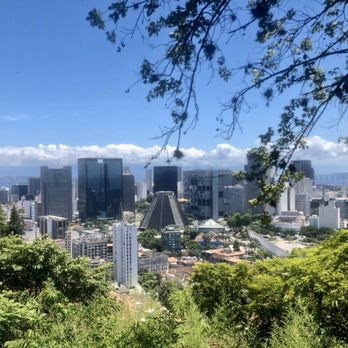
Loved this Museu. The views of the city are amazing. The art collection varied in a beautiful setting. Quiet and blissful. This was one of the few art museums open on a Monday. No crowds. A mar read more
See all
R. Murtinho Nobre, 93
Rio de Janeiro - RJ 20241-050
Brazil
Santa Teresa
(21) 2224-8981
Call Now
Visit Website
http://www.museuscastromaya.com.br/
Hours
What time does Museu da Chácara do Céu open?
Museu da Chácara do Céu opens at 12:00 PM on Monday, Wednesday, Thursday, Friday, Saturday and Sunday.
What time does Museu da Chácara do Céu close?
Museu da Chácara do Céu closes at 5:00 PM on Monday, Wednesday, Thursday, Friday, Saturday and Sunday.Museu da Chácara do Céu is closed on Tuesday.
Mon, Wed-Sun 12:00 PM - 5:00 PMTue Closed
Does Museu da Chácara do Céu have free WiFi?
Yes, Museu da Chácara do Céu has free WiFi.
Portuguese
3 Reviews
Get access to customer & competitor insights.
We took uber there, it is not in a walking distance from every tourist place you might be. We…read morechecked before that Sunday's and Holidays was old anyway. It wasn't today. Llegamos en uber aqui, no es una distancia para caminar de los tipicos lugares turisticos que uno puede estar. Chequeamos antes de ese domingo horarios y feriados. Estaba cerrado. No era hoy!
A great place to take the pulse of the vibrant Brazilian fine-arts scene, the Museum of Modern Art…read moreoccupies a striking concrete-and-glass modernist building. Augmenting the permanent collection of about 6,400 works by Brazilian and international artists is the slightly larger Gilberto Chateaubriand Collection of modern and contemporary Brazilian art. MAM has earned respect over the years for its bold, often thought-provoking exhibitions. The venue also hosts events such as music performances and DJ sessions. Its theater screens Brazilian and international independent and art-house films.
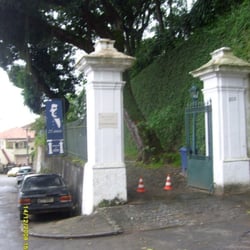
Vista da entrada do Museu
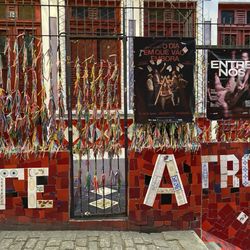
One of the most popular landmarks in Brazil, the Selaron Steps are a highlight of the Lapa…read moreneighborhood. we were lucky to be able to stop by twice first time at night which was great because there were not that many people around & the next time during the day so glad we came before just way too many people during the day hard to really enjoy the area. The steps are a fun colorful display of different countries, art, bright colors & traditions infused together to make these crazy colorful steps. This was a nice stop for sure & definitely worth the look.
Walk up the steps to be able to view all the tiles. Walking down the steps you won't see all the…read moretiles. Have a drink at the top at a rooftop bar.
The Museu da República is housed within the Palácio do Catete and was Brazil's presidential palace…read morefrom 1894 to 1960. It was turned into a museum after the capital of Brazil was moved from Rio to Brasília. The outside is very unassuming and not well-marked, so you could easily walk right past it. But the inside is nothing short of amazing. Most of the rooms have been preserved with original furniture and the paintings, statues, and frescos have been kept in excellent condition as well. Honestly, I'm having a hard time describing what the rooms look like, and I'm not sure words can do them justice. This is an important part of Brazil's history and I can't recommend a visit highly enough (come here instead of seeing the painted stairs). You can tour the old ballrooms, the dining area, the meeting area, see the former Presidential Office, and many other rooms. There is a third floor where President Getúlio Vargas killed himself (the Presidential Bedroom), but it's closed for renovations/preservation. Well worth the visit - take exit B from the Catete Metro Station and you're right there. The entrance fee was R$6, and there are lockers where you can leave your bag or coat.
Brands by name
Articles by date
Stumbled upon this museum after getting off the Cinelandia metro station in Rio, and we loved it…read more Takes about 45 min to browse the entire museum. Some of the art is outstanding. There are enormous paintings, small paintings, sculptures, statues, vases, and more. Best of all, it's free and air conditioned :)
In front of Amanhã Museum. It's not that good, but I would go anyway…read more I had the chance to see the Samba exhibition and it was very good indeed! The rooftop is totally worth it too. En frente al Museo del Mañana. No es tan bueno, pero iría de todos modos. Tuve la suerte de ver la exhibición de Samba y fue muy muy buena! La terraza vale la pena también.
It is too bad that a museum that appears to be recently renovated houses quite a poor collection of…read moreartwork. It has random artwork that is placed haphazardly throughout the various spaces. I thought it was a waste of my money and time to visit this museum. I'd save your money and visit the more substantial Tomorrow Museum diagonally across from the Museu de Arte do Rio.
Yelp Review 2025 #179:…read more I originally wanted to visit this museum because of its architecture. It reminds me of Ciudad de las Artes y Ciencias in Valencia, Spain. Museu do Amanha or Museum of Tomorrow is a nice museum in the Centro area of Rio focusing on visually presenting in a scientific method how our current affects our future. During my visit, the exhibits had climate crisis (no longer climate change) as the theme. Full-price tickets are 40 Brazilian Reais or under $8 which is not bad at all. If you want to check out specific exhibits, it's extra. The goal is to hopefully, open up our eyes as to how our actions or lack thereof affect our future in 50 years time or future generations. And bring awareness so we can make better choices. The resources we enjoy now may not be around in the future - nothing lasts forever unless, we do better. I visited on a Saturday afternoon and this museum was packed! I would've picked a different day and time but that's just how my itinerary worked. I only did a quick walk until I got overwhelmed by the crowd and I left. You can take pictures without flash/ annoying selfie sticks and short video clips in all areas of the museum except for Cosmos. There's a shop and a cafe. There are also vendors outside the museum selling popcorn, churros and açaí bowls. It turns out the architecture looked familiar because Museum do Amanha and Ciudad de las Artes y Ciencias were designed by the same Spanish architect, Santiago Calatrava.
An unexpected treat! We decided to check out this museum when someone suggested it to us. The…read morecurrent exhibition focuses on sustainability and climate change. There was a series of amazing pieces, installations, interactive artworks, amd digital pieces throughout the entire 2nd floor. The architecture of the museum itself is a marvelous work of art. Highly recommend.
This museum was originally a fortress and weapons depot that dates back to when Brazil was still a…read morecolony. The cannons in the courtyard are a dead giveaway of that. It is located in the downtown area but was fairly easy for me to get to with the metro. You get off at the Carioca/Centro stop. The museum houses almost 300,000 items that are from throughout Brazil's history. Some of the more prominent items on display include former thrones of Portuguese kings, artifacts from indigenous peoples, old horse carriages and paintings from very famous Brazilian artists. This museum is a good diversion if you are getting tired of the beach.
The Brazilian National History Museum was marvelous. I was a bit suspicious of a national history…read moremuseum that wasn't in the capital, but the Rio National Historical Museum certainly did the job. The museum covers a wide range of exhibits. The sections devoted to the discovery of Brazil and Portuguese colonization were particularly interesting, as was the accompanying room devoted to discussing Brazil's indigenous populations and the plight they suffered at the hands of the Portuguese and Brazilians. My personal favorite was the portion of the museum devoted to independence, the Brazilian Empire and the Brazilian Monarchy. The rooms devoted to the Imperial Era were exceptionally well done, and incredibly educational when it came to learning about Pedro I, Pedro II, and Princess Isabella. I gave it four stars for two reasons. The first was that the English language signs were haphazard. While some parts of the museum were fully accessible in English, other weren't at all. Luckily I know English and Portuguese, but if I hadn't it would have adversely affected my experience. The second thing I didn't enjoy was that there was no mention whatsoever of the military dictatorship from 1964 to 1985. Obviously it wasn't a pretty period in Brazil's national history, but it's certainly a sizable chunk of Brazilian history and I was looking forward to seeing how they discussed it. Otherwise, though, I really enjoyed it. I would recommend it to anyone in Rio looking to learn more about Brazilian history.
Maybe one of our favorite museums in Rio! The building itself was an old palace for Dom Pedro and…read morelooks like it used to be a beauty in its heydays. Now it looks a little neglected but since the university has picked up the museum and invested some money in it, the content inside is quite an impressive collection. It starts with a dinosaur and meteor display on the first floor, with a couple stuffed and preserved animals for touching. The second floor opens with a huge skeleton of a ground sloth, native to Brazil. They have ancient dinosaurs skeletons with a live artist painting Jurassic dinosaur scenes. There's several types of real stuffed birds; harpy eagle, penguin, Jacu, toucan, etc. There is an impressive Egyptian mummy collection along with decorated sarcophaguses. They're kept under ambient conditions (temperature and humidity regulated) so it's difficult to get a good picture but you can clearly see how well preserved even the cotton clothes that wraps the body. They also have the Chilean Atacama mummies too! An indigenous section shows the traditional ceremonies and headdresses. Another shows Candomblé symbols and yet another has Inuit carvings. There's so much to look at! The building itself has a beautiful courtyard and elaborate ceilings. At only R$6 entrance fee, it's well worth it's price.
This is a cool little museum that is kind of hidden in the trees, you can easily miss the driveway…read moreif you're not paying attention. It costs R$12 to get in and is basically home to a collection of Nordestino art, mostly a bunch of small, hand-painted dolls. The cool thing is that you can get a feel for the culture and how the people used to live through these little dolls. Mostly they're doing work or home activities, but some are representative of festivals or life events. Some of them move and have music, and there's an erotic art room, which I unfortunately didn't get to see (was in mixed company). Supposedly the museum is going to move to a new building this year or next and will be located in Barra.
I am so glad we got a chance to check out this institute and its beautiful surroundings. As a…read moreformer private residence, it's surrounded by a lush garden and towering Dois Irmãos. There are several water features, a blue tiled fountain, turquoise swimming pool and a cascading river along the side of the property. They were under some construction at the moment but a new exhibit was opening up shortly (March 19). We were still able to see a few interesting exhibits. The first one was pen sketches by Cássio Loredano of famous architecture around the city. They had each place labeled and noted on a map of the city, which was helpful to put in prospective where everything was. We also enjoyed the modern photography collection, featuring Marcel Gautherot, Thomaz Farkas, Hans Gunter Flieg and José Medeiros. The photos from industrial Brazil, to insiders view of Candomblé, to interactions with an indigenous Amazonian tribe. In the far space, across the river was another section with only a few large prints of Rio in the early 1900's. The images are amazing, capturing the change throughout time. If you are hungry, they have a small cafe that serves some pastries and coffee. The cappuccinos were fine but the almond croissant was too cake-like. The small gift shop is also worth a look. They have some posters and postcards and a few other things if you like a particular exhibition. Getting here is a bit out of the way, but isn't too far from PUC campus (whenever that metro station opens).
My favourite gallery and a bar with the best coffee in Rio de Janeiro. Great for morning visits.read more