1. Meath Street Grotto
Dublin, D
Cancel
Open app
Search
Sign Up
Log In
Nearby
Bookmarks
Start a Project
Add a Business on Yelp
Add Review
Directions
+2
Start your review...
Get app
2 years ago
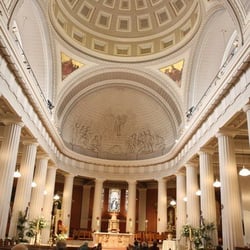
My daughter walked me over here to show me this peaceful spot in the middle of the liberties area. We lit a candle for my dad & grandma and enjoyed the peaceful area the church has created. read more
Meath Street Grotto - Landmarks & Historical Buildings Near Me - Dublin, D
See all
19-75 Meath Street
Dublin
Republic of Ireland
The Liberties
Hours
What time does Meath Street Grotto open?
What time does Meath Street Grotto close?
People searched for Landmarks & Historical Buildings 201 times last month within 5 miles of this business.
Dublin Castle was originally built in the early 1200s as a medieval fortress under the instruction…read moreof King John of England. For centuries, it was the headquarters of English (and eventually British) rule in Ireland. In 1684, a large fire destroyed a large portion of the castle. Instead of matching the original Gothic style, most of it was rebuilt using a Georgian style, similar to what you'd find in the French Palace of Versailles! It's quite the contrast. When you visit Dublin Castle, you can choose to explore it in two ways: with a self-guided tour to the state apartments or with a scheduled guided tour that visits the Viking Excavation, the Chapel Royal, and the State Apartments. When you first enter the courtyard, you'll immediately see the newer Georgian architecture in the neat red brick buildings surrounding the square. From the 13th century to the early 20th century, the castle was under British control. It served from being a royal palace and parliament to a prison. Dublin Castle was eventually handed over to General Michael Collins on the 16th of January in 1922. Collins was a soldier and a politician who lead the Irish people through their fight for Independence Dublin Castle plays a huge role in Ireland's history and a walk around the grounds is time well spent. Today the castle is a government complex and tourist attraction. Stroll through the famous Chester Beatty Library if time permits
This city centre attraction was once a Viking fortress!…read moreSuper popular tourist spot full of history. Lots of cool things to check out here like the gardens, record tower, and of course the apartments. Everything boasts a strong medieval vibe. We opted for a self-guided tour though guided tours are also available. Very interesting and worth a visit!
Dublin Castle_Sanju-4
Dining hall
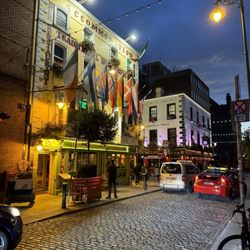
This busy Dublin neighborhood is one those areas you must see as a first-timer…read more Of course, the legendary The Temple Bar is located here as well as several other popular nightlife venues, pubs, restaurants, inns, and shops. Touristy? Hands down, yes! But, it's fun to stroll through and people watch, take on the beautifully lit buildings, the Irish architecture, window shop, and heck, maybe even grab a pint. No matter where you may decide to stop, you're certain to be entertained by live music and local characters. It's kind of got a Piccadilly Circus feel to it. There are several galleries and studios located in the area as well.
The best, most lively and fun area in Dublin. Pub hope, enjoying music, beer, local eats and the…read morefun vibes. With live music in all the pubs and Guinness on tap, what more could you want? Pro tip: add a splash of blackberry syrup to your Guinness for a sweeter taste. It will be gone in a second!
Walking around the Temple Bar district in Dublin at night. Love the old building architecture from late 1800's!
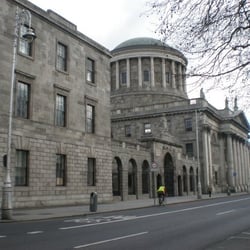
Ireland's main court building contains the Supreme Court, High Court, Central Criminal Court and…read moreDublin Circuit Court - four of them, just like it says on the tin. Designed by James Gandon, the building was completed in 1796 and its green dome held aloft by marble pillars is one of Dublin's most familiar landmarks. Each court has a public area where you can sit and watch trials taking place, but you have to be very quiet or the judge will take offence and have you thrown out and/or arrested if you are particularly boisterous. This is purely a spectator sport - don't be tempted to chip in with your opinion, they hate that.
How could you not give a building that was started in 1776, completed in 1796 and didn't fall prey…read moreto the great development boom of the recent Celtic Tiger anything less than 5 stars. The ghost of Gina past haunts these halls. Back in the day, I worked as a law clerk in Dublin and randomly wandered the halls of this grand old building day after day for about two years. While I would normally enter through the side door and into the back of the building to the Barrister's offices, occasionally, illusions of grandeur would overcome me and I would stroll through the grand front entrance hall under the Rotunda, my briefcase full of mundane papers (along the line of you owe me you wanker and you better pay up). And me...small and wan and countrified, dodging the swishing black cloaks and pompous white curled wigs of the brightest barrister minds of Irish law as they talked in hushed whispers with their anxious clients as they walk purposely through the halls of this magnificent building. Magnificent in its history of not only being a participant in the 1916 Rising, but also the scene of a great travesty in Irish records history in 1922 when toward the end of a takeover by Republican forces opposed to the newly formed Irish government and its alliance with Britain, the entire public records department encompassing a thousand years or more of historical documents was destroyed. (He said, she said kind of blame thing still going on there). As you walk up (and you will, because Dublin is a walking city)...take a wee bit of time to see the bullet holes which were deliberately left in its façade as a reminder to people of the past events that have taken place in this historical monument. The seizure in 1916 by Commandant Ned Daly's 1st Battalion during the Easter Rising and the aforementioned occupation by rebel forces in 1922. Walk inside the grand rotunda and inhale the oldness. Sneak your way into any of the in session civil law cases and try to make head or tail of what is going on. And afterwards....make your way across the bridge and sneak a pint at the more ancient Brazen Head pub.
Photo from website
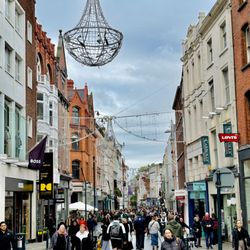
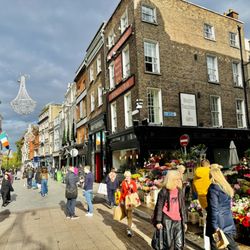
Grafton Street is a busy pedestrian only shopping area. Most of the building façades were from the…read more1800s with the stores on the bottom level. I love looking at the buildings to see the beautiful architecture. There were lots of different styles of architecture. The street has lots of shops and restaurants. The side streets also have shops and restaurants. It is a bustling area! It was hard to choose a pub or restaurant because there were so many!
Grafton Street is one of Dublin's most recognizable locations. When you need a break from all the…read moremuseums and historical sites, head to Grafton Street. This pedestrian street - which runs from Trinity College to St. Stephen's Green - is Dublin's premier shopping district. Here, you'll find everything from familiar brands to more unique items like quirky shoes and used books. There are also two shopping centers in the area, the Stephen's Green Shopping Centre and the upscale Powerscourt Centre. So, if you're looking for a place to exercise your credit card, this would be it. If the idea of shopping bores you to tears, Grafton Street is also known for its rambunctious atmosphere. As you walk along, you're bound to find yourself mesmerized by the dozen or so street performers and musicians hoping to entertain you in exchange for a euro or two. There are also several restaurants and pubs scattered throughout the area; hours and prices vary by vendor.
Side street view
if you are coming by Air, you can see the poster of this famous bridge on airport. The Halfpenny /…read moreHa'penny Bridge, was built in 1816, Ireland's first iron bridge. Although there are over 20 bridges crossing the River Liffey, none are as popular as the Ha'Penny Bridge. The Ha'Penny Bridge is a pedestrian-only bridge over the River Liffey in Dublin, Ireland, providing a great shortcut from the Temple Bar to the North Quays. Though the official name is the Liffey Bridge, it is commonly referred to as the Ha'Penny Bridge because anyone crossing was charged a toll of a half penny. The toll was dropped in 1919, and visitors are free to cross. Before the Ha'Penny Bridge was built, the only way to cross the River Liffey was by ferry. These ferries were operated by a William Walsh and were in bad condition. Walsh was informed that he had to either fix them or build a bridge. Walsh opted to build a bridge. The bridge was built in 1816 of cast iron.
Everyone says you've got to cross the Ha'penny bridge while in Dublin, and I'm not above a cliche,…read moreso I made the trek from one side to the other. People used to put locks on the bridge to signify their love with their special someone, but that's no longer allowed and locks are removed immediately when found. You'll probably get tossed into the water below, too. Just kidding, maybe. Just cross the bridge and appreciate the view. Leave the locks at home.
Ha'Penny Bridge_Sanju-8
Ha'Penny Bridge_Sanju-3
Bridge
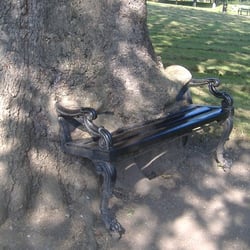
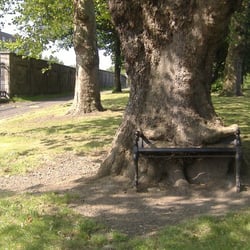
Highly recommend checking out this oddity! It is a tree eating a bench! You will never see anything…read moreelse like it!
This really is a fun landmark to check out. The hungry tree is named so because it is eating a…read morebench! It is found in the beautiful grounds of Kings Inn, it's makes for a great photo opportunity, just don't get too close to the tree or you could be gobbled up next... I know, cheesy but I had to get that in.
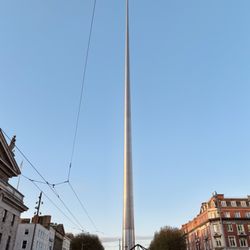
The Spire aka the Monument of Light is almost 400' tall. It's a sculpture made of stainless steel…read morein the heart of Dublin on O'Connell Street. It's the world's tallest sculpture. It looks like a ginormous needle poking through to the sky. It's only been around since 2003ish but seems as though it's been there forever. It's a can't miss attraction. As in, there's no possible way to miss it because of its sheer height.
The city of Dublin may be quaint in size, but it is home to several large and legendary landmarks,…read moreone of the most visible of which is the iconic Dublin Spire! Rising into the city skyline like a giant needle, the Dublin Spire stands tall as one of the city's most recognisable landmarks. The Spire is a striking monument located on O'Connell Street in Dublin, Ireland. This iconic structure has become a symbol of modern Ireland and a popular landmark for both locals and tourists. but ofcourse not everyone likes it. it has a mixed feeling. The Spire was officially unveiled in 2003, replacing the Nelson's Pillar, which had been destroyed by an IRA bomb in 1966. It is a tall, slender structure made of stainless steel, reaching a height of 120 meters (394 feet). The monument is a reminder that Ireland is a dynamic and forward-thinking nation. It has become an enduring symbol of Dublin's identity.
Dublin Spire_Sanju-3
This is The Spire but I don't think it's tall enough. :(
Dublin Spire_Sanju-2
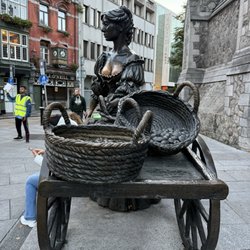
Known as "the Tart with a Cart," the bronze Molly Malone statue is located near the Temple Bar…read moreneighborhood. It depicts a fictional woman popularized by the song "Cockles & Mussels." The lyrics call her a fishmonger with a wheelbarrow who died of a fever, & now haunts the streets of Dublin. Legend has it that rubbing her chest brings good luck, which explains the fading on that part of the bronze. As a visitor to "Dublin's fair city," you'll no doubt spend some time in the vicinity of "sweet Molly Malone," but I wouldn't go out of my way for a photo op with a statue.
The sculpture was created by artist Jeanne Rynhart in 1988. It's on Suffolk Street and a proper…read moretribute to the Irish working class. This is a very popular landmark for tourists. Though I've been to Dublin a few times, if I'm in the area, I still like to pop by and see it.
Molly Malone Statue_Sanju-4
Molly
Side
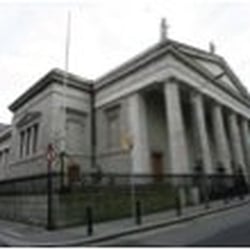
Although located on the grim skid-row of Marlborough Street, St Mary's Pro-Cathedral is an…read moreabsoulute gem of a building. Along with St Andrew's Church on Westland Row, the Pro-Cathedral is one of the finest modern church buildings in the city centre. The Pro-Cathedral is a fine example of a church built in the Classical Greek style, with large Doric cloumns on the inside as well as outside. The Pro-Cathedral was built early in the 19th century, and is modeled on the church of St Philippe-le-Roule in Paris. St Mary's Pro-Cathedral would not be the most frequented tourist attraction in Dublin, located off the beaten track as it is, but it only a minutes walk from O'Connell St, and it should definitely be part of your itinerary if you are visiting Dublin and old churches are your thing. I prefer the Classical style of St Mary's to the medieval Gothic of Christchurch or St Patrick's Cathedrals personally, and best of all, the Pro-Cathedral has no admission charge, whereas the other two have.
Back in the early 19th century, when Protestants didn't care too much for Catholics, the idea was…read moremooted to put the Pro-Cathedral on O'Connell Street. However, such a flagrant symbol of Taigism was judged unwise, what with the Penal Laws and all their attendant imaginative punishments, so it was built on Marlborough Street instead. From the outside, its most distinguishing feature is its sea-green dome, whereas inside it is a mix of Greek and Roman architectural styles, (more white marble statues than you can shake a crosier at), beautiful stained glass and an amazing panelled ceiling - the inside of the dome. Strangely, the name doesn't mean that it has professional cathedral status - in fact, it isn't officially recognised as a cathedral at all.
Statue of Margaret Ball & Francis Taylor 16 Century Persecuted Catholics declared Blessed by Pope Paul Second in 1992
Front of Marlborough Street St Marys Cathedral
Brands by name
Articles by date
A little hard to find as it blends in with the foliage and the theme of the park quite well. Look…read morein the center open grass area, but to the north. What a great television show and super humor (humour?). My wife is a huge fan as well. And as you take your picture, ask yourself, "What would you say to a nice cup of tea?"
It's easy to miss this memorial. It's located in Merrion Square Park, wedged between a bench and a…read moretree. It's called the Jester's Chair and is in memory of the comedy genius that was Dermot Morgan. He was largely known for his part as Father Ted. He had always been involved in various projects at home and abroad but Fr Ted gave him mainstream fame. It won several BAFTAs. Tragically he died very young, 45, from a heart-attack. So this statute is fitting to a man that broke the mould for Irish comedy, so much so that it took the UK to fully embrace his stroke of mastery with Fr. Ted
The Hill of Tara has been important since the late Stone Age, when a passage tomb was built there…read more However, the site became truly significant in the Iron Age (600 BC to 400 AD) and into the Early Christian Period when it rose to supreme prominence - as the seat of the high kings of Ireland. All old Irish roads lead to this critical site. St Patrick himself went there in the fifth century. As Christianity achieved dominance over the following centuries, Tara's importance became symbolic. Its halls and palaces have now disappeared and only earthworks remain. On sight to see is the Lia Fáil - the great coronation stone. Gayle and I came here on a bus tour and spent maybe an hour or so on site. Our tour guide (Mary Gibbons) was superb, with lots of information and dry humor provided. Judging by the Irish Goddess calendar made and sold here, this area remains a place of spiritual opportunity.
We visited Hill of Tara with Mary Gibbons tour and it was spectacular on a clear day. Views for…read moremiles. Amazing history. A just a very powerful experience overall. Highly recommend.
Just like so many other memorials and tributes, this one is dedicated to victims of battle-people…read morefighting for their rights and freedom. No matter the culture, this seems to be a prevailing characteristic of humanity-we like to fight each other. It's a lovely little garden with a water feature in the center. There's a large sculpture at the end which depicts four children who were transformed into swans and will turn back into humans after 900 years, according to the legend of the Children of Lir.
One of the must see free gardens and parks in Dublin. We met our tour guide here as he deemed it…read morethe "staple of the city center" and talked about the significance of the Garden of Remembrance. If you've taken any time to study Irish history - you'll know the Irish fought for their land and freedoms for centuries and often times, they were not the victors. In the few years spent traveling to Ireland you'll hear a lot of the Irish people's plight for freedom and it was never an easy battle. Essentially this garden of remembrance signifies the Irish people and their contributions towards fighting for their freedoms. What I found interesting is that Our tour guide called himself a "blue blood" which in simpler terms he referred to him being a true Dublin local and that these garden means a lot to his people and those working in the city. He taught us a lot about the grounds, the fountains and statues. We toured the grounds with him and they were very nice and well kept. While looking over the fountain statues we were introduced to one of the groundskeepers as well. As lovely as it is it's also a somber place. We were told the story of what the children and swan statue represents, an Irish folklore. All interesting stuff and while the garden is free, I'd highly recommend hiring a local guide as there is so much we wouldn't have learned had we not had someone to tell us the history and stories of what we were looking at on the grounds.
Pretty building. Free tours on first Wednesdays. Had a little audio tour and got to learn some…read morehistory of the building.
Spectacular neo-classical 18th century building on the River Liffey. Today, it houses the…read moreDepartment of Housing, Planning, Community and Local Government / An Roinn Tithíochta, Pleanála, Pobail agus Rialtais Áitiúil. But I had no business there. I simply admired a beautiful building. Originally used for customs collection due to its proximity to the Port of Dublin, it got other uses as the port moved further down river. Lovely to look at, up close or from across the River.
It's such a simple but classy cross in the middle of nowhere…read more In 1979 Pope John Paul II had a visit to Ireland, he instantly became a rock star and more than a million folks showed up for his mass. If only there was an elevator to the top and some rails for a great view of the countryside. it's a nice area around the cross to take a stroll. A few short flights up and you are at the base of this humongous cross.
Built for a historical visitor by Pope John Paul the 2nd in 1979 (which I vaguely remember as a…read morelittle girl) the papal cross stands as a landmark in the Phoenix park. The cross is a simple yet elegant white cross and on that famous day had about 1 and a half million people surrounding it to see the pope himself and listen to his words of wisdom. Today on certain days there are still sermons and I was at one a couple years ago for an Easter celebration. Most days however the papal cross is a meeting place for walking groups, children and best of all the resident deer. A spot of beauty.
Beautiful long walk down to the castle grounds with great views of the sea. The castle is…read moreinteresting and has unique features and coffee is decent. And if you walk a bit further towards the woods you with see a slightly worn fairy trail and there is a little hidden beach, which you can find if you follow the trail to the left and walk over an old bridge. A well hidden secret! Worth the visit.
The grounds are amazing! I was lucky enough to enjoy a private event held at the castle…read more Everything was catered and they hired a "circus". So I could see if you were having a wedding or something private this might be the perfect backdrop. They have a giant field to walk around, the castle itself is beautiful to take pictures. There is a vast garden too.
Visited Howth Castle briefly while I was in the area. I didn't see all of the castle on parts of…read morethe front. I wish I had a chance to see everything. I always pictured an Irish castle to look like the castle in the move "Brave" where an Irish princess named Mèrida running around! Howth Castle is not as extravagant as other castles like in Prague but it's still beautiful. Worth a stop if you're ever in Howth!
The Rhododendeon Garden is the most magical and surprising woodland I've ever visited. Think Secret…read moreGarden mixed with Sherwood Forest and a sprinkling of Lilliput. It's truly special when all the trees are blooming (from May onwards). The trees are unexpectedly tall and because they grow along uneven paths, you're completely nestled in a blaze of colour. The skyline is a crescendo of magenta, violet and cream. The fiery hues shelter your journey along pathways and caves littered with silken petals. There are small copses where you can relax, and you never know whats around the corner. We were lucky enough to go on a warm day, and even then there were so few people around, it was bliss. You honestly feel like you're in a solitary, magical kingdom. View the photos to see what I mean.
It's so lovely having this on my doorstep…read more I've never actually been inside the house itself but I love a good wander up around the grounds, especially on days where there's a market happening, or other event. (Check their website for their calendar of events, there's always something going on at the weekends) Even if there's not, there are horses in the fields, donkeys, a gorgeous walled garden, and lovely pathways to walk your dog, kid, BFF or granny. There's also a really cute little gallery which is currently exhibiting illustrated books; again, definitely worth a glance in. If you're going on a market day, make sure you haven't eaten first, cos there's some goooood eatin' to be had.
Located in the Phoenix Park, Farmleigh is the official Irish State Guest House, where visiting…read moredignitaries enjoy a fry-up every morning and get tucked in by Brian Cowen at night. When there is nobody booked in, it is open to the public, so you too can enjoy its extravangant interior, dating from 1752, which includes crystal chandeliers and a ballroom, and its beautiful landscaped grounds.