Cancel

    Open app

    Search

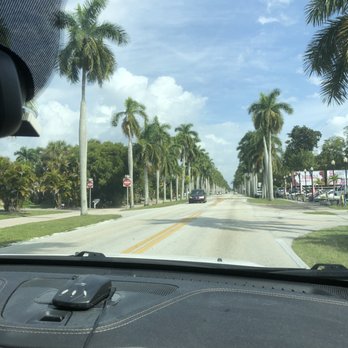
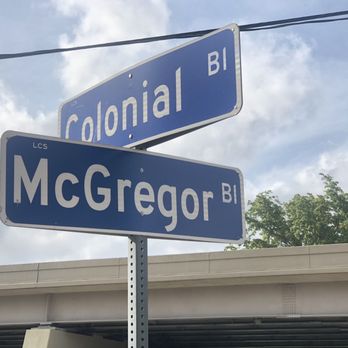
    McGregor Boulevard Photos

    Recommended Reviews - McGregor Boulevard

    Your trust is our priority, so businesses can't pay to alter or remove their reviews. Learn more about reviews.
    Yelp app icon
    Browse more easily on the app
    Review Feed Illustration
    Photo of Ariel W.
    4395
    5923
    104133

    6 years ago

    Helpful 78
    Thanks 0
    Love this 68
    Oh no 0

    9 years ago

    Helpful 7
    Thanks 0
    Love this 5
    Oh no 0

    McGregor Boulevard Reviews in Other Languages

    Verify this business for free

    People searched for Landmarks & Historical Buildings 168 times last month within 5 miles of this business.

    Verify this business

    Fort Myers - Beautiful giant tree in Village

    Fort Myers

    4.5(2 reviews)
    6.2 mi

    Fort Myers area has been booming for the last fifteen years and the quiet watersport town has…read morebecome a beacon for tourists to flock to during the winter to enjoy the water views, fishing, food and jet skiing. We chartered a fishing boat and captain for $600 and caught twenty fish in the Ft Myers intracoastal. The only negative is hurricane season is brutal.

    This historic marker is on the site of Fort Myers from which the city takes it's name. Before the…read morefort was here, the land was a Native American Calusa settlement hundreds of years ago. The site is now the Sidney & Berne Davis Art Center. Marker 128 was installed in 1965 by the Florida Board of Parks and Historic Memorials in cooperation with The Southwest Florida Historical Society. Florida became a US Territory in 1821 and forts were built throughout Florida to offer settlers protection from the Seminoles. One of the first forts to be built during the Seminole Indian Wars was a fort named for Lieutenant John Harvie. The fort was reestablished in 1850 and named Fort Myers, honoring Lieutenant Abraham C. Myers who was the son-in-law of the commander of Fort Brooke in Tampa. The Seminole War ended in 1858. During the Civil War Fort Myers was once more re-activated by Unioun troops looking to cut off food supply to Confederate troops in Georgia and to feed Federal troops patrolling the coast off of Sanibel. The Southernmost battle of the Civil War, a fight between Northern and Southern troops occurred across the Caloosahatchee River in 1865. In 1866, Manuel A, Gonzalez and Joseph Vivas took up residence at the recently abandoned fort. Other settlers arrived and this led to a post office when it was platted in 1876. In 1885 of the community of 349 people was incorporated as Fort Myers. Some of the wood from the fort was used in the construction of the downtown buildings.

    Photos
    Fort Myers
    Fort Myers
    Fort Myers

    See all

    Uncommon Friends

    Uncommon Friends

    5.0(1 review)
    6.1 mi

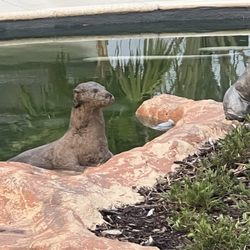
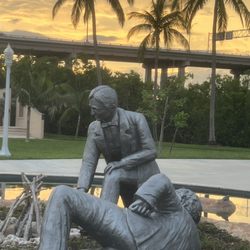
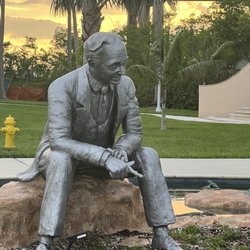
    Uncommon Friends is a sculpture along the Caloosahatchee River in Centennial Park. The art piece…read morewas created to celebrate the friendship of the three titans of Fort Myers, Thomas Edison, Henry Ford, and Harvey Firestone. All three men had winter homes in Fort Myers. Uncommon Friends was requested by former Mayor Art Hammel and was commissioned by the Fort Myers Beautification Advisory Board which added 21 public art pieces to the city in the 1980's and 1990's. Uncommon Friends was created in 1988 by local sculptor DJ Wilkins out of aluminum, plaster and wire. Wilkins was inspired to create the art piece by the book Uncommon Friends by James Dean Newton, who was a friend of the three men. Wilkins has created 23 sculptures throughout Fort Myers including the nearby Florida panther sculpture on nearby Monroe Street. The sculpture features the three men in the three piece suits they would have worn in the 1920's seated around a campfire on an island. Surrounding them is a 40 foot diameter pool with a native Floridian animals including otters, a mother alligator and her 5 babies, a mother manatee and her calf, fish, and frogs. In 1914 Edison, Ford, and Firestone began camping trips in the Everglades calling themselves The Vagabonds. Sometimes they were joined by naturalist John Burroughs and James D. Newton. They often invited the press along to chronicle their adventures which in turn brought recreational travel to the west coast of Florida. I love this tribute to them and if you visit you will find it to be a popular spot to take pictures.

    Photos
    Uncommon Friends
    Uncommon Friends
    Uncommon Friends

    See all

    Edison Bridges

    Edison Bridges

    5.0(2 reviews)
    6.9 mi

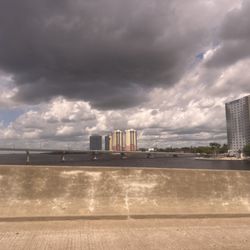
    Bridges are engineering marvels and this one has quite a bit of history. The original Edison Bridge…read morein Fort Myers was in East Fort Myers at Freemont Street where the current southbound bridge is. Before it was built, the only place to cross the Caloosahatchee was at Olga, about 12 miles to the east. The Edison Bridge was a small two lane drawbridge built to carry the Tamiami Trail over the Caloosahatchee River and connecting to Old Bridge Road in North Fort Myers. The bridge opened on February 11, 1931 on Thomas Alva Edison's 84th birthday. He had a winter home nearby and was on hand to dedicate the bridge and be the first one to drive across it. This bridge operated until 1964 until the Caloosahatchee Bridge, a new four-lane high-level fixed bridge, opened downstream on the other side of downtown. In the early 1990's two separate three lane bridges were built carrying US 41 which is still designated as part of Tamiami Trail over the Caloosahatchee River. The north span opened in 1992 and the southbound span opened in 1993. The bridges connect downtown Fort Myers with north Fort Myers. Interestingly, the two bridges are not parallel to each other. While the two bridges meet at the same point on the north side of the river, they are separated by a few blocks on the south side. The bridges are 55 feet tall so there is no need for a drawbridge. Initially the bridge was going to be built by a private company as a toll bridge but the federal government refused to designate it as part of a U.S. Highway if the bridge had a toll. So, the county purchased the bridge and completed its construction. Today the bridge remains toll free.

    The original Edison Bridge opened on February 11, 1931 which would have been the 84th birthday of…read moreThomas Edison. He had a winter home here in Fort Myers and the Edison Winter Estates Museum is not far from here. It is one of a few bridges across the Callosahatchee River between Cape Coral and Fort Myers. Today, the bridge carries US 41 which is also known as the Tamiami Trail. It is made up of two one-way spans the largest of which is 105 feet and the total length of the bridge is just about three quarters of a mile. Unlike some of the other bridges here in Fort Myers and Cape Coral, there is NO TOLL in either direction and that earns it another star from me!

    Photos
    Edison Bridges
    Edison Bridges
    Edison Bridges

    See all

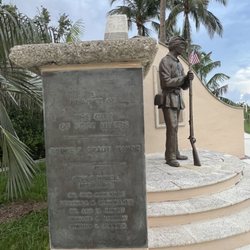
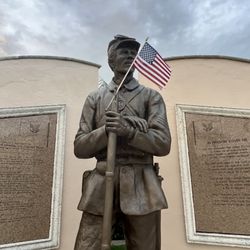
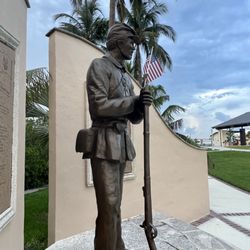
    2nd Regiment  Infantry, U.S Colored Troops Memorial

    2nd Regiment Infantry, U.S Colored Troops Memorial

    5.0(1 review)
    5.8 mi

    I enjoy reading about history and on a recent trip to Fort Myers I learned about the 2nd United…read moreStates Colored Infantry, a regiment that served in the Union Army during the American Civil War. The unit was created by the Bureau of Colored Troops and was authorized by United States War Department on May 22, 1863. The regiment was composed of African American enlisted men commanded by white officers. The 1989 movie Glory was a historical war drama based on a similar fictional African-American regiment. The 2nd U.S. Colored Infantry was organized in Arlington, Virginia from June 20 through November 11, 1863 for a three-year service. The regiment of around 900 men arrived in Key West on February 22, 1864 as replacements for the 47th Pennsylvania Volunteers. They experienced hostility from many of the locals. The unit established a regimental headquarters and was encamped at Fort Taylor, under the jurisdiction of the Department of the Gulf. The unit was then assigned to the Department of Florida until January 1866. The 2nd U.S. Colored Infantry mustered out of service January 5, 1866. During service the regiment lost 173 men. I discovered this memorial in Centennial Park in downtown Ft. Myers which features several memorials as well as art work. The memorial is known as Clayton because it is made out of a ton of clay then cast in bronze. The 9 foot tall memorial was created by local sculptor DJ Wilkins who also created Uncommon Friends, an art piece that is a tribute to the friendship of Thomas Edison, Henry Ford, and Harvey Firestone, located a few feet away in the park. He also created many other art works displayed in downtown Fort Myers. The 2nd U.S. Colored Infantry memorial was dedicated on November 11, 1998. it features a 66,000-pound bronze sergeant standing in front of an open gate within a wall. The soldier is framed by two granite plaques mounted on each wall. The plaque on the left is a description of the important contributions of the USCT during the Battle of Fort Myers. The plaque on the right contains a poem, In Freedom Cover Me by D.J. Wilkins. The memorial was placed in the park in honor of the regiments service on February 20, 1865 when Confederates of the 1st Battalion, Florida Special Cavalry attacked Fort Myers to steal cattle and destroy the military fort. The Confederates engaged in a cannon duel with the 2nd USCT in charge of artillery. The New York Times reported that "the colored soldiers at Fort Myers were in the thick of the fight. Unconscious of danger, their constant cry was to get at them." Confederate forces were forced to withdraw at nightfall having failed to accomplish their mission. The Battle of Fort Myers marked the final action of the 2nd USCT in South Florida. Companies D and I left Fort Myers in March of 1865 and Fort Myers was then decommissioned, The USCT is credited with having freed and enlisted over 1,000 enslaved people in Florida.

    Photos
    2nd Regiment  Infantry, U.S Colored Troops Memorial
    2nd Regiment  Infantry, U.S Colored Troops Memorial
    2nd Regiment  Infantry, U.S Colored Troops Memorial

    See all

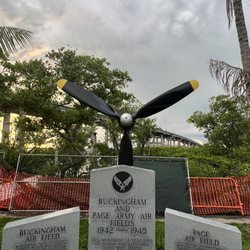
    Buckingham And Page Army Air Fields

    Buckingham And Page Army Air Fields

    5.0(1 review)
    6.1 mi

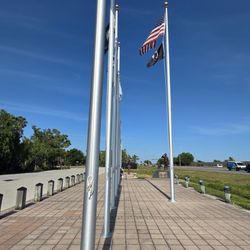
    This monument was dedicated in 1991 by the City of Fort Myers to honor those who served during WWII…read moreon the Buckingham and Page Army Airfields. It is made up of three granite markers and an airplane propeller. You can find the monument along the Caloosahatchee River in Centennial Park. Buckingham field was a 65,723-acre flexible bomber gunnery school activated on July 5, 1942. It was located 6.5 miles east of Fort Myers. Buckingham graduated 50,000 gunners to serve America's WWII bombers. An Instructor's School and the 75th Flying Training Wing were also located there. During 1944-1945 B-29 Pilots trained at the base. During the war years the actress Judy Garland was a famous visitor to the field to offer support to the troops. Page Field began operations in March 1942. It trained bombardment groups from the the 98th(H), the 93rd(H) and the 336th(M). In January of 1943 Page became a fighter training base through August of 1945 for P39, P40, P47 and P51 fighter pilots. After the war Buckingham Field was abandoned. The barracks were briefly used for Edison College until 1948 and after that most of the buildings were removed. Today what was once Buckingham Field is the Lee County Mosquito Control District (LCMCD) airfield and office. The legacy of the airfields can be still be felt in Fort Myers today. After the war many soldiers returned to make their homes in Ft. Myers. The memorial serves as a tangible reminder of the sacrifices they made for freedom.

    Photos
    Buckingham And Page Army Air Fields
    Buckingham And Page Army Air Fields
    Buckingham And Page Army Air Fields

    See all

    First Street

    First Street

    3.4(5 reviews)
    6.1 mi

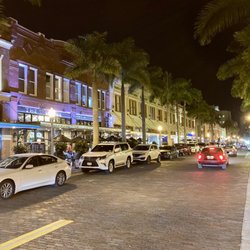
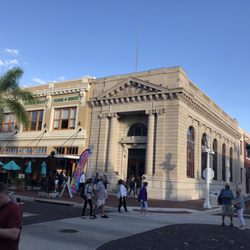
    Florida became a US Territory in 1821 and forts were built throughout Florida to offer settlers…read moreprotection from the Seminoles. One of the first forts to be built during the Seminole Indian Wars was Fort Myers along the Caloosahatchee River. The fort was named in honor of Colonel Abraham C. Myers, who was the son-in-law of the commander of Fort Brooke in Tampa. Fort Myers was abandoned in 1858 and reoccupied by Federal troops from 1863-1865. The Southernmost battle of the Civil War, a fight between Northern and Southern troops occurred across the Caloosahatchee River in 1865. In 1866, Manuel A, Gonzalez and Joseph Vivas took up residence at the recently abandoned fort. Other settlers arrived and this led to a post office when it was platted in 1876. In 1885 of the community of 349 people was incorporated as Fort Myers. Some of the wood from the fort was used in the construction of the downtown buildings. The first mention of First Street located the center of Fort Myers was as a sandy trail on the 1876 town survey plat. Along the street was a church, Phoenix Hall, and the Keystone Hotel where Thomas Edison stayed in 1886. Railroad construction brought an influx of people and the population boomed causing Fort Myers to develop during the last half of the 19th century. In 1897 the street was lined with palm trees and in 1898 the city had electric streetlights. Fort Myers is nicknamed the City of Palms. By 1900 First Street was paved with shells for the first automobiles. During the land boom years of the 1920's, modern buildings replaced the old frame structures. In 1977 historic marker F-280 was placed on First Street. The marker details the history of Fort Myers and First Street. Today First Street has a variety of shops and restaurants in the historic 1920's buildings. Restaurants include Ford's Garage, Los Cabos Cantina & Tequila Bar, and he Lodge. An art walk is held on the first Friday of the month which attracts a lot of people to enjoy art and live music. First Street is the perfect place to take in culture, shop, and dine. It is a must stop on any trip to Fort Myers.

    Went there on a Saturday recent Saturday night. Just a short wait as it was busy. I had the Mahi…read moreand wife had the chicken dinner Both quite tasty. Service was good, no long wait. There are plenty of good restaurants downtown and this is one of them.

    Photos
    First Street
    First Street
    First Street

    See all

    Iwo Jima Monument

    Iwo Jima Monument

    4.5(2 reviews)
    3.2 mi

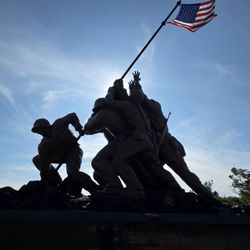
    If you have ever visited Cape Coral it is likely you have seen this majestic memorial to the United…read moreStates Marine Corps. You can find the Iwo Jima Monument also known as the U. S. Marine Corps War Memorial as soon as you cross the Midpoint Memorial Bridge that connects Fort Myers to Cape Coral. It resides on the southern edge of Four Mile Cove Ecological Preserve. Iwo Jima is a small island located 660 miles south of Tokyo. During WWII it was the site of a fierce 36 day battle between the United States and Japan. The monument is a 20-foot statue that depicts five Marines and a Navy hospital corpsman raising the American flag on 560-foot Mount Suribachi, the highest point on Iwo Jima during the American victory over Japan in WWII. The statue is one of three originals that were created by sculptor Felix de Weldon. He was moved to create the sculpture after viewing AP photographer Joe Rosenthal's Pulitizer Prize-winning picture of the actual flag raising that took place on February 19, 1945. After creating the mock up for the sculpture, he shared it with then Vice President Harry Truman. In September 1954 the same statue was installed outside the Arlington National Cemetery on the southern shores of the Potomac River. The Cape Coral monument created in 1964 is one third the size of the one in Arlington Cemetery. The Iwo Jima Monument is made out of concrete pouted over rebar and steel. It depicts Pfc. Rene A. Gagnon, Pfc. Ira Hayes, Pharmacist Mate Second Class John Bradley, Pfc. Harlon Block, Sergeant Mike Strank and Pfc. Franklin Sously. Block, Strank and Sously died within days of the flag raising in combat on the IJM 5 northern end of the island. De Weldon sculpted them using their photographs and measurements. Hayes was was wounded but survived a mortar attack. Also surviving were Gagnon and Bradley. The monument stands in tribute to all Marines who have died in action since 1777. The Cape Coral Monument was commissioned by Gulf American Corporation for the Rose Garden, Cape Coral's first tourist attraction. Julius and Leonard Rosen who owned the Gulf American Corporation were the developers for Cape Coral. The Rose Garden had 40,000 rose bushes, animals, statues, landscaping, and shows to attract people to visit and hopefully buy homes in Cape Coral. The attraction closed in 1970 and the statues including the Iwo Jima Monument were left abandoned. A bank took possession and hired noted local sculptor D.J. Wilkins to restore it. In 1998, the statue was moved to its permanent home in the Four Mile Cove Ecological Preserve. Wilkins and his team did another extensive restoration on the statue on 2011 after it was damaged by Hurricane Charley in 2004. The monument was re-dedicated on February 25, 2012, the first Saturday following the 67th anniversary of the actual flag raising on February 19, 1945. In front of the monument is historic marker F-836 erected in 2014 by The City of Cape Coral and the Florida Department of State. Today the statue is in like new condition and is a source of pride for the veterans and those who honor them in the community.

    Visiting friends and made this stop to pay tribute. This is an incredible free historical…read moreremembrance and is worth the time to visit while in Cape Coral. The facts and events are provided in the signage and various items at the site.

    Photos
    Iwo Jima Monument
    Iwo Jima Monument
    Iwo Jima Monument

    See all

    McGregor Boulevard - landmarks - Updated May 2026

    Loading...
    Loading...
    Loading...