
London Bridge Photos


Recommended Reviews - London Bridge
Start your review...


Reviews With Photos


Frankly the only thing I knew about London was big ben and London Bridge. We were only in London a couple nights in an exhausting 3 week 4 country trip. I had hoped to walk the bridge in daytime and night. But only had time for walking it in daytime. We walked both sides. I had also hoped to take night boat trip but no time. We were blessed to have clear weather and enjoyed the bridge walk. It is crowded.
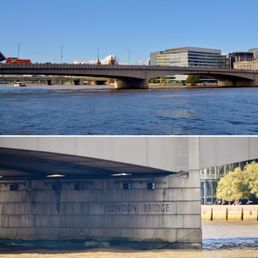

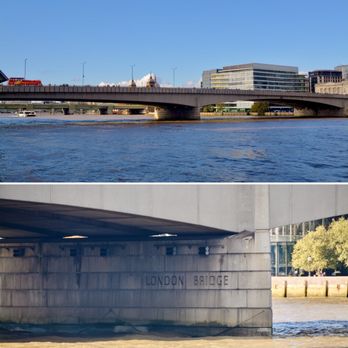
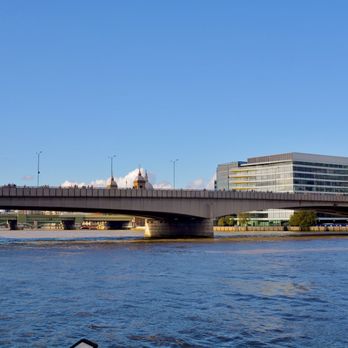
First, of all- this is not the famous London Bridge anymore that you know of. It's a London Bridge... Yes, the same old London bridge from where the Nursery famous rhyme got originated-"London Bridge is Falling Down, falling down, falling down", adding to its historical fame The Old Legacy- There has been a bridge over the Thames River in London for over 2,000 years, since the time of the Romans. The famous nursery rhyme "London Bridge is Falling Down" is associated with the old London Bridge, adding to its historical fame Like many bridges in medieval Europe, London Bridge was a living bridge, with shops, Houses, churches built on it (currently only four bridges exist in world; (1) Ponte Vecchio in Florence (2) Krämerbrücke in Germany (3) Pulteney Bridge in Bath, UK and (4) Ponte di Rialto in Venice) and eventually becomes famous, and for centuries was the only stone crossing over the river Thames. Spanning more than 900 feet, it was the longest inhabited bridge in Europe and was considered a wonder of the world. its so why it's not famous anymore and lost the battle to it's sister bridge- because it was literally falling down ;) plus many more reasons... In 1962, it was discovered that the London Bridge was sinking into the Thames because it was not adequate for the increase in London traffic across it. PS: London Bridge isn't as famous as it once was because the original historic structure was dismantled and sold to the United States, where it was rebuilt in Lake Havasu City, Arizona, meaning the "London Bridge" most people think of is no longer actually in London. The bridge was shipped by boat 10,000 miles to Long Beach, California. It was then trucked to Lake Havasu City.


How come every time you come around My London, London Bridge wanna go down, like London, London, London Wanna go down like London, London, London Be going down like -Fergie The London bridge was a bucket list for me! It's a lovely bridge. Very crowded with tourists. Great view of the city. It's fun to walk or drive over this bridge.


First off, it isn't falling down. So an extra star for that. In fact after that £5M reno it's as shiny as the day it was built. You can even drive across it in your regular old car 7p-7a or ride a bus/taxi/bike the rest of the time. Or do like the rest and just take a stroll. It's almost as fun as looking at it from across the water while you find that perfect iconic photo spot. Hint: get closer than you think: we want to see the bridge in your pic. Take some time to visit the side roads along the base: they have some great eating/gazing history spots. And say hello to My Fair Lady while you're there.


Beautiful tourist attraction. I had the pleasure of walking across the full bridge at 8am before it became too crowded. Very cool to see in person and such beautiful detail. Highly recommend.


It crosses the Thames, you can walk across it or drive, they close it when there is a potential jumper, it is adjacent to the Tower of London, within a stones throw of the London Eye, Big Ben, and Parliament...and it's been in just about every famous movie filmed in London. And, there are pubs on either side. Cheers!


"London Bridge is falling down, hopefully not..." Not to be confused by Tower Bridge, London Bridge is pretty generic, could us some cleaning, and is overshadowed by its neighboring bridges. I recently had the opportunity to walk across(no problems) and there was plenty of room on the pedestrian lane.


"London Bridge is falling down, falling down, falling down." I'm sorry. I just... I had to do it. Loved that nursery rhyme as a kid and I still get a kick out of it today. The London Bridge isn't much to look at when compared to London's other bridges. It often gets confused with the more attractive Tower Bridge that's right across the way. Ironically, the London Bridge provides one of the best views of the Tower Bridge. Although it isn't the prettiest bridge, it's still iconic in its' own right and it acts as a gateway to some of London's most popular landmarks. It's definitely one of the busiest bridges in the city with thousands of pedestrians and hundreds of cars crossing over it daily. The bridge crosses over the River Thames to connect Southwark to the city of London. The walk across the bridge is a relatively short one but incredibly scenic. You'll have views of both the Tower and Southwark Bridges along with gorgeous views of the city and the beautiful River Thames. Reaching the bridge via public transit is very accessible as there are two tube stations that will drop you right near the bridge (The London Bridge station and the Monument station). Crossing the bridge is completely free and this bridge is way less crowded in comparison to the Tower Bridge. A fun fact that I never knew until now: The London Bridge nursery rhyme was created because of the numerous attempts of attacks that have been made on the bridge. I guess these premeditated attacks have been going on for years and so have peoples' fears of them. Hence the saying "London Bridge is falling down". It's crazy to think that I was singing this song as a kid and had no idea what it really meant. Is it worth a visit to the London Bridge? Well, why not? The views are gorgeous, it's easy to get to, and it's free. It's an amazing piece of history surrounded by many other landmarks. I say; do it. Plus, you'll get to tell people that you crossed over that bridge that you used to sing about when you were a kid. Ha! How about that?!


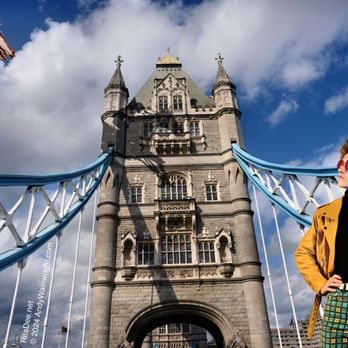
London bridge is not as fancy as tower bridge but this does give you a good view of Tower Bridge. I would say the London Bridge was quite busy and we walked from one side the other with no problem or issue. Yes plenty of cars on the roads and plenty of people walking around. But it is a city and I would say if you do have time to walk around you should stop by here. If you want to take a boat ride they do have stairs that you walk down to for the boats. They also have souvenirs stands on the side if you want to buy anything that says London on it. But I guess it's still kind of cool to say you been on London Bridge before at least once!


10 months ago
Visiting the iconic Tower Bridge in London was one of those experiences that truly lives up to the hype. Standing beside the River Thames, the bridge is even more impressive in person, with its grand towers and intricate details that instantly make you feel connected to London's history. Walking across it offers beautiful views of the city--on one side, the modern skyline with skyscrapers, and on the other, classic landmarks that remind you how timeless London really is. The atmosphere around Tower Bridge is lively but not overwhelming, making it a great spot to pause, take photos, and simply take it all in. Watching boats pass beneath the bridge adds to the charm read more


Once you've taken in and walked across the nearby Tower Bridge there is just no comparison as the London Bridge is plain and basic by look and design. Sure, its a fully functional way to cross over the Thames and take in some sights and pictures but that's. London Bridge seems more famous by name and had been featured in songs and movies but the few times I walked across it while in town for the London Marathon it felt underwhelming. Still, the bridge is iconic with a long history and worth a visit. read more




Frankly the only thing I knew about London was big ben and London Bridge. We were only in London a couple nights in an exhausting 3 week 4 country trip. I had hoped to walk the bridge in daytime and night. But only had time for walking it in daytime. We walked both sides. I had also hoped to take night boat trip but no time. We were blessed to have clear weather and enjoyed the bridge walk. It is crowded. read more


First, of all- this is not the famous London Bridge anymore that you know of. It's a London Bridge... Yes, the same old London bridge from where the Nursery famous rhyme got originated-"London Bridge is Falling Down, falling down, falling down", adding to its historical fame The Old Legacy- There has been a bridge over the Thames River in London for over 2,000 years, since the time of the Romans. The famous nursery rhyme "London Bridge is Falling Down" is associated with the old London Bridge, adding to its historical fame Like many bridges in medieval Europe, London Bridge was a living bridge, with shops, Houses, churches built on it (currently only four bridges exist in world; (1) Ponte Vecchio in Florence (2) Krämerbrücke in Germany (3) Pulteney Bridge in Bath, UK and (4) Ponte di Rialto in Venice) and eventually becomes famous, and for centuries was the only stone crossing over the river Thames. Spanning more than 900 feet, it was the longest inhabited bridge in Europe and was considered a wonder of the world. its so why it's not famous anymore and lost the battle to it's sister bridge- because it was literally falling down ;) plus many more reasons... In 1962, it was discovered that the London Bridge was sinking into the Thames because it was not adequate for the increase in London traffic across it. PS: London Bridge isn't as famous as it once was because the original historic structure was dismantled and sold to the United States, where it was rebuilt in Lake Havasu City, Arizona, meaning the "London Bridge" most people think of is no longer actually in London. The bridge was shipped by boat 10,000 miles to Long Beach, California. It was then trucked to Lake Havasu City. read more


2 years ago
How come every time you come around My London, London Bridge wanna go down, like London, London, London Wanna go down like London, London, London Be going down like -Fergie The London bridge was a bucket list for me! It's a lovely bridge. Very crowded with tourists. Great view of the city. It's fun to walk or drive over this bridge. read more

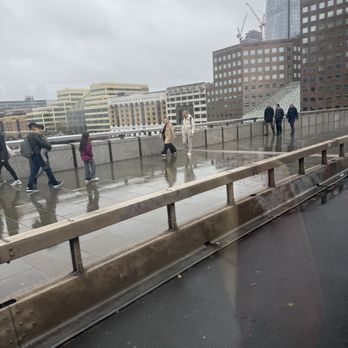


First off, it isn't falling down. So an extra star for that. In fact after that £5M reno it's as shiny as the day it was built. You can even drive across it in your regular old car 7p-7a or ride a bus/taxi/bike the rest of the time. Or do like the rest and just take a stroll. It's almost as fun as looking at it from across the water while you find that perfect iconic photo spot. Hint: get closer than you think: we want to see the bridge in your pic. Take some time to visit the side roads along the base: they have some great eating/gazing history spots. And say hello to My Fair Lady while you're there. read more



2 years ago
It crosses the Thames, you can walk across it or drive, they close it when there is a potential jumper, it is adjacent to the Tower of London, within a stones throw of the London Eye, Big Ben, and Parliament...and it's been in just about every famous movie filmed in London. And, there are pubs on either side. Cheers! read more


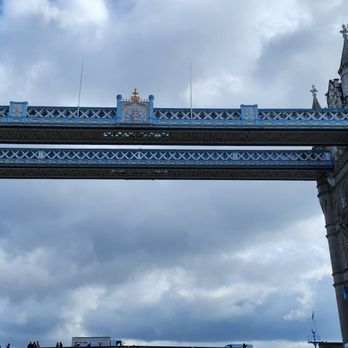


"London Bridge is falling down, hopefully not..." Not to be confused by Tower Bridge, London Bridge is pretty generic, could us some cleaning, and is overshadowed by its neighboring bridges. I recently had the opportunity to walk across(no problems) and there was plenty of room on the pedestrian lane. read more


1 year ago

2 years ago

"London Bridge is falling down, falling down, falling down." I'm sorry. I just... I had to do it. Loved that nursery rhyme as a kid and I still get a kick out of it today. The London Bridge isn't much to look at when compared to London's other bridges. It often gets confused with the more attractive Tower Bridge that's right across the way. Ironically, the London Bridge provides one of the best views of the Tower Bridge. Although it isn't the prettiest bridge, it's still iconic in its' own right and it acts as a gateway to some of London's most popular landmarks. It's definitely one of the busiest bridges in the city with thousands of pedestrians and hundreds of cars crossing over it daily. The bridge crosses over the River Thames to connect Southwark to the city of London. The walk across the bridge is a relatively short one but incredibly scenic. You'll have views of both the Tower and Southwark Bridges along with gorgeous views of the city and the beautiful River Thames. Reaching the bridge via public transit is very accessible as there are two tube stations that will drop you right near the bridge (The London Bridge station and the Monument station). Crossing the bridge is completely free and this bridge is way less crowded in comparison to the Tower Bridge. A fun fact that I never knew until now: The London Bridge nursery rhyme was created because of the numerous attempts of attacks that have been made on the bridge. I guess these premeditated attacks have been going on for years and so have peoples' fears of them. Hence the saying "London Bridge is falling down". It's crazy to think that I was singing this song as a kid and had no idea what it really meant. Is it worth a visit to the London Bridge? Well, why not? The views are gorgeous, it's easy to get to, and it's free. It's an amazing piece of history surrounded by many other landmarks. I say; do it. Plus, you'll get to tell people that you crossed over that bridge that you used to sing about when you were a kid. Ha! How about that?! read more




7 years ago

7 years ago
London bridge is not as fancy as tower bridge but this does give you a good view of Tower Bridge. I would say the London Bridge was quite busy and we walked from one side the other with no problem or issue. Yes plenty of cars on the roads and plenty of people walking around. But it is a city and I would say if you do have time to walk around you should stop by here. If you want to take a boat ride they do have stairs that you walk down to for the boats. They also have souvenirs stands on the side if you want to buy anything that says London on it. But I guess it's still kind of cool to say you been on London Bridge before at least once! read more


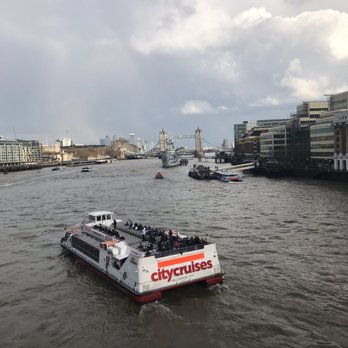

Pretty iconic. When you think of London, of course the London bridge should come to mind. You will undoubtedly see it, drive over it, walk over it, or cruise on a boat under it. Whichever you do, it's a beautiful bridge. read more

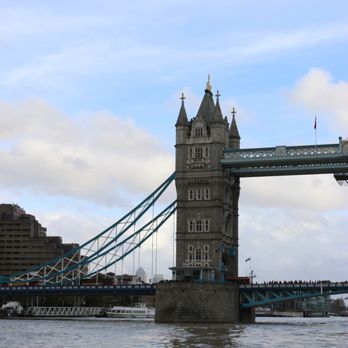


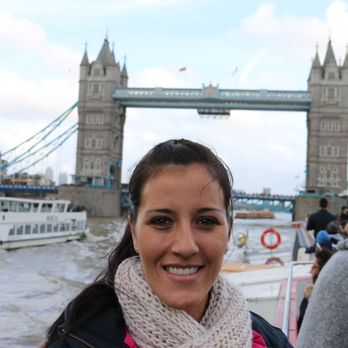


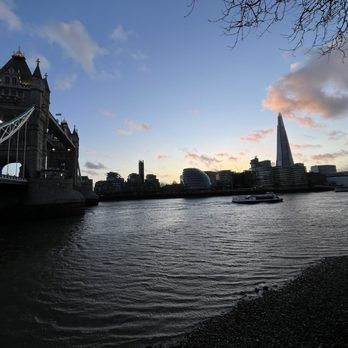
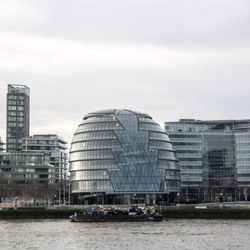
London Bridge - not to be confused with the more famous landmark "Tower Bridge" - is a normal looking bridge. Which is currently undergoing massive construction to become a retail center too. Expected completion date is 2018. One of the first things you may notice is a super tall skinny looking pyramid-shaped building - that is supposed to be the tallest building in the UK. Near London Bridge is one of the best views of Tower Bridge. You may want to ask one of the policemen, security personnel or construction guys to direct you - you'll walk thru some office buildings near the Hilton, pass Jamie's Italian and other eateries, and then voila - one of the best views of Tower Bridge. To the right, you'll see an odd lopsided globe looking building which is City Hall. To the left of the Tower Bridge, you'll see the Tower of London. Great spot for picture-taking. Also nearby is the London Bridge Experience which I heard is fun and super scary :) Another spot worth visiting is Borough Market, one of the best food markets. FYI they're closed on Sundays. FYI take the London Bridge tube station to arrive under London Bridge. Oh yeah, you may also want to check out the Galleria food hall - all kinds of food stations and the food looked fresh and amazing! read more


This is London Bridge, where the terror attacks happened a few weeks ago. I've always thought that London Bridge was the Tower Bridge, but I was completely wrong in that assumption. It's a pretty straight forward bridge. At the ends there are some cool little things, but overall, it's nothing to make you go crazy over. If you want to say you walked the London Bridge then go for it. Other than that, nothing really special about it. read more

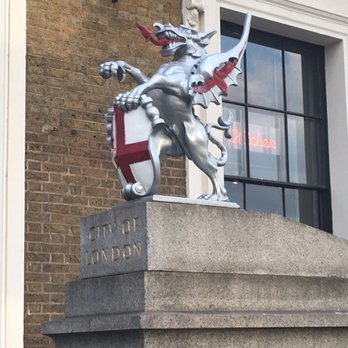
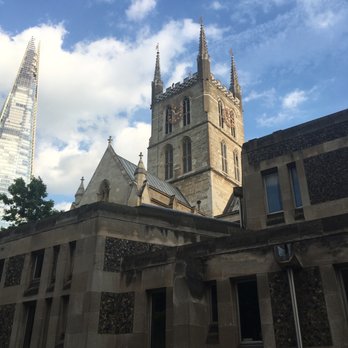

So the London Bridge. Cool history. Not such a cool looking bridge. It was obviously surreal walking across a bridge that I use to sing about 'falling down'. My friend and I actually sang/hummed it as we made our way across. I thought when I had crossed this bridge as a highschooler there were tent shops on the bridge. Well, I either dreamed that or they have been removed because there were no pop up shops there anymore. Of course I would walk across this bridge again. It has a song and it gets you to the other side. Would I say, stop everything you are doing and go...no. read more




11 years ago
It is just a bridge.... very normal. Tower Bridge, it has way more characters. I took the river cruise so we passed under the bridge. That is about it. read more


11 years ago
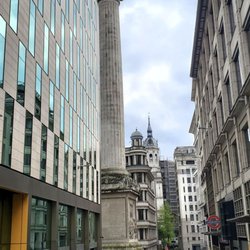
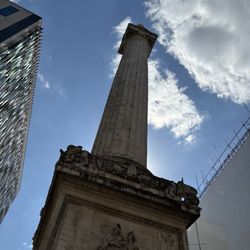
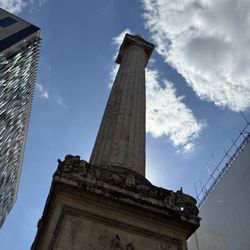
Am I the only one who wishes there was a way to take down every photo of Tower Bridge being posted here? I can't be the only one. Anyway, London Bridge is a pretty normal looking bridge (unlike Tower Bridge). Historically, the original London Bridge was once the only road-crossing option available to those trying to cross the Thames. Obviously it has a place in history and in English (and American) for other reasons as well - "London Bridge Is Falling Down", anyone? And, just in case you're the kind of person who wonders these things like I do, latest version of the bridge has moved a little bit from its original position. London Bridge is admittedly not a very exciting landmark, but because of its historical and cultural significance it's kind of something that us silly tourists feel obligated to walk across, just to say we did. If you keep walking across this bridge far enough (away from the London Bridge rail station side) you'd run into the The Monument to the Great Fire of London. But I don't think there are any other major landmarks and buildings on either side of it. There are some markets, hotels, and I believe small cathedrals surrounding the general area, and I think that's it. Yep. That's what I've got. It's a famous bridge, and a fun bridge to watch and photograph at sundown as the double deckers go across it. But you definitely don't need to plan on spending a lot of time checking it out, fellow travelers. read more


As Moonrising says, to-day's London Bridge isn't really anything to look at: begun in 1967, it was opened by the Queen in 1972. 928ft (283m) long, the structure of pre-stressed concrete box girders comprises two short spans either side of a wide central span of 341ft (104m). But it is functional, and the wide central span does have a certain sort of elegance about it. More interesting, of course, is its history. Incredibly, for many years people forded the Thames in this area. The old river (before the embankments were built) was much wider and shallower, though probably still as muddy, so crossing it must have been extraordinarily dangerous and unpleasant. The Romans got the act together with a wooden bridge, some time around 80AD. A sizeable settlement quickly grew up on the north side, developing into the Roman town of Londinium. After the Romans left, the bridge was subject to collapse from fire, flood and war. It is clear that at certain times there was no bridge, with ferries instead. There was definitely a bridge in place in 984AD, probably the one Olaf the Norseman and his fellow Vikings pulled down in 1014. Another was swept away by a flood in 1091. In 1163, yet another wooden bridge was built, by one Peter de Colechurch. It was he whose replacement design in stone, begun in 1176 and completed 33 years later, in 1209, was to become the most famous and longest lived bridge, lasting until 1825. When it was built, it comprised nineteen stone spans of Gothic (pointed) arches, with a drawbridge span to allow the bridge to be closed for ships and security. A chapel dedicated to Thomas a Becket was built in the centre of the bridge, and Peter de Colechurch was buried there in 1205. Over the years, it acquired its famous double row of houses and shops, whose rents supplemented the tolls for its upkeep. In 1269, these tolls were gifted by Henry III to his wife Queen Eleanor, and the bridge fell into disrepair. In 1281 part of the bridge collapsed, probably the origin of the song: Queen Eleanor being the 'Fair Lady' (although clearly the references to steel and smoking in some of the verses were added later!). But span collapses were regular occurrences over the years, with ad hoc repairs being carried out. The narrowness of the arches produced famously fierce currents at the change of the tide, but also restricted water flow sufficiently for the Thames to freeze over during very cold winters (most notably for the 17th century 'Frost Fairs'). But the water flow was also utilised with several mills being erected on the bridge - one in 1582 pumping London's first water supply. In 1304 the practice of displaying traitors' heads on spikes was begun (a German visitor in 1598 counted no fewer than thirty such heads). The bridge suffered numerous fires, notably during the Peasant's Revolt in 1381 and Jack Cade's rebellion in 1450, much of which was actually fought on the bridge. The worst, in 1212, broke out at both ends, reportedly killing over 3,000 people - many drowning, as so few could swim then. A later fire, in 1633, burned the northern part of the bridge - a blessing in disguise, as it saved it from the Great Fire in 1666, although afterwards, many houses were rebuilt in the new classical style. However, it was the bridge's narrowness that was its undoing. Only 28 feet wide, the houses and shops reduced the effective roadway to about 12ft, and it could take over an hour to cross. Congestion in London is nothing new! In 1722 the Lord Mayor decreed that carts going southwards should keep to the East and those northwards to the west - supposedly the origin of the British left-hand rule of the road. The houses started to be removed in 1758, and in 1763 a single span built to replace two central spans, but it was becoming clear that this was only a temporary solution. In 1821, therefore, a competition was held to design a new bridge. The most dramatic design was that of road engineer Thomas Telford, who proposed a single great arch of cast iron, over 600ft (180m) long and high enough for tall ships to pass beneath unimpeded. George Dance proposed two bridges, each with a drawbridge. The final design chosen was that of John Rennie, and was built 180ft west of the old bridge, so that the two bridges stood side by side. It was completed in 1831, and opened by Queen Adelaide. The old bridge was torn down, during which process Peter de Colechurch's remains were uncovered - only to be thrown into the river. The Rennie bridge was itself widened in 1902-04, to take account of the growing commuter traffic caused, in part, from London Bridge station being located at its southern end. By the 1960's Rennie's Bridge was beginning to suffer from subsidence from growing motor traffic, and thus the present new design was chosen. Rennie's bridge was sold to a welathy American, Robert McCulloch, and moved to Lake Havesu City in Arizona, after being carefully dismantled: the new bridge was read more


London Bridge is ... not the bridge you think it is. Not the bridge, not the bridge, London Bridge is not the bridge you think it is, My fellow travelers. Seriously speaking though London Bridge is not the bridge you think it is. You've probably seen photos of London's Tower Bridge and thought "that must be the famous London Bridge." No one ever told you anything different, right? You're not alone... I had no idea either. London Bridge is really nothing to get excited about. The only thing it has going for it is that you can walk to the middle of it and get a great shot of the Tower Bridge. Ps. I'm sorry if I just got the LB nursery rhyme stuck in your head. read more


7 years ago

12 years ago


9 years ago
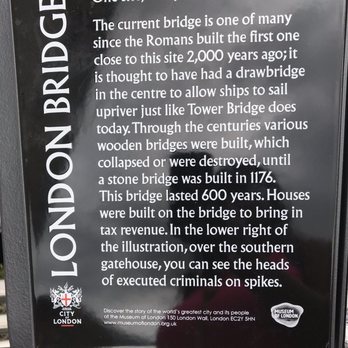
The London Bridge is a short walk from the metro station and offers a great view of the Tower Bridge. It's not too long of a walk and does not really have anything additional outside of pedestrians and cars passing taking place on it. We had a nice stop admiring the Tower Bridge and reading the history behind the London Bridge from the observation deck. read more


13 years ago
Page 1 of 2
More info about London Bridge
London Bridge Reviews in Other Languages
Review Highlights - London Bridge





















Why does Yelp recommend reviews?
8 reviews that are not currently recommended
The reviews below are not factored into the business's overall star rating.


12 years ago
18 years ago

8 years ago

8 years ago

18 years ago

8 years ago

7 years ago


