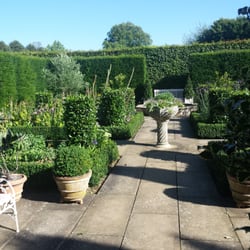
Anglesey Abbey is a National Trust property, comprising a country house, 100 acres of landscaped…read moregrounds, and a working water mill. It is immensely popular, and has one of the Trust's largest restaurants.
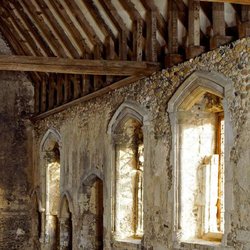
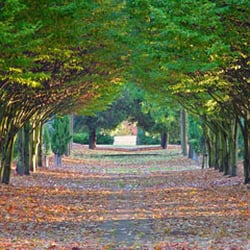
The site began life early in the 12th century as a priory of Augustinian Canons (it was never actually an Abbey). At the dissolution, it was sold, and much of the stone was removed to build nearby Madingley Hall. In 1595 it was acquired by the Fowkes family, who turned the remains into a Jacobean-style house, incorporating the Chapter House and Monk's warming room. It passed through a series of owners over the next 300 years, who added further wings and developed the grounds as an arboretum and garden.
In 1926, it was acquired by two Anglo-American brothers, Urban Huttleston Broughton and his brother, Henry Rogers Broughton, who had recently inherited a fortune from their maternal grandfather. Broughton also inherited the title Lord Fairhaven, which had been granted to his father, who died before it could be conferred.
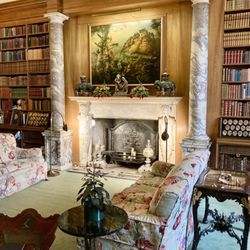
On his marriage, Henry vacated the house and his older brother, now Lord Fairhaven, set about making further alterations and extensions, turning it into a comfortable and modern aristocratic country home, filled with his growing collection of antiques. These include an important collection of tapestries, paintings (notably a large number of landscapes of Windsor Castle), furniture, books and clocks. A notable item is the famous, late 18th Century "Pagoda Clock", regarded as one of the treasures of the National Trust. On chiming the hours, it comes alive with rotating obelisks and jewelled pineapples.
On his death, the house was bequeathed to the National Trust. As well as the house itself, visitors can walk the extensive grounds, and visit the Lode Mill, a working mill rebuilt in the 18th century. Converted in 1900 to grind coprolites, it has now been converted back to grind flour.
The entrance is off the main B1102 road on the Cambridge side of the village of Lode. There is a series of car parks, with disabled parking closest to the modern entrance buildings. These include a large cafe and a shop, which also sells plants. A small cabin holds second hand books, also for sale. The cafe - one of the largest on the NT estate - serves hot and cold meals as well as the cakes the Trust is known for.