Cancel

    Open app

    Search

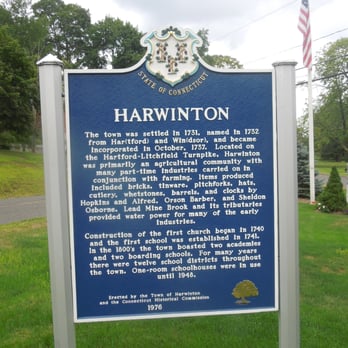
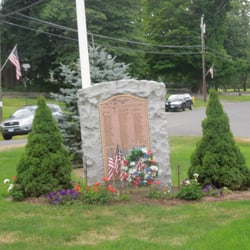
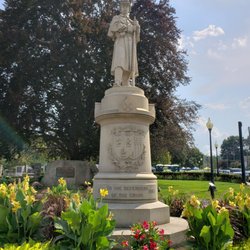
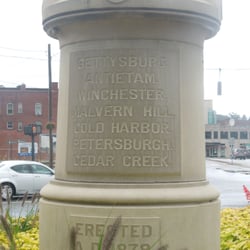
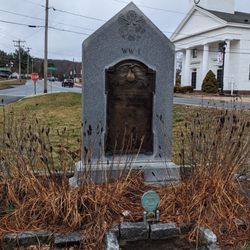
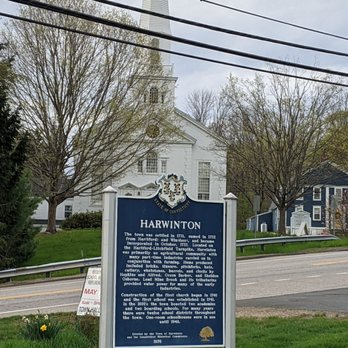
    Harwinton Historical Marker

    3.0 (2 reviews)

    Harwinton Historical Marker Photos

    More like Harwinton Historical Marker

    Recommended Reviews - Harwinton Historical Marker

    Your trust is our priority, so businesses can't pay to alter or remove their reviews. Learn more about reviews.
    Yelp app icon
    Browse more easily on the app
    Review Feed Illustration

    5 years ago

    Helpful 7
    Thanks 0
    Love this 7
    Oh no 0

    13 years ago

    Helpful 5
    Thanks 0
    Love this 5
    Oh no 0

    Verify this business for free

    Get access to customer & competitor insights.

    Verify this business

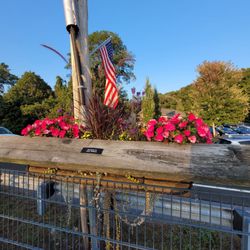
    Canton Flower Bridge - View of flag

    Canton Flower Bridge

    4.5(2 reviews)
    7.8 mi

    "Well, open your eyes, girl, look at me I'm gonna show you…read morehow it ought to be We're gonna have a good thing Such a good thing, baby" (Paul Revere and the Raiders) Good things tend to spread, don't they? The 1908 Bridge of Flowers in Shelburne, MA inspired the 1996 addition of flower baskets and boxes to the Old Drake Hill Flower Bridge in Simsbury, which in turn inspired the 2015 addition of flowers to what is now known as the Canton Flower Bridge. The bridge is actually a section of the boardwalk along the Farmington River Walk on River Road in the Collinsville section of Canton. The bridge parallels the Farmington River, and on today's gorgeous summer day we saw at least ten groups of adventurers enjoying the water, in kayaks or on paddle boards or on rafts. The boardwalk was full of activity today -dog walkers, bicyclists, carriage pushers and folks just out getting some exercise and upping their step count. The bridge is decorated with hanging baskets and flower baskets that are maintained by volunteers. Another nice feature is the dozen or so placards highlighting some of the land and sea wildlife creatures that inhabit the river environment. What a lovely oasis of color and peaceful water scenery.

    This is a very pretty bridge with flowers as the name says…read more It is connected to the Farmington River trail. On one side you will see the Farmington River and on the other, you can see the road. There are signs on the bridge detailing what type of wildlife lives around the river. I like reading each one, nature is beautiful. Once you cross the bridge, there is a park like area with benches. There are plenty of pedestrians using this area and it's a nice place to get some exercise and fresh air!

    Photos
    Canton Flower Bridge
    Canton Flower Bridge
    Canton Flower Bridge

    See all

    Collins Company Axe Factory - View from the inside: imagine being a worker from 1826 to 1966.

    Collins Company Axe Factory

    5.0(1 review)
    7.5 mi

    This historic landmark still stands after all these years. Currently, one of the buildings is a…read moreretail building called Antiques on the Farmington. It's strategically placed on the Farmington River so that dams could be built to create a power source. Eventually, the railroad was built near it so goods could be sent out to be sold. The large bridge nearby was part of the railroad and is now a beautiful walking path for residents near and far. Collinsville became a village because of this famous axe company. The Collins Company opened in 1826 and was known to create the first ready to use axes in America. They also produced and sold machetes and other tools. The building that the axe company was in used to be a gristmill. The company started off with only 8 men and once it got popular, they employed workers from all over the state and nearby states. Housing was built for these workers and their families as well as other town/village necessities; those buildings were a church, bank, shops, etc. As the company expanded, they sold machetes and other tools all over the world. Unfortunately, nothing lasts forever. The Collins brothers died and eventually the floods of 1955 destroyed the railroad, which halted their sales. Due to competition, the deaths of the owners, a natural disaster, the company closed in 1966. It was a good 140 year run though; the Collins left their legacy and we can surely feel their spirit by just walking around downtown and in the old axe factory. The remnants of this factory still stands strong. I really enjoyed walking on the path and looking at the building. There's so much history and definitely some ghostly feels.

    Photos
    Collins Company Axe Factory - The bridge near the factory

    The bridge near the factory

    Collins Company Axe Factory - The factory

    The factory

    Collins Company Axe Factory - See the old sign? "The Collins Co"

    See all

    See the old sign? "The Collins Co"

    Litchfield Historic District

    Litchfield Historic District

    4.0(2 reviews)
    6.9 mi

    The historic district of Litchfield is what people who don't live in Connecticut picture when…read moreconjuring up an image of the state. Litchfield's history is an interesting one, my favorite pieces including locking up Benjamin Franklin's loyalist son and melting down a statue of King George to make bullets during the Revolution. Hints of that history, and the slight revisionism that followed it, can be seen in the structures of Litchfield today. The cobblestone court, although they did not historically have cobblestones, is where horses and blacksmiths used to be kept behind a (no longer existing due to fire) hotel. The Green is well kept with multiple memorials, although the design used is not the one submitted by the architect who one day designed Central Park (and his name escapes me). Today the historic Green area has multiple restaurants (with a lot of pizza), home goods and clothing shops, and of course antique shops. At the top is the Litchfield Historical Society, which can tell you much more about the history then this Yelp review. (They probably remember the important names) They also occasionally offer walking tours, so it's a good idea to watch their Facebook page.

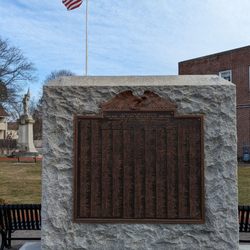
    The beautifully manicured Litchfield Town Green, bounded by North, South, East, and West Streets,…read moreis a treasure chest of historical sights. Military monuments are everywhere -Civil War, WW I, WW II, Korea, and Vietnam. There is a cannon there. There is a plaque to commemorate where in 1862, a recruiting tent stood to sign up recruits for the 19th CT Volunteer Infantry. There is a plaque signifying where Lyman (father of Harriet Beecher Stowe) Beecher's church stood. In recognition of all this, in 1968 the US Dept of the Interior and the National Park Service awarded this area the status of "a registered national historic landmark" due to its "exceptional value in commemorating or illustrating the history of the United States." I posted individual reviews of the Beecher, Civil War, and 20th Century war memorials.
    Photos
    Litchfield Historic District - "a registered national historic landmark" for its "exceptional value in commemorating or illustrating the history of the US"

    "a registered national historic landmark" for its "exceptional value in commemorating or illustrating the history of the US"

    Litchfield Historic District
    Litchfield Historic District

    See all

    The Hiker - Fall Foliage on the Boulevard

    The Hiker

    4.5(2 reviews)
    9.7 mi

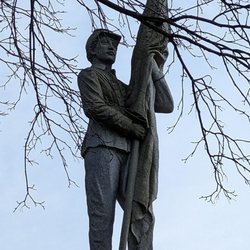
    Running through Bristol, there's a stretch of Route 72 named Memorial Boulevard. It's pretty much…read morebetween Main Street and Blakeslee Avenue. It's a lovely area with parkland and trails on both sides of the road. Memorial Boulevard is quite the appropriate name for this stretch, because the grassy areas bisected by the boulevard contain eight monuments honoring veterans from the Revolutionary War through Vietnam. This review is about one of those monuments; but trust me, this gets confusing. "The Hiker" statue is a copy of a pre-existing statue depicting a soldier from one war, but it's dedicated to the soldiers of a different war. Confused? Yeah, I was too. Let me explain. This "Hiker Statue" on Memorial Boulevard is a 1983 replica of the same statue used in Bristol's 1929 Spanish American War monument over on Park Street at Muzzy Field. When the Memorial Boulevard version was dedicated in 1983, it was meant to honor all soldiers killed in WW II. It's a very detailed bronze statue of a Spanish American War soldier hiking with a rifle held in his right arm. He's dressed in the manner of his time (1898), wearing a wide brimmed hat, a military jacket, and knee high boots. Check out the jaunty angle of his hat. He looks like a bad-ass Indiana Jones. The plaque's inscription reads: The Hiker Spanish American War Soldier Given By The Vanesse Family In Memory Of Deceased World War II Veterans November 12, 1984

    Memorial Boulevard Park is a beautiful spot both to walk your dog, or just to walk through by…read moreyourself. One of the parking lots has a large picnic table if you just want to stop by for a quick bite instead of eating your car or at work. All in all, it is maintained beautifully MOST of the time. BUT Bristol's goose population keeps getting bigger & bigger and they do have a hard time occasionally, keeping up with the droppings, mostly near the East end of the park (by the pond). It is usually very well maintained though. If you walk around the whole three to four block area, it's approximately 2 miles from Barnes Spring to Downes Street. Personally, since getting my high energy doggie, just from walking this area, I've lost 52 lbs (& have clocked 1350 mi per my GPS). It's especially beautiful in the Spring & Fall!!

    Photos
    The Hiker
    The Hiker - Geese!  Geese!  Geese!

    Geese! Geese! Geese!

    The Hiker

    See all

    Torrington Historical Marker

    Torrington Historical Marker

    5.0(1 review)
    3.8 mi

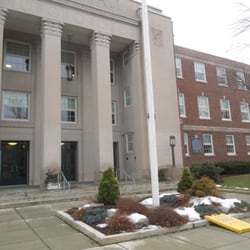
    I love the location of this marker. It's on the exterior front wall of Town Hall, mounted to the…read moreright of the front door. A nice place of honor for a pretty interesting marker, unlike the boring one I just saw in Bristol. Being mounted on the front wall, it should be no surprise that this is a one-sided marker. It's from the CT Historical Commission with the familiar white lettering on a blue background. Here's the highlights - Torrington was named for an English town, it was a spin-off of Windsor, it became a town in its own right in 1740 and had to wait all the way until 1923 to become a city. Manufacturing was king in the early days of Torrington's history as this quintessential mill town churned out metal works, hardware, textiles, and wood trim. John Brown, the lightning rod abolitionist, was born in Torrington. Recognize the name? You definitely recognize the epic song written in his honor in 1861. John Brown's body lies a-mouldering in the grave, But his soul goes marching on. Chorus: Glory, glory, hallelujah, hallelujah, Glory, glory, hallelujah, Glory, glory, hallelujah, His soul goes marching on. Want another great Torrington nugget? OK. Quick, when I say "condensed milk" what names comes into mind? "Bordens", did you say? Yup - Gail Borden patented and manufactured both condensed and evaporated milk in Torrington in 1856. (I wonder if I have any of those original cans buried in the back of my cupboard behind the lentil soup?). Anyway, Torrington's marker is a pretty darned good one. Plus it's in great shape as far as the paint and lettering go. The full inscription reads: Named in 1732 for Torrington in Devonshire, England, this was one of the townships of the Western Lands allotted to Windsor. Since the early settlers were taxpayers in that town, their shares in the division of land depended upon the amount of taxes paid to Windsor. Torrington was incorporated as a town in 1740 and became a city on October 1, 1923. Industries were established on the banks of the Naugatuck River and smaller streams, among them the manufacture of brass, needles, tacks, hooks and eyes, woolen cloth, and millwork. John Brown, noted for his efforts to abolish slavery in the Civil War era, and Samuel J. Mills, Jr., founder in 1810 of the American Board of Commissioners for Foreign Missions, were born in Torrington. In 1856 Gail Borden was granted a patent for the "process of evaporating milk in vacuum." In the following year he began the manufacture of condensed milk in the Burrville section of town. The economy of Torrington remains largely industrial, with many of the earlier products continued and supplemented in modern form. Erected 1980 by the City of Torrington, The Torrington Historical Society and the Connecticut Historical Commission.

    Photos
    Torrington Historical Marker
    Torrington Historical Marker
    Torrington Historical Marker

    See all

    Harwinton Historical Marker - landmarks - Updated May 2026

    Loading...
    Loading...
    Loading...