Haddrell's Point Historical Marker Photos


More like Haddrell's Point Historical Marker
Recommended Reviews - Haddrell's Point Historical Marker
Start your review...



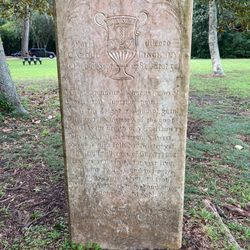
Located in the neighborhood, it points out some of the history of this strategic and industrious hub that shaped Charleston's military and economic history. The front reads, "Haddrell's Point extended along the waterfront from Shem Creek to Cove Inlet and was named for George Haddrell, an early settler. The land bordering Shem Creek became home to important industries including factories, canneries, and rice and saw mills. The mills drew their power from the tides of Shem Creek." And the reverse, "In early 1776, a battery was erected at Haddrell's Point and placed under the command of Brigadier General John Armstrong. The strategic location of the battery was vital in safeguarding Charleston from British attacks. With ceremonial fanfare, President George Washington embarked from Haddrell's Point to Charleston, during his Southern tour in 1791." But in 1775, before that battery mentioned on the marker was completed, Colonel William Moultrie was ordered to construct a fascine battery at Haddrell's Point. Fascines--bundles of sticks used to reinforce earthworks--were employed to quickly build a 58-foot-long fortification armed with four 18-pound cannons. This battery was completed overnight by 200 men under Major Charles Cotesworth Pinckney, who worked under cover of darkness to avoid British fire. The battery's success was immediate. It helped drive off the HMS Tamar and HMS Cherokee, which had been anchored in Charleston Harbor. And during the Civil War, the site of the original fascine battery was repurposed for the Mount Pleasant Mortar Battery and Battery Gary, continuing its legacy as a defensive stronghold. The marker was erected in 2007. There is no sponsor listed on it. There is street parking nearby if you're inclined to visit the site of the original battery. [Review 1409 of 2025 - 1353 in South Carolina - 24961 overall] read more