Cancel

    Open app

    Search

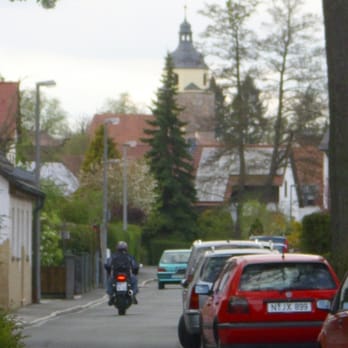
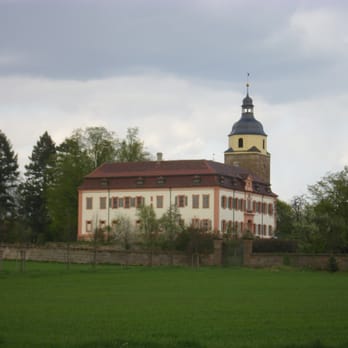
    Großgründlach

    4.0 (1 review)

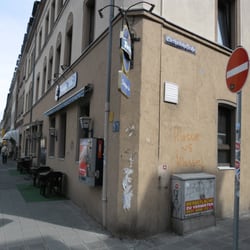
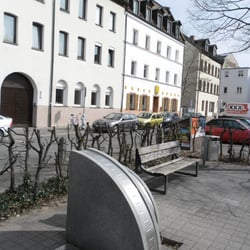
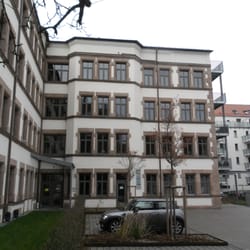
    Großgründlach Photos

    Großgründlach Reviews in Other Languages

    Verify this business for free

    Get access to customer & competitor insights.

    Verify this business

    Stadt Bamberg - Im Rosengarten (02/2024)

    Stadt Bamberg

    4.8(13 reviews)
    41.2 km

    This is by far my favorite city in Germany...at this point I have to admit I'm a little biased…read moresince I had a privilege of living here for two years while serving in the US Army. Nonetheless, Bamberg offers its enchanting medieval old town atmosphere enticing those who visit with its unique charms that other cities/towns may or may not exude IMHO. No wonder the old town area was designated as a UNESCO World Heritage Site in 1993. It is nicknamed the "Seven Hill City" or "Franconian Rome." It is sometimes called "Rome of the North" with its seven hills (with castle or church on them): Abtsberg, Altenburg, Jacobsberg, Kaulberg/Obere Pfarre, Michaelsberg, Stephansberg, and Domberg, the hill upon which the Imperial Cathedral is built in the center of all. Rivers Main-Danube Canal and Regnitz also run through it. All that makes a very picturesque town for sure. A "Castrum Babenberg" existed on the Domberg (Cathedral Hill) and was mentioned in 902 for the first time. King Heinrich II. founded a diocese in 1007. The first cathedral was consecrated in 1020 by Pope Benedict VIII. Heinrich II. also founded a Benedictine abbey on the Michaelsberg. King Heinrich and his wife Kunigunde chose Bamberg as their favorite residence, and they supported the diocese of Bamberg with their wealth. The royal couple was well-educated and religious. In 1014 Henry was crowned Holy Roman Emperor by pope Benedict VIII. Emperor Henry II died in 1024, and his wife empress Kunigunde in 1040. They were both canonized and are buried in the cathedral in their beloved Bamberg. The second bishop Suidger of Bamberg was elected as Pope Clemens II. in 1046. His last resting place in the Bamberg Cathedral is the only preserved tomb of a pope north of the Alps. From the 13th century on bishops were also princes of the German Empire, overseeing the construction of major buildings in the city. It paralleled the economical development of Bamberg. Bamberg has a long history in brewing beer, thus it is also known as the City of Beer. It was known for its hops trading, and the city flourished with over 90 breweries in the past, however, only nine of them still remain in operation to the present day. The most famous of Bamberg's breweries is the historic the dark "rauchbier" (smoked beer) brewery, Schlenkerla. This 6th-generation family brewery has been quenching thirst since 1405 and still taps beer the old-world way - from wooden barrels. 27 years before the German Purity Law (Deutsches Reinheitsgebot) was issued in 1516, prince-bishop Heinrich III. worried about the quality of beer and ordered that nothing more than hop, malt and water should be in Bamberg's beer. At that time beer already had a long tradition in Bamberg. It is documented that bishop Otto I. granted the Benedictine monks at the St. Michaels abbey the privilege of brewing beer in 1122. It is a must visit in Germany if you are in Franconia, the vicinity of Nürnburg or even in München. You will not regret it.

    Stadt Bamberg has been UNESCO World Heritage site since 1993. The city lies on the confluence on…read morethe Main and Regnitz rivers in the upper Franconia area of Germany. Once a Roman Fortress, Bamberg still has evidence of Roman occupation. Roman walls and city gates can be seen. Beginning in 800 AD, Bamberg began to draw a large Slavic population which is still present. Having over 2,000 historical monuments, it survived the war relatively intact. It is truly picturesque displaying some of the finest architectural designs from the Middle Ages through the Renaissance. Some examples are the 16th century (Old Bridge Town Hall) with it's Trompe d'oeil exterior and Rococo Hall, the Neue Residenz which was the seat of the Prince-Bishops until 1802 with 40+ magnificent rooms, an Imperial Hall painted by Melchior Steidl and the elector's rooms and prince-bishops apartments, and the Old German and Baroque Galleries. The adjacent Baroque Rose Garden designed by Balthasar Neumann features 4,500 roses, sculptures by Ferdinand Tietz (1760-1761) and a garden café. Also in Dom Plaza you can visit the Dom featuring the Bamberg Horseman and tomb of the holy imperial couple Kunigunde and Heinrich II. The tomb was the creation of Tilmann Riemenscheider, Germany's master artist. The Dom also houses the papal tomb of Clemens II. There are so many photo opportunities, restaurants and opportunities to drink Bamberg's famous smoked beer. There are nine breweries in Bamberg the most famous of which is Ambrausianum where I had my first smoked beer. The ambience that you will find in Bamberg is transporting.

    Photos
    Stadt Bamberg - Im Rosengarten (03/2024)

    Im Rosengarten (03/2024)

    Stadt Bamberg - Residenzgarten (02/2024)

    Residenzgarten (02/2024)

    Stadt Bamberg - E.T.A. Hoffmann Haus (03/2024)

    See all

    E.T.A. Hoffmann Haus (03/2024)

    Stadt Nürnberg - ... Abendspaziergang an der Pegnitz ...

    Stadt Nürnberg

    4.9(7 reviews)
    9.4 kmInnenstadt

    Known as Nuremberg in the English speaking world is my hometown, so yes it will get a 5 star rating…read morefrom me. Here you can enjoy modern comfort with a ton of history as it was founded in 1050. A review alone won't touch on all there is to see here. Let's go for the touristy stuff: Start with the Imperial Castle high above the city. Getting up there will give you quite a workout. You can always access the courtyard and enjoy the spectacular view across the entire city, even if you can't go up the tower "Lug-ins-Land", which loosely translated to Look into the Land. If you guess look out tower you are right, also used as the symbol of our city. Everyone here recognizes it's outline. The inside buildings of the castle are not always open, but you can see the stables which have been converted into a youth hostel. You can walk around the massive defense walls, enjoy the castle gardens, I believe there are 3 of them. Make your way down to discover the other sights, which I am just going to list a few to give you an idea of the medieval sights: Duerrer House, the only existing home of a 15th century artist in Europe Tiergaertner Tor: tower, part of the defensive walls, so named for the bear pit that used to be located in the moat surrounding the city. City Walls: Can be seen all over around the 'old' part of the city, along with it's defensive towers and moats. There is no longer water in the extensive moat, but they area is mostly used for recreation today. Lochgefaengnisse: Dungeons below city hall Handwerker Hof: Craftmen's Courtyard, artisan crafts and great shopping Lorenzkirche: Church of St. Lorenz houses one of the largest organs and is famous for the "Englischer Gruss" Woodcarving hanging from it's ceiling. Sebalduskirche: St. Sebald Church houses the shrine of it's namesake, Patron Saint of the city. Frauenkirche: Church of our Lady houses the oldest stained glass windows of the city. Also home to the "Maennleinlaufen" glockenspiel. Schoener Brunnen: Beautiful Fountain, don't forget to turn the brass ring for good luck. Ask a local if you can't find it. Henkersteg: Hangman's Bridge, leads to the hangman's house which is also a museum now Ochsenportal: Statue of a laying oxen by the former meat house and butcher's bridge If you are a WWII enthusiast you are in luck, as Nuremberg is finally embracing it's role in history: Reichspartei Gelaende: former Nazi Rally Grounds, which includes the Documentation center, Zeppelin Field and many more ( I recommend a bus tour to get the full effect) Der Saal 600: Courtroom of the Nuremberg Trials Historischer Kunstbunker: historic art bunker underneath the Imperial Castle, where the party hid priceless artifacts. Museums: Fembo House, City museum Toy Museum: Significant since Nuremberg is famous for toy making as well as the annual toy convention Transportaion Museum: as it's name implies Germanisches Nationalmuseum: largest museum of cultural history in the German speaking world. Bratwurst Museum, Hat Museum, 1.FCN aka Klub Museum, Children's museum, Pigeon Museum, Military Garrison museum, Fire Brigade museum, Hospital museum, and so on... This is just the tip of the iceberg and doen not even touch on all the events and foods you can experience here.

    We visited Nuremburg on a coach trip and we were allowed some time to look round the whole area. We…read morewere delighted with the old town and were able to take in the view. We enjoyed the food hereabouts. We also went to see the remains of the huge Halle that was being built by the Nazis plus the parade grounds. We also visited the courthouse where the war criminal trials were held.

    Photos
    Stadt Nürnberg - ... Nürnberg versinkt im Schnee ...

    ... Nürnberg versinkt im Schnee ...

    Stadt Nürnberg - ... Abendspaziergang an der Pegnitz ...

    ... Abendspaziergang an der Pegnitz ...

    Stadt Nürnberg

    See all

    Großgründlach - localflavor - Updated May 2026

    Loading...
    Loading...
    Loading...