Cancel

    Open app

    Search

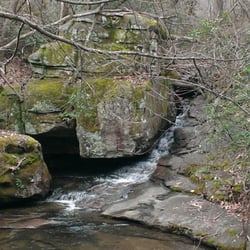
    Grace's High Falls Overlook

    5.0 (2 reviews)

    Grace's High Falls Overlook Photos

    You might also consider

    Recommended Reviews - Grace's High Falls Overlook

    Your trust is our priority, so businesses can't pay to alter or remove their reviews. Learn more about reviews.
    Yelp app icon
    Browse more easily on the app
    Review Feed Illustration
    Photo of Melissa B.
    1279
    2704
    33391

    12 years ago

    Helpful 1
    Thanks 0
    Love this 0
    Oh no 0
    Photo of Dale G.
    26
    39
    6

    5 years ago

    Helpful 0
    Thanks 0
    Love this 0
    Oh no 0

    Verify this business for free

    Get access to customer & competitor insights.

    Verify this business

    Opera House

    Opera House

    5.0(1 review)
    0.9 mi

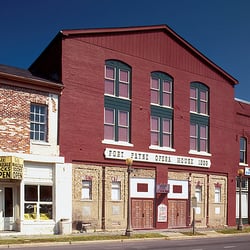
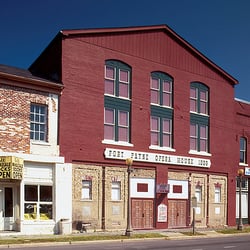
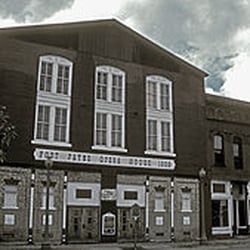
    Tony an d I happened across this gorgeous landmark while visiting Fort Payne on Sunday March 2nd…read more The town has several locations to visit. The Fort Payne Opera House, located at 510 Gault Avenue North in Fort Payne, DeKalb County in the U.S. state of Alabama built during the industrial boom in 1889. The Fort Payne Opera House is the only one in the State of Alabama still in use. The establishment has been used as a movie theater, live theater and a public forum. The Opera House still hosts live theatrical events and is on the National Register of Historic Places and the National Register of 19th Century Theaters in America. Completely restored, the Opera House is a cultural center of the community. Located on Fault Avenue (main street down Fort Payne) The Fort Payne Opera House is a historic building in Fort Payne, Alabama. It was built in 1889 and continues to be in use today, thanks to regular maintenance and upkeep. Completed during the region?s industrial boom, the Fort Payne Opera House is the oldest theater in Alabama that is still in use today. Through its more than a century of existence, it has already been used for various purposes including as a movie house, a live theatre, and even as a public forum. It has truly contributed a lot in the development of the area. Today, the Fort Payne Opera House is still open to the public. It still hosts live performances, and tours can be arranged for those interested in exploring this historic site.

    Photos
    Opera House
    Opera House
    Opera House

    See all

    Depot Museum

    Depot Museum

    4.5(2 reviews)
    0.8 mi

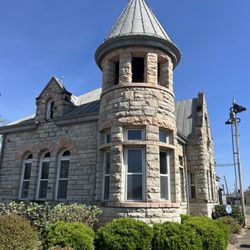
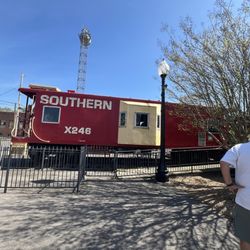
    Sunday, March 2nd, Tony and I stopped at the Old Depot. It was closed. would have loved to go…read moreinside but at least I got to walk around and take some gorgeous pictures of the old depot. History: The Fort Payne Depot Museum is one of the few surviving nineteenth-century railway terminals in Alabama. Located on the main thoroughfare in Fort Payne, DeKalb County, it features a large collection of Native American artifacts as well as holdings that illustrate the history of the region and the railroad era. The Fort Payne Depot was constructed in 1891 by the Alabama Great Southern Railroad. Fort Payne was a main stop on the line, with two express mail trains and as many as six passenger trains daily. The depot was a passenger station for 79 years. Among the most notable people to use or pass through the station were Milford Howard, one of the nation's leading populists The depot served passengers until 1970, when passenger service was dropped. After that, it served trains hauling freight only and housed an agent. The following year, the Alabama Historical Commission, Landmarks of DeKalb County, and the City of Fort Payne worked together to have the landmark placed on the National Register of Historic Places. In 1973, a local group called Landmarks of DeKalb expressed interest in obtaining and preserving the depot. Railroad officials agreed to trade the depot to the organization in exchange for a building in another location. In July 1983, freight service was halted by approval of the Public Service Commission, and the depot remained empty for a year. In 1986, the nonprofit Landmarks of DeKalb Inc., and its board of directors was created to save the depot building after it was threatened with being torn down. The group decided to put a museum into the building. To fund the building's renovation, Landmarks of DeKalb Inc. and the City of Fort Payne were able to secure funding through grants. The exterior of the structure was renovated that same year; it is constructed from pink sandstone with a copper roof, and the interior is finished in native pine and plaster. On October 12, 1986, the depot was dedicated as a museum. Five years later, on October 13, 1991, the depot celebrated its 100th anniversary. Also on the grounds is a 30-foot trailer that contains a collection of 94 dioramas, small, intricate scenes created by Italian artist Steve Fiora between 1915 and 1934 out of plaster of Paris and wire mesh. The dioramas, donated by L. A. Shankles, feature characters and settings from fairy tales, historical scenes, and scenic representations. The museum is run by a 12-member board of directors and is funded through grants, donations, and the City of Fort Payne. The museum has a curator and one staff member, as well as several volunteers.

    We did not go inside. We also just walked around and took some pictures. We had just come from…read moreanother Museum in Fort Payne. I also would have loved to go inside as the grounds were lovely. Unfortunately we were on the road and had to be somewhere. It was my first trip to the beautiful state of Alabama and I was very impressed. It is a beautiful state with it's rolling hills and lush plants and greenery all over. I must give a shout out to the two ladies we met outside the Museum. We were taking pictures and when my friend mentioned it was my first time in Alabama, they welcomed me. Lots of southern friendliness and I so wish I could have stayed longer! I would love to come back to the Depot Museum and Alabama in general some day.

    Photos
    Depot Museum
    Depot Museum
    Depot Museum

    See all

    Old Fort Payne Cabin Site

    Old Fort Payne Cabin Site

    5.0(1 review)
    0.9 mi

    Tony and I found this while traveling through Fort Payne, Alabama on Sunday March 2nd. The park…read moreitself is well marked with Brown Historical Road signs guiding you to the Williston Trail of Tear sites in the town. The park is free but accepts donations. There is a private parking lot and the park has lots of signs that give you tons of historical. informationp If in the area I highly recommend a quick stop. Took us only about 10 minutes. No one was there, so we were alone to take our time. History: Landmarks' property at the end of 4th Street S. and Gault Ave. in Fort Payne, containing the old cabin foundation and chimney, is now an officially certified historic site on the Trail of Tears Historic Trail. To get driving directions for the Benge Route of the Trail of Tears Late in 1837, Federal Troops arrived in Will's Valley to establish a fort for the purpose of removing the Cherokee Indians from the area. Principal Chief John Ross and other leaders had lost their political and judicial battles with The United States and the Cherokee would be forced to leave their homeland in Northeast Alabama, as part of what's now known as the Trail of Tears. To accommodate officers, soldiers, Cherokees, supplies and animals, the local property included a fort, water supply (the Big Spring), holding pens, cabins, encampment areas and associated outbuildings. Some structures were built specifically for the compound, while others, owned by the Cherokee, were confiscated for use as part of the fort. For generations, many area residents have told the story of one such structure -- a log cabin -- used by the soldiers during the removal. Believed to be the last undeveloped part of local property seized by Federal Troops as part of the complex, all that remains of the cabin are a chimney, a foundation outlined in stones and evidence of a small root cellar. A stacked stone well is situated nearby. The structural remains of the log cabin are visibly evident and documented by archaeological research done by Tim Mistovich (1984) and Sharon Freeman (2009). Materials and method of the chimney's construction are consistent with those built in the early 19th century according to Architectural Historian Robert Gamble. Architect Winston Walker III, who was involved in several research projects relating to the pre-statehood period of the area, stated "the cabin was most probably built between 1800 and 1825". The exact function of the log cabin during the time of the removal is in question. Some think it was used for storage, others claim it was officers' quarters, still others believe it was part of the fort - although two reports place the fort "two hundred yards northeast of the Big Spring". There is better evidence suggesting the identity of the cabin's owner prior to the removal. John Huss (Spirit the Preacher) a Cherokee and ordained Presbyterian minister, moved to Will's Valley around 1824. From John La Tourette's 1837 map and recent research including the government evaluation of his property, it is believed that Huss' land included or was nearby the cabin site. Huss and his family voluntarily left for the western territory in November of 1837.

    Photos
    Old Fort Payne Cabin Site
    Old Fort Payne Cabin Site
    Old Fort Payne Cabin Site

    See all

    Andrew Ross Home Site

    Andrew Ross Home Site

    5.0(1 review)
    3.7 mi

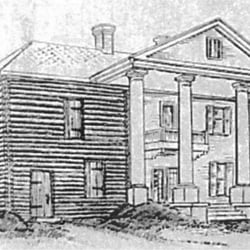
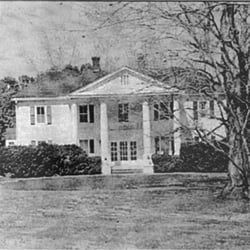
    Sunday, March 2nd, while in Fort Payne, Al ..Tony and I happened across three different sites…read morepertaining to the Trail of Tears National Historic Trail..I visited them and found them very interesting..so I wanted to share. The main property is posted as PRIVATE because someone actually lives in the home as a private residence. History of the site: Visitors to our area will soon discover new signs identifying the Andrew Ross Home, along with the Willstown Mission Cemetery and old Fort Payne Cabin site, as official components of the Trail of Tears National Historic Trail. The congressionally designated trail commemorates the tragic history of the 1838 removal of the Cherokee people from their ancestral homelands to territory in the west. Located just off the intersection of 45th Street and Godfrey Avenue NE, the Andrew Ross home is privately owned by Dr. Stephen Brewer. The present structure retains intact portions of the original home built in 1821 by Cherokee leader Andrew Ross and his wife, Susannah (Susan) Lowery Ross, who was the daughter of Assistant Principal Chief George Lowery. Long thought to be the home of Daniel Ross, Andrew's father, recent research has revealed the home's true origins. In addition to the home, which had an impressive second story balcony across the front, the property included stables, numerous outbuildings, farmlands, orchards and pastures A brother of Cherokee Principal Chief John Ross, Andrew was a judge on the Cherokee Supreme Court. As a member of the Ridge Party -- the group who lobbied to cede all Cherokee lands east of the Mississippi and voluntarily emigrate to the Western territory, Andrew was in direct opposition to his brother John's anti-removal stance. The other two certified properties are owned by Landmarks of DeKalb County. They are Willstown Mission Cemetery located off Godfrey Avenue on 38th Street NE, which is open to the public, and the old Fort Payne Cabin site, located at the end of 4th Street SE, which is undergoing continued research and development -- access to the Cabin Site is by appointment only. National Park Service signs should be in place at these two sites by May, 2010. For further information, contact Landmarks at (256) 845-6888 or send email to: Landmarks.

    Photos
    Andrew Ross Home Site
    Andrew Ross Home Site

    See all

    Little River Canyon National Preserve - Water flowing down rocks on the trail

    Little River Canyon National Preserve

    4.8(20 reviews)
    5.3 mi

    Absolutely beautiful spot we need to go back to, literally two years ago to day almost and not a…read morefar drive at all. We visited early and the trees were just changing colors, but there was still lots of green to go around. Park rangers on site and helpful. The best time to view Little River Falls is in the winter with snow runoff and increasing waterfall flow, but this visit was just as beautiful. ADA accessible from near parking lot but you can also take a short loop trail that brings you around and above the canyon along the highway (protected of course), before a scenic view at the rim from where we were.

    I always love to start at the visitor's center to get the ranger's recommendations about what hikes…read moreto do. I think this center is unique as NPS partnered up with Jacksonville State University for the Little River Canyon Center. There's a gift shop that blends the usual NPS wares with stuff more local to the region. There's a 20 minute video in the center that is quite ernest about their mission to be eco friendly and to teach the next generation about nature. We did the Bridge Trail (0.75 mile, out and back) trail which was smooth, although there are a bunch of rock steps at the end to give you access to the river. There's additional places to scramble around on the rock next to the river. If you're more limited in mobility, there's a paved lookout to the waterful at the beginning of the trail so you can still appreciate the views!

    Photos
    Little River Canyon National Preserve - Junior ranger badge display in the visitor center

    Junior ranger badge display in the visitor center

    Little River Canyon National Preserve - Little River Falls

    Little River Falls

    Little River Canyon National Preserve

    See all

    Grace's High Falls Overlook - landmarks - Updated May 2026

    Loading...
    Loading...
    Loading...