Cancel

    Open app

    Search

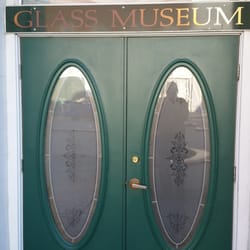
    Glass Museum

    5.0 (2 reviews)

    Glass Museum Photos

    You might also consider

    Recommended Reviews - Glass Museum

    Your trust is our priority, so businesses can't pay to alter or remove their reviews. Learn more about reviews.
    Yelp app icon
    Browse more easily on the app
    Review Feed Illustration

    1 year ago

    Helpful 0
    Thanks 0
    Love this 0
    Oh no 0
    Photo of Cort M.
    0
    106
    1

    8 years ago

    Helpful 0
    Thanks 0
    Love this 0
    Oh no 0

    Verify this business for free

    Get access to customer & competitor insights.

    Verify this business

    Minnetrista - Love is natural and real

    Minnetrista

    (11 reviews)

    Doesn't the name Minnetrista make you think that you'll be visiting a place with puppets? Like…read moremarionettes, right? Well, I hate to disappoint you, but there are no puppets or marionettes here. But there is an exhibit dedicated to Ball jars. Fun fact: Minnetrista was created by the Ball family, who created Ball canning jars, which you can learn about here. They are also the "Ball" behind Ball State University, which is located in Muncie. I had no idea! You will learn interesting facts like these, and others about this area of Indiana, at Minnetrista. The main museum itself is a bit small, and part of it is conference and meeting rooms. But the museum is just one part of Minnetrista. This is actually a 40-acre campus with gardens and paved trails. As you stroll along the grounds, you'll come across some houses. Some of the houses are part of Minnetrista, and you are welcome to pop inside and check out what's going on. What's going on in one of them is an exhibit dedicated to Bob Ross, the painter. At the Bob Ross Experience, you can step inside the historic home where The Joy of Painting was filmed, and see some of the actual filming equipment and art supplies that were used to create the television show. It's sort of surreal that Bob was painting his happy little trees right here in humble Muncie. Some of the houses that you encounter are not a part of Minnetrista, but belong to IU Health or other entities. It's not really clearly marked on the houses which is which. I'm sure if you consulted a map, it might tell you! I consulted no such map, and I was just walking around blindly. I visited during the late fall, when it was cold and the gardens were dormant, for the most part. But I bet this place is amazing in the spring and summer, when everything is in bloom.

    Minnetrista is an event center and museum that was built in 1988 by the five Ball brothers. The…read moremodern center is part of a complex of museums and gardens on the former Ball property that sits across from the White River in Muncie. There is an admission fee to visit the galleries of $15/adult and $12/child, but the ticket grants admission to the other museums and garden as well. During our visit, we saw the Narwhal exhibit, which is a small exhibit dedicated to narwhals. A curator greeted us at the entrance and was available to answer questions. My granddaughter is a narwhal fan enjoyed the interactive displays. We also visited a special children's exhibit called Good Night Forest. Again a curator welcomed us and invited us to build a backpack and enjoy the nighttime activities set up for the kids. My granddaughter loved the firer fly dance, wandering through the dark forest listening for animals and the shadow puppet show. There were fun and educational activities suitable for all ages. We also visited a permanent exhibit describing the Ball Store History. I liked seeing all the vintage items and describing them to my granddaughter. We also toured a display for a local artist competition. The staff is super friendly and engaging. The center is immaculate and accessible. There is plenty of parking in their dedicated lot. Minnetrista is a great legacy from the Ball family to the community. Exhibits change and can be found on their website. I highly recommend a visit if you like art and history.

    National Model Aviation Museum - In the stacks

    National Model Aviation Museum

    (8 reviews)

    One thousand percent, I am not the audience for this museum. But that said, I had a great time…read moreexploring and seeing all of the model airplanes and aviation accoutrement. The National Model Aviation Museum is the largest model aviation museum in the world. Who knew that Muncie held such a treasure? At this very specific museum, you will see model aircraft of all sorts, memorabilia, equipment, and even a space for children with simulators. I would keep your expectations low for the children's area, though. Other than two simulators, there is not much for children to touch and explore. But if you're an adult who loves model airplanes, you will have a great time here. I was told that people who study model airplane history will sometimes come here to go through the collection of books, magazines and manuals that the museum owns. There's a whole library that you can explore, if that's your thing. This is a neat place to visit if you're in Muncie, simply because there's nothing else like it in the area.

    I'm not a big RC person, though I used control lines as a kid and built a few balsa models, before…read morerunning into the cost of radios and eventually deciding to get my pilot's license. But it's a fun hobby, and there are some very impressive models out there- and some crossover to homebuilding planes and to military drones, etc., so it's pretty interesting. The museum is outstanding. Covers things from the Wrights and others building models to test theories, etc., through the golden age of, say, the '30s through '50s, up to the current new golden age with jets and helos and a range of planes from hard-to-crash-and-break entry models to ones that cost as much as a new car. Loads of examples, all well cared for and displayed. A surprise around every corner. Not huge, but big enough to spend a couple of hours. There's a workshop you can see through big windows, and a library you can use. Plenty of models and trinkets and clothes in the gift shop. Well worth a visit if you are at all into aviation.

    Elwood Haynes Museum

    Elwood Haynes Museum

    (4 reviews)

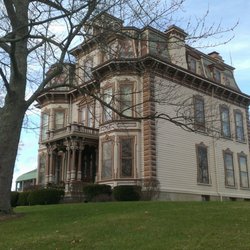
    I stumbled across the Elwood Haynes Museum while traveling on my recent Tenderness Tour in the…read moreKokomo area. While I'd heard about the museum before, I knew very little about it and I can honestly say that visiting it wasn't on my itinerary for my Kokomo visit until we happened to drive by it while searching for our evening dining location. The Elwood Haynes Museum is located in the mansion owned by Elwood Haynes, a Kokomo-based inventor credited with multiple firsts including being the first to produce cars commercially back in 1894. He lived in Kokomo until his death in 1925. Haynes also invented stainless steel. Seriously. Being that the Elwood Haynes Museum was actually a residence, you might guess that wheelchair access is kind of an issue. It definitely is kind of an issue, though kudos must be given for efforts to make the mansion as accessible as possible. You go up a rather narrow, somewhat steep driveway and park in the back of the house. If you have a high vehicle or an RV type vehicle, the odds you're going to achieve this are slim to none. There's only a few parking spots, a likely indicator that visits to the museum tend to be in smaller groups. The guide who was present for our visit acknowledged that the vast majority of visitors are out of towners rather than locals, though they do host local student groups. They've concocted a rather large, wooden ramp designed to provide wheelchair access. It likely meets ADA requirements in terms of grade, though be aware the wood itself feels a little flimsy. For those with limited range of motion or upper body strength, it may be advised to have a companion or assistant with you. You then enter via a side door that leads to your standard residential hallway. As this was a turn of the 19th century house, you can easily guess that hallways are rather narrow. I had zero issues moving into each room on the first floor - a bathroom on the first floor is largely wheelchair friendly with appropriate rails. The second floor would not be accessible to a wheelchair user, while the third floor, a small area, is not open to the public. They also have a basement area that is not open to the public. There's also an attached carriage house that had three of Haynes's vehicles within it along with a safe that had been created from the materials he invented. The Elwood Haynes Museum really is rather fascinating, though it's a rather quick view with a maximum of 1-2 hours needed to enjoy the entire museum. Admission is free, though donations are welcomed and somewhat encouraged in a low pressure sort of way. The exhibit, in addition to the vehicles, includes a wealth of photos, documents, inventions and other items related to Haynes, a figure who contributed greatly to modern motoring yet remains relatively unknown when compared to many others. The volunteer who was present was friendly and knowledgeable about Haynes's history and worked at a comfortable pace in explaining the museum. This was definitely an unexpected gem during my time in Kokomo.

    For history buffs, or car buffs, or fans of invention, this is a "must stop" place to visit while…read morein Kokomo. The home of Elwood Haynes is partly a time capsule showing the Haynes residence and all those wonderful antiques you might expect. The other part of the building is the museum tribute to Mr Haynes and some of the other famous inventors/inventions of Kokomo. I hadn't done any research before going, so I was surprised to learn how many incredible inventions were created/discovered by Haynes. What is most commonly related to is that Haynes designed, funded the building of, and drove the first commercially built auto in the country! Local inventors (The Apperson Brothers) owned a shop and were paid by Haynes to build the frame and moving parts of the first auto after Haynes had bought a one horsepower engine that ran on gasoline. At that time, gasoline was considered a waste product from natural gas production and it was another of Haynes' inventions that made gasoline more usable as a fuel. On July 4, 1994, Haynes successfully drove his vehicle for an hour, covering about six miles. But that was just some of what this man accomplished. He discovered a means for making brass at the age of 15. He also invented the small thermostat that is used to regulate home temperature. He also created numerous alloys, including stainless steel and Stellite (used in blading small turbines and numerous other tools/equipment that should not rust.) The museum shows photos throughout the building from Haynes' life. Upstairs, the rooms are not maintained as living spaces, but rather, as tributes to the other inventors and "firsts" that Kokomo is known for. You will see exhibits about the Appersons, the first pneumatic rubber tire, first carburetor, lots of Delco radio inventions, and even some canning innovations. And of course, there are lots of exhibits about alloys and their uses. The staff is friendly and goes the extra mile to make sure you have all the information you desire. Note: Although the garage is off limits, you can still see three of the first cars produced in Kokomo through the windows. Review #2486

    Model T Museum - Snowmobile conversion

    Model T Museum

    (10 reviews)

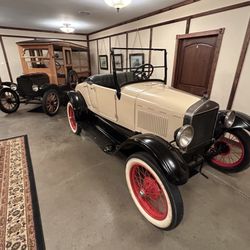
    Stumbled on this when in town to visit the county historical museum. Google or Apple or someone…read moreknows I am a history buff, and this popped up. Fit it in when I could. Pull up to the building on the hill. Nice parking area. But it turns out that is the smaller, annex building, really. Head down to the row of shops across the street, and you will enter a world full of Model Ts. Beautifully restored and displayed, with good explanations of their backgrounds, and often a copy of the group's magazine in front with an article about that particular car. Superb staff, friendly and knowledgeable. Tons to see. When you finish here, there are more cars (and a plane) across the street. They have events, and it's really worth a visit if you are anywhere nearby, are at all a car buff or history buff. Or just curious. A few cars for kids to sit in, etc., and they'll have fun too.

    A fun and interesting diversion, but I think unless you're really a car buff, the $7 admission is a…read morebit stiff. Fascinating to see actual 100-plus year old vehicles arranged in such a way that you learn about their development. Interesting how they were really toys for the very wealthy until about the early 20s when the assembly line started to bring the prices down. It's housed in two buildings, the second one really had much more to see than the first. The docent/tour guide was full of knowledge and enthusiasm and would probably talk for hours if you were willing to listen. A couple visitors who were there were major car buffs, looking closely under hoods and discussing valves and pistons at great length. The guide did a good job balancing between them and those of us who were really more interested in the historic aspect and a somewhat shorter tour. Along with the cars, tractors, trucks, you can see antique office equipment, tools, car accessories, vintage advertising and mannequins dressed in period costumes. Most of the vehicles have been restored with fresh Ford paint jobs, but a few are on display in all their ancient, rusty glory. Be prepared to spend the entire visit on your feet. As with most antiques, the general rule is 'look but don't touch' but they are not obsessed with this and didn't seem to mind some careful, respectful touching of the restored vehicles. Perfect activity for a Sunday afternoon.

    David Owsley Museum of Art - So many things

    David Owsley Museum of Art

    (3 reviews)

    I love a good hidden gem. The David Owsley Museum of Art is hidden in plain sight, though, because…read moreit's located on the campus of Ball State University, one of the biggest universities in Indiana. So, I guess, if you know, you know. But if you don't know? Then, in the words of the late Biggie Smalls, aka the Notorious B.I.G. (RIP): If you don't know, now you know. Either way, you'll find this surprisingly large art museum in Ball State's Old Quad. Parking is kind of a pain: You'll need to park in one of the metered lots. Make sure you pay! Those campus parking attendants don't play and are always out in full force. The museum houses works of art from all around the world. I saw everything from African masks to Greek statues. It's kind of amazing to me the amount of art this place holds. There are two stories of things to see. I forgot that I was on a college campus -- it really is a real-deal art museum. Best of all: This museum is free! Just stroll right in and peruse at your leisure. Just don't plan to visit on a Sunday or Monday, because it's closed on those days.

    The Ball State Museum of Art has long benefited from the generosity of the Industrialist Ball…read moreFamily. The renamed "David Owsley Museum of Art" continues that generosity from the grandson of the Ball founders. This two story museum is located in the heart of the Ball State Campus, about a block west of the intersection of Riverside and McKinley. As you approach the museum, you will see several outdoor sculptures including a pair of bronzes by Lila Katzen: "X Notion, Like a J" and "Maxi-Antecedent II" circa 1978. The main entrance to the museum is on the south side (non-street side) and has a small lobby where you can find brochures and a map of the museum. There is also a street side entrance which requires you to climb stairs to enter the museum on the second floor. Due to time constraints and being tired from walking all over campus, I didn't spend enough time to do justice to reviewing all the different rooms. The main floor of the museum starts out with a Sculpture Court with grand staircases that lead up to the upper level. The West end of the main floor has a Special Exhibition room, Native American, Pre-Columbian, African, and Pacific Islands art. The East end of the main floor has Early & Ancient art, South and Southeast Asia, and China & Japan Art. The upper floor has European art surrounding the central sculpture court. To the north of the court, American art progresses from early work on the east to more contemporary work on the west. The wings of the floor have special exhibits, Contemporary Craft, and Decorative Arts. For my visit, I started with the Sculpture Court. Although there aren't many pieces in the court, I was pleased to find a couple joyful pieces by Harriet Whitney Frishmuth from the mid-1920's. Both "Joy of the Waters" and "Crest of the Wave" are water themed pieces that were originally conceived as fountain centerpieces. I moved upstairs to browse the European art. I wasn't personally familiar with the names of most of the artists, but the works that are on display seem quite life like. Many of the painted art pieces were portraits or landscapes. The American art was the most interesting to me since I have been reading about the history of art in America. Early works by Thomas Cole ("Storm King of the Hudson" - 1827), who some consider the "father" of the Hudson River School of Art , and Gilbert Stuart ("Portrait of Anne Eliza Allston" -1805), who was a contemporary of Benjamin West and learned from famed artist Thomas Gainsborough, are on display. One of my favorites on display is Alexander Wyant's "Near Conway, North Wales" (1868). This landscape is remarkably detailed and beautiful. Other paintings by famous artists include John Twachtman's "Waterfall, Greenwich" - 1890, Childe Hassam's "Monmartre" -1889, and "Reflection (Kitty Hughes)" 1917, and Robert Henri's "Jimmie n Blue Jumper" 1920. Artist's with Hoosier ties include William Merritt Chase ("Rest by the Wayside"-1902 and "Portrait of Mme E H Bensel"-1912), T C Steele ("Tennessee Mountain Land"-1899), and John Ottis Adams ("In Poppyland"-1901). I have heard that the museum has quite a few JO Adams paintings, but unfortunately, only one was on display during my visit. This one, also known as "Poppy Field", is from the time he spent living at the Hermitage in Brookville with TC Steele painting the river valley. I also had time to explore some of the craft and contemporary pieces before heading down to the main floor again. There I chose to spend time in the Japan & China exhibit. This section of the museum had more sculpture and ornamental vases than paintings. One of my favorite's is from the Chinese Tang Dynasty (618-907 CE) "Earth Spirits". The pieces, though exaggerated in appearance, seem to embody human personalities in their expressions. The website also has lots of information, including videos of art that has been on display. Pieces from the World's Fair of 1915 (San Francisco) and glass blowing by Dale Chululy show some of the diversity that the museum has. 2021 W Riverside Ave, Muncie, Indiana Open: Mon - Fri 9-4:30; Sat-Sun 1:30 - 4:30 Cost: free Parking: McKinley Avenue Parking Garage $1 (1-3 hours) per hour (cash or credit) Free parking on weekends in the red lot west of the museum Review #264

    Glass Museum - museums - Updated May 2026

    Loading...
    Loading...
    Loading...