Giechburg Photos



Recommended Reviews - Giechburg
Start your review...



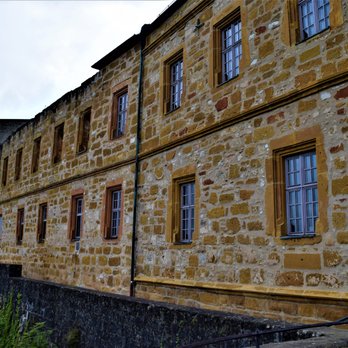
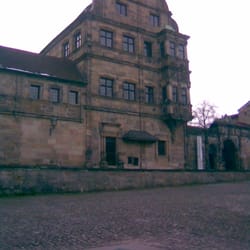
We returned to this local-favorite castle for the first time since we left Bamberg in 2014. We have parked in lower free parking lot and climbed up to the summit in the past, but we drove all the way up to the castle parking lot (free) today instead :-). Visible from afar, the Giechburg towers over the valley with a view of Bamberg and northern Franconian Switzerland. In fact, it is said that knights signaled each other between here and Altenburg in Bamberg to collect taxes from the travelers in the valley. There's a Franconian restaurant/biergarten, banquet hall and accommodation facilities here. They often host cultural events on this ground (such as an art gallery/display in the massive House Tower). The construction of the medieval castle took place under the mighty Schweinfurt counts, probably around the time of the devastating Hungarian invasions in the 10th century. For this purpose, the western third of the plateau was separated by a deep neck ditch, whereby the remaining fortifications continued to exist until the 12th century. From then on, the castle served as a link between the royal courts of Hallstadt and Königsfeld on the Jura heights. The castle was first mentioned in a document in 1125 in a deed of donation from Bishop Otto I the Holy, in which Wilhelm von Lützelburg, second husband of Margravine Mechthilde von Meißen, appears as a witness under the name Willehalm, liber homo de giche. Their daughter from their first marriage, Adela von Beichlingen, married Count Reginboto from Wertheim, who held a high office at the Bamberg court and named himself comes de gicheburc after his married property. In 1137, Chuniza, his only child, brought the Giech hereditary estate to the Andechs count's house by marriage. In 1142 the marriage was separated and Chuniza bequeathed her inheritance to the Bishopric of Bamberg. However, the count succeeded with the secularization of the bishopric, the properties around the castle were sold separately. After the barbaric demolition measures of Hohenhausen in 1809, which rapidly accelerated a process of decay, the state of construction of the castle became increasingly desolate. In 1819, Count Friedrich Karl Herrmann von Giech zu Thurnau acquired the castle from the Kingdom of Bavaria without any fundamental changes. In 1932 the last Count von Giech sold the castle to Leonhard Schmaus, a postal worker, whose grandson sold the property to Friedrich Karl Hohmann in 1962. In order to ensure the continued existence of the facilities, the Friends of Giechburg e.V. was founded in 1967 and the first noteworthy renovation work initiated. With the takeover of the castle complex by the Bamberg district in 1971, the association dissolved and under the care of the district administration a comprehensive renovation program and expansion as a conference location and cultural event center for the Bamberg district began. In addition, the castle offers a restaurant and accommodation facilities. The castle is also the starting point for the popular hike to the Gügel, a pilgrimage church which honors Saint Pancras. He was only 15 years old when he was beheaded for his faith. The pilgrimage church stands high (515 meter) on the rock near Scheßlitz dates from the 17th century. The mighty Giechburg is directly opposite the valley. The rock plateau was already settled in the Neolithic, and prehistoric fortifications became a medieval castle. This was destroyed and rebuilt, today the reconstruction as a Renaissance castle is partially preserved. The climb to the castle and hike to the pilgrimage church is worth it because you can enjoy a wonderful view from above and mildly challenging hike. read more