Freedom Rides Museum Photos


You might also consider


More like Freedom Rides Museum
Recommended Reviews - Freedom Rides Museum
Start your review...


Reviews With Photos


As other reviews have mentioned, this is a small museum with a limited amount of displays and information. While the curator is indeed very enthusiastic and passionate, I don't think there is any significant information here that you don't find at many of the other Civil Rights Museums around town. After all, the bus segregation in Montgomery was headline news for years and the catalyst to the movements focus in this area of the south. So it is part of most of the conversations about history here in Montgomery. The largest value is physically being able to walk into the building where the riders arrived on their journey and witness the blueprints of the buildings design, which focused on segregation. You can walk the "colored" waiting room and see from the inside where the entrance has since been bricked over & mortared shut. Don't get me wrong, this place has relevance and shares a little more detail about the riders than most. But I think to stand out they should offer something the others don't, maybe a bus ride with videos and maybe even live action to reenact what the riders were feeling and ultimately experienced. The Freedom Rides were many and have a complex 6-month history, but the museum location was actually the site of a watermark moment of violence on May 20th, 1961. [ GREYHOUND STATION HISTORY ] Initially, the ride began in Washington DC by a group known as Congress of Racial Equality (CORE). The goal was to ride all the way to New Orleans but the trip became an increasingly hostile journey as it entered the deep south. South Carolina was particularly hostile. Some of the DC riders abandoned the mission and the Tennessee students stepped in not wanting it to fall apart. Even Martin Luther King Jr. warned: "You will never make it through Alabama." But they courageously continued on. --- "Anniston, AL segregationists firebombed one of the buses and a mob attempted to attack the riders as they fled the burning vehicle. When the second bus reached Birmingham, Alabama, a mob with similar intentions also assaulted the riders, who were dragged away and beaten nearly to death. The Freedom Riders were not allowed to leave the city for five days as Bull Conner, Birmingham's Public Safety Commissioner, effectively held them hostage." [source: National Register of Historic Places - NPS] MUST WATCH Janie's Story about firebombing: http://www.pbs.org/wgbh/americanexperience/features/freedom-riders-young-witness/ --- The riders were coming from Birmingham after being delayed the day before because the driver refused to drive due to an angry mob surrounding the bus station. Alabama State Patrol was forced to protect the bus by the Kennedy administration, but later abandoned the bus at Montgomery city limits. At 10:23 a.m., another mob awaited the bus where the rider were beaten severely. White riders were particularly given extra violent attention by the angry mob and even reporters and photographers were attacked and their cameras destroyed. Ambulances refused to take wounded riders to the hospital and local police, while present, did not intervene and allowed the beating to go on. The nightmare didn't end in the days that followed as local and state officials made no attempts to protect the people or bring any order to an out of control growing mob. Even a Justice Department official was beaten and left unconscious lying in the street. May 20th, 1961 Freedom Riders whom risked it all included: William Barbee | 19 Paul Brooks | 22 Catherine Burks | 21 Carl Bush | 19 Charles Butler | 20 Joseph Carter | 22 Allen Carson, Jr. | 19 Lucretia Collins | 21 Rudolph Graham | 20 William Harbour | 19 * Susan Hermann | 20 Patricia Jenkins | 18 Bernard Lafayette Jr. | 20 Fredrick Leonard | 18 John Lewis | 21 William B. Mitchell Jr. | 18 Etta Simpson | 19 Ruby Doris Smith | 19 * Susan Wilbur | 18 Clarence M. Wright | 19 * Jim Zwerg | 21 * white Be sure to take time to walk the museum with the curator, who holds a vast amount of knowledge about each of the displays. I personally got more out of listening to her than I did reading all the information in the displays. Story of Chela Lightchild - https://www.santafenewmexican.com/news/local_news/mlk-s-oratory-turned-a-young-woman-into-a-freedom/article_cef52c6f-e85a-5d8e-a156-49ae30da588f.html [ FINAL THOUGHTS ] Again, while the museum itself is not particularly large, it is stained with the blood of courageous people willing to give up their own safety and risked their own lives for the sake of humanity. These amazing people even wrote farewells and wills prior to boarding the bus. WHAT COURAGE!!! They did this largely and initially without support from anyone and it is for that reason this space is 5-stars. 2019/83


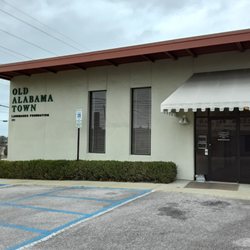
The Greyhound Bus Station at 210 South Court Street in Montgomery, Alabama, was the site of a violent attack on participants in the 1961 Freedom Ride during the Civil Rights Movement. The May 1961 assaults, carried out by a mob of white protesters who confronted the civil rights activists, "shocked the nation and led the Kennedy Administration to side with civil rights protesters for the first time." The property is no longer used as a bus station, but the building was saved from demolition and its facade has been restored. The site was leased by the Alabama Historical Commission and a historical marker was located in front of the building. In 2011, a museum was opened inside the building, and it was listed on the National Register of Historic Places. The first Freedom Ride left Washington, D.C. on May 4, 1961, and was scheduled to arrive in New Orleans on May 17. The black and white Freedom Riders were trying to compel the U.S. government to enforce U.S. Supreme Court decisions outlawing segregated transportation, and wanted to end the discriminatory practice of allocating seating on the buses and bus stations with a preference for whites. Organized by the Congress of Racial Equality (CORE), the plan was to have mixed pairs of riders sit side by side. The first ride consisted of two buses, one from Greyhound and one from Trailways, and the plans included a final leg starting in Atlanta, Georgia, and stopping in the state of Alabama in Anniston, Birmingham, and Montgomery before ending in New Orleans. In Anniston, a mob of angry whites violently attached the Greyhound bus and set it on fire; the riders were severely beaten. The Trailways bus arrived an hour later and was boarded in Anniston by Ku Klux Klan members who beat up the Freedom Riders. It was also attacked in Birmingham, and several riders (including James Peck) were beaten in front of the press. Reports of the violence reached US Attorney General Robert Kennedy, who urged restraint on the part of Freedom Riders and sent an assistant, John Seigenthaler, to Birmingham. CORE agreed to halt the Freedom Ride in Birmingham on May 14, with the remaining riders flying to New Orleans. The riders, who had been left unescorted by the highway police as they reached Montgomery city limits, arrived at the bus station at 10:23 AM and were met by a crowd of violent white protesters, including women and children. Several were injured in the racist attack, including Robert Kennedy's assistant John Seigenthaler, who had followed the bus in his car: attempting to rescue two white female riders, he was hit over the head with a metal pipe and "lay unconscious on the ground for half an hour." Floyd Mann, a "committed segregationist, tough on law and order," stepped in to protect William Barbee, who was to remain paralyzed and died an early death as a result of his beating. Floyd fired his gun in the air, yelling, "'There'll be no killing here today.' A white attacker raised his bat for a final blow. Mann put his gun to the man's head. 'One more swing,' he said, 'and you're dead.'" On Sunday, May 21, Martin Luther King, Jr., C.K. Steele, and SCLC officers came to support the Freedom Riders. That evening, they and the riders joined the evening service in Ralph Abernathy's First Baptist Church on North Ripley Street while some 3000 angry protesters yelled outside, burning a car and threatening to burn the church. From inside the church, King telephoned Robert Kennedy, who urged the activists to "cool down," a proposal refused first by Diane Nash, and then by James Farmer (on behalf of CORE) and King. Kennedy had sent 500 U.S. Marshals, headed by United States Deputy Attorney General Byron White. Airborne troops were on standby at Fort Benning,[3] just across the Georgia state line. The Kennedy Administration's decision that it would send US troops to restore order was protested by city and state officials.[8] The marshals, with the help of Floyd Mann and his state troopers, managed to keep the mob at bay; it was finally dispersed with the help of the National Guard at midnight. The Freedom Ride again went on the road, and travelled to Jackson, Mississippi, where the students, which by now included Nashville Student Movement activists Bernard Lafayette, James Bevel, and others, were arrested as they attempted to segregate the "Black" and "White" waiting rooms in the bus terminal. As a result of the unrest and the nationwide publicity generated by the Freedom Rides, in late May Robert Kennedy was able to successfully petition the Interstate Commerce Commission to adopt stronger regulations and desegregate interstate transportation.
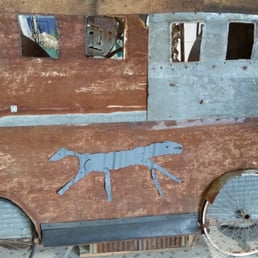

The guide is great and very knowledgeable. The exhibits are limited but should definitely be a stop on your Montgomery civil rights tour.


3 months ago
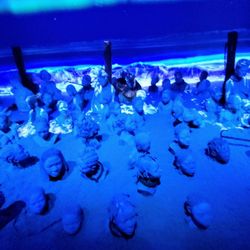
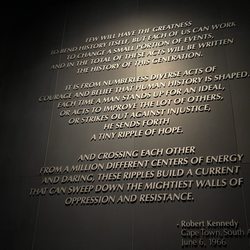
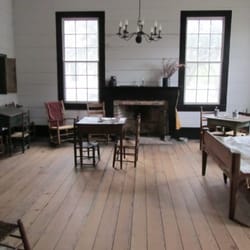
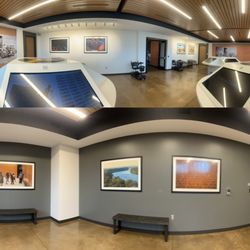
We visited the Freedom Rides Museum in Montgomery, AL on Jan 7, 2026 as part of Road Scholar's "The Civil Rights Movement - Atlanta, Montgomery, Selma, Birmingham" program. As the name indicates, this museum is entirely about the numerous Freedom Rides from May to December of 1961. Its contents include maps, background information and related events. Tickets were covered by our program. We spent less than an hour here, in part because we got two other sites to visit in our day's itinerary. Gracing the entrance to the museum is the floor mural of people grouped between "FREE" and "DOM", and shaped in the form of a bus. Once inside the museum, "Mapping the 1961 Freedom Rides" - to my left - shows all the rides mapped out from point A to point B. Past that is "Separate and Unequal" that briefly describes what life was like "Traveling While Black". Opposite from that is "From Bus Station to Museum". It traces the timeline from the Freedom Rides to the founding of the museum, and includes different editions of the Green Book. The next section delves into the Freedom Rides themselves. "Movement Making" (organizing and planning), "You Don't Have To Ride Jim Crow" (boycotts and civil disobediences), "Faces of the Movement" (numerous individuals that participated in the Rides, "The Rides Continue" (despite violent oppositions). Footages of the exhibits are in the video "Day 4: Freedom Riders" on my YouTube channel, in playlist "2026-1: The Civil Rights Movement - Atlanta, Montgomery, Selma, Birmingham". Of the three Montgomery mini-sites about the Civil Rights movement - the other two being the Civil Rights Memorial Center and the Rosa Parks Museum - I was most impressed with the Freedom Rides Museum. We had barely enough time to see almost everything. I learnt a lot more than what I had thought. (I thought the Freedom Rides were a mere few and not many!) Due to lack of time, I did not visit the gift shop. I definitely recommend this museum if done in conjunction with the Rosa Parks Museum and the Civil Rights Memorial Center, both of which are within walking distance. read more

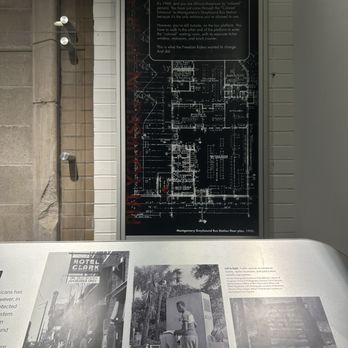


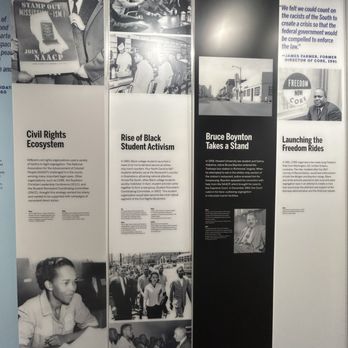


They stood up so that we could sit down. Another stable to stop at while visiting Alabama. The Freedom Riders Museum has a lot of information on the Freedom riders. They tell the story through the words of the freedom riders during the civil rights movements. You learn about the routes they took and all the obstacles they had to put up with. The museum also has a lot of good books on sale and My friend And I purchased some. The only thing I wished was the museum was bigger and had more things to view. Until next review Kisses read more


2 years ago
So much important history in one small building. Don't skip this museum. Tells the story of the Freedom Riders. The people who work there are incredibly kind and helpful. read more


4 years ago

7 years ago
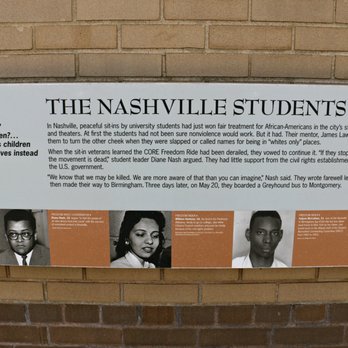
As other reviews have mentioned, this is a small museum with a limited amount of displays and information. While the curator is indeed very enthusiastic and passionate, I don't think there is any significant information here that you don't find at many of the other Civil Rights Museums around town. After all, the bus segregation in Montgomery was headline news for years and the catalyst to the movements focus in this area of the south. So it is part of most of the conversations about history here in Montgomery. The largest value is physically being able to walk into the building where the riders arrived on their journey and witness the blueprints of the buildings design, which focused on segregation. You can walk the "colored" waiting room and see from the inside where the entrance has since been bricked over & mortared shut. Don't get me wrong, this place has relevance and shares a little more detail about the riders than most. But I think to stand out they should offer something the others don't, maybe a bus ride with videos and maybe even live action to reenact what the riders were feeling and ultimately experienced. The Freedom Rides were many and have a complex 6-month history, but the museum location was actually the site of a watermark moment of violence on May 20th, 1961. [ GREYHOUND STATION HISTORY ] Initially, the ride began in Washington DC by a group known as Congress of Racial Equality (CORE). The goal was to ride all the way to New Orleans but the trip became an increasingly hostile journey as it entered the deep south. South Carolina was particularly hostile. Some of the DC riders abandoned the mission and the Tennessee students stepped in not wanting it to fall apart. Even Martin Luther King Jr. warned: "You will never make it through Alabama." But they courageously continued on. --- "Anniston, AL segregationists firebombed one of the buses and a mob attempted to attack the riders as they fled the burning vehicle. When the second bus reached Birmingham, Alabama, a mob with similar intentions also assaulted the riders, who were dragged away and beaten nearly to death. The Freedom Riders were not allowed to leave the city for five days as Bull Conner, Birmingham's Public Safety Commissioner, effectively held them hostage." [source: National Register of Historic Places - NPS] MUST WATCH Janie's Story about firebombing: http://www.pbs.org/wgbh/americanexperience/features/freedom-riders-young-witness/ --- The riders were coming from Birmingham after being delayed the day before because the driver refused to drive due to an angry mob surrounding the bus station. Alabama State Patrol was forced to protect the bus by the Kennedy administration, but later abandoned the bus at Montgomery city limits. At 10:23 a.m., another mob awaited the bus where the rider were beaten severely. White riders were particularly given extra violent attention by the angry mob and even reporters and photographers were attacked and their cameras destroyed. Ambulances refused to take wounded riders to the hospital and local police, while present, did not intervene and allowed the beating to go on. The nightmare didn't end in the days that followed as local and state officials made no attempts to protect the people or bring any order to an out of control growing mob. Even a Justice Department official was beaten and left unconscious lying in the street. May 20th, 1961 Freedom Riders whom risked it all included: William Barbee | 19 Paul Brooks | 22 Catherine Burks | 21 Carl Bush | 19 Charles Butler | 20 Joseph Carter | 22 Allen Carson, Jr. | 19 Lucretia Collins | 21 Rudolph Graham | 20 William Harbour | 19 * Susan Hermann | 20 Patricia Jenkins | 18 Bernard Lafayette Jr. | 20 Fredrick Leonard | 18 John Lewis | 21 William B. Mitchell Jr. | 18 Etta Simpson | 19 Ruby Doris Smith | 19 * Susan Wilbur | 18 Clarence M. Wright | 19 * Jim Zwerg | 21 * white Be sure to take time to walk the museum with the curator, who holds a vast amount of knowledge about each of the displays. I personally got more out of listening to her than I did reading all the information in the displays. Story of Chela Lightchild - https://www.santafenewmexican.com/news/local_news/mlk-s-oratory-turned-a-young-woman-into-a-freedom/article_cef52c6f-e85a-5d8e-a156-49ae30da588f.html [ FINAL THOUGHTS ] Again, while the museum itself is not particularly large, it is stained with the blood of courageous people willing to give up their own safety and risked their own lives for the sake of humanity. These amazing people even wrote farewells and wills prior to boarding the bus. WHAT COURAGE!!! They did this largely and initially without support from anyone and it is for that reason this space is 5-stars. 2019/83 read more




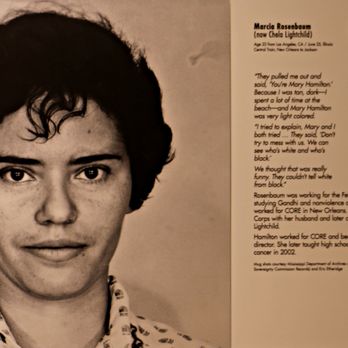


4 years ago


13 years ago
The Greyhound Bus Station at 210 South Court Street in Montgomery, Alabama, was the site of a violent attack on participants in the 1961 Freedom Ride during the Civil Rights Movement. The May 1961 assaults, carried out by a mob of white protesters who confronted the civil rights activists, "shocked the nation and led the Kennedy Administration to side with civil rights protesters for the first time." The property is no longer used as a bus station, but the building was saved from demolition and its facade has been restored. The site was leased by the Alabama Historical Commission and a historical marker was located in front of the building. In 2011, a museum was opened inside the building, and it was listed on the National Register of Historic Places. The first Freedom Ride left Washington, D.C. on May 4, 1961, and was scheduled to arrive in New Orleans on May 17. The black and white Freedom Riders were trying to compel the U.S. government to enforce U.S. Supreme Court decisions outlawing segregated transportation, and wanted to end the discriminatory practice of allocating seating on the buses and bus stations with a preference for whites. Organized by the Congress of Racial Equality (CORE), the plan was to have mixed pairs of riders sit side by side. The first ride consisted of two buses, one from Greyhound and one from Trailways, and the plans included a final leg starting in Atlanta, Georgia, and stopping in the state of Alabama in Anniston, Birmingham, and Montgomery before ending in New Orleans. In Anniston, a mob of angry whites violently attached the Greyhound bus and set it on fire; the riders were severely beaten. The Trailways bus arrived an hour later and was boarded in Anniston by Ku Klux Klan members who beat up the Freedom Riders. It was also attacked in Birmingham, and several riders (including James Peck) were beaten in front of the press. Reports of the violence reached US Attorney General Robert Kennedy, who urged restraint on the part of Freedom Riders and sent an assistant, John Seigenthaler, to Birmingham. CORE agreed to halt the Freedom Ride in Birmingham on May 14, with the remaining riders flying to New Orleans. The riders, who had been left unescorted by the highway police as they reached Montgomery city limits, arrived at the bus station at 10:23 AM and were met by a crowd of violent white protesters, including women and children. Several were injured in the racist attack, including Robert Kennedy's assistant John Seigenthaler, who had followed the bus in his car: attempting to rescue two white female riders, he was hit over the head with a metal pipe and "lay unconscious on the ground for half an hour." Floyd Mann, a "committed segregationist, tough on law and order," stepped in to protect William Barbee, who was to remain paralyzed and died an early death as a result of his beating. Floyd fired his gun in the air, yelling, "'There'll be no killing here today.' A white attacker raised his bat for a final blow. Mann put his gun to the man's head. 'One more swing,' he said, 'and you're dead.'" On Sunday, May 21, Martin Luther King, Jr., C.K. Steele, and SCLC officers came to support the Freedom Riders. That evening, they and the riders joined the evening service in Ralph Abernathy's First Baptist Church on North Ripley Street while some 3000 angry protesters yelled outside, burning a car and threatening to burn the church. From inside the church, King telephoned Robert Kennedy, who urged the activists to "cool down," a proposal refused first by Diane Nash, and then by James Farmer (on behalf of CORE) and King. Kennedy had sent 500 U.S. Marshals, headed by United States Deputy Attorney General Byron White. Airborne troops were on standby at Fort Benning,[3] just across the Georgia state line. The Kennedy Administration's decision that it would send US troops to restore order was protested by city and state officials.[8] The marshals, with the help of Floyd Mann and his state troopers, managed to keep the mob at bay; it was finally dispersed with the help of the National Guard at midnight. The Freedom Ride again went on the road, and travelled to Jackson, Mississippi, where the students, which by now included Nashville Student Movement activists Bernard Lafayette, James Bevel, and others, were arrested as they attempted to segregate the "Black" and "White" waiting rooms in the bus terminal. As a result of the unrest and the nationwide publicity generated by the Freedom Rides, in late May Robert Kennedy was able to successfully petition the Interstate Commerce Commission to adopt stronger regulations and desegregate interstate transportation. read more

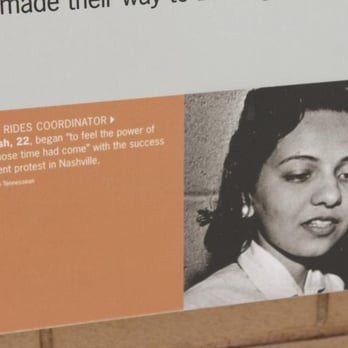


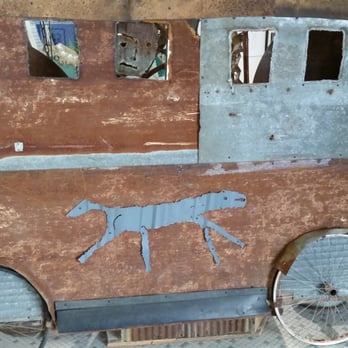

9 years ago
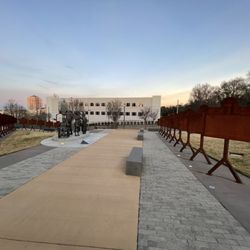
THE FREEDOM RIDERS There was really no need for me to go inside of this Greyhound bus station because all I needed to know was displayed on the outside of the building. Going inside only confused me because it was very limited and it really did not add anything to expand or enhance my experience. Also, there is a more comprehensive display in Birmingham which I visited just last summer. The outside of the building told me all I needed to know. Along the front of the building, you will need to start to your left and walk along the front to understand what took place when the Freedom riders arrived in Montgomery on May 20, 1961. The riders consisted of students and activists who wanted to test the interstate segregation laws that had been ruled unlawful. Would the laws be respected here in Alabama or would segregation stand? When the riders who were non-violent and unarmed arrived at this Montgomery bus station, they were viciously attacked by Klansmen and others. The local police were no where to be found. Eventually the national guard and state police stepped in to provide provide safe passage for riders to leave the area. This incident brought great embarrassment to the president and much needed attention to issues of segregation. This was a really sad day in black history but important to remember, especially when you realize that these people left home prepared to die for this cause. The photos of those that were beaten are fairly graphic so be careful if you are taking young children to this site. It is definitely a great place to stop and reflect. This station was placed on the historic registry in 2011. What took them so long? read more


8 years ago

8 years ago

12 years ago
7 years ago
12 years ago
More info about Freedom Rides Museum
210 South Court St
Montgomery, AL 36104
Directions
(334) 414-8647
Call Now
Hours
Other Amenities
Ask the Community - Freedom Rides Museum
Review Highlights - Freedom Rides Museum

















Why does Yelp recommend reviews?
1 review that is not currently recommended
The reviews below are not factored into the business's overall star rating.

4 years ago
Freedom Rides Museum - museums - Updated October 2026
Best of Montgomery
People found Freedom Rides Museum by searching for…
Things to Do in Montgomery, AL
Landmarks & Historical Buildings in Montgomery, AL
Fun Things to Do on Date Night in Montgomery, AL
Children's Museums in Montgomery, AL
Art Galleries in Montgomery, AL
Arts & Entertainment in Montgomery, AL
Historical Tours in Montgomery, AL
Historical Sites in Montgomery, AL
Tourist Attractions in Montgomery, AL
Comedy Clubs in Montgomery, AL
Things to Do on a Rainy Day in Montgomery, AL
Performing Arts in Montgomery, AL
18 and Up Clubs in Montgomery, AL
Trending Searches in Montgomery, AL
Apple Orchards near Freedom Rides Museum
Apple Picking near Freedom Rides Museum
Archery near Freedom Rides Museum
Barbershop near Freedom Rides Museum
Blow Dry Bar near Freedom Rides Museum
Cheap Party Venues near Freedom Rides Museum
Corn Maze near Freedom Rides Museum
Eyelash Extensions near Freedom Rides Museum
Fun Kid Friendly Restaurants near Freedom Rides Museum
Halloween Events near Freedom Rides Museum
Historic Homes near Freedom Rides Museum
Indoor Activities near Freedom Rides Museum
Kids Birthday Party near Freedom Rides Museum
Landmarks & Historical Buildings near Freedom Rides Museum
Makeup Artists near Freedom Rides Museum
Photo Spots near Freedom Rides Museum
Pick Your Own Farms near Freedom Rides Museum
Places To Take Pictures near Freedom Rides Museum
Public Art near Freedom Rides Museum
Pumpkin Patches near Freedom Rides Museum
Browse Articles
Browse Nearby
BEST of Montgomery, Alabama Restaurants near Freedom Rides Museum
BEST of Montgomery, Alabama Things to Do near Freedom Rides Museum
BEST of Montgomery, Alabama Coffee near Freedom Rides Museum
BEST of Montgomery, Alabama Breakfast near Freedom Rides Museum
BEST of Montgomery, Alabama Zoo near Freedom Rides Museum
BEST of Montgomery, Alabama Botanical Gardens near Freedom Rides Museum
BEST of Montgomery, Alabama Hotels near Freedom Rides Museum
BEST of Montgomery, Alabama Visitor Centers near Freedom Rides Museum
BEST of Montgomery, Alabama Alligator near Freedom Rides Museum
Browse Brands
Related Searches in Montgomery, AL
Best Fun Things to Do in Montgomery, Alabama
Best Sightseeing Experiences Available in Montgomery, Alabama
Book Engaging Historical Tours in Montgomery, Alabama
Browse Top Hotels in Montgomery, Alabama for Your Stay
Browse the Best Casinos Located in Montgomery, Alabama
Challenging Escape Room Adventures in Montgomery, Alabama
Discover Charming Historic Homes in Montgomery, Alabama
Discover Family-Friendly Aquariums in Montgomery, Alabama
Discover Fun Activities to Do in Montgomery, Alabama
Discover Fun Things to Do Alone in Montgomery, Alabama
Discover Live Theater Shows in Montgomery, Alabama
Discover the Best Interactive Museum in Montgomery, Alabama
Discover the Best Military Museum in Montgomery, Alabama
Enjoy Arts & Entertainment in Montgomery, Alabama
Enjoy Fun Paint & Sip Events in Montgomery, Alabama
Enjoy the Best Family Activities in Montgomery, Alabama
Explore Beautiful Parks and Green Spaces in Montgomery, Alabama
Explore Children's Museums Near Montgomery, Alabama
Explore Family-Friendly Zoos and Wildlife in Montgomery, Alabama
Explore Free Things to Do Around Montgomery, Alabama
Explore Fun Activities to Do in Montgomery, Alabama
Explore Fun Field Trips in Montgomery, Alabama
Explore Interactive Science Museums in Montgomery, Alabama
Explore Landmarks & Historical Buildings in Montgomery, Alabama
Explore Sunday Fun Things to Do in Montgomery, Alabama
Explore Top Art Galleries Located in Montgomery, Alabama
Explore Top History Museums in Montgomery, Alabama
Explore Venues & Event Spaces in Montgomery, Alabama
Explore the Top Car Museum in Montgomery, Alabama
Find Exciting Tours to Take in Montgomery, Alabama
Find Fun Things to Do With Kids in Montgomery, Alabama
Find Top Art Museums in Montgomery, Alabama
Find Top Event Venues to Book in Montgomery, Alabama
Find Top Libraries to Visit in Montgomery, Alabama
Find Top Movie Theater Options in Montgomery, Alabama
Find Top-Rated Cinema Experiences in Montgomery, Alabama
Find a Public Library Near You in Montgomery, Alabama
Must-See Tourist Attractions Around Montgomery, Alabama
Popular Kids Activities in Montgomery, Alabama
Popular Things to Do in Montgomery, Alabama
Top Movie Theaters to Visit in Montgomery, Alabama
Top Museums for Kids to Visit in Montgomery, Alabama
Top Things to Do With Kids in Montgomery, Alabama
Top-Rated Plantation Tours Near Montgomery, Alabama
Tour Popular Historical Sites in Montgomery, Alabama
Visit a Free Museum Near You in Montgomery, Alabama
Visit the Best Kids Play Place Options in Montgomery, Alabama


