Fort Augusta Historical Marker Photos

More like Fort Augusta Historical Marker
Recommended Reviews - Fort Augusta Historical Marker
Start your review...



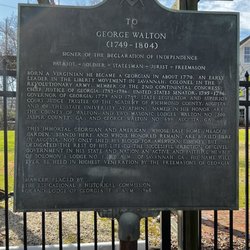
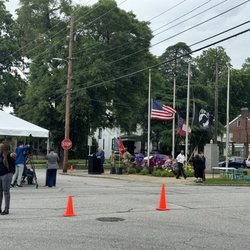
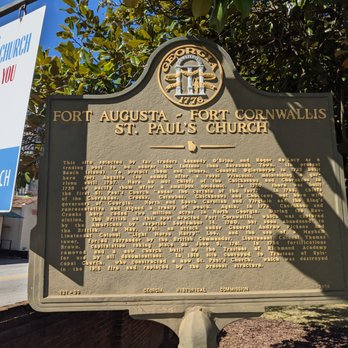
This historical marker stands in front of the large and imposing St. Paul's Church in Augusta along the Savannah River. The church is amazing and deserves a special visit but this marker points out the history of the site, which dates back to the pre-Revolutionary times. The marker is in excellent condition and the very small text reads, "This site selected by fur traders Kennedy O'Brien and Roger de Lacy as a trading post to be nearer the Indians than Savannah Town, (in present Beech Island). To protect them and others, General Oglethorpe in 1735 built here Fort Augusta (so named after a royal Princess), maintaining a garrison until 1767. Here he met chiefs of the Chickasaws and Cherokees in 1739 to pacify them after a smallpox epidemic. In 1750, there was built the first St. Paul's Church "under the curtain of the fort." In 1763, chiefs of the Cherokees, Creeks, Catawbas, Chickasaws and Choctaws met here with governors of Georgia, North and South Carolina and Virginia and the King's representative and signed a treaty of peace. Again, in 1773, Cherokees and Creeks here ceded two million acres in North Georgia. During the Revolution, the British on this spot erected Fort Cornwallis, which was captured by the Americans by surprise September 14, 1780, but soon abandoned to the British. In May, 1781, an attack under General Andrew Pickens and Lieutenant Colonel "Light Horse Harry" Lee, and the use of a Mayham tower, forced surrender by the British Commander, Lieutenant Colonel Thomas Brown, capitulation taking place on June 5, 1781. In 1786 fortifications removed and a new church built by the Trustees of Richmond Academy for use by all denominations. In 1818 site conveyed to Trustees of Episcopal Church, who constructed a new St. Paul's Church, which was destroyed in the 1916 fire and replaced by the present structure." And if you're curious of what a Mayham Tower looks like and how this battle took place, watch https://youtu.be/C7o4xY8x_vI [Review 14727 overall, 227 of 2021, number 391 in Georgia.] read more